
Introduction
That dark corner of your yard is not a lost cause. The bed fails because of the plant you put there, not the shade itself, and the right shade perennials will fill that spot and thrive where sun-lovers sulk. Pick the wrong plant and even the gentlest shade looks like a graveyard of bare stems.
Here is the part most people get wrong. Shade is a spectrum, not one flat condition. Full shade usually means 4 hours or less of direct sun a day, while partial shade gives you a few hours of morning light and cover for the rest. A plant happy under light, filtered shade can melt in dense shade, and one built for deep woodland gloom may scorch in a brighter spot.
Most guides hand you the same flat top-ten list and call it done. That helps nobody who is squinting at an actual problem corner. This guide does the opposite. It sorts shade-loving perennials by how deep the shade runs and how wet or dry the soil stays. Then it layers in native plants, foliage-driven design, and real fixes for the toughest case of all, dry shade under tree roots.
Shade gardening keeps growing fast. It rides the same wave as native and pollinator-friendly yards, and that is no accident. The best perennials for shade feed bees and songbirds while they soften a gloomy bed. Every pick here leans on plant lists from real university experts. So you get proof, not guesswork. Let's start by reading the shade you actually have, then match it to plants that last.
Best Shade Perennials to Grow
Six years ago that dim back corner went from a bare scrape of dirt to a full green carpet. It happened the season I stopped fighting the spot. The corner sits where my lawn meets the woods edge. I dropped in a 'Sum and Substance' hosta the size of a beach ball and tucked a few 'Jack Frost' brunnera around its base. By midsummer the two had closed ranks and swallowed the bare ground whole.
Before that I wasted a whole year on a sun-loving coreopsis there. It sulked from the day I planted it, threw maybe three sad blooms, and gave up by August in shade it was never built to take. The fix was never better soil or more fuss. It was picking plants that actually want the dark.
That is the whole game with shade perennials. The right plant beats fighting the site every time, so the list below leans on species that earn their keep in dim spots. For each one you get the common and botanical name, the shade depth it suits, and the standout leaf or flower trait that tells you where it belongs.
Start with hosta, your most popular and problem-free shade perennial, with deer and snails as its only real pests. From there your options split two ways. Flowering picks like astilbe and bleeding heart carry the color, while foliage stars like coral bells, foamflower, and ferns hold the texture. Most of these plants are hardy across roughly USDA zones 3 to 9. Several are native woodland species, and you will meet them again later in this guide.
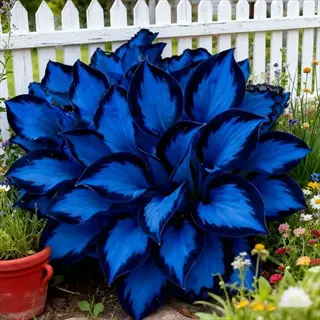
Hosta (Hosta species)
- Shade depth: Thrives in full to partial shade, tolerating deep shade better than almost any other perennial in the bed.
- Foliage: Bold mounding leaves range from blue-green to chartreuse with white or gold variegation for season-long texture.
- Flowers: Slender summer spikes of lavender or white blooms rise above the foliage and some carry a light fragrance.
- Care: Wants consistent moisture and rich soil; divide clumps every few years to keep them vigorous and full.
- Watch for: Deer and snails are the main pests, so protect young plants in browsing or damp slug-prone gardens.
- Zones: Hardy across roughly USDA zones 3 to 9, making it a dependable backbone in most shade gardens.
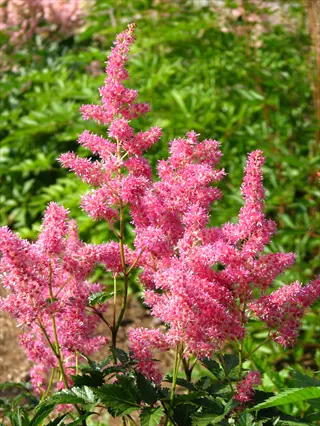
Astilbe (Astilbe species)
- Shade depth: Best in partial shade with steady moisture, holding up in deeper shade where the soil never dries out.
- Flowers: Feathery plumes of pink, red, white, or lavender rise in early to midsummer for weeks of soft color.
- Foliage: Fern-like, finely cut leaves stay attractive after bloom and contrast well with broad hosta foliage.
- Care: Needs reliably moist soil; it sulks and browns at the edges in dry shade, so water it through dry spells.
- Use: Pairs beautifully with ferns and hosta and lights up shady borders that feel too green and flat.
- Zones: Hardy across roughly USDA zones 3 to 9, returning dependably from the crown each spring.
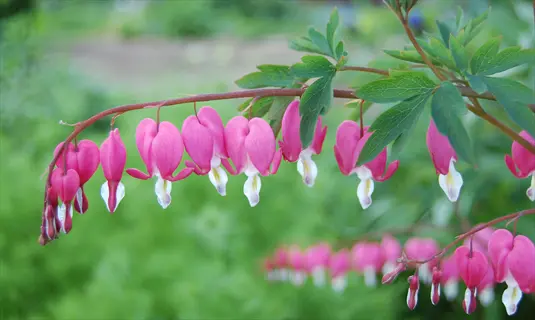
Bleeding Heart (Lamprocapnos spectabilis)
- Shade depth: Grows best in partial to full shade with cool, moist, woodland-style soil rich in organic matter.
- Flowers: Arching stems carry rows of heart-shaped pink or white blooms in spring, a true cottage-garden classic.
- Behavior: In hot climates it goes summer-dormant, dying back by mid to late summer, then returns the next spring.
- Pairing: Plant near later-emerging perennials like hosta or ferns to cover the gap it leaves when it fades.
- Care: Keep soil consistently moist and shaded; avoid hot afternoon sun, which scorches the soft foliage.
- Zones: Hardy across roughly USDA zones 3 to 9 and one of the most beloved spring shade bloomers.
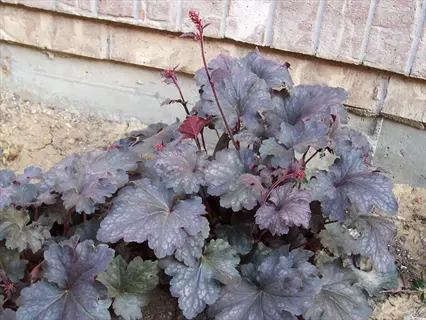
Coral Bells (Heuchera species)
- Shade depth: Suits partial shade and tolerates more sun in cool climates; grown chiefly for foliage, not bloom.
- Foliage: Mounds of ruffled leaves come in amber, purple, lime, silver, and near-black for vivid color all season.
- Buying tip: Choose thin, shiny-leaved types for cool dry shade and large, fuzzy-leaved types for warm, humid gardens.
- Flowers: Airy wands of tiny bells appear in early summer and draw hummingbirds to the shade border.
- Care: Wants well-drained soil; crowns can rot in soggy ground, so avoid waterlogged spots and plant slightly high.
- Zones: Hardy across roughly USDA zones 4 to 9 depending on the variety and parentage.
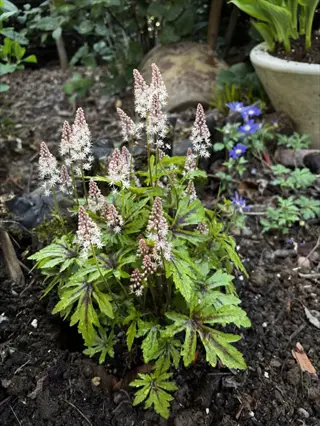
Foamflower (Tiarella species)
- Shade depth: A true woodland native that prefers partial to full shade with humus-rich, evenly moist soil.
- Foliage: Lobed, often maroon-veined leaves form a low spreading carpet that works as a soft groundcover.
- Flowers: Short bottlebrush spikes of white to pale-pink foamy blooms appear in spring above the foliage.
- Ecology: Native to eastern woodlands, it supports the kind of biodiversity covered later in this guide.
- Care: Low maintenance once established in moist shade; mulch with leaf litter to mimic its forest home.
- Zones: Hardy across roughly USDA zones 4 to 9 and excellent for naturalistic shade plantings.
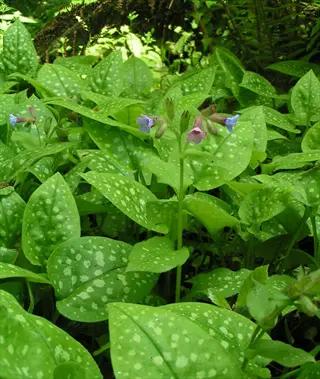
Lungwort (Pulmonaria species)
- Shade depth: Handles partial to full shade and is one of the most deer-resistant perennials for the shade bed.
- Foliage: Silver-spotted, fuzzy leaves brighten dim corners and stay handsome long after the flowers finish.
- Flowers: Early-spring blooms often open pink and age to blue on the same plant, feeding the first pollinators.
- Use: A strong texture and foliage choice that pairs with hosta and ferns for contrast in shady borders.
- Care: Prefers moist soil; keep it watered in dry shade to prevent the leaves from wilting and scorching.
- Zones: Hardy across roughly USDA zones 3 to 8 and valued for both early bloom and showy leaves.
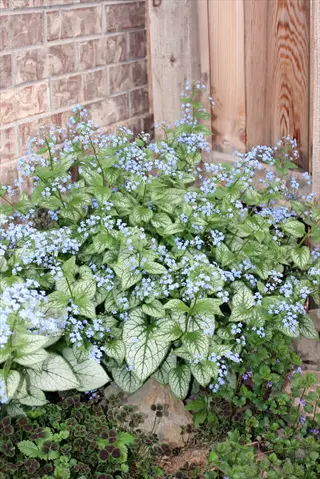
Siberian Bugloss (Brunnera macrophylla)
- Shade depth: Thrives in partial to full shade with moist soil and is prized for its bold heart-shaped leaves.
- Foliage: Silver-frosted varieties like the popular 'Jack Frost' light up shade with metallic, heart-shaped foliage.
- Flowers: Sprays of tiny sky-blue, forget-me-not-style blooms float above the leaves in mid to late spring.
- Use: A reliable foliage anchor for dark corners where its silvery leaves bounce what little light there is.
- Care: Keep soil consistently moist; the leaf edges brown in dry shade or harsh afternoon sun.
- Zones: Hardy across roughly USDA zones 3 to 8 and a low-care backbone for the shade garden.
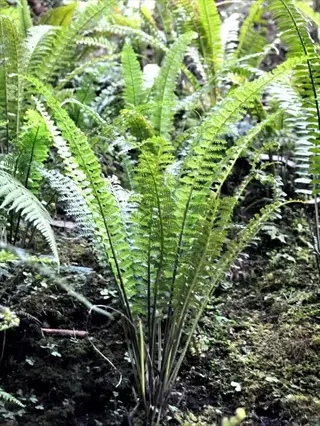
Ferns (various genera)
- Shade depth: From the ostrich fern to the Japanese painted fern, ferns suit partial to deep shade beautifully.
- Foliage: Their fine, arching fronds bring the airy texture that contrasts with broad hosta and bold brunnera leaves.
- Variety: Japanese painted fern adds silver and burgundy tones, while ostrich and cinnamon ferns add height.
- Ecology: Many are native woodland species that knit a shade bed into a natural, layered planting.
- Care: Most want moist, humus-rich soil; a few like Christmas fern tolerate drier shade once established.
- Zones: Different ferns span roughly USDA zones 3 to 9, so there is a hardy choice for nearly every garden.
Lungwort, brunnera, and the rest split into two simple jobs in your shade bed. Some bring color through their leaves and some bring it through their blooms. Use both and a flat green corner gains contrast you can see from across the yard. That mix is what turns a shade garden from a problem into a feature.
Know Your Shade First
The fastest way to kill a shade plant is to buy it before you know your shade. Not all shade is the same, and the right shade perennials for one spot will sulk or rot in another. So start with the ground you have, not the plant you want.
Most experts split shade two ways. Iowa State University Extension keeps it simple with full shade and partial shade. Full shade is the tough zone: the north side of a building or the ground under a dense tree canopy, where almost no direct sun lands. A common garden rule of thumb pegs full shade at 4 hours or less of direct sun a day, though that number is a convention, not a hard law.
Partial shade is the friendlier spot. It gets a few hours of direct sun, often in the morning, but sits in shade for most of the day. East-facing beds and the edge of a tree line fall here. This is where the widest range of plants will be happy.
Purdue Extension splits the same ground three ways and adds a useful middle term. Filtered light under an open tree is dappled shade. True woodland gloom is dense shade. A spot blocked part of the day by a wall or fence is intermittent shade. Don't treat these labels as a contest. Iowa State and Purdue just describe the same yard with different rulers, so use whichever names help you picture your own beds.
Light is only half the story. The other half is water, and this trips up more gardeners than the sun ever does. Dry shade sits under tree canopies and along house eaves, where greedy roots and the roof itself steal the rain before it reaches your plants. Cool, moist shade in an open low spot is a whole different home, even if both read as shady on paper.
Dry shade is one of the most limiting for gardeners and plant lovers.
So before you spend a dime, read your spot. Watch one patch of ground across a full day and note when the sun hits it and for how long. Then watch it across the seasons too. Purdue points out that wooded ground gets far more light in winter and early spring. The trees have not leafed out yet. So a bed that looks black in July may be bright in April. That single habit of watching first will save you more dead plants than any list of names can.
Foliage-First Garden Design
Most shade gardens fall flat because people chase flowers first. In a dim corner, blooms come and go in a week or two, then the bed has nothing left to hold your eye. A foliage-first plan flips that order. You build the bed around leaves, and you treat any flower as a happy bonus.
This works because low light changes what your eye notices. Shade mutes color, so a red petal reads as a dull spot from across the yard. Leaf shape and foliage texture do the real visual work instead. A broad leaf next to a fine one creates depth that no flower in a dark spot can match.
The fix is simple. You contrast forms textures colors in the leaves you plant together. Set a broad, rounded hosta beside the fine, arching fronds of a fern, and the shape gap alone carries the whole group. Then push it with leaf color, like a silver brunnera set against a dark heuchera.
Below are four ways to put this to work. They run from leaf shape and texture to color and season-long interest that keeps the bed sharp for months.
Contrast leaf shape and form
- Why it works: In low light, the eye reads outline and form before color, so mixing leaf shapes creates instant depth.
- How to do it: Set broad, rounded hosta leaves beside fine, arching fern fronds for a clear shape contrast.
- Anchor plants: Use bold-leaved hosta or brunnera as structure and weave airy ferns and grasses between them.
Layer foliage texture
- Why it works: Texture contrast keeps an all-green shade bed from looking flat and monotonous from a distance.
- How to do it: Combine glossy, matte, and fuzzy surfaces, such as smooth hosta, fuzzy lungwort, and ruffled heuchera.
- Quick win: Japanese forest grass adds a flowing, fine texture that softens stiffer mounding plants nearby.
Use leaf color and variegation
- Why it works: Pale and silver foliage bounces what little light reaches a dark corner and brightens the whole bed.
- How to do it: Place silver-frosted brunnera or variegated hosta where you want a dim spot to feel lighter.
- Bold accents: Dark heuchera and burgundy-tinged Japanese painted fern add depth and stop a green scheme feeling plain.
Plant for season-long interest
- Why it works: Foliage holds the bed together for months, long after individual flowers have faded for the year.
- How to do it: Combine spring bloomers like bleeding heart with foliage that stays handsome into autumn.
- Sequencing: Pair early ephemerals with later-emerging hosta and ferns so the bed never looks bare.
None of this is just a personal style choice. Garden experts at Colorado State University build their shade advice on the same idea. They put it plainly.
The key to a successful shade garden is to combine and contrast the forms, textures and colors of the leaves.
Native Shade Perennials
One April morning I watched a soft blue haze light the damp north-facing corner where my lawn meets the woods edge. From the kitchen window the pale Virginia bluebells seemed to glow against the dark, wet ground. By July that whole patch had vanished. The plants died back to nothing and left bare soil for the ferns to fill.
That patch shows why native shade plants matter so much. Virginia bluebells are a spring ephemeral, so they push up, bloom, feed the first bees, and go dormant before summer heat arrives. That early window matters because few other plants are open then. The bees that find your woodland natives in March and April often have nothing else to eat.
The case for natives is not just a pretty plant list. Maryland Extension gives a real target here. Aim for at least 80% natives by cover if you want true biodiversity in the bed. Hit that mark and your shade garden starts to support pollinators, songbirds, and the bugs that overwinter under the plants. A row of fancy hybrids cannot do that same work.
There is a low-effort bonus here too. Undisturbed leaf litter acts as a natural weed barrier, so you rake less and weed less. That same litter is overwintering habitat for beetles, native bees, and the larvae songbirds feed their chicks in spring. A native bed you barely touch doubles as wildlife support, which is rare in the garden world.
Virginia Bluebells (Mertensia virginica)
- Bloom: Nodding clusters of pink buds open to sky-blue bells in early to mid spring, feeding the season's first bees.
- Habit: A spring ephemeral that emerges, flowers, and goes dormant by summer, so pair it with later-emerging plants.
- Value: A classic eastern woodland native that supports early pollinators when little else is in bloom.
Christmas Fern (Polystichum acrostichoides)
- Foliage: Evergreen, leathery fronds hold their green through winter and tolerate drier shade than most ferns.
- Use: A reliable native groundcover and texture plant for slopes and dry shade under deciduous trees.
- Value: Provides year-round cover and structure in the herbaceous layer of a native woodland planting.
Cardinal Flower (Lobelia cardinalis)
- Bloom: Tall spikes of vivid red flowers light up partial shade in late summer and draw hummingbirds reliably.
- Site: Native to moist woodland edges and streamsides, so it wants consistently damp, rich soil to thrive.
- Value: One of the few bold red bloomers for shade and a strong late-season pollinator plant.
Foamflower (Tiarella cordifolia)
- Bloom: Frothy spikes of white spring flowers rise above lobed, often maroon-veined evergreen-ish foliage.
- Habit: Spreads gently into a low woodland groundcover that knits the herbaceous layer together.
- Value: An eastern native that supports the layered, biodiversity-friendly planting Maryland Extension describes.
Some plants sold as native are not truly native to your region, so check a local native plant list before buying rather than trusting a nursery label alone.
Pair these plants smart and you get color from spring through late summer. Because spring ephemerals like bluebells go dormant by June, you can double plant that same ground with Christmas fern or cardinal flower. The ferns and later bloomers fill the gap, so the bed never looks bare and the soil stays covered all season.
Solving Dry Shade Under Trees
The patch of bare ground under trees is where most shade gardens go to die. The soil looks fine, but it stays bone dry because the tree drinks first. This is dry shade, and Minnesota Extension calls it one of the hardest spots a gardener can plant.
The real enemy here is root competition. A mature tree has a huge web of roots near the surface, and those roots soak up rain before your perennials ever get a sip. Think of it like sharing one glass of water that is already almost empty. You can pour more in, but the tree gulps most of it down.
You can still win this spot with two moves. First, amend soil with compost or peat to a depth of 6 to 8 inches (15 to 20 cm) before you plant. Then pick tough plants that shrug off root competition, like hosta, Ligularia, and Heuchera. These three take low light and dry roots better than almost anything else.
Watering is the other half of the job. When the soil dries out, soak it deep enough to wet the top 3 to 4 inches (8 to 10 cm), not just the surface. A quick sprinkle never reaches your plants because tree roots grab it first. Follow the steps below and that dead zone becomes a real bed.
Work compost or peat into the bed to a depth of six to eight inches (15 to 20 cm) so new roots find moisture and nutrients despite the tree roots already there.
Pick proven dry-shade performers such as hosta, Ligularia, Heuchera, and Christmas fern that cope with both low light and root competition.
Set plants out when the weather is cool and damp so they establish roots before the dry stress of summer arrives under the canopy.
When the soil is dry, water to saturate the top three to four inches (8 to 10 cm) rather than giving frequent shallow sprinkles that tree roots intercept first.
Spread a layer of leaf litter or bark mulch to slow evaporation, suppress weeds, and feed the soil as it breaks down.
Plan on supplemental watering during dry stretches, at least until your plants settle in. The tree will always drink first, so a deep soak every week or two keeps your perennials from losing the fight. Skip this and even the toughest picks will sulk by midsummer.
Even tough dry-shade plants need extra water through their first full growing season; once established, their roots compete with the tree far better.
Care, Soil, and Common Traps
One soggy spring the crowns of my hostas in the back corner turned brown and mushy, right where the lawn meets the woods edge. That north-facing spot stayed damp for days after every rain, and the leaves flopped over like wet paper. I dug one plant up and found the roots sitting in a pocket of standing water that never drained away.
I cut a shallow channel to carry the water off and worked grit and compost into the heavy soil. The next year the same plants pushed up firm, healthy growth. Poor drainage killed those crowns, not a lack of water, and that one fix saved the whole corner.
Drainage trips up more shade beds than any other trap. Wet soil with bad drainage is a harder problem than dry ground, and you have to solve it before you plant anything. Standing water leads straight to crown rot, which turns the base of a plant soft and brown until it collapses. Fix the grade or add grit first, then set your plants.
Light causes a quieter failure. Some shade plants make lush leaves but almost no flowers when the spot is too dark for them. If a plant leafs out yet never blooms, it needs more light than that corner gives, so move it or swap in something grown for foliage. The checklist below keeps a shade bed healthy from the soil up.
- Fix drainage first: Before planting, correct soggy ground; standing water causes crown rot in hosta, heuchera, and many shade perennials far faster than dry soil ever will.
- Amend the soil: Mix compost into the bed 6 to 8 inches (15 to 20 cm) deep so plants get the rich, woodland-style soil most shade perennials want.
- Match light to plant: If a plant makes leaves but no flowers, it likely needs more light than that spot offers, so move it or swap in a foliage-first plant.
- Divide every few years: Lift and divide perennials like hosta and astilbe when clumps crowd, which keeps them vigorous and gives you free new plants.
- Choose spreaders knowingly: Goutweed, lily of the valley, and creeping bellflower are invasive shade plants that run hard, so set them only where you can contain them.
- Water deeply in dry spells to give roots consistent moisture, especially under tree canopies where they compete for every drop.
Most of the shade canon is tough. These plants are hardy across roughly USDA zones 3 to 9, so soil and drainage matter more than winter cold for many of us. Climate still shapes how plants behave. In hot regions bleeding heart and columbine often go summer-dormant, fading back by midsummer, then return the next spring. That dieback looks like death but is a normal rest, not a problem to fix.
Deer and snails are the main pests of hostas. If browsing is heavy, lean on tougher plants like ferns, lungwort, and hellebore instead.
5 Common Myths
Nothing worth growing will survive in a fully shaded part of the yard, so a dark corner is a lost cause for any gardener.
Many perennials are adapted to woodland shade and thrive there; the problem is plant choice, not the shade itself.
Shade perennials are all green, flowerless foliage plants that bring no real color or seasonal interest to a garden bed.
Astilbe, bleeding heart, hellebore, and coral bells add bloom and vivid foliage color across spring, summer, and fall.
Shade automatically means cool, damp soil, so any plant you pick will get all the moisture it could ever need.
Shade under tree canopies and eaves is often dry because roots and structures steal rainfall before it reaches the bed.
Once a shade bed is planted it cares for itself completely, needing no watering, dividing, or soil work ever again.
Shade beds still need soil amendment, occasional dividing, and deep watering in dry spells to stay healthy and full.
Hostas are deer proof, so planting them anywhere keeps your shade garden safe from being eaten by browsing wildlife.
Deer and snails are the main pests of hostas; lungwort, ferns, and hellebore are far more deer resistant choices.
Conclusion
The best shade perennials reward you when you read the spot first and pick the plant second. Watch your corner for a day. Note how much direct sun it gets and whether the soil dries out fast, then match a plant to that exact mix of light and moisture.
Keep the anchor numbers close as you plant. Full shade means roughly 4 hours or less of direct sun, so set your expectations there. Dig in compost 6 to 8 inches deep before anything goes in the ground, and the roots will thank you for years. If you want a bed that feeds pollinators and songbirds, aim for at least 80% native shade plants by cover.
Design the bed foliage-first and the flowers become a bonus, not the whole show. Shade flowers come and go in weeks, but bold hosta leaves, lacy ferns, and the fine texture of foam flower carry the bed from spring to frost. Contrast the leaf shapes and colors and the whole corner reads as full and rich, even in deep shade where few blooms appear.
A dark corner is not a problem to fix. It is the spot where woodland plants feel at home, and it can end up the lushest part of your yard. Start small with one or two sure things like hosta and astilbe, learn how they behave through a season, then add a native or two each year. More people want gardens that are low-maintenance, native, and friendly to bees and birds. A good shade garden gives you all three at once.
Glossary
- Crown rot
- Rot at the base of a plant where stems meet roots, usually caused by soggy, poorly drained soil.
- Dappled shade
- Soft, shifting light that filters through the branches of an open tree canopy.
- Dry shade
- A shaded area that also stays dry because tree roots or structures intercept rainfall before it reaches the soil.
- Full shade
- A spot that gets four hours or less of direct sun per day, often only filtered or dappled light.
- Perennial
- A plant that lives for several years, regrowing from its roots each season instead of being replanted.
- Spring ephemeral
- A woodland plant that emerges, flowers, and then dies back to dormancy by early summer.
- Summer dormancy
- When a plant naturally dies back and rests during hot summer weather, then returns later.
- Variegation
- Patterned leaf coloring, such as white, gold, or silver markings, that brightens foliage.
External Sources
Frequently Asked Questions
What are the best perennials for shade?
The most reliable shade perennials are hosta, astilbe, bleeding heart, coral bells, foamflower, lungwort, brunnera, and ferns.
What plants come back every year in the shade?
Hardy shade perennials such as hostas, ferns, astilbe, bleeding heart, and lungwort regrow from their roots each spring.
What is the longest blooming shade perennial?
Coral bells, astilbe, and corydalis hold flowers or colorful foliage longer than most other shade perennials.
Can hostas grow in full shade?
Yes, hostas tolerate full shade, though many varieties color best with a little filtered or dappled light.
What flower needs the least amount of sun?
Hellebores, foamflower, and several woodland natives flower with very little direct sun.
Do any flowering shrubs grow in full shade?
Yes, shrubs like mahonia, thimbleberry, and many hydrangeas flower in full or deep shade.
How do you garden in dry shade under trees?
Choose tough plants like hosta, Ligularia, and Heuchera, amend the soil, and water deeply to beat tree-root competition.
Why won't my shade plants flower?
Many shade perennials make lush foliage but few flowers when light is too low for that species.
What perennials bloom all summer in the shade?
Astilbe, corydalis, hardy geranium, and coral bells give the longest summer color in shade.
Are shade perennials deer resistant?
Many shade perennials like ferns, lungwort, and hellebore resist deer, but hostas are a known favorite.