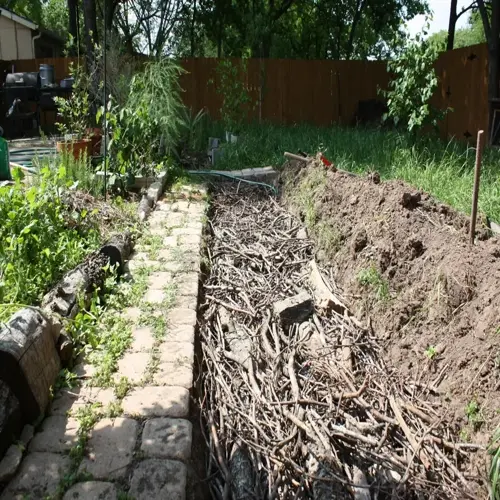

A heaped barrow of fresh mowings sat by the fence-line bed one July, and I tipped the whole green pile on at once. Four days later it had packed into a sour, slimy mat that smelled like a clogged drain, and I pulled it off in wet, ropey sheets. Yes, clippings belong in a grass clippings lasagna garden, and they are one of the best free materials you have. That slimy mat is just what happens when you forget the one rule about them.
Clippings count as a strong green nitrogen layer. That is the wet, lively material that feeds the dry brown stuff and gets your whole bed cooking. So building a grass clippings lasagna garden is a smart move. The catch is all in how thick you spread them, not whether you use them at all.
Grass is loaded with nitrogen and water. Pile it on thick and the clippings press into a dense slab. That slab blocks air from moving through the layer. With no air, the wrong microbes take over and the grass goes anaerobic. That is the rot you smell in a slimy mat. Thin layers let air reach the grass, so it breaks down clean and fast instead.
This is why thin matters so much with fresh grass clippings. Spread each green layer about 1 to 2 in (3 to 5 cm) deep, and no more than that. Then cover it with a dry brown carbon layer. Use dead leaves, straw, or shredded cardboard for the brown. The browns soak up the extra water and hold open little gaps so air can keep moving.
Pile grass clippings on too thick and they turn into a slimy, sour mat. Keep each green layer to about 1 to 2 in (3 to 5 cm) and sandwich it between dry brown layers.
Both Clemson and Cornell extension guides treat clippings as a green layer and push the same balance. They aim for roughly four parts brown to one part green as you stack the bed. That ratio keeps the carbon high enough that your nitrogen-rich grass never sits in a wet clump. So build the bed like a sandwich. Lay green, then brown, then green again, all the way up to the top.
A few simple habits will keep you out of my fence-line mess. Let wet clippings dry on the lawn for a day before you rake them. Drier grass packs down far less than wet grass does. I always rake mine the morning after I mow for that reason. The clippings spread loose and never knit into a mat on me anymore.
Where the grass comes from matters as much as how you spread it. Only use a lawn that you have not treated with weed killer. Some herbicides stay active in the soil for months. They can stunt or twist your vegetables long after the grass looks gone. So if your own lawn gets sprayed, ask a neighbor with an untreated yard for their clippings instead.
One last thing trips up a lot of new gardeners. Never use grass that has gone to seed. A lasagna bed stays cool, so it does not heat up like a hot compost pile. Those grass seeds live right through the cold layers. Then they sprout in your new bed and you spend the season pulling lawn out of your lettuce. A friend who runs a market garden told me she learned that the slow way.
Keep every layer thin and you turn a yard chore into free garden food. Two inches of grass at a time, always with a brown layer right on top. Do that and your clippings rot down into rich, dark soil instead of the slimy mat I once peeled off by the fence.
Read the full article: Lasagna Gardening: No-Dig Beds Made Easy