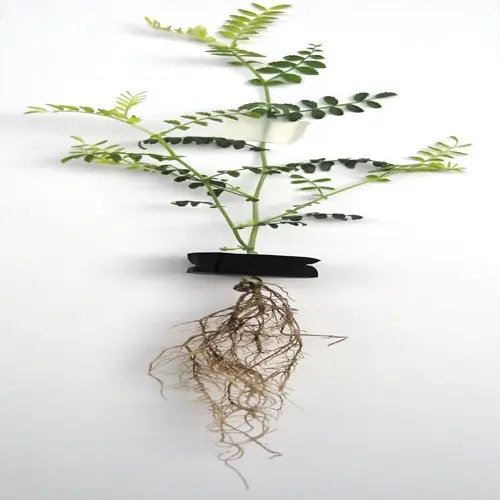

"How are your tomatoes already that big?" My neighbor leaned over the fence with a tray of her own thin, pale starts. I grew mine on a basement shelf under cheap LED shop lights, planted in a sterile mix on a heat mat. That setup is the best seed starting method for most home gardeners, and it comes down to giving a seed the few things it needs at the same time.
Here is what those things are. A seed needs four things to sprout, says UGA Extension. They are water, oxygen, light, and warmth. The process kicks off when the seed soaks up water. Then the embryo inside wakes up. Miss any one of the four and the seed either sits there or sprouts weak. So the whole point of starting seeds indoors is to give a seed all four at once instead of leaving it on a cold, unpredictable windowsill. You set up the right seed germination conditions on purpose.
Start with a sterile, soilless seed starting mix rather than garden dirt. Garden soil packs down, drains poorly, and carries fungi. Those fungi cause damping off, the disease that topples your healthy seedlings at the soil line. A light mix holds water but still lets air reach the roots, which covers two of your four factors right away. You give your seeds a clean start.
Warmth comes next, and this is where most people fall short. Indoor potting mix runs up to 5°F cooler than the room air around it. A seedling heat mat fixes that. You want the mix to sit at 65 to 75°F (18 to 24°C), the range that gets most seeds moving. Bottom heat also helps keep the surface from staying soggy, which lowers your damping off risk. Once seeds sprout, you can ease the temperature down toward the low end of that band.
Light is the factor people get wrong most often. A south window rarely gives enough, and weak light is the main cause of leggy, stretched stems. Run a grow light for 14 to 16 hours a day and keep it 2 to 4 inches (5 to 10 cm) above the leaves, raising it as the plants grow. Seedlings draw their first energy from the seed itself, so hold off on fertilizer until they push out several sets of true leaves.
Pack trays with a sterile seed starting mix and dampen it so it feels like a wrung-out sponge, not muddy.
Set seeds at a depth of about twice their width, then cover them with a light layer of mix or vermiculite.
Place trays on a heat mat to hold the mix at 65 to 75°F (18 to 24°C) until the seeds break the surface.
Once you see green, give 14 to 16 hours of light a day with the bulbs 2 to 4 inches above the leaves.
Timing matters too. Sow most of your crops about 6 to 8 weeks before your last frost. Then harden them off outdoors for a week or two before they go in your garden. Expect a wide window for sprouting, since some of your seeds break through in 3 days and others take up to 3 weeks, so do not toss a tray that looks slow.
One last habit makes the biggest difference. Sow sparingly. Crowded cells force seedlings to fight for light and air, which breeds thin stems and disease. Drop one or two seeds per cell, thin to the strongest, and you get sturdy plants worth the space on your shelf.
Read the full article: Seed Starting: A Complete Beginner Guide