Ornamental · Poaceae
Blue Fescue
Festuca glauca
A spirited silver-blue tuft that thrives on the hot, dry, lean ground other plants quit.
Full sun
Every 7–14 days
USDA 4–8
8–12 in · 20–30 cm
Overview
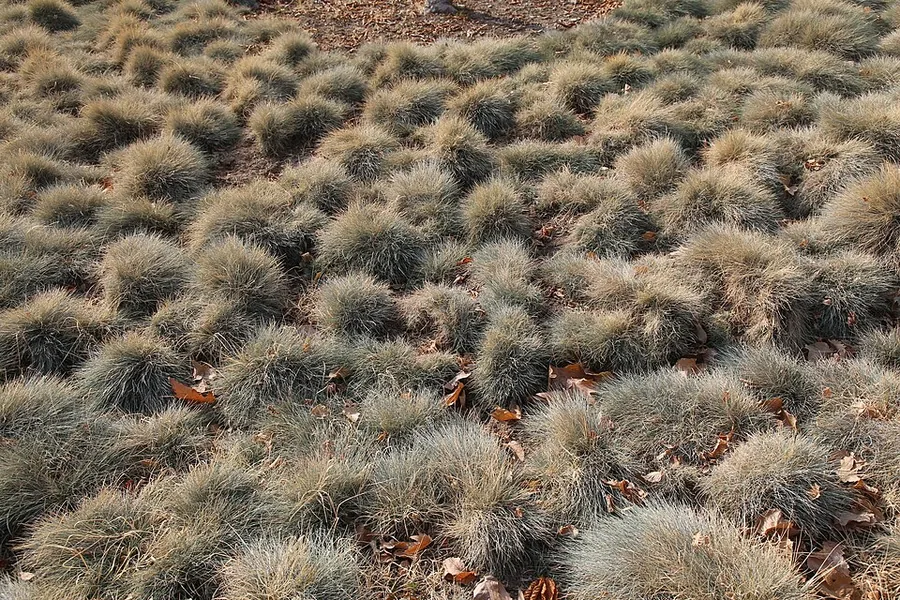
Blue fescue packs a lot of character into a small, tidy ornamental grass, mounding into a rounded silver-blue tuft about a foot tall. It hails from the cooler parts of Europe and wins its spot through color and form rather than size, holding a crisp dome all season. Plant it where the blue catches the light against gravel, dark mulch, or greener neighbors and it really comes alive.
Best of all, it rewards a hands-off gardener. Give it full sun and sharp drainage in lean or rocky soil and it powers through drought and cold all the way to zone 4. Rich ground and wet roots are what trip it up, leaving the clump floppy or rotted, so plant it tough and water it light and it just keeps performing.
There is one quirk to work with: its short life. A clump tends to hollow out from the middle after 2 to 3 years, which simply means dividing it or starting fresh on a regular cycle. Stay on top of that, keep it in full sun, and a run of blue domes comes back sharp year after year.
Care
The short version: full sun, lean and sharply drained soil, and light water once it gets going. Feed it almost never, shear it back in early spring, and divide the clump every 2 to 3 years before the center dies out.
Light
Hand blue fescue full sun and watch the silver-blue come through at full strength, because that light is exactly what fires up the color. Park it in too much shade and it greens up and flops. It tolerates light shade, but the foliage clearly misses the sun.
Water
Once it is established this grass powers through drought, so water it sparingly and let the soil dry out between drinks. It really dislikes wet, soggy ground, and overwatering is the quickest path to a rotted crown, so leaning dry keeps it thriving.
Soil
Drop it into average to lean, sharply drained soil, even poor, dry, rocky ground, and it digs right in. Wet or heavy clay rots it, so drainage beats fertility every time here. Any pH from 5.5 to 7.5 keeps it humming.
Temperature
It is impressively cold-hardy, charging through winters down to about -29°F (-34°C) and summer heat up to 86°F (30°C). The real challenge is a hot, humid summer rather than temperature alone, which can drag it into decline.
Humidity
Low humidity is its happy place, right in line with its love of dry soil. Hot, muggy summers are the tough stretch and can rot or fade the clump, so good airflow and dry roots pay off big.
Feeding
Feed it almost never and it thanks you for it. One light feeding in spring is all it asks, and rich soil backfires by pushing floppy, weak growth. Lean ground is where this grass truly shines.
Pruning
Come early spring, shear or comb the clump back to about 3 to 4 inches to strip out the old brown blades before fresh growth surges up. That single yearly haircut keeps the tuft crisp and renewed.
Repotting
Skip the pot and divide the clump every 2 to 3 years to keep it charging along. A brown, bare center or a thinning tuft is the plant flagging that it is ready to lift and split.
Size & spacing
Each plant stays compact, topping out around 8 to 12 inches (20 to 30 cm) tall and about the same across. Set them roughly 10 to 12 inches (25 to 30 cm) apart so every blue dome stands out as its own mound.
When to plant
Blue fescue runs on a cool-season schedule, doing its real growing in the milder shoulders of the year. Get new plants in during spring after the last frost or in early fall, and watch for its modest flower spikes from late spring into early summer. Early spring is also prime time to shear and divide.
Northern hemisphere
Southern hemisphere
Typical months for a temperate climate: start earlier in warm zones, later where spring frosts linger.
- Sow: Late winter to early spring (species only; named blue cultivars do not come true from seed)
- Plant: Spring after last frost or early fall
- Harvest: Late spring to early summer (June-July)
Hardiness
USDA hardiness zones: 4–8
Temperature: down to -34°C
Troubleshooting
Most blue fescue snags come down to one of two things: too much water or too little sun. The center dying out as a plant ages is the other near-certainty, and it is an easy one to turn around. Find your match below and a quick move, a haircut, or a division usually does the trick.
Yellowing, collapse, and a mushy crown
Wet feet are almost always the culprit. Heavy, rich, or poorly drained soil drives crown and root rot, and a hot, humid summer can shove a plant into the same slide. Shift it to lean, sharply drained ground in full sun, dial back the water, and cut the tired foliage so it springs back once the weather cools.
Fix:
- Move or replant in sharply well-drained, lean soil with full sun
- Reduce watering and avoid wet feet
- Cut back declining foliage and allow recovery in cooler weather
Bare brown center wrapped in a ring of green
No need to fret, this is just the plant's short life in action, since blue fescue starts emptying from the center after 2 to 3 years. A crowded clump that has gone too long without a split hits that point faster. Dig the whole thing in early spring, toss the dead middle, and replant the lively outer pieces for a fresh start.
Fix:
- Dig up the entire clump in early spring
- Discard the dead center and divide the vigorous outer portions into smaller sections
- Replant the divisions in well-drained soil and water in
Blue slipping toward plain green
That standout silver-blue is a sun effect, so a plant stuck in too much shade greens up and loosens. Age chips in too, with older clumps drifting greener over summer. Move it into full sun and divide tired clumps to fire the brightest blue right back up.
Fix:
- Transplant to a full-sun location
- Divide and replant aging clumps to restore vigor and color
Toxicity
Great news for anyone with pets or grazing animals: blue fescue is not toxic. It is a true grass with no poisonous parts, perfectly safe around cats, dogs, horses, rabbits, and livestock. A pet that nibbles too much might bring it back up like any grass, and the pollen can nag at hay fever sufferers, but nothing in this plant will poison a single creature.
Safe for
People · Cats · Dogs · Horses · Rabbits · Livestock · Birds
Cats None
A cat is in the clear around it, since the plant carries nothing harmful. Chew a few blades and a cat might bring them back up, the usual grass routine, and that is all.
Dogs None
No toxins to deal with here, so a dog can nose right through it. The worst case is a big mouthful of grass resurfacing a little later.
Horses Safe
Horses are totally fine grazing it. As a true grass, a mouthful causes no trouble at all.
Rabbits Safe
Rabbits browse fescue without harm, and rabbits and deer grazing the clumps is actually one of the reasons gardeners reach for it.
Livestock Safe
Cattle, goats, and sheep are all safe with it. Fescue is a common pasture grass, and this ornamental form behaves the same.
Birds Safe
Nothing in the plant threatens birds, and the seed heads pull in finches and other small feeders.
People Safe
People are safe around it too. The one thing to flag is grass pollen, which can set off hay fever in anyone already sensitive to it.
Not poisonous, but pets that nibble grass may vomit, and grass pollen can aggravate allergies in sensitive people.
Varieties
Most garden blue fescue comes down to a few named selections, sorted mainly by how blue they run and how well they take the heat. These are the ones worth chasing down.
Elijah Blue
Elijah Blue leads the pack as the most widely grown cultivar, loved for its soft, silvery powder-blue blades.
Boulder Blue
Boulder Blue brings fine texture in steely slate-blue and powers through heat and drought better than most.
Cool as Ice
Cool as Ice earns its spot with an especially icy silver-blue, the coolest tone in the group.
Beyond Blue
Beyond Blue, a sport of Elijah Blue, holds its blue longer and shakes off the heat and humidity that fade the rest.
How to propagate
Division is the go-to way to turn one blue fescue into several, and the bonus is it revives an aging clump at the same time. Seed grows the plain species just fine, though it won't carry the named blue selections.
DivisionEasy
Early spring · 4-8 weeks
Division is the move here, since the named blue cultivars won't come true from seed and splitting an old clump locks in both the color and the form. Dig and split in early spring, replant the lively outer pieces, and they settle in over the next 4 to 8 weeks. Even better, it doubles as the fix for a clump that has died out in the middle.
SeedEasy
Late winter to spring · 4-8 weeks
You can raise the plain species from seed sown late winter into spring, and it roots in about 4 to 8 weeks. Keep in mind seedlings vary a lot in color and the named cultivars won't come true this way, so seed is the play for the species rather than a prized blue selection.
Myths
Blue fescue is a plant-once-and-forget grass that lasts for years.
Truth is, it is a short-lived cool-season grass, and the center of the clump tends to hollow out within 2 to 3 years. Keep it looking sharp by dividing it every few years or replacing it once it runs out of steam.