Tree · Cupressaceae
Green Giant Arborvitae
Thuja 'Green Giant'
Give it full sun and room to spread, and this tree throws up a living privacy wall fast.
Full sun
Every 7–14 days
USDA 5–8
40–60 ft · 12.2–18.3 m
Overview
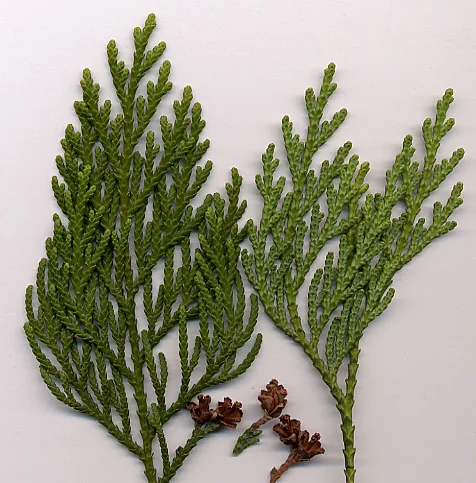
Green Giant arborvitae is the plant to grab when a yard needs a tall, dense screen fast. It's a hybrid evergreen in the cypress family, crossed from two Thuja species, and once it digs in it can pack on several feet of growth a year. Line a few up and they lock together into a solid green wall that beats back wind, muffles noise, and closes off the neighbor's view.
Don't let the word arborvitae sell it short. This is a forest-scale tree that rockets to 40 to 60 feet tall and fills out to 12 to 18 feet wide, carrying a narrow pyramid shape and soft, scale-like foliage that stays green straight through winter. The 'Green Giant' name is no exaggeration. Hand it the space it truly wants and it repays you with almost no work.
What makes it such a joy to grow is how tough and easygoing it is. It brushes off most pests and disease, deer steer clear of it, and it takes on a wide sweep of soils without blinking. The one thing that trips it up is a soggy, poorly drained spot, where root rot creeps in and can drag the whole plant under.
Care
The short version: plant it in full sun in well-drained soil, hand it room to hit its full 40 to 60 feet, and keep it watered through the first couple of years while the roots dig in.
Light
Green Giant charges ahead in full sun, where it stays dense from the ground to the tip. It tolerates partial sun or light shade, but the deeper the shade, the thinner and looser the foliage gets, so give it all the light you can.
Water
Keep the soil moist for the first one to two years while the roots take hold, watering roughly every 7 to 14 days. Once it settles it shrugs off short dry spells, though steady moisture in well-drained soil is what really floors the growth pedal.
Soil
It isn't picky and grabs clay, sand, and just about everything between, as long as the ground drains. A moist, fertile, well-drained loam hits the sweet spot, and it powers through a wide pH band from 5.5 to 8.0.
Temperature
This cold-hardy tree stays game from about -20°F to 100°F (-29°C to 38°C), which spans USDA zones 5 through 8. It grips its color through brutal winters, though a biting wind can scorch the foliage left out in the open.
Humidity
Plain outdoor air suits it just fine, so there's no humidity number to chase. What counts more is good airflow between plants, since crowding traps moisture and stirs up trouble.
Feeding
In decent soil it barely wants feeding. If growth looks weak, work a balanced slow-release tree fertilizer into the soil in spring, but skip it on plants already surging along.
Pruning
Green Giant asks for little to no pruning and holds its shape on its own. Shear it in late spring or early summer only when you're driving it as a hedge, and tie up or pull extra leaders so snow can't wrench them apart.
Repotting
It's a landscape tree, not a pot plant, so repotting barely enters the picture. In a nursery pot, watch for roots circling or bursting out the drainage holes, the cue to rush it into the ground.
Size & spacing
Line up a mature tree of 40 to 60 feet (12 to 18 m) tall and 12 to 18 feet (3.7 to 5.5 m) wide, and space a screen with that full spread locked in. Crowd it and you'll end up wrestling oversized plants jammed against the house and lines.
When to plant
It's grown for its evergreen foliage, so skip any bloom or harvest to time. Get new plants in the ground in spring or fall, when the soil works easily and the weather stays mild, and let that cooler stretch drive the roots home before summer heat or winter cold hits.
Northern hemisphere
Southern hemisphere
Typical months for a temperate climate: start earlier in warm zones, later where spring frosts linger.
- Plant: spring or fall
- Harvest: non-flowering (grown for evergreen foliage)
Hardiness
USDA hardiness zones: 5–8
Temperature: down to -29°C
Troubleshooting
A thriving Green Giant hardly ever throws you a curveball, and the few it does tend to flare up in the foliage or right after a rough winter. Nail the difference between winter burn and a pest, or a wet-site slump and plain drought stress, and you can pounce before anything spreads. Match what you spot below, then move while it still counts.
Whole tree yellowing and sliding downhill on wet ground
A plant fading all over on soggy, heavy ground almost always points to root rot, with Phytophthora moving in wherever the soil stays wet. Dig down and the roots turn up dark, soft, and discolored. Nothing rescues it easily once it grips, so jump on the drainage, cut the watering back hard, and yank any badly hit plants before it marches to the rest.
Fix:
- Improve drainage and stop overwatering
- Avoid planting in low, waterlogged spots
- Remove severely affected plants to limit spread
Brown, scorched foliage turning up after a hard winter
Chalk this up to winter burn, which bites hardest on the wind- and sun-facing side. The foliage keeps shedding water while the frozen roots sit stuck with none to send up, so the tissue dries and bleaches instead of spotting. Soak it deeply in fall before the ground locks, pack mulch over the roots, and let spring growth reveal the survivors before you snip a thing. It bounces back stronger than you'd expect.
Fix:
- Water deeply in fall before the ground freezes
- Prune out clearly dead tissue once new spring growth shows what survived
- Apply mulch over the root zone to extend water uptake
Thinning branches strung with small spindle-shaped bags
Those dangling cases give away evergreen bagworm caterpillars, which chew through the foliage and haul their armor along for the ride. Hunt the twigs for the bags, 0.25 to 2 inches long and stitched from scraps of the plant itself. Snap them off through fall and winter before the eggs hatch, then hit any young larvae with Bt in late spring, and you'll keep this pest from ever gaining a foothold.
Fix:
- Hand-pick and destroy bags in fall, winter or early spring before eggs hatch
- Spray Bacillus thuringiensis (Bt) on young larvae in late spring/early summer, repeating every 7 to 14 days
Branches splayed wide or snapped after a snowstorm
That slim pyramid grabs snow and ice, and the piled-on weight pries multiple leaders apart or cracks them clean off. Knock the snow off before it settles and freezes, and lash the upright stems together with soft ties so they hold their line. Grab a single-leader plant from the start and you sidestep nearly all of this trouble.
Fix:
- Gently brush snow off before it accumulates and freezes
- Tie multiple leaders together with soft material for support
- Prune cleanly broken branches
Dull, bronzed foliage flecked with fine webbing
Hot, dry spells wake up spider mites, which drain the color from the foliage and leave it stippled and bronze. Catch them fast: hold white paper under a branch, tap, and watch the tiny specks scramble across it. A hard jet of water sends most of them flying, horticultural oil crushes a heavy run, and simply keeping the tree watered through the heat shuts them out from the start.
Fix:
- Spray foliage with a strong jet of water to dislodge mites
- Treat heavy infestations with horticultural oil or miticide
Toxicity
Keep Green Giant arborvitae off the menu, but relax, a casual nibble reads as an upset stomach, not an emergency. The foliage packs thujone, an oil that can irritate the stomach and skin of pets, livestock, and people. The real hazard is concentrated arborvitae essential oil, which should never sit anywhere animals can reach it.
Toxic to
Cats · Dogs · Horses · Rabbits · Livestock · Birds · People
Cats Mild
A cat that grabs a nibble of foliage usually just drools, runs a queasy stomach, or has a bout of diarrhea. The thujone oil in the leaves drives it, so a curious taste ranks well below the concentrated essential oil for worry.
Dogs Mild
Dogs that chew the foliage tend to drool, throw up, or run loose stools and drag a bit for a while. It clears on its own in most cases, but stash the concentrated arborvitae oil somewhere the dog can't reach.
Horses Mild
A horse that browses the foliage might pick up a mild stomach upset and not much more. It lands on the list of plants to keep them off, though a casual taste rarely stirs up real trouble.
Rabbits Mild
The same thujone that rattles cats and dogs can upset a rabbit's stomach too, so block it from browsing the foliage. Load it up with its usual greens instead.
Livestock Mild
Cattle, goats, and sheep generally skip the bitter foliage, but a hungry one that strips a branch can take on enough oil for some digestive upset. Fence stock off from young plantings.
Birds Caution
Birds pile happily into the dense branches for shelter and take no harm at all. They won't chase the foliage as food, so the one thing to mind is keeping concentrated thuja oil away from them.
People Caution
No part of this plant belongs on a plate, and the leaves can irritate the stomach and skin. Pull on gloves if the sap nags you while shearing, and keep the concentrated essential oil away from children.
Keep pets from chewing foliage and never apply or leave out concentrated thuja/arborvitae essential oil around animals; oral exposure is the highest-risk route.
Helpline numbers

United States
ASPCA Animal Poison Control: (888) 426-4435 (fee applies)
Poison Control: (800) 222-1222



Canada
Poison Centres: 1-844-764-7669
Varieties
Green Giant towers as the biggest of the popular arborvitae, and a handful of relatives step up for the spots where it would simply overwhelm. These are the ones worth knowing by name.
'Emerald Green' ('Smaragd')
When Green Giant would swamp a tight spot, this trimmer Thuja occidentalis holds around 10 to 15 feet tall and 3 to 4 feet wide and slots right in.
'Spring Grove'
Grow this fast, large pyramidal arborvitae just as you'd run Green Giant, and it races up into a quick privacy screen.
'American Pillar' (Thuja occidentalis 'Pillar')
Reach for this pencil-slim column on narrow vertical screens, where it stands far leaner than the broad-shouldered Green Giant.
How to propagate
Just one practical route makes more Green Giants, and it's a fun one, since the plant sets no seed of its own.
Stem cuttingsModerate
Late summer to fall (semi-hardwood cuttings) · Several weeks to a few months to root
Since this cultivar is sterile and hands you no seed, every Green Giant kicks off as a cutting, which makes propagating your own a genuine kick. Snip semi-hardwood cuttings in late summer or fall, then hand them a few weeks to a few months to root before you grow them on.
Myths
Green Giant arborvitae stays a tidy little hedge plant.
Don't buy it, this is a fast-growing forest tree, not a foundation shrub. It shoots to 40 to 60 feet tall and 12 to 18 feet wide, so it demands real room. Cram it in as a small hedge and it will devour the space whole.
Arborvitae will spread and turn invasive.
Scratch that worry. 'Green Giant' is a sterile hybrid, so it sets no viable seed and has zero way to break loose into the wild. It parks itself right where you plant it.