Shrub · Rosaceae
Knock Out Rose
Rosa
Plant it in full sun and hit it with one spring prune, and the Knock Out roars from June to frost.
Full sun
Every 7–14 days
USDA 5–9
3–4 ft · 0.9–1.2 m
Overview
The Knock Out rose blew the doors off what a shrub rose could do. Breeder William Radler chased a rose that would flower nonstop without the endless spraying and fussing older roses demanded, and his original 'Radrazz' burst onto the scene in 1999. It sits in the rose family and grows as a tough, go-anywhere landscape shrub rather than a pampered show rose.
The payoff is how little it asks while it works overtime. The shrub is self-cleaning, flinging off its spent flowers on its own, and it reblooms from June clear through to frost with no deadheading at all. It shrugs off black spot and powdery mildew, the fungal troubles that once chased gardeners away from roses, and once its roots dig in it laughs off dry spells.
Better yet, it keeps a tidy footprint, holding to a rounded mound of 3 to 4 feet (91 to 122 cm) in most gardens. Drop it into a foundation bed, run it as a low hedge, or stage it in a big container, and it pays you back with a long, rolling bloom season through summer and fall.
Care
The short version: give it full sun, well-drained loam, and a deep drink while it settles in, then water only in dry stretches once established. Mulch the root zone, feed in spring, and cut back about a third of the oldest canes each spring to keep it open and blooming.
Light
Feed it full sun, six to eight hours a day, and it blooms with everything it has. It will keep going in partial shade, but less light means fewer flowers and a looser, leggier frame.
Water
Water deeply and often the moment it goes in, right up until the roots grab hold, then throttle back, since this rose runs drought tolerant once established. A solid soak every 7 to 14 days in a dry stretch does the trick, and about 3 inches of mulch held off the stem locks the moisture in.
Soil
Set it in well-drained loam with a pH between 6.0 and 7.0. It does not fuss over soil, but drainage is the deal-breaker, so break up heavy clay with compost before you plant.
Temperature
This rose is built tough, riding out winter lows near -20°F (-29°C) and summer heat up to 100°F (38°C). That range powers it through most temperate gardens with no coddling required.
Humidity
Everyday outdoor humidity keeps it happy, so there is no number to chase. Airflow does the heavy lifting, since crowded, still air is what hands the occasional fungal spot its opening.
Feeding
Hit it once in spring with a balanced rose or general-purpose fertilizer to launch that first flush of growth. A seasonal feeding through the year keeps the blooms rolling, and this easy shrub asks for nothing more.
Pruning
Pruning barely registers on the to-do list. In spring, run the renewal method and cut about one-third of the oldest canes right to the soil line to open the shrub and drive out fresh growth. Deadheading is optional, since the plant tidies itself, but snipping spent blooms speeds the next flush.
Repotting
In a container it rarely needs a move, but stay alert for roots circling or bursting out the drainage holes, water blasting straight through, or growth that stalls out. Any of those calls for a bump up to a larger pot.
Size & spacing
The shrub rounds out to 3 to 4 feet (91 to 122 cm) tall and about as wide. Hand each plant that same 3 to 4 feet (91 to 122 cm) of room so air rips through freely and the canes never crowd.
When to plant
This cold-hardy shrub tears through winters as low as -20°F (-29°C), so it holds its ground in the garden year-round across zones 5 through 9. Plant it in spring the moment the last frost clears, then sit back for a rolling show of bloom from June until frost finally shuts it down.
Northern hemisphere
Southern hemisphere
Typical months for a temperate climate: start earlier in warm zones, later where spring frosts linger.
- Plant: spring after last frost
- Harvest: June to frost (repeat blooming spring through fall)
Hardiness
USDA hardiness zones: 5–9
Temperature: down to -29°C
Troubleshooting
Knock Out roses dodge nearly all the grief that drags down other roses, so trouble rarely turns up. The one exception to hunt for is rose rosette disease, which is fatal and pays to catch early. Match what you see below before you make a move.
Vivid red shoots massing into a broom, packed with soft thorns
Learn to spot rose rosette disease fast, because this virus, carried by a mite too small to see, is the one thing that can bring down a Knock Out. It announces itself when fresh canes flush bright red, cluster into a broom shape, and sprout a tangle of soft, pliable thorns. Nothing cures it, so move quickly: dig out the entire plant with its roots, bag it, and haul it off before the mite jumps to the roses next door.
Fix:
- There is no cure; infected plants cannot be saved and the virus is systemic so it cannot be pruned out
- Promptly remove and bag the entire infected plant including roots and dispose of it
- Do not replant a rose in the same spot until remaining roots are gone
Foliage shredded to lace and blossoms chewed at midsummer
Japanese beetles charge in over summer, chewing the soft tissue between the veins until the leaves turn to lace and gnawing straight into the open blooms. Beat them at the game by tipping them into a jar of soapy water early in the morning, while the chill still slows them down. This shrub powers through light feeding without missing a beat, so save your energy for the days aphids, thrips, or mites also swarm the tender new growth.
Fix:
- Hand-pick Japanese beetles into soapy water
- Tolerate minor feeding on this vigorous shrub
- Manage aphids with a strong spray of water or appropriate controls as needed
Black spotting on foliage that yellows fast and falls
Those dark blotches signal black spot, a fungus that pounces during warm, wet spells, though the Knock Out series was bred to fight it off and a heavy bout is rare. Round black marks with feathery edges pop up on the top of the leaf, and that leaf yellows and drops in short order. Sweep up the fallen leaves and bin them, open the shrub to let air rush through, and aim your water at the base so the foliage stays dry.
Fix:
- Remove and dispose of fallen infected leaves
- Improve air circulation and avoid wetting foliage when watering
Toxicity
Great news for anyone with pets or kids: true roses play it safe. Every part of this rose is non-toxic to cats, dogs, horses, and people, and the petals and hips even land on the menu. The only real hazard is the thorns, which can scratch a curious nose or prick a bare hand at pruning time.
Safe for
People · Cats · Dogs · Horses · Rabbits · Livestock · Birds
Cats None
Cats get the all-clear here, since nothing about this rose will poison them. The thorns are the one thing to watch, as they can scratch a curious nose or paw, and a cat that gulps a lot of woody stem might end up with a queasy stomach.
Dogs None
Dogs run into zero poisoning risk with this rose. The thorns are what to keep tabs on, because a dog that chews the canes can jab its mouth, and a big mouthful of stem puts up a real fight in the gut.
Horses None
The ASPCA gives it a non-toxic rating for horses, so a horse can browse the leaves or petals and stay perfectly fine. Just keep those sharp thorns on the radar.
Rabbits None
Rabbits can dig into the leaves and petals safely, with nothing toxic in the mix. A thorn can still scratch, so hand them a smooth, thornless stretch of stem for the friendlier browse.
Livestock None
Cattle, goats, and sheep can browse the foliage with zero poisoning risk. The thorns are the only snag, and most animals happily graze right around them.
Birds None
Nothing here poisons a bird, and plenty of them flock to the cover the thorny canes throw up. Even better, the hips that follow the flowers deliver a welcome winter feast.
People None
Roses play safe around people, and both the petals and the hips land on the edible list. The thorns are the only hazard, so pull on gloves before you dive into pruning.
Although non-toxic, the canes bear thorns that can cause mechanical injury (mouth or paw trauma); ingesting large amounts of stem material could pose a foreign-body obstruction risk.
Varieties
Knock Out is not one rose but a whole lively crew, with selections that switch up the flower color, the petal count, and the size of the shrub. These are the ones you will meet most.
Knock Out (Rosa 'Radrazz')
This is the trailblazer that launched the whole group, breeder William Radler's original 1999 to 2000 introduction with single cherry-red blooms.
Double Knock Out
A double-flowered member of the group that packs in fuller, many-petaled blooms for extra punch.
Pink Knock Out
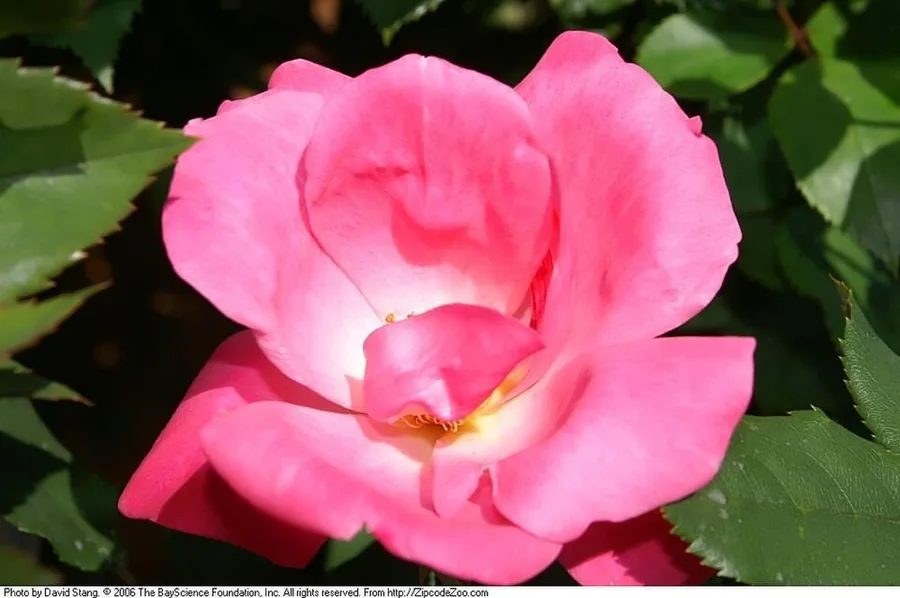
The pink-flowered selection of the series, ready for gardeners chasing a softer shade than the fiery original red.
Rainbow Knock Out
A smaller selection that fires off coral-pink blooms brightened by a sunny yellow eye at the center.
Petite Knock Out
The compact, miniature-scale form built to shine in small beds, along edges, and in containers.
How to propagate
Cuttings root without much drama, but one legal catch is worth knowing before you kick off a new plant from one you already grow.
Stem cuttingsModerate
Late spring to summer from softwood or semi-hardwood growth · Several weeks to root, established over a season
Grab cuttings from softwood or semi-hardwood growth anywhere from late spring through summer, and watch them root over several weeks and dig in across a full season. One rule reins in the fun, though. This cultivar is patented under US Plant Patent PP#11836, so propagating it to sell or give away stays legally off-limits while the patent runs.
Myths
Knock Out roses fend off all disease and never sicken.
They absolutely earn their name against black spot and powdery mildew, batting away the fungal troubles that hound older roses. But immune? No rose is. Rose rosette disease, a fatal virus with no cure, strikes them like any other rose, so keep your eyes peeled for the red, broom-like growth that gives it away.
Knock Out roses quit flowering without regular deadheading.
Forget the chore, because they clean themselves, shedding spent blooms and reblooming from spring to frost all on their own. Clipping off the old flowers just fires up the next flush faster, so it is a bonus move, never a must.