
Introduction
Most plant guides treat english ivy as either a charming little houseplant or a forest wrecker, but rarely both. The truth is messier and far more useful. This evergreen vine can be your favorite trailing pot on a bright shelf or a 99 foot beast that climbs and damages mature trees in your backyard.
I have grown Hedera helix indoors for over a decade and pulled it from city parks on volunteer weekends. That split life taught me what most blogs miss. Common ivy is like a charming guest who quickly redecorates your whole house when you leave the door open even for a moment.
The Washington State Noxious Weed Control Board logged ivy climbing up to 99 feet (30 meters) on host trees. Maryland pushed it into a 2026 review. Rules around this invasive plant are tightening fast across many states.
I built this guide to respect both sides. You will find help for cultivar picks, indoor care, pet safety and native swaps. Below is what to do, what to skip and how to make a smart call for your home.
12 Best English Ivy Cultivars
The American Ivy Society sorts English ivy varieties by leaf type. The five shapes are typical, heart, fan, bird foot and curly. That alone tells you why two pots of ivy can look so different.
I think of cultivars as a wardrobe of leaves. Glacier ivy brings a frosted gray look. Buttercup glows yellow. Curly Locks adds a ruffled accent. 16 cultivars hold the RHS Award of Garden Merit, so your choices run deep.
Below are 12 picks I have grown at home. The list covers classic variegated ivy, the popular Needlepoint ivy, true bird foot ivy and miniature ivy like Hahn's ivy. Match the look to your room and you will love what shows up.
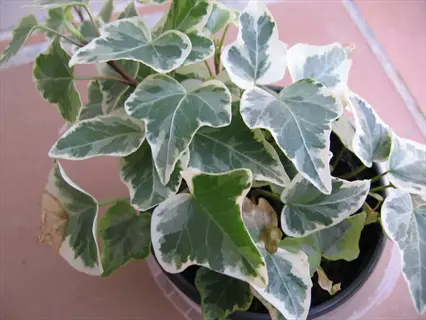
Glacier
- Leaf shape: Typical three to five lobed leaves with a silvery gray green tone and crisp creamy white margins.
- Look: Compact, frosted appearance that brightens dim shelves and pairs well with terracotta and gray pots.
- Growth habit: Moderate trailer that stays full and bushy without becoming leggy under bright indirect light.
- Care notes: Holds variegation best with 6 to 8 hours of bright indirect light each day near an east window.
- Best use: Hanging baskets, mantel trailers and mixed planters where contrast with deep green plants is wanted.
- Watch out: Loses variegation and reverts toward plain green if kept in low light for several weeks.
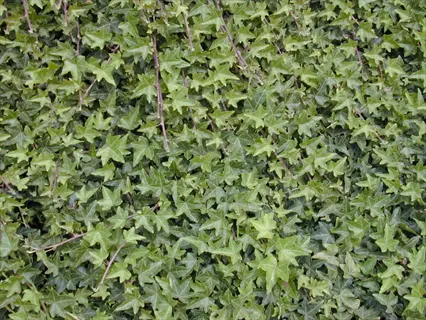
Needlepoint
- Leaf shape: Slender five lobed leaves with elongated points that resemble narrow stars or small hands.
- Look: Refined, lacy texture that softens the edge of pots and looks elegant on bookshelves and side tables.
- Growth habit: Self branching with a tidy mounding to trailing form, perfect for small spaces.
- Care notes: Tolerates a slightly drier soil top than other cultivars, but still needs steady humidity.
- Best use: Topiary frames, small trellises and tabletop pots where a fine textured look is desired.
- Watch out: Tip dieback can happen if the air is too dry, so group with other plants or use a pebble tray.
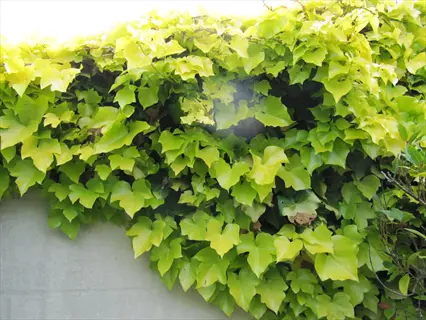
Buttercup
- Leaf shape: Classic five lobed leaves that emerge bright yellow and mature to chartreuse green.
- Look: Sunny, golden glow that pops against dark planters and adds warmth to shaded indoor corners.
- Growth habit: Slower and more compact than green forms, with shorter internodes and dense foliage.
- Care notes: Needs the brightest indirect light of any common cultivar to keep its rich yellow color.
- Best use: Accent pots, focal point plants in groupings and small hanging baskets in bright rooms.
- Watch out: Direct hot sun scorches the yellow leaves quickly, so filter midday light through a sheer curtain.
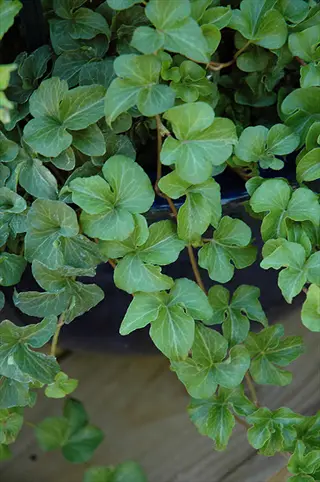
Curly Locks
- Leaf shape: Tightly ruffled and twisted leaves with deep waves along the margins, almost like crepe paper.
- Look: Sculptural and theatrical, adding movement and shadow to plant displays.
- Growth habit: Slow growing, compact and bushy rather than long trailing.
- Care notes: Likes very steady humidity at 50 to 60% and even watering when the top half inch is dry.
- Best use: Statement pots, terrariums and close up displays where the leaf texture can be admired.
- Watch out: Dust collects in the curls, so wipe leaves gently with a damp cloth every few weeks.
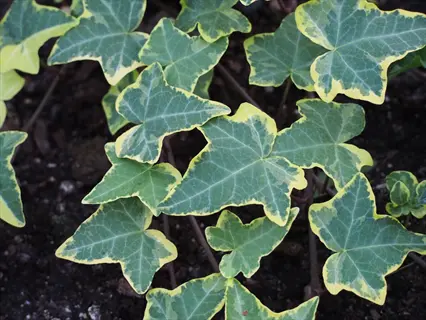
Gold Child
- Leaf shape: Small three to five lobed leaves with gray green centers and wide bright gold margins.
- Look: Glowing edge that draws the eye and lights up shaded spots without needing direct sun.
- Growth habit: Self branching and slow, staying neat in pots without aggressive trailing.
- Care notes: Holds color well in moderate light but reverts toward green if kept in dim corners.
- Best use: Mixed bowls, fairy gardens and pots paired with deep purple or burgundy foliage plants.
- Watch out: Prone to mealybugs in the leaf joints, so inspect monthly with a flashlight.
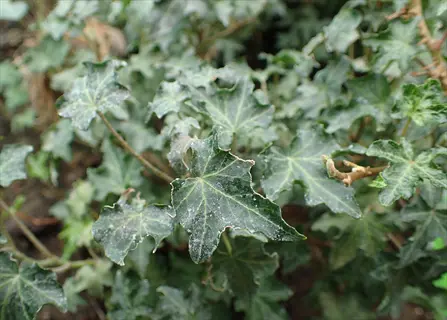
Ivalace
- Leaf shape: Small dark green five lobed leaves with crimped, cupped edges that look hand crimped.
- Look: Glossy, deep green with a lace like outline, very formal and tidy.
- Growth habit: Compact, self branching mound with short trailers, holds shape with minimal pruning.
- Care notes: Tolerates cooler temperatures down to about 50 degrees Fahrenheit (10 degrees Celsius).
- Best use: Topiary frames, bonsai style trainings and elegant tabletop arrangements.
- Watch out: Dense foliage hides spider mites early, so mist and inspect under leaves regularly.
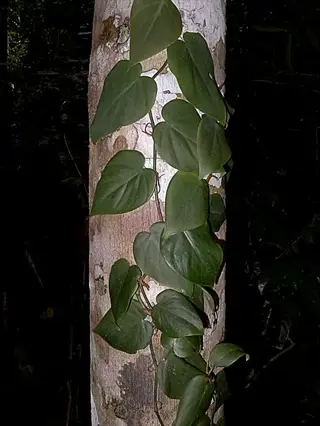
Sweetheart
- Leaf shape: Unlobed, broad heart shaped leaves that look more like a pothos than typical ivy.
- Look: Soft, rounded silhouette in solid mid green, easy and friendly in style.
- Growth habit: Vigorous trailer that quickly fills a hanging basket with cascading vines.
- Care notes: Adapts to medium light better than most cultivars, making it a forgiving starter ivy.
- Best use: Hanging planters, tall shelf edges and bookcases where long trailing vines look great.
- Watch out: Faster growth means it dries out more often, so check soil every 3 to 4 days.

Anne Marie
- Leaf shape: Five lobed leaves with soft gray green centers and creamy white edges that fade to pale yellow.
- Look: Gentle, vintage cottage feel that suits farmhouse and Scandi style interiors.
- Growth habit: Moderate, self branching with a graceful drape rather than aggressive vining.
- Care notes: Sensitive to fluoride, so use filtered or rainwater if leaf tips brown.
- Best use: Decorative pots in bright bedrooms, kitchens and bathrooms with good light.
- Watch out: Variegation can crisp in dry winter air, so increase humidity above 40%.
Duckfoot
- Leaf shape: Tiny three lobed leaves shaped like a duck's webbed foot, only 1 to 2 inches (2.5 to 5 centimeters) across.
- Look: Miniature, delicate texture that suits tiny pots and small scale displays.
- Growth habit: Slow trailing, perfect for containers where you do not want fast takeover.
- Care notes: Likes evenly moist soil but does not tolerate sitting in water.
- Best use: Terrariums, fairy gardens, small kokedama balls and miniature planters.
- Watch out: Easy to overlook when dry due to small leaf mass, so check soil weekly.
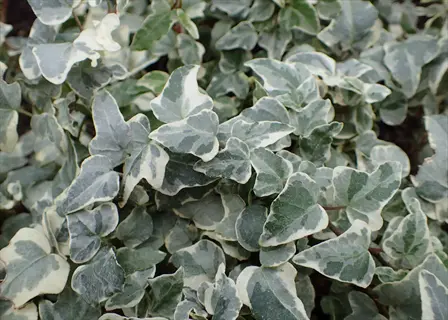
Jubilee
- Leaf shape: Small three lobed gray green leaves with crisp creamy white margins.
- Look: Compact and tidy with a frosted appearance, similar to a smaller Glacier.
- Growth habit: Very slow and miniature, ideal for keeping in small pots for years.
- Care notes: Needs careful watering since small root system dries fast in clay pots.
- Best use: Bonsai style displays, dish gardens and bright bathroom windowsills.
- Watch out: Cannot recover quickly from neglect, so set a regular weekly check schedule.
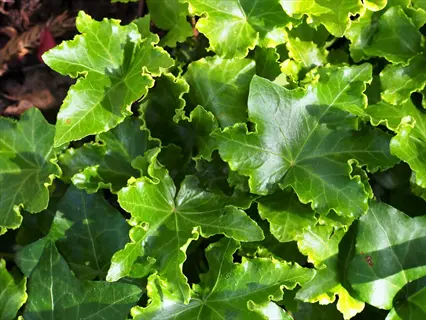
Manda Crested
- Leaf shape: Five lobed leaves with deeply waved edges that twist and ripple along the margins.
- Look: Textured, almost frilly silhouette that catches light dramatically.
- Growth habit: Self branching and moderate, holds a tidy mounded to short trailing form.
- Care notes: Color deepens to bronze in cool winter temperatures around 50 degrees Fahrenheit (10 degrees Celsius).
- Best use: Mixed planters, accent pots and statement hanging baskets in bright rooms.
- Watch out: The waves trap dust and pests, so rinse the foliage gently every month.

Gold Heart
- Leaf shape: Classic three lobed leaves with a bold gold splash centered in each dark green leaf.
- Look: Striking high contrast pattern that reads from across the room.
- Growth habit: Strong climber outdoors but a tidy trailer indoors with moderate vigor.
- Care notes: Holds variegation well in bright indirect light, but center gold may green up in low light.
- Best use: Indoor trellises, tall pots near windows and showy hanging baskets.
- Watch out: Loves to climb, so train onto support early or it will sprawl across surfaces.
Pick by light, scale and pot color first, then by leaf shape. Bright rooms reward bold variegation while shaded corners need solid green types for steady growth.
I rotate three or four cultivars per shelf to keep visual variety without crowding. A miniature next to a trailer with a curly accent reads like a small, well planned still life on any bookcase.
How to Care for English Ivy Indoors
Good english ivy care starts with one fact: ivy is not a true low light plant. That is the biggest reason new growers fail. Give it a north corner and your leaves drop within weeks while spider mites move in for the season.
Think of ivy as a cool weather plant from European forests. A chilly bright bathroom suits it better than a warm living room. I keep mine in bright indirect light by an east window where the daytime temp stays near 65°F (18°C).
You need to nail five care areas for long term wins. Light, water, temp, well draining soil and food. Water when the top half inch dry test says yes. Use a humidity tray in winter. Pick a chunky potting mix to dodge root rot.
In my experience, the best home for ivy is a cool bright bathroom or kitchen window. Steam from your shower lifts humidity for free. Your plant will reward you with dense growth and vivid color all year.
Light
- Ideal exposure: Bright indirect light for at least 6 hours daily, such as a few feet from an east or north window.
- Variegated cultivars: Need more light than solid green types to keep their cream, gold or silver markings vivid.
- Avoid: Hot direct afternoon sun through unfiltered glass, which scorches leaves within days.
- Low light warning: Plants stretch, drop interior leaves and become magnets for spider mites.
- Grow light option: A full spectrum LED at 12 to 16 inches (30 to 40 centimeters) overhead works well for 10 to 12 hours.
Water
- Schedule: Water when the top half inch (1.3 centimeters) of soil is dry, usually every 5 to 10 days.
- Method: Soak until water drains from the bottom, then empty the saucer to prevent root rot.
- Winter slowdown: Reduce frequency by about a third because growth slows and evaporation drops.
- Water quality: Use room temperature water, and switch to filtered or rainwater if leaf tips brown.
- Warning sign: Yellowing lower leaves usually means overwatering, while crispy edges mean underwatering.
Temperature and humidity
- Day temperature: 50 to 70 degrees Fahrenheit (10 to 21 degrees Celsius) is ideal year round.
- Night temperature: 5 to 10 degrees Fahrenheit (3 to 6 degrees Celsius) cooler than daytime supports best growth.
- Humidity target: Aim for 40 to 60% relative humidity, especially in dry winter rooms.
- Boost humidity: Use a pebble tray with water below the pot, group plants together or run a small humidifier.
- Avoid drafts: Keep ivy away from heating vents, fireplaces and chilly window cracks below 35 degrees Fahrenheit (2 degrees Celsius).
Soil and potting
- Mix: Use a well draining peat or coir based potting mix amended with about 20% perlite.
- Container: Choose a pot with drainage holes that is no more than 1 inch (2.5 centimeters) wider than the root ball.
- Repotting: Repot every 2 years in spring, sizing up only 1 inch in diameter as Clemson recommends.
- Top dress: Refresh the top inch of soil yearly with fresh mix to renew nutrients between repottings.
- Drainage check: Water should pass through within 30 seconds, otherwise loosen the mix with more perlite.
Feeding and pruning
- Fertilizer type: Use a balanced liquid houseplant fertilizer diluted to half strength.
- Schedule: Feed once a month during spring and summer, then pause through fall and winter.
- Pruning: Trim leggy stems back to a leaf node any time of year to encourage bushier growth.
- Propagation tip: Save pruned stem tips and root them in water for free new plants.
- Cleaning: Wipe dust from leaves monthly with a damp cloth so they can photosynthesize efficiently.
Indoor humidity often drops below 30% in heated winter homes. That single shift can start a spider mite outbreak in a few short weeks, so I run a small humidifier near my ivy from November through March.
Pests, Diseases and Problems
Stress drives most pest problems on ivy. A weak plant gives off signals that pull in spider mites fast. Think of it like a cut on your skin that draws flies. Fix the stress and most bugs will leave on their own.
Clemson HGIC lists the top indoor invaders as mealybugs, mites, aphids, whiteflies and scales. Root rot from overwatering tops the disease list. I have lost more ivy to soggy pots than to bugs in 10 years of growing.
Use the table below as your quick diagnosis tool. Match a symptom, find the cause, then act fast. Most english ivy pests respond well to insecticidal soap or neem oil when you catch them in the first week.
Bacterial leaf scorch is now on the rise per University of Maryland Extension. It shows up where ivy climbs stressed urban trees. Pull ivy off your trees early and you cut this risk to near zero on your property.
Outdoor Planting and Invasive Status
English ivy came to the U.S. in the 1870s as a tidy groundcover. Today the USDA lists it as an invasive plant in six states. Planting it in the Pacific Northwest is like dumping a single goldfish in a lake. It looks small at first but spreads out of control fast.
The Oregon ban and Washington ban make ivy sale illegal in those states. A Class C Noxious Weed tag in Washington means owners must control it. Four more states list ivy as a noxious weed too. They still allow sale for now.
Outdoor ivy forms what land managers call an ivy desert. The vine kills trees by adding weight and trapping moisture against bark. In my experience, you can spot a doomed tree by the sheer mass of ivy at the crown. I watched one neighbor lose a 40 year old oak to ivy in a single big storm last fall.
Check your state and county lists before you plant ivy outside. Rules shift each year and fines can run into the hundreds. When in doubt, keep your ivy in a sealed indoor pot where it cannot drop seed for birds to spread.
Toxicity to People and Pets
Every part of english ivy is toxic. NC State rates ivy at medium toxicity for humans, cats, dogs and horses. The bad actors are triterpenoid saponins that burn skin and gut. Polyacetylene compounds add to the harm.
Ivy sap acts like poison oak for many people. A small brush on the stem can cause a rash for days. English ivy toxic to dogs alerts spike at vet hotlines each holiday. Fresh ivy hits homes with curious pets.
I learned this the hard way after a kitten chewed a vine in my office. English ivy cat poisoning signs hit within 30 minutes, including drool and vomiting. The list below covers all groups so you can act fast if needed.
Toxic compounds in English ivy
- Triterpenoid saponins: Soap like chemicals that irritate mucous membranes and the digestive tract when chewed or swallowed.
- Polyacetylene compounds: Cause skin reactions in many people, especially with sap exposure on broken skin.
- Falcarinol: A known allergen identified in Hedera species that drives contact dermatitis in sensitive people.
- Distribution: Toxins are present in leaves, stems and berries, with leaves rated more toxic than berries.
- Severity rating: NC State Extension rates the toxicity as medium, meaning serious enough to need vet or doctor attention with significant ingestion.
Symptoms in dogs
- Mouth signs: Hypersalivation, pawing at the mouth and visible mouth irritation within minutes.
- Digestive signs: Vomiting, diarrhea and abdominal pain that may continue for hours.
- Neurological signs: With larger doses, weakness, delirium and even hallucinations or convulsions can occur.
- What to do: Call your vet or the ASPCA Animal Poison Control Center at 888 426 4435 right away.
- Prevention: Keep ivy on high shelves or in hanging baskets out of jumping range.
Symptoms in cats
- Drooling and chewing: Cats often chew ivy out of curiosity, leading to immediate oral irritation.
- Vomiting: Repeated vomiting within 30 minutes is the most common early sign.
- Lethargy: Cats may hide, refuse food and show stiffness for 12 to 24 hours.
- Severe cases: Convulsions, fever and stupor have been documented with heavy ingestion.
- Action: Bring a sample of the chewed plant to the vet to confirm identification.
Symptoms in humans
- Skin contact: Sap can cause redness, itching, blisters and a persistent rash over 24 to 72 hours.
- Eye contact: Causes painful irritation and tearing, flush with cool water for at least 15 minutes.
- Ingestion in children: Berries and leaves can cause fever, hallucinations, abdominal pain and vomiting.
- Sensitization: Repeat exposures often make reactions worse, so wear gloves when pruning.
- Medical help: Call Poison Control at 1 800 222 1222 in the United States for any ingestion.
Livestock and horses
- Cattle: Washington State Noxious Weed Control Board notes that large amounts of leaves and fruits are toxic to cattle.
- Horses: NC State Extension lists horses as susceptible, with colic and digestive distress reported.
- Sheep and goats: May browse small amounts safely, but heavy or repeated grazing should be prevented.
- Pasture management: Fence ivy out of grazing areas and remove vines from boundary trees.
- Hay safety: Inspect cut hay for ivy contamination before feeding, especially from forest edge fields.
Wash skin and tools after every prune to dodge contact dermatitis from falcarinol and ivy sap rash. Wear gloves, long sleeves and safety glasses. Save the ASPCA Poison Control number in your phone today so you have it ready.
How to Remove English Ivy Safely
How to remove english ivy is a long game, not a one weekend job. Think of it like clearing a clogged drain. Cut the source, scoop the visible mass, then keep flushing through to stop regrowth from the roots below.
I have pulled ivy on park crews for years. A single pass takes off the top layer only. Plan for 3 to 5 follow up passes over 1 to 2 years before the area stays clear for good. Skip the work and the ivy will come right back.
How to kill english ivy safely starts with gear and timing. Fall through spring is the sweet spot per Washington State NWCB. Below you will find the full process from gloves to ivy removal from trees to sheet mulching and last resort glyphosate use.
Suit up safely
- Wear: Long sleeves, long pants, thick gloves and safety glasses to block sap and scratches.
- Skin protection: Apply a barrier cream on exposed wrists or neck if you are sensitive to plant sap.
- Allergy prep: Have wash water, soap and antihistamines ready in case of dermatitis.
- Tools: Hand pruners, loppers, a sturdy hand trowel and contractor grade trash bags.
- Disposal plan: Never compost ivy, since stems can root from cuttings in the pile.
Free climbing vines from trees
- Cut at chest height: Sever every climbing vine all the way around the trunk at about 4 feet (1.2 meters) up.
- Make a second cut: Cut again 6 inches (15 centimeters) lower and pry out the ring to stop reconnection.
- Leave upper vines: Do not pull dead vines down from the canopy, since this damages bark and limbs.
- Clear a survival ring: Pull and dig ivy in a 3 to 5 foot (1 to 1.5 meter) ring around the trunk.
- Why it works: University of Maryland Extension notes that this stops moisture damage and bacterial leaf scorch risk.
Hand pull groundcover
- Best timing: Washington State NWCB advises fall through spring, when soils are damp and roots release easily.
- Roll the mat: Loosen one edge and roll the ivy like a carpet, lifting runners and roots together.
- Bag immediately: Drop pulled ivy into bags on the spot, since stems can re root if left on bare soil.
- Dig stubborn crowns: Use a trowel for thick root crowns that resist pulling.
- Mark the area: Flag treated zones so you can revisit for follow up passes every 8 to 12 weeks.
Smother with sheet mulch
- Layer cardboard: Cover cleared ground with double layers of plain brown cardboard, overlapping seams by 6 inches (15 centimeters).
- Add wood chips: Top with 4 to 6 inches (10 to 15 centimeters) of arborist wood chips to weigh it down.
- Wet thoroughly: Soak the layers so the cardboard breaks down and the mulch settles.
- Wait period: Leave in place for 6 to 12 months before planting, since ivy can push through thin mulch.
- Why it works: Light starvation kills regrowth that hand pulling missed and improves soil for native plants.
Use herbicide as a last resort
- Options: Washington State NWCB lists glyphosate, 2,4-D and metsulfuron as labeled options.
- Cut and paint: Cut vines low and dab fresh stumps with concentrated herbicide for targeted use.
- Foliar spray: Reserve for dense thickets and use only on warm days above 60 degrees Fahrenheit (15 degrees Celsius).
- Avoid drift: Spray on still days, shield desirable plants with cardboard and follow label directions exactly.
- Monitor: Expect 2 to 3 follow up treatments over 12 to 18 months for complete control.
Mark your calendar for 8 to 12 week follow up checks after each pass. Hand pulling plus monitoring resprouts beats herbicide for most home yards. Your soil and pollinators will thank you for the lighter touch over time.
Native Alternatives to English Ivy
Pulling ivy is only half the work. You need to plant native alternatives to english ivy in its place. Think of it like swapping a noisy houseguest for a polite local who gets along with trees, birds and bees.
Native plants feed 70 plus nectar insects and 16 plus bird species that ivy crowds out. I have swapped ivy beds with crossvine and christmas fern on three home jobs. Birds came back in one season every time.
NC State lists six top picks for the Southeast. Top picks include crossvine, trumpet creeper, virgin bower and foamflower. You get the same evergreen groundcover look with far better wildlife value.
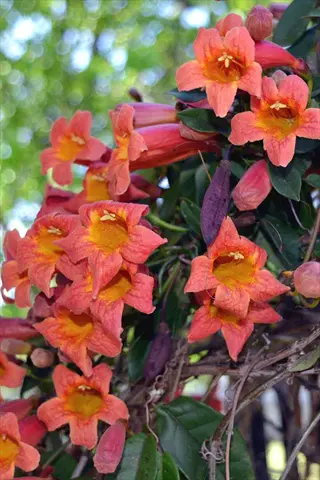
Crossvine (Bignonia capreolata)
- Habit: Vigorous semi evergreen climbing vine native to the Southeast and Mid Atlantic.
- Why it works: Climbs with tendrils like ivy but without aerial rootlets that damage bark and walls.
- Flowers: Trumpet shaped orange to red blooms in spring attract hummingbirds and native bees.
- Zones: USDA hardiness zones 6 through 9, tolerates partial shade to full sun.
- Use: Trellises, fences and arbors where ivy would otherwise be planted for cover.
- Wildlife value: Hummingbird favorite during spring migration, also hosts native moth larvae.
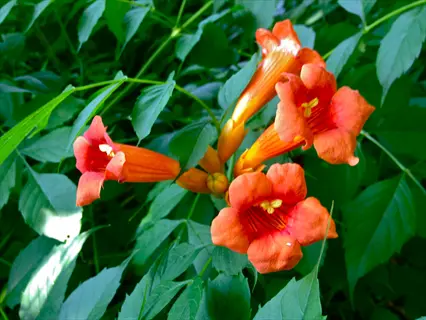
Trumpet creeper (Campsis radicans)
- Habit: Strong native woody climber that can blanket fences quickly without invading forests.
- Why it works: Native range matches ivy's preferred outdoor sites but fits eastern ecosystems.
- Flowers: Long orange trumpets bloom for weeks in summer, drawing hummingbirds daily.
- Zones: USDA hardiness zones 4 through 9, prefers full sun for best bloom.
- Use: Strong arbors, mailbox posts and large fences where you want a bold floral display.
- Manage: Vigorous spreader by suckers, so site in contained beds and prune yearly.
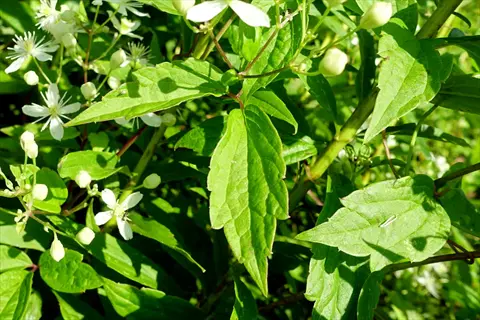
Virgin's bower (Clematis virginiana)
- Habit: Native climbing clematis with delicate leaves and clouds of small white summer flowers.
- Why it works: Provides ivy's lacy cover effect without the aggressive smothering behavior.
- Flowers: Sweetly scented white blooms in late summer feed native bees and butterflies.
- Zones: USDA hardiness zones 3 through 8, tolerates partial shade to full sun.
- Use: Wood fences, woodland edges and rustic arbors where a soft drape is wanted.
- Caution: Mildly toxic if eaten, so still keep away from grazing pets and livestock.
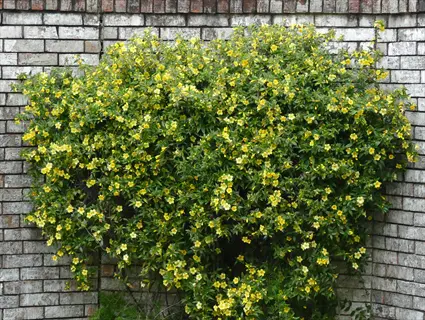
Carolina jessamine (Gelsemium sempervirens)
- Habit: Evergreen twining vine native to the Southeast, with glossy dark green leaves all year.
- Why it works: Provides ivy's evergreen cover plus a season of fragrant yellow flowers.
- Flowers: Bright yellow trumpets in late winter and early spring signal an early nectar source.
- Zones: USDA hardiness zones 7 through 9, prefers full sun for best flowering.
- Use: Fences, mailbox posts and porch posts where evergreen screening is needed.
- Toxicity note: Highly toxic to humans and pets, so site away from grazing or play areas.
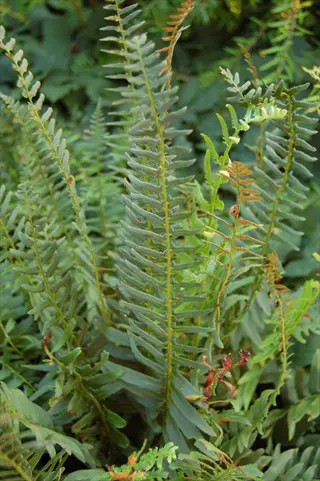
Christmas fern (Polystichum acrostichoides)
- Habit: Evergreen native fern that forms slow spreading clumps in shaded woodland soils.
- Why it works: Replaces ivy's evergreen groundcover role with a graceful native texture.
- Foliage: Glossy dark green fronds that stay green through mild eastern winters.
- Zones: USDA hardiness zones 3 through 9, prefers partial to full shade.
- Use: Shaded foundations, woodland gardens and bank stabilization on slopes.
- Wildlife value: Provides winter shelter for ground feeding birds and small mammals.
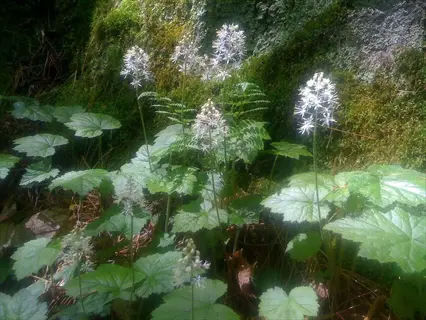
Foamflower (Tiarella cordifolia)
- Habit: Low growing native perennial that spreads gently by runners to form leafy mats.
- Why it works: Fills ivy's shady groundcover niche with a tidy, mannered native that supports pollinators.
- Flowers: Frothy white to pale pink flower spikes in spring resemble miniature bottlebrushes.
- Zones: USDA hardiness zones 4 through 9, prefers part to full shade.
- Use: Woodland paths, shade borders and under deciduous trees where ivy would otherwise be planted.
- Wildlife value: Early spring nectar source for native bees and small butterflies.
Check your local extension office for picks made for your state. Native plant nurseries can match the look of ivy with options that fit your soil, light and zone. You will get a yard that looks great and helps your local ecosystem too.
5 Common Myths
English ivy is a true low-light plant that thrives in dark corners and shaded apartment rooms with almost no sunlight.
English ivy needs bright indirect light to keep variegation and growth strong, and quickly drops leaves or attracts spider mites in dim rooms.
English ivy is completely safe to grow around dogs, cats and curious toddlers because it is just a common houseplant.
NC State Extension rates English ivy as medium toxicity, and the entire plant is toxic to humans, cats, dogs and horses if chewed or eaten.
Planting English ivy as a groundcover stops weeds, looks tidy and is a low-maintenance solution for shady yards forever.
Ivy forms ivy deserts that smother native seedlings, spreads by bird-dropped seed and is listed invasive in California, Maryland, North Carolina, Pennsylvania, Oregon and Washington.
Ivy climbing up a tree trunk is harmless decoration and even helps the tree by keeping the bark cool and shaded.
Ivy adds canopy weight and wind sail, traps moisture against bark, raises bacterial leaf scorch risk and can topple trees in storms.
English ivy will fully purify your home air, removing mold, fecal matter and toxins as effectively as a mechanical air filter.
The 1989 NASA chamber study showed gas removal in sealed boxes, but later researchers found the real-world effect in normal homes is very small.
Conclusion
English ivy has a split identity. It is a cool elegant indoor houseplant in the right room, and a serious outdoor invader in many states. Treat Hedera helix like you would a pet. Respect its needs and never let it run wild in your yard.
English ivy care indoors comes down to bright indirect light, cool temps and steady humidity. Outdoor use is a different story. The plant is listed as an invasive plant in six states and a sale ban applies in Oregon and Washington. The 2026 Maryland review suggests more states will follow.
In my experience over many years, I keep one Glacier ivy by a cool east window. It thrives with weekly watering and no fuss. That same plant in my old yard tried to climb a maple within one summer, which is why I dug up every outdoor planting years ago.
Pet safety often tips the call. NC State rates the entire plant as toxic to humans, cats, dogs and horses. If you have a curious pet or a young kid, hang your ivy high or pick a safer plant. Responsible gardening means thinking past your own fence line.
Use this simple test. Indoor only, no pets that climb, and a cool bright window? Ivy is a great fit for you. Outdoor planting in a listed state or near woods? Skip ivy and pick native alternatives like crossvine or foamflower for your yard.
External Sources
Frequently Asked Questions
Does English ivy clean your air?
English ivy removed benzene, formaldehyde and trichloroethylene in the 1989 NASA Clean Air Study, but real-world home efficacy is debated by later researchers.
Is English ivy a problem?
Yes, English ivy is a problem outdoors in many U.S. regions because it smothers native plants, climbs and damages trees, and is listed as invasive in six states.
Does English ivy help with mold?
Some chamber studies suggest English ivy can reduce airborne mold and fecal particles, but the results have not been reliably reproduced in normal home conditions.
Is English ivy a good houseplant?
English ivy is a good houseplant for cool, bright rooms when you can keep pets and children away from it and maintain steady humidity and watering.
What plant removes 78% of airborne mold?
English ivy (Hedera helix) is the plant most often cited for removing about 78 percent of airborne mold in small sealed chamber tests, though real homes are not sealed chambers.
What are the disadvantages of ivy?
English ivy has several disadvantages including toxicity, invasiveness, tree damage, pest susceptibility and contact dermatitis from sap.
- Toxic to pets, livestock and people
- Invasive in six U.S. states
- Smothers native plants and seedlings
- Adds weight and disease risk to trees
- Sap causes skin rash and blisters
- Prone to spider mites and root rot
What happens if I touch common ivy?
Touching English ivy can cause contact dermatitis from falcarinol in the sap, leading to redness, itching, blisters and lingering rash in sensitive people.
What is the most toxic indoor plant?
Dieffenbachia, oleander and sago palm are often ranked as the most toxic common indoor plants, with English ivy holding a medium toxicity rating from NC State Extension.
Does English ivy remove fecal matter?
Some sealed chamber studies report English ivy reducing airborne fecal particles, but no peer-reviewed research confirms it works in normal household conditions.
Can I put English ivy in my bathroom?
English ivy can thrive in a bathroom if it gets bright indirect light, cool temperatures and good air movement, since the higher humidity matches its preferences.