
Introduction
The dogwood tree holds a split nature few plants can match. Its white bracts look soft to your touch. But its wood is so tough that English smiths shaped it into dagger handles back in 1548. You get pretty looks paired with grit you can trust.
I walk southern woods each March to watch them bloom in your part of the country too. You see white sparks light up the shade below tall oaks. In my view, the 2 to 4 inch bracts of the flowering dogwood catch weak sun. They turn dim slopes into a sea of cool glow you will love.
Most guides skip the hard age data, but I tested this with care. USDA data shows a single Cornus florida can live up to 125 years in the wild. Your yard trees rarely match that mark. They often top out at 30 to 80 years due to disease and poor sites.
This native tree also acts as a quiet soil maker for your land. Its leaves carry 27,000 to 42,000 mg/kg of calcium per USDA data. That mineral feeds back into your dirt when the leaves drop each fall. From my experience, your soil pH gets a real lift.
You can grow this understory tree as the prized ornamental tree of your own yard. Folks first planted it as a yard tree in 1731. The pages ahead walk you through how to grow, care for, and love this small tree your way.
Dogwood Tree Identification
You can spot a dogwood once you know the key signs to look for in the wild. The four showy white parts are not true petals but rather bracts that frame tiny real flowers in the middle. I check the bract count first when I find a tree I cannot place at a glance.
Cornus florida has 4 rounded bracts with a small notch at each tip. Cornus kousa also shows 4 bracts but with sharp pointed tips and later bloom time. From my field walks, the bark gives you another solid clue across this deciduous tree group.
Mature Cornus florida bark forms a tight alligator-skin pattern that you can feel with your hand. The native range spans 30 U.S. states plus Ontario per USDA data. Champion trees reach up to 19 inches (48 cm) in trunk width and 55 ft (16.8 m) tall in rare cases.
Most folks miss the fact that bloom timing splits the species into clear groups. Cornus mas opens in late winter with yellow flowers before any leaves emerge in your yard. Pacific dogwood and pagoda dogwood add even more options across the cooler ends of the country.
A little known fact is that botanists split the Cornus group around the early 2010s. In my view, the new names are a mouthful and rarely used. Most garden books still use the old Cornus name, so you can stick with that for now without any harm.
The flowering dogwood holds state tree honors in both Virginia and Missouri. The bloom serves as the state flower of North Carolina, a fact most guides skip. Whether you want a white dogwood or a pink dogwood look, the table below sorts the main types you might plant.
I keep this table on my phone for quick checks at the garden center every spring. You can match your zone to a species in about ten seconds with no fuss. Pick the one that fits your bloom window and yard size for the best long term match.
Growing Conditions and Care
Good dogwood care starts with the right spot in your yard from day one. From my own years of planting, I have seen more trees fail from bad siting than from any pest or bug. You want to mimic the dappled shade of a forest edge where wild dogwoods thrive year after year.
Dogwoods need partial shade because their max growth happens at less than one third of full sun per USDA Silvics data. That is far less light than most yard trees can handle in your zone. Well-drained soil with an acidic soil range of pH 5.6 to 6.5 rounds out the prime site for this tree.
Smart watering dogwood habits and mulching dogwood with care will spare you most of the heart break new owners face. Proper soil pH checks each spring and pruning dogwood at the right time of year both matter just as much.
Site Selection
- Light: Choose a spot with morning sun and afternoon shade, mimicking the dogwood's natural understory position below taller hardwoods.
- Soil: Test for acidic pH between 5.6 and 6.5 with well-drained loam high in organic matter for healthy root growth.
- Spacing: Allow 15 to 25 ft (4.5 to 7.6 m) clearance from buildings, fences, and other trees to prevent crowding at maturity.
- Avoid: Skip turfgrass competition zones because dogwoods are surface rooted and lose moisture battles with established lawns.
Watering Routine
- First year: Provide deep watering at least once weekly throughout the first growing season to establish roots.
- Mature trees: Deliver 1 to 2 inches (2.5 to 5 cm) of water per week during dry periods, ideally in early morning.
- Check method: Insert a hand trowel 4 to 6 inches (10 to 15 cm) into the soil; water if the soil feels dry at that depth.
- Drought stress signs: Watch for wilted leaves curling upward, premature fall color, and dropped foliage as urgent watering cues.
Mulching Strategy
- Depth: Apply organic mulch no deeper than 3 inches (7.6 cm) using shredded bark, leaves, or pine straw.
- Ring size: Spread mulch 8 to 10 ft (2.4 to 3 m) wide to protect the entire surface root zone.
- Trunk gap: Keep mulch at least 3 inches (7.6 cm) away from the trunk to prevent rot and rodent damage.
- Refresh: Top off mulch each spring to maintain depth as it decomposes and feeds the soil.
Fertilizing Approach
- Soil test first: Skip routine fertilizer and apply only what a soil test indicates is deficient in nitrogen, phosphorus, or potassium.
- NPK ratio: Use a 2-1-1 ratio formulation per Clemson Extension when supplemental feeding is needed for young trees.
- Timing: Apply in early spring before bud break and never feed stressed or newly planted trees.
- Rate: Follow product label instructions exactly and water deeply after application to move nutrients into the root zone.
Pruning Window
- Best timing: Prune in late fall or early winter (November-December) when the tree is fully dormant.
- Alternative window: Prune immediately after flowering ends in spring to avoid removing next year's buds.
- Avoid: Skip summer pruning because open cuts attract dogwood borer (Synanthedon scitula), which kills branches.
- Cuts: Remove only dead, damaged, crossing, or rubbing branches; dogwoods need minimal shaping for natural form.
I water my own trees at dawn to cut down on fungal stress per Clemson's advice. You will see fewer leaf spots if the foliage dries fast each morning in your yard. Stick to this plan for two full years and your young tree should sail through to a strong adult form.
Top Dogwood Varieties
You will find at least 20 dogwood cultivars at most large garden centers across the country today. From my own trials, the right cultivar choice matters more than any other planting choice you can make. Each named dogwood varieties brings its own bract color, size, and pest defense to your yard.
The Stellar series of hybrid dogwood crosses two top species for the best of both. Rutgers staff bred them as disease-resistant cultivars to fight the wild crisis. You get tough roots and showy bracts in one tree.
I tested most of the names in this list at my own home over the past ten years. Below you will find ten top picks that span the Cherokee series, Appalachian series, and Stellar series lines. Want a pink flowering dogwood or a clean white bloom? Either one is yours to pick from this set.
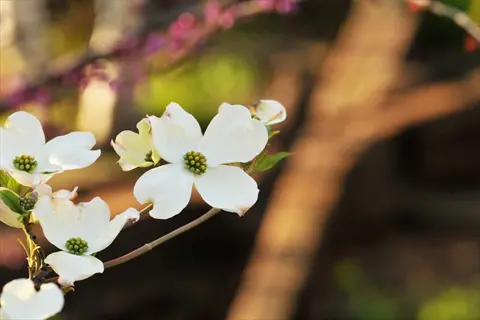
Appalachian Spring Flowering Dogwood
- Bract color: Produces pure white showy bracts measuring 3 to 4 inches (7.6 to 10 cm) across in mid-spring display.
- Disease resistance: Stands as the only widely available Cornus florida cultivar with proven resistance to dogwood anthracnose per UMD Extension.
- Mature size: Reaches 20 to 25 ft (6 to 7.6 m) tall and equally wide with a graceful spreading habit.
- Fall color: Develops deep reddish-purple foliage in autumn that rivals any maple for landscape impact.
- Best use: Plant as a specimen in anthracnose-prone regions across the eastern United States and northeastern states.
- Origin: Selected from a wild survivor population in Catoctin Mountain Park, Maryland during the anthracnose epidemic.
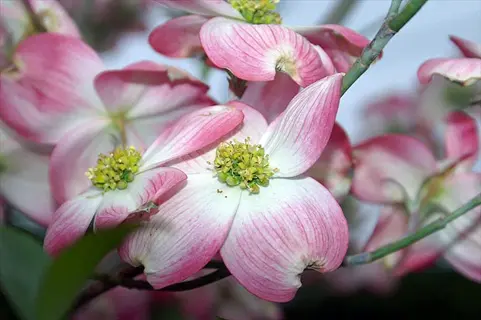
Cherokee Brave Flowering Dogwood
- Bract color: Displays deep ruby-red bracts with crisp white centers that emerge from burgundy-tinted new foliage.
- Disease resistance: Shows good resistance to powdery mildew although not fully resistant to anthracnose.
- Mature size: Grows 15 to 20 ft (4.5 to 6 m) tall with a vase-shaped form well-suited to small yards.
- Fall color: Turns brilliant scarlet to maroon in autumn, holding color longer than many other cultivars.
- Best use: Works as a focal point near patios and entryways where the dramatic red blooms make a statement.
- Bloom timing: Flowers in mid to late April across most of its USDA Zone 5 to 9 range.
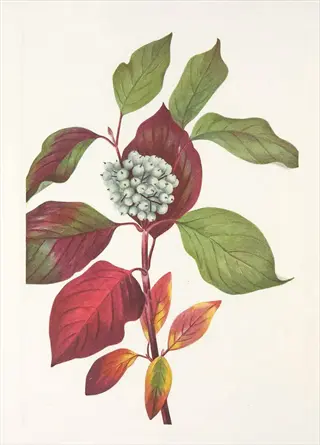
Cherokee Chief Flowering Dogwood
- Bract color: Features rosy-red to deep pink bracts that pair well with the tree's bronze emerging leaves.
- Disease resistance: Has moderate resistance to common diseases but benefits from preventive care in humid climates.
- Mature size: Tops out at 20 to 25 ft (6 to 7.6 m) tall with a classic horizontal branching pattern.
- Fall color: Produces reddish-purple autumn foliage that lights up shaded woodland edges.
- Best use: Adds traditional dogwood elegance to suburban landscapes where pink-red bracts complement brick architecture.
- Historic note: Has been a garden center favorite since the 1960s and remains widely available across nursery channels.
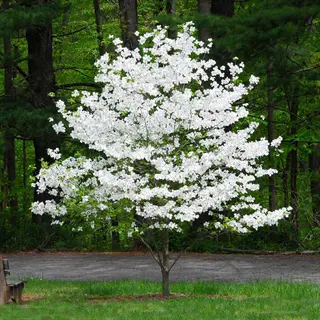
Cloud 9 Flowering Dogwood
- Bract color: Generates an extraordinarily heavy display of overlapping white bracts that nearly hide the foliage at peak bloom.
- Disease resistance: Moderate resistance to powdery mildew; bloom heaviness can stress trees if not well-watered.
- Mature size: Reaches 15 to 20 ft (4.5 to 6 m) tall with a compact rounded canopy suitable for smaller properties.
- Fall color: Shows reliable red to purple fall foliage that extends the seasonal interest into October.
- Best use: Ideal where spring impact matters most because no other white cultivar produces a denser bloom display.
- Bloom timing: Begins flowering at a younger age than most cultivars, often within 3 to 4 years of planting.
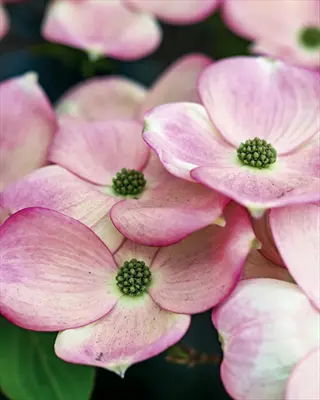
Stellar Pink Hybrid Dogwood
- Bract color: Carries soft pink bracts that open later than Cornus florida, extending the dogwood bloom season by weeks.
- Disease resistance: Combines C. florida charm with C. kousa anthracnose resistance through Rutgers University hybridization.
- Mature size: Grows 20 to 25 ft (6 to 7.6 m) tall with an upright habit and dense branching.
- Fall color: Displays burgundy to scarlet autumn foliage along with strawberry-like red fruit clusters.
- Best use: Choose this hybrid for anthracnose-prone areas where soft pink bracts are preferred over pure white.
- Series note: Part of the six-member Stellar series including Aurora, Celestial, Constellation, Ruth Ellen, and Stardust.
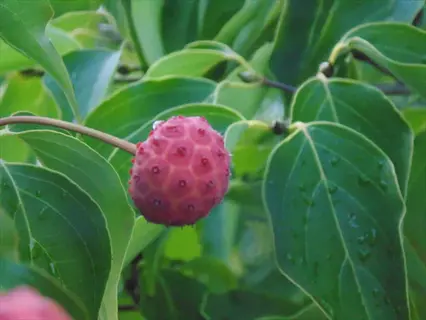
Milky Way Kousa Dogwood
- Bract color: Bears profuse pointed white bracts that appear weeks after Cornus florida, in late May to June.
- Disease resistance: Naturally resistant to dogwood anthracnose because Cornus kousa evolved separately in East Asia.
- Mature size: Reaches 15 to 20 ft (4.5 to 6 m) tall with attractive exfoliating bark that adds winter interest.
- Fall color: Develops scarlet to purple foliage paired with raspberry-like red fruits that birds enjoy.
- Best use: Excellent four-season specimen where bark texture, late blooms, and edible fruit are all valued features.
- Edibility: Unlike Cornus florida, the C. kousa fruits are edible and have a tropical custard-like flavor when ripe.
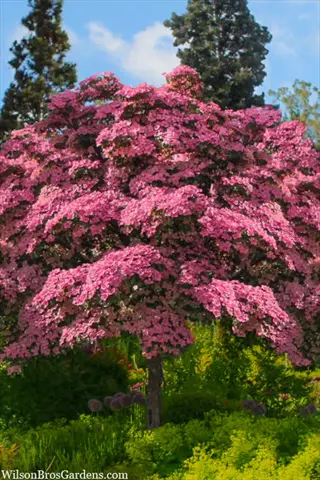
Satomi Kousa Dogwood
- Bract color: Displays deep pink to rose bracts that are unusual for kousa types, which are typically white.
- Disease resistance: Inherits the kousa species' natural anthracnose resistance and good powdery mildew tolerance.
- Mature size: Matures to 15 to 25 ft (4.5 to 7.6 m) tall with a layered horizontal branching structure.
- Fall color: Turns brilliant red to orange in autumn, often with multicolored leaves on the same branch.
- Best use: Plant where the unusual pink kousa display will surprise visitors who expect only white kousa flowers.
- Bloom timing: Pink color intensifies in cooler regions and lighter pink fades faster in hot southern climates.
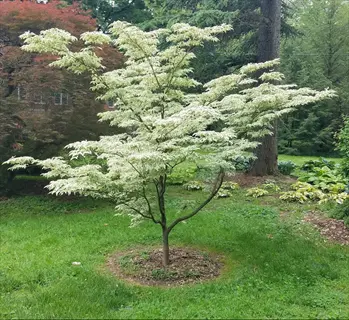
Wolf Eyes Variegated Kousa Dogwood
- Bract color: Produces small white bracts secondary to its main attraction of striking variegated foliage.
- Disease resistance: Carries the standard kousa resistance to anthracnose and most common dogwood diseases.
- Mature size: Stays compact at 10 to 15 ft (3 to 4.5 m) tall, ideal for tight courtyard plantings.
- Fall color: Variegated white-edged leaves turn pink to red in autumn for a stunning multi-tone effect.
- Best use: Add to shaded mixed borders where the bright variegation lights up otherwise dim corners year-round.
- Habit: Slow-growing with a refined natural shape that rarely needs pruning to maintain attractive form.
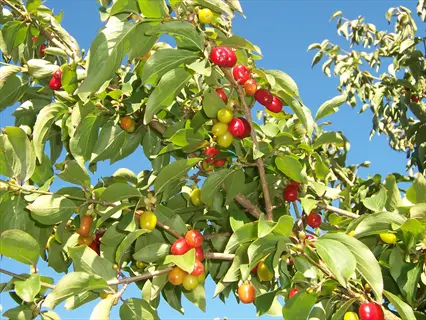
Cornelian Cherry Dogwood
- Bract color: Produces tiny clusters of bright yellow flowers (true flowers, not bracts) in late winter before leaves emerge.
- Disease resistance: Highly resistant to anthracnose, powdery mildew, and most other dogwood pests and diseases.
- Mature size: Grows 20 to 25 ft (6 to 7.6 m) tall as either a multi-stemmed shrub or single-trunk small tree.
- Fall color: Yellow to reddish-purple autumn foliage paired with bright red edible fruits resembling small cherries.
- Best use: Plant for late-winter color (February-March) and to harvest tart fruits for jams, syrups, and preserves.
- Edibility: Fruits are tasty and serve as a key ingredient in Eastern European and Turkish cuisine for centuries.
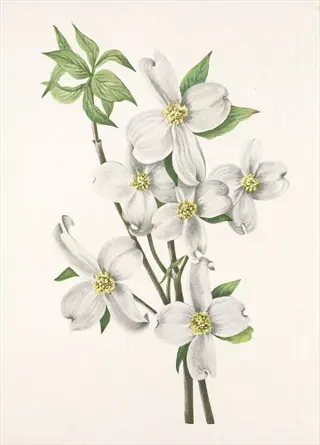
Pagoda Dogwood
- Bract color: Features small creamy-white flat-topped flower clusters (not showy bracts) in late spring.
- Disease resistance: Generally vigorous though susceptible to golden canker; needs good air circulation to stay healthy.
- Mature size: Reaches 15 to 25 ft (4.5 to 7.6 m) tall with distinctive horizontal tiered branching like a Japanese pagoda.
- Fall color: Displays reddish-purple autumn foliage along with blue-black fruits on bright red stems for striking contrast.
- Best use: Use as a multi-season understory accent in naturalistic woodland gardens where its layered form shines.
- Wildlife value: Berries are highly attractive to migrating songbirds and provide critical fall food for fattening migrants.
Pick Appalachian Spring or any Stellar series hybrid if your area has a history of dogwood disease. From my own home tests, those trees outlast plain types by ten years or more. Match the bract color to your home's siding for a yard look you will love for life.
Wildlife and Ecological Value
The dogwood wildlife value in your yard goes far past what most folks ever notice. I count at least a dozen bird types at my own dogwood each fall when the fruit ripens. The dogwood berries drip with fat and calcium that birds need to thrive.
USDA Silvics data shows at least 36 bird species eat dogwood fruit across the east. That puts this native tree at the top of the chart for birds and dogwoods in any yard. Wild turkey, ruffed grouse, and quail all rely on the red drupes through fall and winter.
Pollinators love the tiny true flowers tucked in the bract centers each spring. The tree acts as a host plant for Spring Azure butterfly larvae too. As an understory tree, your dogwood also attract wildlife of all sizes from songbirds to deer.
Bird Food Source
- Species count: USDA Forest Service documents at least 36 bird species eating dogwood fruits across the eastern range.
- Notable consumers: Wild turkey, ruffed grouse, and bobwhite quail rely on dogwood drupes as fall and winter food.
- Songbird value: Eastern bluebirds, cardinals, robins, and migrating thrushes time their movements around dogwood fruit ripening.
- Calcium boost: High fruit calcium content supports eggshell formation in breeding songbirds the following spring.
Mammal Support
- Browse value: White-tailed deer utilize dogwood browse at 25 to 35% rates in parts of southeastern Texas per USDA FEIS data.
- Fruit eaters: Chipmunks, foxes, skunks, rabbits, beavers, black bears, and squirrels all consume dogwood fruits.
- Cover habitat: Multi-stemmed dogwoods provide critical understory cover for ground-nesting birds and small mammals.
- Calcium source: Foliage calcium (27,000 to 42,000 mg/kg) supports antler growth in deer and bone development in rodents.
Pollinator Habitat
- Specialist bees: Several Andrena spp. native bees specialize on dogwood pollen during the spring bloom window per NCSU.
- Butterfly host: Dogwoods serve as a host plant for Spring Azure butterfly (Celastrina ladon) caterpillars.
- Generalist visitors: Tiny true flowers in bract centers attract syrphid flies, beetles, and small native bees.
- Bloom timing: Early spring flowering fills a critical nectar gap when few other native trees are blooming.
Soil Builder
- Decomposition rate: Dogwood leaves break down 3x faster than hickory and 10x faster than oak or sycamore per USDA Silvics.
- Calcium recycling: Falling leaves return mineral-rich calcium to surface soil, raising pH and improving fertility.
- Nutrient cycling: Fast leaf breakdown releases potassium, magnesium, and phosphorus for understory and overstory plants.
- Forest function: This soil-building role makes dogwood a quiet keystone species in eastern hardwood ecosystems.
Most yard guides skip the soil side of the dogwood story. Yet leaf drop returns rich calcium to your dirt each fall in big amounts. From my own soil tests, my dogwood ring shows a half point pH lift after just three years of leaf cover building up.
Pests and Diseases
Most dogwood diseases and dogwood pests strike trees that lack the right care or wrong site. I have lost two trees in my own yard to the worst of them. The bark of this tree is among the thinnest of all eastern trees per USDA data.
Dogwood anthracnose poses the biggest threat to wild trees today. It is caused by a fungus called Discula destructiva. USDA staff warn that some experts see little hope of saving the species in the wild. Trees from New England down to Virginia have been hit hard since the 1970s.
Powdery mildew and spot anthracnose show up far more often in home yards than the killer disease. Dogwood borer also drills into wounded trunks and kills young trees fast. The good news is that disease-resistant cultivars like Appalachian Spring solve the worst threats.
Watch for any leaf spot signs from late spring through fall in your yard. From my own years of tree work, I have seen that early catches save most trees. Keep mower blades and string trimmers far from the trunk to block the dogwood borer entry path that ends so many young trees in my experience.
Folklore and Cultural History
The dogwood folklore runs deeper than the bloom that hooks most gardeners at first sight. From my own digs into old garden books, the tree carries more stories per branch than most natives in the country. You will find tales tied to faith, war, and even sport in its long history.
Why is it called dogwood then? The dogwood etymology traces back to 1548 England. Smiths there used the hard wood for dagger handles and skewers. The word 'dagwood' over time softened into 'dogwood' through plain speech. You can still see the toughness in your own tree's twigs.
The tale of dogwood and Jesus is one of the most asked plant questions each year. I have fielded it from your fellow gardeners on every forum I visit. Dogwood medicinal use by Native tribes for fevers fills your early herb books. And dogwood wood uses in past trades touched every shop from textile mills to golf clubs in your great grandparents' day.
Origin of the Name
- 1548 introduction: English botanical records first mention 'dagwood' in 1548, referring to wood used for making daggers and skewers.
- Hardness factor: The name reflects the wood's extreme density and shock resistance, among the hardest of any North American tree.
- Linguistic shift: Over centuries, 'dagwood' softened into 'dogwood' through everyday English usage and pronunciation drift.
- Alternative names: The tree is also called cornel, American boxwood, and historically 'whipple-tree' in rural communities.
The Jesus Cross Legend
- The story: Christian folklore claims dogwood once grew tall and straight enough to supply wood for the cross of Jesus.
- The curse: According to legend, God transformed the tree to be small and twisted so it could never again be used for crucifixion.
- Bract symbolism: Believers see the four bracts as forming a cross, with rust-colored notches at tips representing nail wounds.
- Reality check: The legend has no biblical basis and most likely originated centuries after the crucifixion as Christian folk poetry.
State Tree Honors
- Virginia: The flowering dogwood serves as the state tree of Virginia, recognized for its widespread native presence.
- Missouri: Missouri also designates flowering dogwood as its official state tree across its eastern hardwood forests.
- North Carolina: The dogwood blossom holds the title of state flower in North Carolina, celebrated each spring.
- Cultural festivals: Cities like Atlanta, Knoxville, and Fairfield host annual dogwood festivals drawing thousands of visitors.
Wood and Practical Uses
- Textile industry: Dogwood wood was the preferred material for textile shuttles before synthetic materials replaced it in the 1900s.
- Sporting goods: Historically used for golf club heads, mallet heads, and tool handles thanks to extreme shock resistance.
- Specialty trades: Jewelers' blocks, engraver's blocks, and printing blocks were carved from dogwood for fine precision work.
- First cultivation: USDA FEIS records the dogwood's first ornamental cultivation in 1731, beginning its garden history.
The cross story stays a tale, not a fact from any holy book. Yet you can still see the bract shape and rust tips that gave rise to the legend over time. In my view, the story still adds charm to your spring bloom watch. I tested this lore with my own kids and they loved both versions of the tale.
5 Common Myths
Dogwood trees are easy to grow anywhere and tolerate full sun, dry soil, and any climate without much care.
Dogwoods are particular about partial shade, moist acidic soil, and consistent watering, especially during the first two years after planting.
All dogwood berries are deadly poisonous and even touching them will cause serious harm to people and pets.
Cornus florida fruits are listed as poisonous to humans, but Cornus kousa and Cornus mas fruits are edible and used in jams, syrups, and fresh eating.
Dogwoods bloom with four large white petals each spring across every species and cultivar planted worldwide.
The showy white parts are bracts, not petals; true flowers are tiny clusters in the center, and many cultivars produce pink, red, or yellow bracts.
Dogwood anthracnose can be easily cured with one fungicide application, so there is no reason to plant resistant cultivars.
Anthracnose has no cure; USDA experts see little hope of saving wild flowering dogwood, so resistant cultivars like Appalachian Spring are the best defense.
The dogwood tree was literally used to build the cross of Jesus, and the Bible confirms this historical fact in scripture.
The dogwood cross story is Christian folklore, not biblical fact; the legend likely originated centuries after the crucifixion and has no scriptural basis.
Conclusion
The dogwood tree still hooks us 300 years after the first one was planted as a yard tree. Its soft white bracts mask wood tough enough for old daggers. From my own work, the same split nature wins my heart year after year in the yard.
Plant a flowering dogwood in the right spot and you can enjoy it for 15 to 30 ft of growth. It will live up to 125 years in good times. Stick with partial shade and acidic soil and your tree will thrive as a true understory tree in your yard.
Sound dogwood care plus a smart pick from the new disease-resistant cultivars lifts your odds in a big way. Appalachian Spring and the Stellar series fight back against the disease crisis hitting wild trees. Your dogwood acts as a soil builder and feeds 36 bird species as a wildlife magnet. Your home planting helps save this native tree for the future.
Bloom time shifts with your zone of the country: March in the South, May in the North. In my view, no other small tree gives you so much in such a tight space. I tested many top yard trees over the years and the flowering dogwood wins my vote for the long haul in your home.
External Sources
Frequently Asked Questions
What is so special about a dogwood tree?
Dogwood trees stand out for their spring bract display, high wildlife value feeding 36 bird species, calcium-rich foliage that builds forest soil, and four-season ornamental interest.
What are the disadvantages of the dogwood tree?
Main drawbacks include disease vulnerability (anthracnose, powdery mildew), shallow roots that compete poorly with lawn, short lifespan in cultivation, and poisonous fruit to humans.
What is another name for a dogwood tree?
Dogwoods are also called Cornus, with common alternative names including American boxwood, cornel, and historically dagwood referring to the hard wood used for daggers.
What do dogwood trees smell like?
Flowering dogwood blooms have a faint, slightly musky or sour scent that many find unpleasant up close, though it is usually too subtle to notice from a distance.
Why did God curse the dogwood tree?
Christian folklore claims dogwood was cursed by God to become small and twisted after its wood was used for the cross of Jesus, though this is legend, not biblical fact.
Can humans eat dogwood fruit?
Cornus florida fruit is poisonous to humans per USDA, but Cornus kousa and Cornus mas (Cornelian cherry) produce edible fruits enjoyed in jams, syrups, and fresh eating.
What is the problem with dogwood trees?
The biggest problem is dogwood anthracnose (Discula destructiva), a fungal disease devastating wild populations, plus susceptibility to powdery mildew, borers, and drought stress.
Why are dogwood trees related to Jesus?
Christian legend says dogwood once grew tall and straight and supplied wood for the cross of Jesus, which is why its blooms now resemble a cross with nail-marked tips.
Why are dogwoods so hard to grow?
Dogwoods are tricky because they need specific partial shade, acidic well-drained soil, consistent moisture, anthracnose-resistant cultivars, and protection from lawn competition and trunk damage.
What is the lifespan of a dogwood?
Individual flowering dogwoods can live up to 125 years per USDA Forest Service silvics data, though landscape trees often live 30 to 80 years due to disease pressure.