
Introduction
Cover crops grew by 17% across US farms from 2017 to 2022. That one number tells you something big is shifting on farms today. Nearly 18 million acres of US cropland now wear a living green coat after the cash crop comes off.
In my experience walking farm fields each spring, I have seen topsoil blow away in March and wash out in April. When I first tested cover crop strips on bare ground, the dirt stopped moving in the wind. Those farms now lean on regenerative agriculture. They write smaller checks for fertilizer too.
Think of a cover crop as a winter coat for your soil. It keeps the ground warm and fed when no cash crop is in the field. A study in the Agronomy Journal found these plants raise soil organic carbon by 7.3%. That is a huge gain for long term soil health.
USDA NRCS rules back this practice, and sustainable farming programs now pay you to try it. The rest of this guide shows you which species fit your goals. You will also see when to plant, how to kill them off, and what the real money math looks like on your farm.
What Cover Crops Really Are
USDA NRCS Code 340 spells out the rule book for this practice in plain words. It calls a cover crop any grass, legume, or other forb planted for seasonal vegetative cover. The agency updated this standard in May 2024 to match modern soil science.
Unlike corn or soybeans that you grow for sale, cover crops are a non-cash crop that you grow for the dirt itself. When I first planted rye after corn harvest, my neighbor asked why I was working ground I would never combine. The answer is simple. You feed the next cash crop by feeding the soil first.
Think of it as money in the bank for future yields. Your roots build soil organic matter, feed microbes, and lock down nutrients that would otherwise leach away. Below are the 10 purposes NRCS lists for this practice, and any one of them alone can pay back the seed cost.
Reduce Sheet, Rill, and Wind Erosion
- Mechanism: Living roots and canopy bind soil particles and slow raindrops before they detach surface aggregates.
- Target: NRCS recommends 90% combined canopy and residue cover during erosive periods of the year.
- Best species: Fast-establishing cereal rye and annual ryegrass cover bare ground within 4 to 6 weeks of fall planting.
- Measurable outcome: Field studies cited by USDA show dramatic reductions in sediment loss compared to bare winter fallow.
Build Soil Organic Matter
- Mechanism: Root exudates and decomposing biomass feed microbes that produce stable humus over multiple seasons.
- Measured gain: Meta-analysis of 61 peer-reviewed studies showed average soil organic carbon increase of 7.3% (Agronomy Journal).
- Storage rate: Surface 30 centimeters gain about 0.88 megagrams of soil organic carbon per hectare each year.
- Long-term value: Higher organic matter improves water holding capacity, nutrient supply, and overall soil resilience for decades.
Supply Nitrogen for Following Crop
- Mechanism: Legume cover crops host rhizobia bacteria that convert atmospheric nitrogen into plant-available forms in root nodules.
- NRCS target: Legumes should supply 20% to 100% of the subsequent crop's estimated nitrogen requirement.
- Field example: Hairy vetch plus red clover provided 65 to 103 pounds nitrogen per acre fertilizer replacement value in Wisconsin trials.
- Optimal timing: Terminate legumes at 30% to 50% bloom to maximize nitrogen release for the next cash crop.
Provide Pollinator and Beneficial Habitat
- Mechanism: Flowering forbs deliver nectar and pollen during periods when other floral resources are scarce.
- NRCS standard: Pollinator mixes must contain at least 50% forbs and reach 50% bloom before termination.
- Beneficial species supported: Wild bees, honey bees, syrphid flies, lady beetles, and parasitic wasps that suppress pest insects.
- Additional benefit: Insectary strips along field edges multiply beneficial populations across the entire production system.
These four purposes only scratch the surface of what NRCS Code 340 covers. The full list also covers water quality and stable soil clumps. It includes living soil bugs, weed and pest control, water use, and busted up hard pans. You do not have to chase all 10 at once.
Pick the one or two goals that hurt your farm most right now. From there, you can match the right species to that need. The next section walks you through which plant family delivers which benefit.
Main Types by Plant Family
In my fields, I think of cover crop species as a team with one main job each. Grasses are the soil builders. Legumes make their own free nitrogen. Brassicas drill deep to bust up hard ground.
I have seen the best results when growers blend two or three families in one mix. SARE research found cereal rye scavenged 25% to 100% of leftover nitrogen in Georgia corn fields. Hairy vetch boosted corn yields to 167 bushels per acre, up from 134 on control plots.
For a corn and soybean rotation, you have two proven plays. Plant cereal rye after corn harvest to lock up loose nitrogen. Plant hairy vetch before corn to give it free nitrogen for spring. Oilseed radish fits in the slot between soybean harvest and corn planting when you need to bust up compacted dirt.
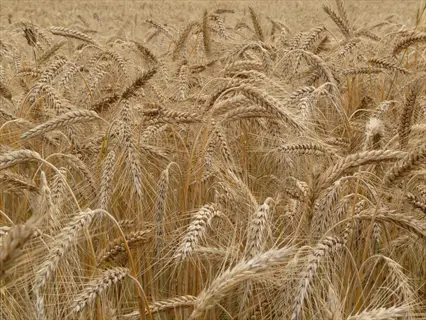
Cereal Rye (Grass)
- Best for: Erosion control, weed suppression, and nitrogen scavenging in cool seasons with excellent winter hardiness.
- Planting window: Plant from late summer through late fall, even after corn or soybean harvest in most regions.
- Performance data: SARE research shows cereal rye scavenged 25% to 100% of residual nitrogen in Georgia corn rotations.
- Termination: Roller-crimp at anthesis or apply glyphosate before stems exceed 12 inches (30 centimeters) tall.
- Allelopathy: Releases natural compounds that suppress small-seeded weeds for several weeks after termination.
- Caution: Vigorous regrowth potential makes timely termination critical to avoid competing with the cash crop.
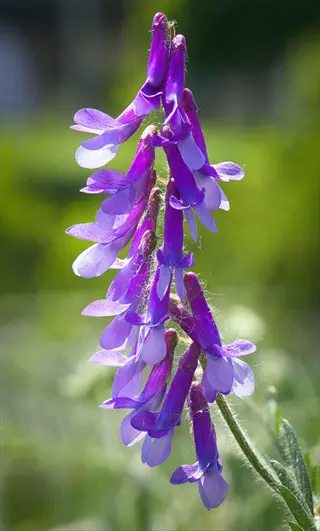
Hairy Vetch (Legume)
- Best for: Nitrogen fixation, providing 65 to 103 pounds nitrogen per acre when paired with red clover in Wisconsin trials.
- Planting window: Plant 30 to 45 days before first frost so vines establish strong roots before winter dormancy.
- Performance data: Following corn averaged 167 bushels per acre after hairy vetch versus 134 for unfertilized controls (SARE).
- Termination: Mow or roller-crimp at 30% to 50% bloom for maximum nitrogen release timing.
- Compatibility: Often interseeded with cereal rye to combine nitrogen supply with weed suppression benefits.
- Caution: Volunteer seed can persist if allowed to mature, requiring careful termination timing.

Crimson Clover (Legume)
- Best for: Fast nitrogen production with showy red blooms that attract bees and beneficial insects.
- Planting window: Plant in early fall in the Southeast or early spring in northern climates for summer termination.
- Performance data: Can fix 70 to 150 pounds nitrogen per acre when terminated at peak bloom in southern systems.
- Termination: Mow or roll at full bloom (typically 60 to 90 days after planting in warm climates).
- Pollinator value: Crimson red flowers provide abundant nectar during early-season floral shortages.
- Compatibility: Mixes well with oats or annual ryegrass for combined ground cover and nitrogen benefits.
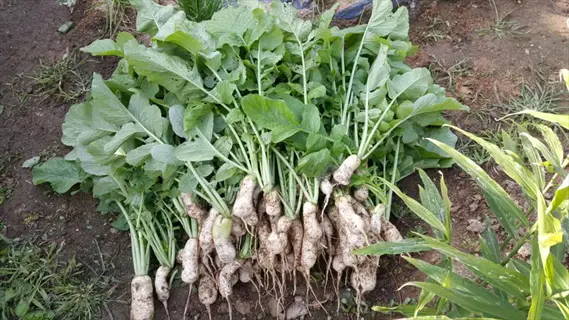
Oilseed Radish (Brassica)
- Best for: Breaking up subsoil compaction with taproots that penetrate up to 32 inches (81 centimeters) deep.
- Planting window: Plant 6 to 10 weeks before killing frost so roots fully develop before winter-kill.
- Performance data: SARE reports brassica plus cultivation cut herbicide applications by 25% or more in Pacific Northwest potato systems.
- Termination: Winter-kills at sustained temperatures below 20°F (-7°C), no mechanical termination needed.
- Biofumigation: Decomposing roots release glucosinolates that suppress soil-dwelling nematodes and fungal pathogens.
- Caution: Strong sulfur odor during decomposition may surprise neighbors in suburban or urban settings.
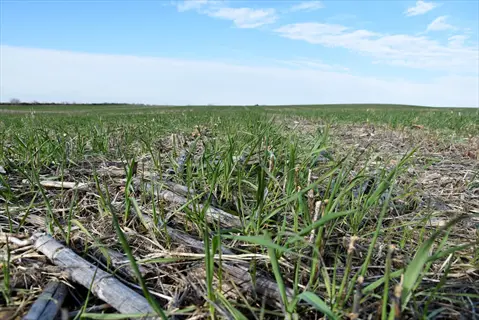
Oats (Grass)
- Best for: Quick fall ground cover and nitrogen scavenging in cool but not extremely cold climates.
- Planting window: Plant from late summer through early fall, allowing 60 days of growth before hard freeze.
- Performance data: Iowa research showed oat fall cover crops reduced drainage water nitrate concentrations by 26%.
- Termination: Winter-kills reliably below 10°F (-12°C), requires no spring herbicide.
- Establishment: Germinates within 7 to 10 days even in cool soils, making it forgiving for late planting.
- Companion: Pairs well with peas or vetch to combine biomass production with nitrogen fixation.
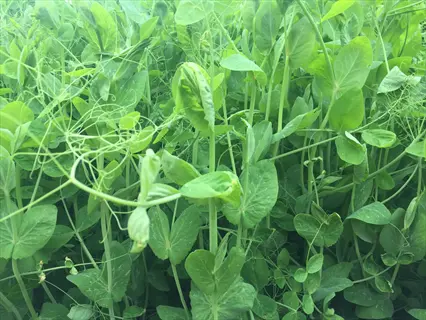
Austrian Winter Peas (Legume)
- Best for: Nitrogen supply in cool seasons, providing 80% to 100% of a potato crop's nitrogen need (Pacific Northwest).
- Planting window: Plant in early fall in mild climates or early spring in regions with harsh winters.
- Performance data: SARE-cited trials showed Austrian winter peas matched conventional nitrogen rates in potato systems.
- Termination: Mow or apply herbicide at first bloom for optimal nitrogen release into the soil.
- Soil preference: Performs best on well-drained loams and tolerates a wide soil pH range.
- Caution: Susceptible to deer browse, may need protection in small plots near woods.
Annual Ryegrass (Grass)
- Best for: Aggressive rooting to relieve mid-depth compaction and produce abundant biomass quickly.
- Planting window: Plant in early fall for winter cover or early spring for summer biomass in northern regions.
- Performance data: Roots can extend over 3 feet (1 meter) deep, opening channels for cash crop roots to follow.
- Termination: Requires multiple herbicide passes or careful tillage timing; populations have shown glyphosate resistance.
- Biomass: Produces 2 to 4 tons dry matter per acre, returning substantial organic matter to soil.
- Caution: Choose varieties bred for cover cropping rather than turf, which can become weedy.
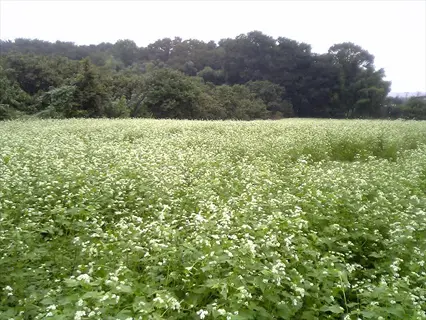
Buckwheat (Forb)
- Best for: Fast summer cover that suppresses weeds and attracts pollinators within 30 days of seeding.
- Planting window: Plant after last frost through midsummer when soil temperatures exceed 50°F (10°C).
- Performance data: Reaches flowering in just 4 to 6 weeks, making it ideal for short windows between vegetable crops.
- Termination: Mow or till at early bloom before seeds mature to prevent volunteer regrowth issues.
- Phosphorus mobilization: Roots release organic acids that unlock bound phosphorus in low-pH soils.
- Pollinator value: Small white flowers produce nectar that supports honey bees and native bees during summer dearths.
When I picked crimson clover for my first spring trial, the bees showed up within days. The mix of species also keeps the soil microbe community fed all year. Most growers find that a two or three species cocktail beats any single plant for total soil benefit.
Top Benefits Backed by Data
The real cover crop benefits show up in dollar values and yield gains you can take to the bank. SARE data shows corn after hairy vetch averaged 167 bushels per acre versus 134 for the control. That is a jump of 33 bushels that came from a few pounds of free seed.
Iowa State research found that rye cover cropping cut nitrate in drainage water by 48% over five years. That cleaner water keeps you on the right side of state rules. Legumes give you free nitrogen fixation and save cash on fertilizer. Rye gives you weed suppression that cuts your spray bill. Carbon sequestration also adds a new check from carbon programs that pay $15 to $30 per ton.
Each benefit also feeds the next one in a loop. More soil organic matter holds more water. Better water holding means better yields. Better yields fund the next year of seed. In my experience, this cycle builds year after year on the same ground.
Erosion Prevention
- Mechanism: Living roots and canopy intercept rainfall and bind soil particles year-round.
- Data point: NRCS targets 90% combined canopy and residue cover during the most erosive seasons.
- Best species: Cereal rye, annual ryegrass, and winter wheat establish rapidly and tolerate cold weather.
- Application: Critical on sloped fields and in regions with intense spring rainfall or snowmelt events.
Nitrogen Supply
- Mechanism: Legumes partner with rhizobia bacteria to fix atmospheric nitrogen in root nodules.
- Data point: Subsequent cash crops can use 30% to 60% of nitrogen produced by legume cover crops (SARE).
- Best species: Hairy vetch, crimson clover, Austrian winter peas, and red clover lead in nitrogen production.
- Application: Replace 50 to 150 pounds of synthetic nitrogen per acre depending on species and management.
Soil Carbon Storage
- Mechanism: Root exudates and decomposing biomass build stable humus and soil aggregates.
- Data point: Meta-analysis of 61 studies found average soil organic carbon increase of 7.3% (Agronomy Journal).
- Best species: High-biomass producers like cereal rye, annual ryegrass, and sorghum-sudangrass.
- Application: Enables participation in carbon credit programs paying farmers for measured sequestration.
Weed Suppression
- Mechanism: Dense canopy shades weed seedlings while allelochemicals from some species inhibit germination.
- Data point: Brassica cover crops plus cultivation cut herbicide applications by 25% or more in potato (SARE).
- Best species: Cereal rye for allelopathy, sorghum-sudangrass for biomass, mustards for biofumigation.
- Application: Reduces dependence on glyphosate and helps manage herbicide-resistant weed populations.
Water Quality Protection
- Mechanism: Roots absorb leftover nitrogen and phosphorus before runoff carries them to streams.
- Data point: Iowa State trials showed rye winter cover crop cut drainage water nitrate by 48% over 5 years.
- Best species: Cereal rye, oats, and annual ryegrass as fall nitrogen scavengers after grain harvest.
- Application: Essential in Chesapeake Bay and Mississippi River watersheds with strict nutrient targets.
Soil Biology Boost
- Mechanism: Continuous living roots feed mycorrhizal fungi, bacteria, earthworms, and arthropods year-round.
- Data point: NRCS recommends mixes of at least 3 species from 2 to 3 plant families for biological variety.
- Best species: Multi-species cocktails outperform single species for microbiome benefits.
- Application: Healthier soil biology improves disease suppression and nutrient cycling for years to come.
Water infiltration also climbs as roots open old worm channels and add organic matter. One Ohio State study found mycorrhizal fungi make glomalin, a glue that locks dirt into stable clumps. Those clumps soak up rain instead of letting it run off your field.
Stack all these gains and you get the building block effect. Each one alone might earn back your seed cost. Add them together and you can match or beat a chemical only system on both yields and net profit.
Seasonal Planting Calendar
Think of your cover crop planting calendar like a wardrobe. You would not wear a parka in July or shorts in January. The same goes for plants you put in the ground.
Summer cover crops like buckwheat work like a light shirt for warm soil. Winter cover crops like cereal rye work like a thick coat that survives the freeze. Spring cover crops fit the quick gap before corn or soy. Fall cover crops do the heavy lifting after harvest.
When I first switched to fall rye, I missed the window by two weeks and got thin stands. Now I plan my planting dates around the first frost in my area. NRCS Code 340 ties planting and kill timing to local growing degree days.
Climate shifts have moved a lot of these windows by 2 to 3 weeks in many regions. Your grandfather's planting dates may not work today. Check your local NRCS office or extension service for the most current zone advice.
The best move is to mark your calendar 30 days before your first frost. That is your latest safe planting date for fall species. Miss that mark and the seed often will not have enough warmth to establish strong roots.
Termination Methods Compared
Cover crop termination is like turning off the oven at the right minute. Pull the dish out too soon and it falls flat. Leave it in too long and it burns. Get the termination timing wrong and you waste all your seed money and field work.
NRCS Code 340 says to kill legumes at 30% to 50% bloom for the best nitrogen release. When I first tried a roller-crimper on cereal rye, I went too early and the rye sprang back up to compete with my corn. The next year I waited for anthesis and got a perfect mulch mat.
You have five main tools in your kill box. Winter-kill is free if you pick cold sensitive species. Herbicide termination is fast but costs cash. It also has weed killer push back. Tillage works on any species but breaks up your soil. Mowing is gentle but may need follow up passes.
Always check your crop insurance rules before you kill a cover crop. Most plans set firm deadlines for termination before the cash crop goes in. Miss those dates and you may lose your coverage if the next crop fails.
If you farm in a region with glyphosate resistance, a roller-crimper is your best long term tool. It costs more up front but gives you a chemical free kill. The flat mulch mat it leaves also blocks weeds for weeks after termination.
Economics ROI and Programs
Think of cover crop ROI like a soil bank account. Each seed you plant is a deposit. The yields, lower input costs, and program checks act like compound interest over time.
Your basic cover crop cost runs about $15 to $50 per acre for seed. Add $10 to $25 for seeding labor. SARE data on hairy vetch shows a strong fertilizer replacement value. That value runs 65 to 103 pounds of free nitrogen per acre. At today's prices that wipes out the seed cost on its own.
When I first ran the math on my own farm, the EQIP cost-share turned the practice from break even to profit in year one. NRCS programs like the Cover Crop Initiative pay $25 to $75 per acre based on your state. USDA also put $20 billion in IRA funding behind smart farm practices through 2031.
Run the simple math for your own farm using the table above. A typical acre with hairy vetch before corn might run $40 in seed, $15 in seeding, and earn $80 in fertilizer savings. Add a $50 cost share and you bank $75 per acre before counting yield gains.
Stack a 33 bushel yield gain on top and you double or triple your return. Visit farmers.gov to find your local NRCS office and ask about open sign up windows. The application is short and free to file.
5 Common Myths
Cover crops always reduce cash crop yields by competing for water and nutrients with the main crop.
Properly managed cover crops typically maintain or boost yields. SARE data shows corn after hairy vetch averaged 167 bushels per acre versus 134 for controls.
You only need to plant one species, since all cover crops do basically the same job in the field.
Different species deliver different benefits. NRCS recommends mixes of three or more species from two to three plant families for soil biology benefits.
Cover crops are only useful for large commercial farms and have no place in home or urban gardens.
Cover crops work in any scale. USDA Farmers.gov highlights successful use in backyard plots, urban gardens, and the USDA headquarters People's Garden.
Cover crops cost too much money and never pay back the investment in seed and labor costs.
Hairy vetch alone has shown fertilizer replacement value of 65 to 103 pounds nitrogen per acre, and EQIP cost-share offsets establishment expenses.
Once you plant a cover crop, it will terminate itself easily and never become a weed problem.
Termination requires planning. Cereal rye and other vigorous species need timely roller-crimping, herbicide, or tillage at the correct growth stage to prevent regrowth.
Conclusion
The hard numbers tell a clear story about cover crops. US acreage jumped 17% from 2017 to 2022. Soil organic carbon climbed by 7.3% on average. Legumes like hairy vetch swap in 65 to 103 pounds of nitrogen per acre. Those are real, measured cover crop benefits.
Treat this practice as a long term deposit in your soil health account. The seed and labor cost is small compared to the yield, input savings, and program checks you bank over time. Sustainable farming is not a fad. It is the same dirt your grandkids will farm.
When I first tried this, I started with one field and one species. Pick one easy goal like erosion control or extra nitrogen. Then choose the species that fits that goal best, like rye for erosion or vetch for nitrogen. Regenerative agriculture does not require a full farm switch on day one.
Your next planting window is closer than you think. Mark your calendar today and call your local NRCS office to ask about open cost share signups. USDA aims for 30 million acres of cover crops by 2030, and that funding runs through 2031. Start small, learn fast, and the soil will pay you back for decades.
External Sources
Frequently Asked Questions
What are examples of cover crops?
Common examples include cereal rye, hairy vetch, crimson clover, oats, oilseed radish, Austrian winter peas, buckwheat, annual ryegrass, and sorghum-sudangrass.
What is a cover crop?
A cover crop is a non-cash plant grown between production seasons to protect soil, build organic matter, fix nitrogen, suppress weeds, and support beneficial organisms.
What is cover cropping in simple words?
Cover cropping means planting living plants on bare farm soil during off-seasons so the ground stays covered, healthy, and biologically active instead of sitting empty.
What are the best cover crops?
The best cover crops depend on your goal. Top picks are:
- Cereal rye for erosion control and weed suppression
- Hairy vetch for nitrogen fixation
- Crimson clover for fast nitrogen and pollinators
- Oilseed radish for compaction relief
- Buckwheat for quick summer cover
What are the downsides of cover crops?
Downsides include establishment cost, additional management time, possible planting delays for the cash crop, water use in dry regions, and termination challenges if timing is wrong.
What is the 3 crop rule?
The 3 crop rule is a European Union Common Agricultural Policy requirement that farms above a certain size grow at least three different crops each year to maintain biodiversity.
Why are they called cover crops?
They are called cover crops because their main job is covering the soil surface, shielding it from rain, wind, sun, and weeds rather than producing a harvest.
Which is poor man's crop?
Sorghum is often called the poor man's crop because it grows reliably in harsh, low-input conditions with minimal water, making it accessible to resource-limited farmers worldwide.
Are oats a cover crop?
Yes, oats are a popular cool-season cover crop. They establish quickly, scavenge leftover nitrogen, prevent erosion, and winter-kill in cold regions for easy spring termination.
What are the 7 different types of farms?
The seven main farm types are:
- Arable or crop farms
- Livestock farms
- Dairy farms
- Mixed farms with crops and animals
- Poultry farms
- Aquaculture or fish farms
- Specialty farms such as orchards or vineyards