
Introduction
Penn State Extension calls the clematis vine the queen of the vines for good reason. One look at this flowering vine in full bloom shows you why. The plant grows in nearly every color a gardener wants. Hues range from rich purple to soft cream and bright sunny yellow.
I planted my first clematis 12 years ago. I made every newbie mistake before I learned the basics. NC State data shows this perennial vine family holds about 400 species. Most thrive in USDA zones 3a to 9b. That range covers nearly every backyard in the country.
Most online guides skip one big fact you need to know. Clematis carries a high toxicity rating for pets, kids, and your own skin. This guide treats that risk with the same care it gives to bloom tips.
Think of this climbing vine like a fashion model. She wants sun on her face but cool feet at all times. The leaves crave 5 to 6 hours of direct light each day. The roots need shade and steady water to do well.
Interest in vertical gardens jumped more than 35% in five years. Small city yards push folks to grow up rather than out. The queen of the vines fits this trend better than most plants you can buy.
15 Best Clematis Varieties
Picking the right clematis is a lot like picking a dog breed for your home. Each one has a unique vibe, growth pace, and care need. The right match brings you years of joy. The wrong one brings stress and dead vines by July.
I built this list from 15 trusted clematis varieties that I have grown or seen thrive in client yards. Iowa State and Clemson back many of these picks with trial data. The list covers Jackmanii clematis, Nelly Moser, Henryi, and a few fragrant clematis picks.
Big bloom hybrids still rule store shelves. Small flower types catch up fast in modern yards. Bees and bugs love the smaller species best. Skip the sweet autumn clematis since it spreads like wildfire. Evergreen clematis like armandii gives year round cover where winters stay mild.
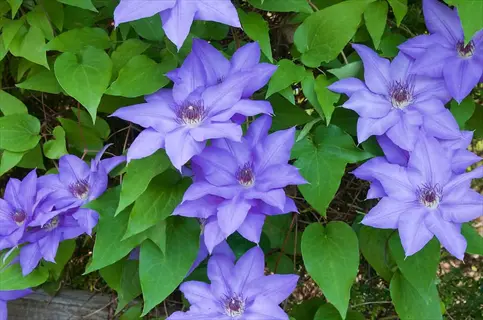
Jackmanii
- Bloom color: Deep velvety purple flowers measuring 4 to 5 inches across appear in profuse waves from June through September.
- Pruning group: Group 3 new wood bloomer that responds well to hard spring cuts down to 12 inches above ground level.
- Mature size: Reaches 10 to 12 feet tall with vigorous twining growth that quickly covers fences and trellises.
- Hardiness: Tolerates USDA zones 4 through 9 making it one of the most adaptable historic cultivars available today.
- Heritage: Bred by Hugh Morgan in 1863 and remains the benchmark large flowered hybrid against which all others are judged.
- Best use: Ideal for beginners wanting reliable color on arbors, mailbox posts, and lamp posts in full sun positions.
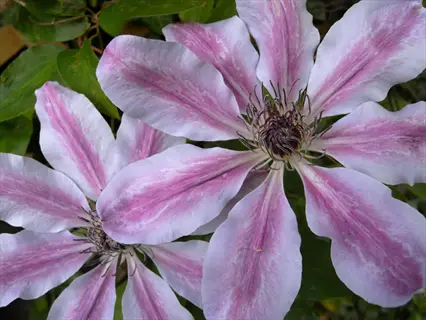
Nelly Moser
- Bloom color: Pale pink tepals with deep raspberry pink central bars create a striking pinwheel effect on 6 to 8 inch blooms.
- Pruning group: Group 2 repeat bloomer requiring only light tidying of dead wood in early spring before bud break.
- Mature size: Climbs to 8 to 10 feet with a moderate growth rate suited to medium sized arbors and fence panels.
- Hardiness: Reliable in USDA zones 4 through 9 with proven cold tolerance across the northern United States.
- Light tolerance: Performs better in partial shade because intense sun fades the signature pink stripes within hours.
- Bloom timing: Produces a heavy May to June flush followed by a lighter late summer encore display on new growth.
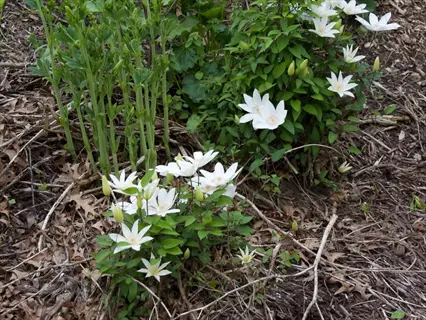
Henryi
- Bloom color: Pure creamy white tepals with chocolate brown anthers measuring 6 to 8 inches across the open face.
- Pruning group: Group 2 producing flowers on both old and new wood with two distinct waves of bloom per season.
- Mature size: Grows 10 to 12 feet tall and works beautifully on tall obelisks and against dark colored fences for contrast.
- Hardiness: USDA zones 4 through 9 with excellent cold tolerance confirmed by Iowa State Extension trials.
- Bloom window: Flowers from May through July with a late summer flush as confirmed by university extension data.
- Garden use: Pairs beautifully with dark purple cultivars like Jackmanii planted side by side for two tone displays.
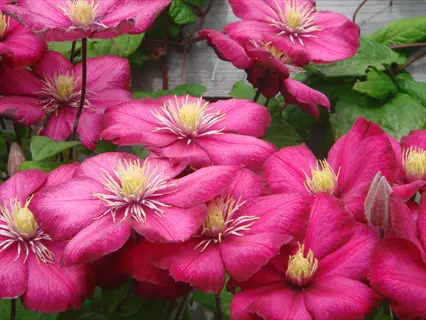
Ernest Markham
- Bloom color: Bright magenta pink to red flowers measuring 5 to 6 inches across with overlapping rounded tepals.
- Pruning group: Group 3 new wood bloomer that needs hard pruning to 6 to 12 inches each spring per Iowa State guidance.
- Mature size: Vigorous climber reaching 10 to 12 feet with dense foliage coverage on supports.
- Hardiness: USDA zones 4 through 9 with strong heat tolerance for southern gardens.
- Sun requirement: Needs at least 6 hours of direct sun daily to produce intense flower color and abundant blooms.
- Best use: Excellent for hot dry walls where other clematis struggle and rewards gardeners with reliable annual displays.
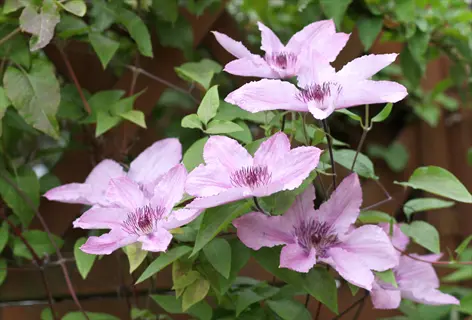
Hagley Hybrid
- Bloom color: Soft shell pink tepals with chocolate stamens producing 5 to 6 inch flowers throughout summer.
- Pruning group: Group 3 with simple maintenance requirements making it ideal for first time clematis growers.
- Mature size: Compact growth to only 6 to 8 feet making it perfect for containers and small space gardens.
- Hardiness: USDA zones 4 through 9 with proven container performance even in colder regions.
- Bloom duration: Late May through September provides four full months of continuous flower production.
- Container friendly: One of the best clematis for pots and balcony gardens due to manageable size and reliability.
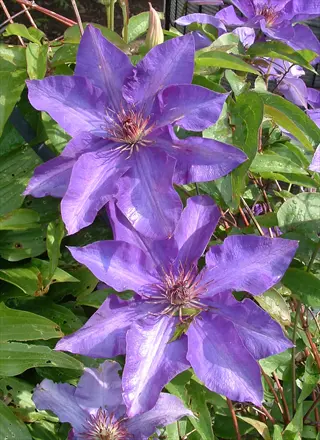
The President
- Bloom color: Rich purple blue blooms with silvery undersides creating shimmering 6 to 7 inch flowers.
- Pruning group: Group 2 flowering on both old and new wood requiring only light spring shaping.
- Mature size: Reaches 8 to 10 feet with strong upright growth suited to obelisks and pillar supports.
- Hardiness: USDA zones 4 through 8 with reliable performance across temperate regions.
- Bloom timing: May through July flush followed by a strong second wave in late August and September.
- Garden role: Functions as a vertical accent plant ideal for cottage gardens and formal border designs.
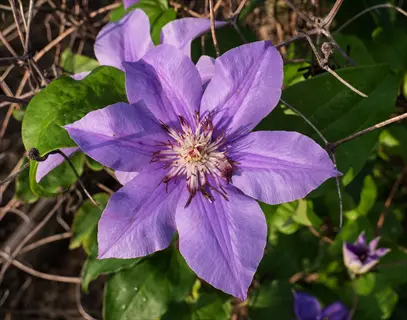
Ramona
- Bloom color: Sky blue to lavender blue flowers measuring 6 to 7 inches across with dark red anthers for contrast.
- Pruning group: Group 2 producing reliable flushes on old and new wood with minimal pruning intervention required.
- Mature size: Vigorous growth to 10 to 12 feet covering large supports quickly within two seasons.
- Hardiness: USDA zones 4 through 9 with strong adaptability to varied soil conditions.
- Color stability: Maintains blue color better than most cultivars even in afternoon sun exposure.
- Pairing: Combines beautifully with yellow climbing roses or golden hops for striking color combinations.
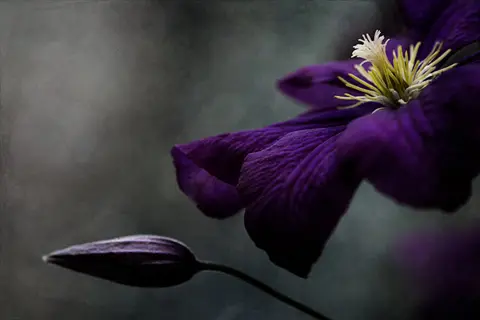
Happy Jack
- Bloom color: Deep velvety violet purple flowers with bright golden yellow stamens for vivid contrast.
- Pruning group: Group 3 with easy hard pruning each spring suitable for beginning gardeners.
- Mature size: Compact 6 to 8 feet making it ideal for small trellises, mailbox posts, and patio containers.
- Hardiness: USDA zones 4 through 9 with excellent disease resistance to clematis wilt.
- Bloom production: Flowers heavily from June through September providing months of continuous color.
- Modern breeding: A newer cultivar specifically bred for container performance and balcony gardens.
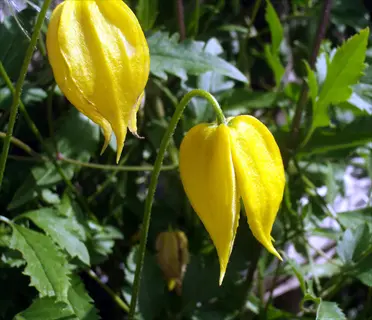
Helios
- Bloom color: Bright sunshine yellow nodding bell shaped flowers measuring 1 to 2 inches across in profuse displays.
- Pruning group: Group 3 derived from C. tangutica with hard spring cutting required to encourage fresh growth.
- Mature size: Vigorous to 10 to 13 feet with fern like foliage covering large supports.
- Hardiness: USDA zones 3 through 9 making it one of the most cold tolerant clematis available.
- Seed heads: Develops silvery fluffy seed heads that persist into winter providing four season ornamental interest.
- Pollinator value: Attracts bees, butterflies, and hummingbirds throughout its long July to September bloom period.
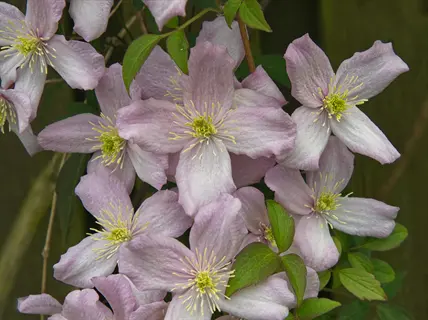
Mayleen
- Bloom color: Soft satin pink tepals with vanilla fragrance covering the entire vine in May and June.
- Pruning group: Group 1 montana type requiring only post bloom tidying and no major spring cuts.
- Mature size: Extremely vigorous to 25 to 30 feet ideal for covering large structures, sheds, or pergolas.
- Hardiness: USDA zones 6 through 9 with preference for milder winter regions.
- Fragrance: One of the few truly fragrant clematis with notes of vanilla detectable from several feet away.
- Best use: Choose for large scale coverage rather than small spaces as growth quickly becomes overwhelming.
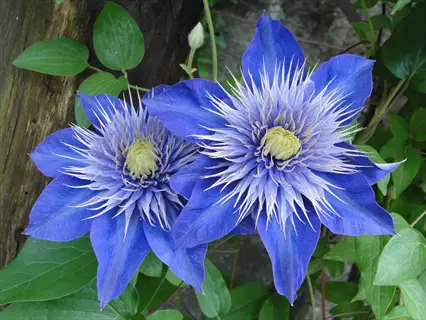
Regal Diamantina
- Bloom color: Royal blue purple double flowers resembling small dahlias with up to 100 tepals per bloom.
- Pruning group: Group 2 with light spring pruning to maintain shape and remove dead wood.
- Mature size: Compact 6 to 8 feet perfect for showcasing the elaborate flower form on smaller supports.
- Hardiness: USDA zones 4 through 9 with good cold tolerance and disease resistance.
- Flower form: Double tepal arrangement creates a pom pom effect that maintains shape even in summer heat.
- Garden use: Functions as a living jewel best displayed at eye level where the flower detail can be appreciated.
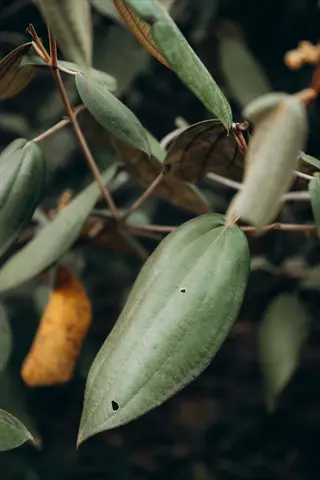
Clematis armandii
- Bloom color: Pure white star shaped flowers with sweet almond fragrance appearing in clusters during early spring.
- Pruning group: Group 1 evergreen species requiring only post bloom tidying of dead or damaged stems.
- Mature size: Vigorous evergreen reaching 15 to 30 feet according to Clemson Extension data.
- Hardiness: USDA zones 7 through 9 only as it is the least cold tolerant common clematis species.
- Foliage value: Glossy leathery evergreen leaves provide year round screening unlike deciduous cultivars.
- Bloom timing: Among the earliest clematis to flower providing March and April color when little else blooms.
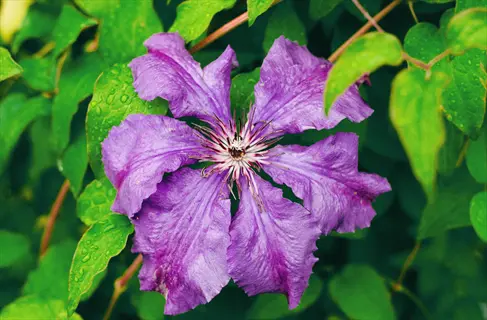
Clematis viticella
- Bloom color: Small 1 to 2 inch nodding bells in shades of purple, pink, and red depending on cultivar.
- Pruning group: Group 3 with reliable hard pruning making it forgiving for new gardeners.
- Mature size: Manageable 8 to 12 feet with delicate flowering habit suited to growing through shrubs and roses.
- Hardiness: USDA zones 4 through 9 with proven adaptability across many climate regions.
- Wilt resistance: Confirmed by Clemson Extension as one of the species most resistant to clematis wilt disease.
- Beginner friendly: Excellent first clematis due to disease resistance, easy pruning, and dependable annual blooms.
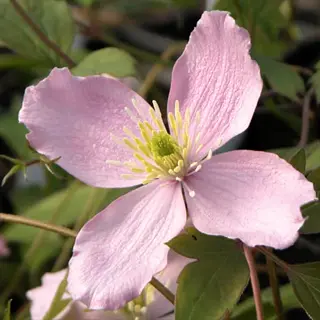
Clematis montana
- Bloom color: Pale pink to white star shaped flowers covering the entire vine in late May and early June.
- Pruning group: Group 1 species requiring only light post bloom tidying.
- Mature size: Extremely vigorous 20 to 30 feet per Clemson Extension making it suitable only for large structures.
- Hardiness: USDA zones 6 through 9 with preference for milder winters and protected positions.
- Wilt resistance: Listed by Clemson as one of the wilt resistant species along with C. alpina and C. macropetala.
- Caution: Can become aggressive in ideal conditions so site carefully where vigorous growth is welcomed.
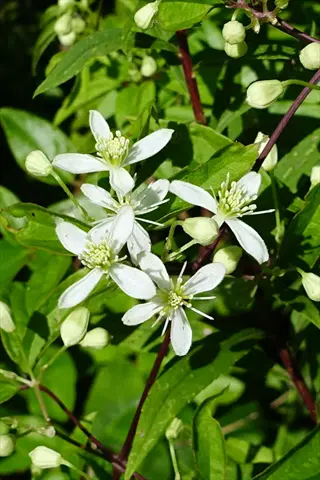
Virgin's Bower
- Bloom color: Tiny white star shaped flowers in dense panicles covering the vine in late summer through fall.
- Pruning group: Group 3 native species requiring hard spring pruning to control vigorous growth.
- Mature size: Native climber reaching 12 to 20 feet with delicate texture compared to large flowered hybrids.
- Hardiness: USDA zones 3 through 8 with exceptional cold tolerance across the eastern United States.
- Native status: Clemson Extension recommends Virgin's Bower as the native non invasive alternative to sweet autumn clematis.
- Wildlife value: Supports native bee, butterfly, and bird species making it ideal for ecological landscape designs.
If you want one safe first pick from this clematis varieties list, go with Jackmanii. It blooms hard, takes hard cuts each spring, and forgives most newbie slips. Hagley Hybrid and viticella also rank near the top for new gardeners on a budget.
Match the vine to your space and goals before you buy. Small yards need Happy Jack or Hagley Hybrid in pots. Big walls need montana or armandii for full cover. Pick by use case and your plant will pay you back for 20 years or more.
Light Soil and Site Selection
Where to plant clematis is the single biggest call you will make for this vine. I lost my first three plants to a swampy spot before I learned this hard truth. Get the spot right and your plant lives for decades. Get it wrong and you fight wilt, weak blooms, and root rot all season long.
Picture a beach goer in a wide sun hat. The face soaks up the rays but the body stays cool under shade. Sun for clematis works the same way. Penn State says you need 5 to 6 hours of direct sun on the leaves. Clemson pushes for 6 hours as the gold mark for top blooms.
Soil for clematis must drain fast or roots will rot in a wet spring. NC State sets the clematis soil pH range from 6.0 to 8.0. Neutral to a bit on the alkaline side works best for nutrient uptake by the roots.
Sunlight Exposure Requirements
- Minimum hours: Penn State Extension confirms 5 to 6 hours of direct sun daily on the foliage is required for maximum flowering performance.
- Direction preference: East or south facing positions work best because they provide morning to midday sun with optional afternoon shade.
- Hot climate adjustment: In USDA zones 8 and 9 provide afternoon shade to prevent flower fading and leaf scorch on dark cultivars.
- Shade tolerance: Some cultivars like Nelly Moser tolerate partial shade but bloom counts drop noticeably below 4 hours of direct light.
- Foliage focus: Sun should reach the upper foliage rather than the base since climbing growth carries leaves up the trellis.
Soil Composition Standards
- Drainage priority: Well draining soil prevents the root rot that kills more clematis than any other single cultural problem.
- Organic content: Amend planting holes with about 20% compost by volume per Clemson Extension recommendations.
- pH range: Maintain soil pH between 6.0 and 8.0 with neutral to slightly alkaline preferred per NC State data.
- Texture preference: Loamy soils outperform pure clay or sand but both extremes can be improved with generous compost incorporation.
- Depth requirement: Prepare soil to a depth of 18 inches and 12 to 15 inches wide for healthy root establishment.
Root Zone Cooling Methods
- Mulch application: Apply 2 to 3 inches of organic mulch but keep it pulled back 2 inches from the main stem.
- Companion planting: Plant low growing perennials like hostas, heuchera, or hardy geraniums at the base for living shade.
- Flat stone placement: Set a flat decorative stone over the root zone to retain moisture and block direct sun penetration.
- Container option: Place a tall container in front of in ground plantings to cast afternoon shade on the root area.
- Groundcover choice: Avoid aggressive groundcovers like vinca or pachysandra that compete for water and nutrients.
Locations to Avoid Completely
- Deep shade: Dense canopies under mature oaks or maples reduce light below the threshold needed for any flowering.
- Wet spots: Areas where water pools after rain create anaerobic conditions that kill clematis roots within weeks.
- Hot reflective walls: Unshaded south facing brick or stucco walls in zones 7 and warmer cook the root zone.
- Walnut proximity: While clematis is black walnut tolerant per NC State, proximity to walnuts still reduces overall vigor.
- High wind sites: Exposed windy positions tear vining stems before they can attach securely to supports.
Some folks plant hostas or hardy geraniums at the base for a living mulch. These cover the root zone and keep things cool. Heuchera works too if you want bright leaf color. Skip vinca or pachysandra since they steal water from your vine.
A partial shade clematis like Nelly Moser handles less light than most hybrids. Even she still wants 4 hours of direct sun to bloom well. Well-draining soil with a flat stone over the roots is the magic combo that most pros swear by.
Planting Depth and Timing Rules
How to plant clematis the right way takes a few steps that most folks skip. I learned this from a Penn State trial guide and from killing two of my own vines in the first year. The trick is the clematis planting depth of 2 to 3 inches below soil so the vine can regrow if wilt hits.
Think of how you plant a tomato deep so the stem makes more roots. Deep planting clematis works the same way. Buried buds act as backup if the top growth fails. Clemson calls this a survival insurance plan that no other vine needs in quite the same way.
When to plant clematis matters as much as how. Stick with spring or early fall when soil temps stay mild. Skip summer heat and frozen ground. Penn State also says to cut your new vine back to 18 to 24 inches in the first year. This pushes the plant to make multiple stems.
Mulching clematis with 2 to 3 inches of compost locks in the moisture. Keep the mulch about 2 inches away from the main stem. This stops rot at the crown and still keeps roots cool through hot months.
Growing clematis in containers works well if you size the pot right. Use a tub at least 18 inches wide and deep. Smaller pots dry out and cook the roots in midsummer. Feed potted vines more often since water washes nutrients out fast.
Pruning Groups Made Simple
Pruning clematis scares more new gardeners than any other task on the care list. The good news is that it boils down to one simple rule. When to prune clematis depends on which of the clematis pruning groups your plant belongs to.
Think of pruning like a haircut. Group 1 clematis gets only a small trim once a year after the wedding. Group 2 clematis gets light layers twice a year for shape. Group 3 clematis gets a full buzz cut each spring with no fuss. Pruning on old wood matters for Group 1 and 2 alone.
Heads up on a tricky point. Penn State, Clemson, and the RHS use one set of numbers. Iowa State flips Group 1 and Group 3. I always check by bloom time and not the label on the plant tag. That one habit saves a lot of headaches each year.
Group 1 - Old Wood Bloomers
- Bloom timing: These clematis bloom only on old wood in May with species like C. alpina, C. macropetala, C. montana, and C. armandii.
- Pruning rule: Per Clemson Extension prune after flowering ends but no later than the end of July to allow new wood to mature.
- What to remove: Cut out dead, damaged, or crossing stems only and remove no more than one third of total growth annually.
- Common mistake: Spring pruning destroys all flower buds because they formed on stems grown the previous summer and fall.
- Memorable rule: If your clematis blooms before June then never prune it in spring or you will lose the entire show.
- Example cultivars: Mayleen, Apple Blossom, and most evergreen clematis fall into this low maintenance pruning category.
Group 2 - Repeat Bloomers
- Bloom timing: Flowers on both old and new wood with a heavy May to July flush followed by a late summer encore display.
- Pruning rule: Per Clemson Extension light pruning in February or March back to the topmost pair of plump green buds on each stem.
- Approach: Work from the top of each stem downward removing only the dead wood above the first healthy bud pair.
- What stays: Preserve the woody framework as these stems carry the early summer blooms before new growth blooms later.
- Common confusion: Beginners often cut these too hard which sacrifices the first wave of large early flowers entirely.
- Example cultivars: Nelly Moser, Henryi, The President, Ramona, and most large flowered double cultivars.
Group 3 - New Wood Bloomers
- Bloom timing: Flowers exclusively on the current season's growth from late May through September on cultivars like Jackmanii.
- Pruning rule: Cut all stems to within 6 to 12 inches (15 to 30 cm) of the ground per Iowa State or 2 to 3 feet per Clemson in February or March.
- Why hard cuts work: New shoots emerge from below the cut points and produce flower buds within 60 to 90 days.
- Numbering warning: Iowa State Extension inverts the numbering and calls these Group 1 so always verify by bloom timing rather than label.
- Visual cue: If your clematis blooms only after late June then it almost certainly belongs in this hard pruning category.
- Example cultivars: Jackmanii, Ernest Markham, Hagley Hybrid, Happy Jack, Helios, viticella types, and Virgin's Bower.
Identifying an Unknown Clematis
- Watch one season: Penn State Extension advises observing flowering habit over one full growing season before assigning a pruning group.
- Track bloom dates: Record when flowers first open and whether a second wave appears in late summer on the same plant.
- Stem inspection: Old wood bloomers have woody persistent stems while new wood types die back to near ground level naturally.
- Bud timing test: Cut a small test stem in early spring and watch where new growth emerges to confirm the group.
- Forgiveness factor: Penn State confirms that incorrect pruning will not kill clematis but will shift bloom timing for that season.
- When in doubt: Treat as Group 2 with light spring pruning since this approach causes the least damage across all three groups.
If you only buy one vine this year and want zero pruning stress, pick a Group 3 clematis like Jackmanii or Hagley Hybrid. You cut them down each spring to about 12 inches. New growth pops up and blooms in 60 to 90 days. No tricky calls about old wood or new wood at all.
Watering Feeding and Trellis Care
Watering clematis the right way means deep weekly soaks. Skip the light daily sprays. Clemson sets your target at about 1 inch per week for set in plants. I water mine with a slow drip line for 20 minutes each Sunday morning in my own back yard.
Fertilizer for clematis starts in spring when you see the first buds on your vine. Use a balanced 10-10-10 mix for the first round of food. In my own beds I switch to a low nitrogen feed once flowers open. Too much nitrogen gives you loads of leaves but cuts your blooms.
Training clematis on a trellis for clematis takes hands on care from you in the first weeks. Think of teaching a kid to walk. You hold their hand at first but soon they take off on their own. Tying in clematis stems with soft twine guides your vine until the leaf stems grab the clematis support for themselves.
Watering Schedule and Depth
- Weekly target: Apply approximately 1 inch (2.5 cm) of water per week per Clemson Extension guidance for established plants.
- Deep soaking: Water deeply every 5 to 7 days rather than light daily sprinkling to encourage roots to grow downward.
- First year priority: Newly planted clematis need consistent weekly watering throughout the first full growing season without exception.
- Container watering: Pots may need daily checking in hot weather because container soil dries faster than ground plantings.
- Stress signs: Wilting leaves in afternoon heat that recover by morning indicates adequate water and is normal during heat waves.
- Mulch retention: A 2 to 3 inch (5 to 7.6 cm) mulch layer cuts water needs by about 30% during summer.
Fertilizer Application Strategy
- Spring start: Apply balanced 10-10-10 fertilizer when buds first appear in early spring at label rates.
- Mid season boost: Switch to lower nitrogen 5-10-10 or bone meal once flowering begins to encourage continued bloom production.
- Frequency: Feed every 4 to 6 weeks during the active growing season but stop feeding by August to allow hardening off.
- Container needs: Potted clematis require liquid feed every 2 weeks because container watering leaches nutrients faster than ground soil.
- Compost topdress: Apply 1 inch (2.5 cm) of finished compost in spring as a slow release organic supplement.
- Over feeding caution: Too much nitrogen produces lush foliage but reduces flower production so follow label rates strictly.
Trellis and Support Selection
- Maximum diameter: Per competitor analysis support material should not exceed 0.5 inch (1.3 cm) in diameter for clematis leaf petioles to grasp.
- Material options: Wire mesh, jute netting, thin bamboo, and lattice work better than thick wooden dowels or pipes.
- Tree support: Growing clematis through shrubs or trees per RHS provides natural support without any installed structure.
- Wall mounting: Install supports 2.5 cm or approximately 1 inch from walls per RHS to allow air circulation behind stems.
- Anchor strength: Permanent structures should support 30 to 50 pounds of mature vine weight when wet during heavy rains.
- Aesthetic match: Choose supports that complement the architectural style as they remain visible in winter after leaf drop.
Training and Tying Techniques
- Early guidance: Tie young stems gently with soft twine to start them up the support in the desired direction.
- Frequency: Check tied stems weekly during the spring growth surge since clematis can grow 6 inches (15.2 cm) per week.
- Spreading rule: Train stems horizontally as well as vertically to maximize flower display across the support surface.
- Tie material: Use soft jute, garden twine, or fabric strips that will not cut into expanding stems as they thicken.
- Self attachment: Once leaf petioles grasp the support no further tying is needed for that stem segment.
- Renovation tip: Per RHS overgrown plants can be renovated by cutting back hard over two consecutive springs.
One last care tip on your supports. The thickest part of your trellis should be 0.5 inch or less in width. Clematis leaf stems can grab thin wire, twine, or jute mesh but they slip right off thick wood dowels. In my experience I tossed my first lattice when I saw the slats were too thick for the stems to twine.
Toxicity and Invasive Warnings
You may wonder if clematis is poisonous to you or your pets. Yes it is, and most online guides skip this fact. NC State Extension rates clematis toxicity as high for humans and pets. The plant holds a chemical called protoanemonin in its sap and leaves. I learned this the hard way when I got a red rash on my arm after a long pruning day.
Think of clematis like a stunning but risky movie star. The looks draw you in but you must treat the plant with respect. Wear gloves each time you prune. Keep cut bits out of reach of dogs, cats, and small kids. Horses are also at risk if a vine grows on a pasture fence.
The sweet autumn clematis invasive problem is a big one. Clemson Extension lists C. terniflora as a known pest in the South. The vine reseeds and smothers native plants in the wild. Plant the native clematis alternative called Virgin's Bower instead for the same look without the harm.
Toxicity to Humans
- Severity rating: NC State Extension classifies clematis as high toxicity due to the chemical compound protoanemonin in leaves and sap.
- Ingestion symptoms: Eating any plant part causes severe mouth pain, ulcers, dizziness, confusion, and potentially convulsions in serious cases.
- Skin contact: Sap contact triggers contact dermatitis with redness, burning, and blistering on sensitive individuals within hours.
- Glove requirement: Always wear gardening gloves when pruning, transplanting, or handling cut clematis stems and foliage.
- Children risk: The colorful flowers and seed heads attract curious toddlers so site plants away from play areas when possible.
- Compost handling: Wear gloves when adding clematis trimmings to compost bins to avoid repeated skin exposure over time.
Toxicity to Pets
- Affected animals: NC State Extension confirms toxicity to dogs, cats, and horses with all three species showing clinical symptoms.
- Common symptoms: Salivation, vomiting, and diarrhea appear within hours of ingestion in companion animals.
- Bitter taste deterrent: Fortunately the bitter taste usually limits how much animals consume in a single feeding incident.
- Pasture caution: Horses are at highest risk if clematis grows on pasture fences within grazing reach of curious mouths.
- Veterinary contact: Contact a veterinarian immediately if a pet consumes any clematis foliage even in small quantities.
- Safer placement: Site clematis on supports above the reach of pets or behind decorative fencing to prevent accidental access.
Sweet Autumn Clematis Warning
- Invasive listing: Clemson Extension confirms sweet autumn clematis (C. terniflora) is on the South Carolina Exotic Pest Council Invasive Species List.
- Spread mechanism: The plant reseeds freely producing thousands of windborne seeds that germinate widely in disturbed soil.
- Aggressive growth: Mature plants reach 30 feet smothering native vegetation and outcompeting beneficial pollinator plants.
- Direct guidance: Clemson Extension states explicitly Do not plant this species in any garden in affected regions.
- Identification clues: Small white star shaped flowers in dense panicles during August and September signal the invasive species.
- Multi state concern: While only South Carolina formally lists it many other states report similar invasive behavior in surveys.
Native and Safer Alternatives
- Virgin's Bower preference: Clemson Extension recommends native Virgin's Bower (C. virginiana) as the non invasive alternative to sweet autumn clematis.
- Wildlife support: Native clematis supports specialist bee species, butterfly larvae, and seed eating birds adapted to local ecosystems.
- Visual similarity: Virgin's Bower produces similar small white star shaped late summer flowers without the invasive spread.
- Cultivated hybrids: Modern large flowered hybrids like Jackmanii, Henryi, and Nelly Moser do not naturalize aggressively in garden settings.
- Species clematis: Wilt resistant species like C. viticella and C. alpina offer safer options than terniflora for ecological gardens.
- Local verification: Check your state's invasive species list before planting any new clematis species to confirm regional safety.
Check your state list before you buy any new vine. Many states track C. terniflora even if they have not yet banned it. Folks often ask, is clematis poisonous to all pets. Yes the whole genus holds the same toxic sap. A safe vine today protects your yard and the wild spaces that your bees visit.
Diseases Pests and Winter Care
Clematis wilt is the bug that scares most gardeners off this vine. Picture a sudden flu that knocks out a healthy plant in 24 hours. Stems collapse, leaves go black, and the whole vine looks like it died in one night. The cause is a fungus called Phoma clematidina.
Deep planting from section 4 acts as your backup. Buried buds spring back from below the soil line once you cut the dead growth off. I have seen a vine come back to full bloom in eight weeks after a bad wilt strike. The vine looks dead but the roots stay strong.
Other clematis diseases and clematis pests show up in mild forms most years. Powdery mildew clematis issues hit when air sits still around the leaves. Winter care clematis plans need a four inch mulch layer on the crown before the first hard frost. These steps fix most clematis problems before they grow big.
Want to dodge wilt for good? Plant a wilt resistant species from the Clemson list. C. viticella and C. alpina rank near the top for tough plants. I switched two beds to viticella types five years back and have not seen one wilt strike since that day.
5 Common Myths
All clematis vines should be cut back hard to the ground every spring for the best flower display.
Only Group 3 clematis tolerates hard cutting. Group 1 and 2 plants will lose most of their flower buds if pruned this way.
Clematis prefers full shade and grows best on the cool north side of a house away from direct light.
Clematis needs 5 to 6 hours of direct sun on the foliage to bloom well. Only the roots should be kept shaded and cool.
You should plant clematis at the same depth as it sits in the nursery container to avoid stem rot.
Plant the crown 2 to 3 inches below soil level so the vine can regrow from buried buds if clematis wilt strikes.
Clematis vines are completely safe around pets and children since they are common ornamental garden plants.
Clematis is rated high toxicity by NC State Extension and contains protoanemonin causing dermatitis and pet illness.
Sweet autumn clematis is a wonderful fragrant native vine perfect for covering fences and arbors quickly.
Sweet autumn clematis is invasive in many states. Choose native Virgin's Bower or non-aggressive hybrids instead.
Conclusion
Three core care pillars guide all good clematis care plans. Give the leaves 5 to 6 hours of sun while you keep the roots shaded and cool. Plant the crown 2 to 3 inches below soil for wilt backup. Spot your pruning group by watching one full bloom cycle before you cut.
A well placed clematis vine pays you back for decades to come. Some old plants live for 50 years or more in the right spot with simple yearly care. Your time spent on site choice and soil prep up front is the smartest move you can make for this vine.
This guide also dug into the gaps most other sites skip. Toxicity needs respect since the queen of the vines carries a high rating from NC State. Skip the invasive sweet autumn clematis and pick safer clematis varieties for your zone. Always check the clematis pruning groups twice since Iowa State and Penn State use flipped numbers.
Scroll down to the FAQ for quick fixes to common issues you may face. From watering swings to winter prep, the answers below tie back to the same university sources used in this guide. With this plan in hand you can grow a clematis that will thrive long past your first decade of effort.
External Sources
Frequently Asked Questions
What are the downsides of clematis?
Clematis can suffer sudden wilt collapse, contains toxic protoanemonin, and demands precise pruning by group to bloom well.
Do clematis vines like sun or shade?
Clematis prefers 5 to 6 hours of direct sun on the foliage while keeping the root zone shaded and cool.
Do clematis come back every year?
Yes, clematis is a hardy perennial vine that returns each spring in USDA zones 3 through 9 depending on species.
Are clematis vines hard to grow?
Clematis is moderately easy once you understand the three care basics:
- Sun on foliage with shaded roots
- Deep planting 2-3 inches below soil
- Correct pruning group identification
Where not to plant clematis?
Avoid these problem spots:
- Heavy shade under dense tree canopy
- Waterlogged or poorly drained soil
- Hot south-facing walls without root shade
- Near walnut trees with allelopathic roots
Will a clematis survive winter?
Most clematis survive winter down to USDA zone 3 when planted deeply and mulched with 2 to 3 inches of compost.
Is clematis better in pots or ground?
Clematis grows best in the ground but compact cultivars thrive in pots at least 18 inches wide with regular feeding.
What is the secret to growing clematis?
The secret is the head in sun, feet in shade rule combined with deep planting and patience during the first two years.
Should you water clematis daily?
No, water clematis about 1 inch per week with deep soakings rather than daily light sprinkles for healthier roots.
What is the lifespan of a clematis?
A well-sited clematis can live 20 to 50 years and some heritage specimens have been recorded thriving for over 80 years.