
Introduction
Most companion planting charts you see online just copy old folklore. Gardeners pass the same tips around year after year. The UMN Extension says many popular pairings fail in real tests. Your vegetable garden can suffer when you trust bad advice.
I tested plant pairings in my own beds for years. I learned which mixes work and which ones flop. The good pairings share a clear reason rooted in plant science. The bad ones trace back to one claim with no proof.
Think of your garden bed as a small block of homes. Each plant is a neighbor. Good neighbors share food, draw bees, and watch for pests. Bad neighbors fight for water and steal each other's space. Smart growers pick plant companions that bring mutual benefits to the whole block.
The science gives us hard numbers to use. USDA data shows beans and peas can fix 50 to 200 pounds of nitrogen per acre each year. That equals 22.7 to 90.7 kilograms of free plant food for your soil. Those gains can shape how you plan beds each season.
Polyculture dates back over 2,200 years to 200 BCE per Utah State Extension. People have used intercropping for ages. But only modern tests show which pairings work. This guide ranks each one by proof so you can plant with full trust in the data.
Best Vegetable Pairings
A great garden bed works much like a strong sports team lineup. Each player covers a spot the others cannot. Tomato companion plants guard the fruit while cucumber companion plants lure pests off the vines. I built this chart from years of bed trials and the latest extension data.
Smart pairings also tap into root depth. Michigan State Extension notes that deep and surface roots pull water from different soil layers. That trick lets carrot companion plants like peas thrive in the same bed. Lettuce companion plants like chives also share space well thanks to their slim roots.
Tomato pairings show the strongest data of all the matches I have grown. UMN Extension trials show basil and marigolds cut thrip numbers on tomatoes in both field and greenhouse tests. That gives you fewer bug spots on your fruit without a single spray.
Onion companion plants like carrots and lettuce work well for spacing. But keep onions far from beans and peas. The reason shows up in the next section. Brassica companion plants like sage and thyme draw in hoverflies that hunt cabbage pests, which is one of the best wins in the whole chart.
Science Behind It Works
Think of your garden as a home security system with many layers. Some plants act as cameras that block the view of pests. Other plants serve as alarms that send out volatile compounds. A few plants act like guard dogs that draw in parasitoid wasps to hunt the bugs.
Most blogs say marigolds repel pests without telling you how. The real story shows clear paths from plant to pest. I dug into the lab data so you can pick pairings with full trust. Five core methods drive every proven pairing in your bed.
Nitrogen Fixation by Legumes
- Mechanism: Beans and peas host rhizobia bacteria in root nodules that convert atmospheric nitrogen into plant-usable forms.
- Effect size: USDA data shows legumes can contribute 50 to 200 pounds (22.7 to 90.7 kilograms) of nitrogen per acre annually.
- Caveat: Most of the fixed nitrogen feeds the legume itself; neighbors benefit mainly from decomposed residue the following season.
- Best use: Plant pole beans with corn and follow heavy feeders like tomatoes with a bean cover crop in rotation.
Predator and Parasitoid Habitat
- Mechanism: Flowering insectary plants supply nectar and pollen that sustain adult hoverflies, parasitoid wasps, and minute pirate bugs.
- Effect size: Coriander planted with cabbage reduced pest infestation by attracting hoverflies per Morris and Li 2000 in NZ Journal of Crop and Horticultural Science.
- Caveat: Increased predator populations do not always translate into fewer crop pests due to dispersal limitations.
- Best use: Add umbel-flowered plants like dill, fennel, and coriander every 6 to 10 feet (1.8 to 3 meters) along beds.
Trap Cropping
- Mechanism: A more attractive sacrificial plant lures pests away from the cash crop, concentrating damage where it can be managed.
- Effect size: Blue hubbard squash significantly reduces cucumber beetle, squash bug, and squash vine borer damage per UMN Extension trials.
- Caveat: Trap crops only succeed when planted on the perimeter ahead of the main crop and removed or treated before pests disperse.
- Best use: Plant blue hubbard squash 10 to 15 feet (3 to 4.6 meters) from your main cucurbits about 2 weeks earlier.
Odor Masking and Volatile Defense
- Mechanism: Aromatic plants release volatile compounds that confuse pest insects searching for hosts or directly inhibit their growth.
- Effect size: Oregano produces carvacrol and thymol that act as insecticides per Utah State University Extension.
- Caveat: Volatile effects fade quickly outdoors and depend on planting density and weather conditions.
- Best use: Interplant clusters of basil, sage, oregano, and thyme densely among target vegetables rather than as single specimens.
Spatial and Resource Partitioning
- Mechanism: Plants with different root depths, canopy heights, and water needs share the same bed without head-to-head competition.
- Effect size: Michigan State University Extension cites carrots with peas, strawberries with bush beans, and asparagus with tomatoes as classic depth pairings.
- Caveat: Excessive density still causes competition for light, water, and soil nutrients regardless of root depth.
- Best use: Pair deep tap roots like carrots with surface feeders like lettuce, and tall corn with low-growing squash for ground cover.
French marigolds use a smart chemical trick beyond simple repellent claims. Conboy 2019 in PLOS ONE found French marigolds give off airborne limonene that guards tomatoes from greenhouse whiteflies. That is the clear path we look for in good pairings. Nitrogen fixation in beans works the same way.
Hoverflies and syrphid flies rank as my top bug allies. One female syrphid fly drops hundreds of eggs near soft prey per Delaware Extension. The young then eat aphids by the score. Allelopathy plays a role too. Plant roots send root exudates and signals through hidden mycorrhizal networks under the soil. A good trap crop like nasturtium also pulls pests off your main bed.
Plants to Avoid Pairing
Some plants act like bad roommates in a shared home. Two heavy feeders fight over the fridge. Fennel behaves like a tenant who poisons the water supply. I learned this the hard way after losing a row of bush beans to fennel that I had planted nearby.
Bad companion plants often share pests, fight for the same food, or release chemicals that block growth. This block-and-burn effect is called allelopathy. Knowing the plants to avoid can save your harvest more than picking good pairings can. The chart below shows the top companion planting enemies I have tested.
Old gardeners spotted some bad pairings ages ago. Utah State Extension cites the Roman writer Varro. He wrote that cabbage near grapes hurt the vines. Modern data backs that old note. You will see the same clash with alliums with legumes. Onions and garlic block the soil bacteria your beans need to fix nitrogen.
Nightshades like potato and tomato share the same pests and sickness. Plant them near each other and blight can wipe out both crops in one rainy week. The black walnut juglone issue runs even deeper. The tree leaks juglone from its roots, leaves, and nuts. Your vegetables will wilt within the drip line of mature walnut trees.
Flowers and Herbs as Helpers
Think of your flowers and herbs as the volunteer crew at a community garden. Each one has a special job to do. Some act as scouts that draw in bees. Others act as bouncers that scare off pests. A great marigold companion plant can do both jobs at once.
Pick your helpers based on what they bring to the bed. A nasturtium companion plant lures aphids away from squash. A basil companion plant keeps thrips off your tomatoes. Borage, calendula, dill, alyssum, and sunflower each have their own job. Delaware Extension warns that fancy bred annuals like modern pansies often lack the nectar bees need.
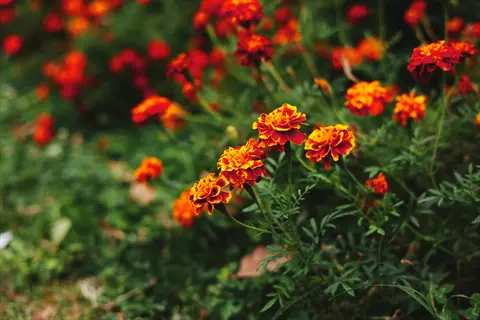
French Marigold
- Active compound: Releases airborne limonene that suppresses glasshouse whiteflies on neighboring tomatoes per Conboy 2019 in PLOS ONE.
- Best partners: Pairs strongly with tomatoes, peppers, and brassicas when planted within 12 to 24 inches (30 to 60 centimeters).
- Pest targets: Reduces whitefly and thrip pressure and supports root-knot nematode suppression when used as a cover crop.
- Growing tips: Sow directly after last frost in full sun with moderate water; pinch spent blooms to extend flowering season.
- Caveat: Does not deter Colorado potato beetles or flea beetles despite widespread folklore claims to the contrary.
- Bonus value: Edible petals add color to salads and the flowers attract hoverflies that prey on aphid colonies.
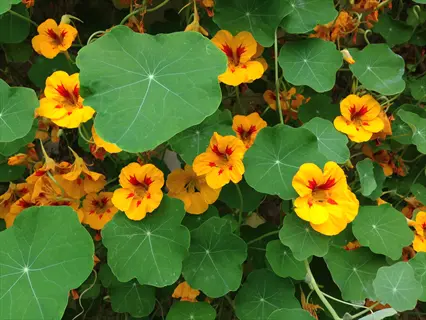
Nasturtium
- Active compound: Mustard-oil volatiles attract aphids and squash bugs, making it one of the most effective trap crops in the garden.
- Best partners: Excels around cucumbers, squash, broccoli, and beans where it draws pests off the main crop.
- Pest targets: Concentrates aphids, cabbage moths, and squash bugs onto its own foliage for easier manual removal.
- Growing tips: Thrives in poor soil with low fertility; rich soil produces lush leaves and few flowers.
- Caveat: Heavy aphid loads require removal before pests reproduce and spread back to the cash crop.
- Bonus value: Peppery leaves and brightly colored flowers are edible and add nutrition to summer dishes.
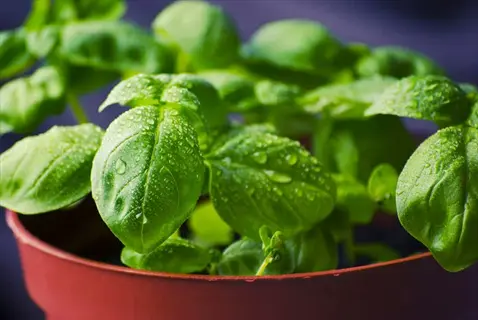
Sweet Basil
- Active compound: Aromatic volatiles including eugenol and linalool reduce thrip populations on tomatoes per UMN Extension trials.
- Best partners: Plant within 18 inches (46 centimeters) of tomato stems and around peppers for layered pest defense.
- Pest targets: Discourages thrips and may confuse host-seeking moths searching for solanaceous crops.
- Growing tips: Pinch tips weekly to keep plants bushy and prevent flowering, which redirects energy into leaf volatiles.
- Caveat: Flavor improvement claims for neighboring tomatoes lack controlled-trial support and remain folklore.
- Bonus value: Continuous culinary harvest provides fresh leaves all summer for kitchen use alongside garden benefits.
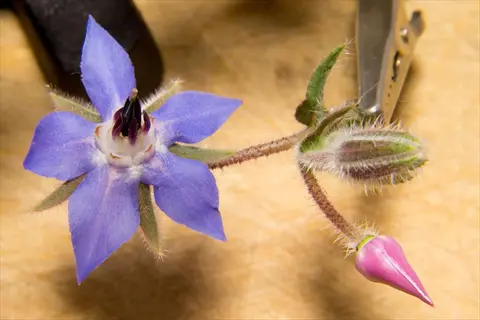
Borage
- Active compound: Star-shaped blue flowers provide exceptional nectar volume that draws bumblebees and honeybees to the garden.
- Best partners: Strawberries, tomatoes, and squash benefit from increased pollination visits driven by borage flowering.
- Pest targets: Indirectly reduces fruit damage by improving pollination, which leads to faster fruit set and shorter vulnerability windows.
- Growing tips: Self-seeds aggressively once established; sow once and expect volunteers for years to come.
- Caveat: Can become weedy if not managed and may shade out smaller seedlings beneath its broad leaves.
- Bonus value: Edible cucumber-flavored flowers garnish drinks and salads, and bees produce excellent honey from borage.
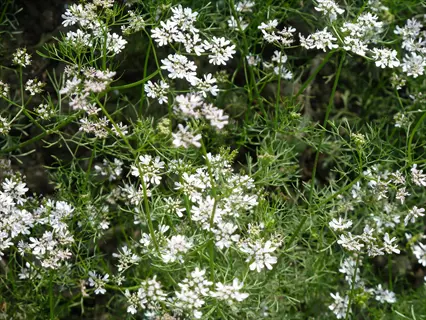
Coriander or Cilantro
- Active compound: Tiny white umbel flowers offer accessible nectar that attracts hoverflies whose larvae devour aphids.
- Best partners: Cabbage, broccoli, and other brassicas benefit most as documented by Morris and Li 2000 study.
- Pest targets: Hoverfly larvae attracted by coriander significantly reduce aphid colonies on neighboring cabbages.
- Growing tips: Let some plants bolt and flower rather than harvesting all leaves; flowers deliver the beneficial insect benefit.
- Caveat: Bolts quickly in hot weather and needs successive sowings to maintain a steady flowering presence.
- Bonus value: Provides both fresh cilantro leaves early and coriander seeds later in the season for the kitchen.
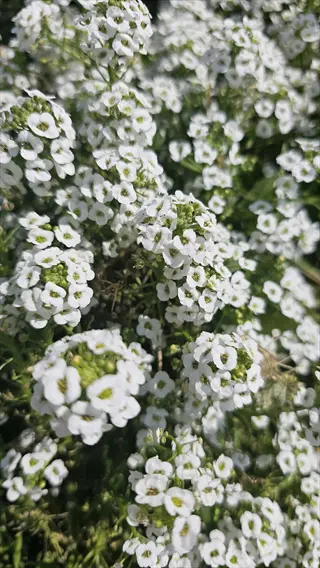
Sweet Alyssum
- Active compound: Dense low clusters of tiny white flowers feed parasitoid wasps and minute pirate bugs throughout the season.
- Best partners: Lettuce, brassicas, and tomatoes gain biocontrol from the wasps and predators that alyssum sustains.
- Pest targets: Supports natural enemies that control aphids, thrips, and small caterpillars indirectly.
- Growing tips: Plant as a living ground cover along bed edges and between rows of taller vegetables.
- Caveat: Needs continuous bloom to maintain beneficial insect populations; replace tired plants in midsummer.
- Bonus value: Honey-scented flowers attract many pollinator species and form an attractive border that suppresses weeds.
Note the named compound in each entry. I learned to look for that detail after years of vague advice. The French marigold ranks at the top because of its airborne limonene. Conboy 2019 in PLOS ONE proved that limonene guards tomatoes from greenhouse whiteflies. That makes French marigold the gold standard of the bunch.
Mix at least three of these helpers into your beds for the best result. One alone gives limited cover. Three or more give you stacked layers of pest control. I keep basil, French marigold, and nasturtium near my tomatoes each year.
Three Sisters and Trap Crops
Picture your garden as a small medieval castle. Three Sisters plants act as the main defense. Corn beans squash plants each have a role. Corn stands as the watchtower. Beans climb the walls. Squash forms a thorny moat at the base. Trap cropping sets up decoy outposts on the edge.
These plans come from old farms in the Americas. The indigenous agriculture behind them runs deep. USDA NAL records show the milpa system has fed people for hundreds of years. Pueblo, Mandan, and Iroquois farmers all grew the trio side by side. Perimeter planting of blue hubbard squash is a newer trick I added to my own garden plan.
The Three Sisters
- Roles: Corn provides the climbing pole, pole beans fix nitrogen, and squash leaves shade soil and deter raccoons.
- Spacing: Plant corn in mounds 4 feet (1.2 meters) apart, add beans when corn reaches 6 inches (15 centimeters), squash between mounds.
- Cultural origin: Documented across Pueblo, Mandan, and Iroquois agriculture and central to the Mesoamerican milpa system per USDA NAL.
- Modern evidence: Some studies show roughly 20% calorie advantage per area; per-plant yields can be comparable to monoculture.
Blue Hubbard Trap Crop System
- Roles: Blue hubbard squash serves as a sacrificial perimeter plant that draws cucumber beetles, squash bugs, and vine borers away.
- Spacing: Plant trap crop rows 10 to 15 feet (3 to 4.6 meters) from main cucurbits about 2 weeks earlier than the cash crop.
- Cultural origin: Modern integrated pest management adaptation tested extensively by UMN Extension and other land-grant universities.
- Modern evidence: Significantly reduces beetle and borer damage on neighboring cucumbers, summer squash, melons, and pumpkins.
Insectary Strip Intercropping
- Roles: Buckwheat, cowpea, and sunn hemp planted in strips boost predator and parasitoid populations of corn earworm per UMN.
- Spacing: Plant insectary strips 3 to 4 feet (0.9 to 1.2 meters) wide between every 4 to 6 rows of cash crops.
- Cultural origin: Modern agroecology technique scaling from indigenous polyculture traditions into commercial vegetable systems.
- Modern evidence: Increases the activity of parasitoid wasps and predatory bugs across nearby vegetable rows during the bloom period.
Brassica Three-Species Trap Mix
- Roles: Mixed trap crops of arugula, Chinese mustard, and pak choi attract diamondback moth and cabbage looper away from cabbage.
- Spacing: Plant a 2 to 3 foot (0.6 to 0.9 meter) trap mix border around brassica blocks at the start of the season.
- Cultural origin: Modern integrated pest management evolution validated by UMN Extension trials on Brussels sprouts and cabbage.
- Modern evidence: Three-or-more species trap crop mixes outperform single trap crops in brassica protection per UMN.
The Three Sisters work because each plant gives the others what they lack. Your beans fix 50 to 200 pounds of nitrogen per acre per year. That equals 22.7 to 90.7 kilograms. Your corn uses the nitrogen to grow tall and lend a pole for your beans. Your squash leaves shade out weeds and keep your soil moist all summer long.
Trap crop timing makes or breaks your whole plan. UMN Extension trials show that three or more trap species beat single ones for brassica beds. In my own garden I plant blue hubbard squash about two weeks before my main cucumbers. That head start gives your trap crop time to bloom and pull the bugs in first.
Garden Layout and Planning
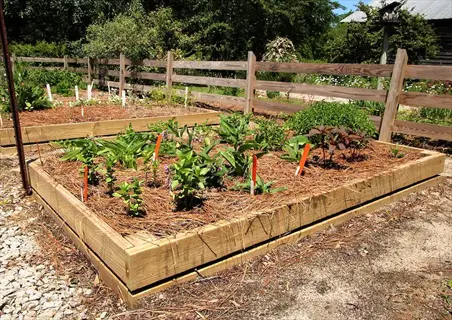
Treat your companion planting layout like an apartment building floor plan. Each plant gets the right room. Sun, root depth, and neighbors all matter. Plan the right house and your whole vegetable garden layout will work as one team. I sketch my beds each spring before I buy a single seed.
Build your raised beds 3 to 4 feet wide for the best garden bed planning results. That equals 0.9 to 1.2 meters across. You can reach both sides without packing down the soil. Michigan State Extension also notes that deep and surface roots pull water from different soil layers when you mix them well.
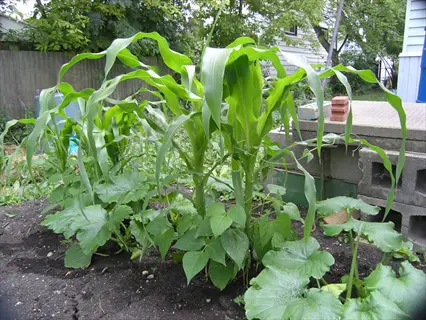
Classic Three Sisters Mound
- Footprint: A circular mound about 4 feet (1.2 meters) wide and 12 inches (30 centimeters) tall holds the polyculture trio.
- Layout: Plant 4 corn seeds at the center, 4 pole bean seeds around the corn once it is 6 inches (15 centimeters) tall, squash on the slopes.
- Sun and water: Needs full sun and consistent moisture; the squash canopy reduces evaporation and cools soil through the heat of summer.
- Best for: Gardeners with room for a 6 by 6 foot (1.8 by 1.8 meter) area who want a single-mound demonstration of polyculture.
- Pitfalls: Crowded planting can stress corn pollination; allow at least 4 mounds for adequate wind pollination of corn.
- Pro tip: Add nasturtium on the sunny side as a bonus trap crop for squash bugs and aphids.
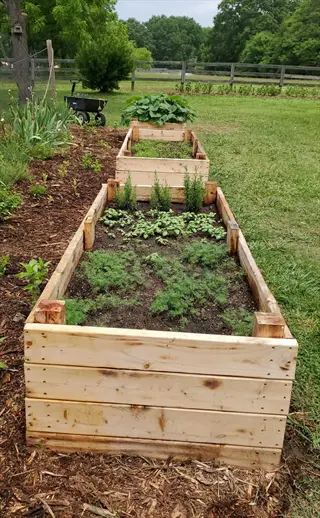
Tomato and Basil Raised Bed
- Footprint: A 4 by 8 foot (1.2 by 2.4 meter) raised bed holds 4 caged tomatoes with a basil ground layer beneath.
- Layout: Space tomatoes 24 inches (60 centimeters) apart; tuck 12 basil plants between them and edge with French marigolds.
- Sun and water: Full sun and drip irrigation work best; both tomatoes and basil prefer evenly moist soil without leaf wetting.
- Best for: Suburban gardeners wanting a high-yield single-bed solution that combines food, herbs, and flowers in one space.
- Pitfalls: Watch for early blight; mulch heavily and avoid overhead watering to protect basil and tomato leaves alike.
- Pro tip: Add parsley at the bed corners to support hoverflies that prey on tomato hornworm eggs.
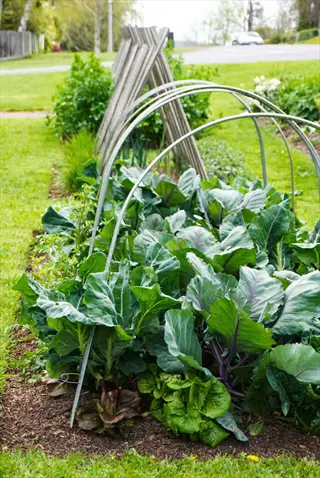
Brassica Block with Trap Border
- Footprint: A 6 by 6 foot (1.8 by 1.8 meter) block dedicated to cabbage, broccoli, and kale with a trap-crop perimeter.
- Layout: Center the brassicas spaced 18 inches (46 centimeters) apart and ring the bed with arugula, mustard, and pak choi.
- Sun and water: Full sun in cooler weather, partial shade in summer; water consistently to prevent bitter flavors and bolting.
- Best for: Cool-season gardeners hoping to minimize cabbage moth, diamondback moth, and aphid damage organically.
- Pitfalls: Trap crop must be monitored weekly and removed once colonized to prevent pests from migrating to the cash crop.
- Pro tip: Interplant coriander allowed to flower to feed hoverflies that suppress brassica aphid colonies.
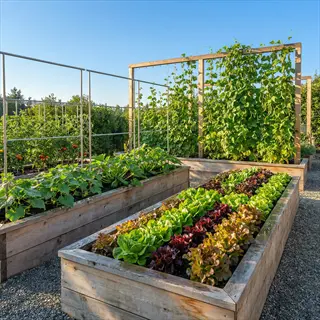
Salad Bar Strip Plot
- Footprint: A long 2 by 12 foot (0.6 by 3.7 meter) strip optimized for fast-turn salad ingredients.
- Layout: Alternate rows of leaf lettuce, radish, carrots, and chives; edge with sweet alyssum to draw pollinators and predators.
- Sun and water: Morning sun with afternoon shade in summer; light frequent watering keeps greens tender and prevents bolting.
- Best for: Beginners and small households wanting continuous salad harvests with minimal pest pressure all season long.
- Pitfalls: Slugs love this combination; mulch with crushed eggshells or use beer traps in damp weather to protect seedlings.
- Pro tip: Sow new lettuce and radish every 2 weeks for staggered harvest and constant fresh greens through the season.
Container Companion Combo
- Footprint: A 5 gallon (19 liter) pot or 18 inch (46 centimeter) container hosts a complete companion trio for balconies.
- Layout: One determinate tomato or pepper in the center, basil on the south side, and marigold tucked at the rim edge.
- Sun and water: Needs 6 to 8 hours of direct sun and daily watering in summer because containers dry out faster than beds.
- Best for: Apartment, balcony, and patio gardeners who want companion benefits without ground space.
- Pitfalls: Overcrowding starves the main crop; do not exceed 3 plants per 5 gallon (19 liter) container or yields drop sharply.
- Pro tip: Use a moisture-retentive potting mix with worm castings to compensate for limited soil volume and feeding window.
Raised bed companion planting gives you the most control over soil and pests. The 4 by 8 foot tomato and basil bed is my top pick for backyards. You get a strong harvest in a small space. Add crop rotation each year to keep diseases from building up in the same spot.
Container companion planting works great for balcony and patio growers. One 5 gallon pot can hold a full plant trio. Keep your watering schedule tight. Pots dry out faster than beds and a single missed day in July can stunt your crop for weeks.
5 Common Myths
Marigolds planted next to potatoes repel Colorado potato beetles and protect the crop from significant damage during the growing season.
Multiple controlled studies cited by the University of Minnesota Extension show marigolds do not deter Colorado potato beetles in any meaningful way.
Beans fix nitrogen into the surrounding soil, immediately feeding neighboring plants with extra nitrogen during the same growing season.
USDA data shows almost all the nitrogen fixed by beans is used by the bean plant itself; neighbors benefit only after the residue decomposes.
Simply planting marigolds among tomatoes or vegetables suppresses harmful root-knot nematodes throughout the entire garden bed.
Per Delaware Extension, marigolds suppress nematodes only when used as a tilled-in cover crop, not as a simple interplant alongside vegetables.
Basil planted near tomatoes dramatically improves the flavor and sweetness of the harvested fruit at the dinner table.
Flavor-improvement claims lack controlled-trial support; basil does help tomatoes by reducing thrips, but no proven flavor mechanism exists.
Marigolds and onions planted around brassicas reliably repel flea beetles and keep cabbage and broccoli leaves damage-free.
University of Minnesota Extension reports contradictory evidence for this pairing; flea beetle deterrence by marigolds or onions is unsupported.
Conclusion
Science-backed companion planting beats folklore every time in your garden. Five core methods drive the wins. Nitrogen fixation by beans feeds your soil. Flower beds bring in good bugs that hunt pests. A good trap crop pulls beneficial insects off your main crop. Strong odors mask host plants from pests. Smart spacing splits root depth and light needs.
Tier each pairing by proof before you plant. Strong pairings have peer-reviewed data behind them. Moderate pairings show mixed results across trials. Folklore claims may sound great but often fail in real tests. The pollinator boost is one of the best wins of all. The Montoya 2020 study found pollinator plants raise yields of cucumbers and hot peppers.
Pick one or two pairings to try in your beds this season. Start with tomatoes and basil for a low risk win. Add French marigolds for extra cover. Mix in nasturtium near your cucumbers as a trap crop. Each small step builds your skill and your harvest at the same time.
Your companion planting journey grows stronger with each year of trial work. Refine your vegetable garden layout based on what you see in your own beds. Scroll back up to the FAQ section if you have a quick follow-up question before you head out to plant. Your garden is ready to thrive with the right neighbors in place.
External Sources
Frequently Asked Questions
What plants should be planted next to each other?
The best neighbors are plants with complementary needs and benefits, such as carrots with peas, tomatoes with basil and marigolds, and the classic Three Sisters of corn, beans, and squash.
Which vegetables grow well together chart?
A research-supported pairing chart focuses on combinations with proven mechanisms, including:
- Tomatoes with basil, marigolds, and parsley
- Carrots with peas and onions
- Corn with pole beans and squash
- Cucumbers with nasturtiums and radishes
- Brassicas with sage and thyme
What vegetables shouldn't be planted near each other?
Avoid pairings like fennel with most vegetables, beans with onions or garlic, potatoes with tomatoes, and cabbage near grapes due to growth interference or shared pest and disease pressure.
What plants can be planted in October?
October is ideal for cool-season crops and overwintering vegetables, including:
- Garlic and shallot bulbs
- Spinach and kale
- Lettuce and arugula
- Radishes and turnips
- Cover crops like winter rye and clover
What is the easiest companion plant?
Nasturtium is widely considered the easiest companion plant because it grows in poor soil, requires little care, attracts pollinators, and serves as a proven trap crop for aphids and squash bugs.
Is October too late to plant?
October is not too late for many crops, especially cool-weather vegetables, garlic, perennials, cover crops, and trees and shrubs that benefit from cooler soil for root establishment before winter.
What are the best companion plants for vegetables?
Research-supported companions include:
- Basil and marigolds for tomatoes
- Nasturtiums and radishes for cucumbers and squash
- Sage and thyme for brassicas
- Coriander for cabbage to attract hoverflies
- Buckwheat and cowpea for sweet corn
What plants need to be planted in pairs?
Some plants benefit from or require pair planting for pollination and support, such as sweet corn for wind pollination, blueberries for cross-pollination, and many fruit trees that need a compatible pollinator partner.
How do I create a companion planting plan?
Build a plan with these steps:
- Map your garden beds and sun exposure
- List crops you want to grow and group by family
- Match each crop with research-supported companions
- Plan trap crops on the perimeter
- Add flowering insectary plants throughout the bed
What is a good layout for a vegetable garden?
A productive layout uses raised or in-ground beds 3 to 4 feet (0.9 to 1.2 meters) wide, organizes plants by height and root depth, places trap crops on the edges, and dedicates space to pollinator-supporting flowers and herbs.