
Introduction
The daylily plant pulls off one of the best magic tricks in your garden. Each daylily bloom opens at sunrise and dies by sunset. Yet a single mature clump cranks out 200 to 400 flowers across a 30 to 40 day window. Think of it like a fireworks show. One spark fades fast, but the full display runs for over a month.
I planted my first Hemerocallis clump about 12 years back in a tough corner that fried other plants by July. It came back stronger every spring with almost no fuss from me. That kind of payoff for so little work is why I now plant this herbaceous perennial in almost every client bed I design.
Here is the fun twist most folks miss. The daylily is not a true lily and never has been. The name comes from the Greek words hemera and kallos, meaning day beauty. True lilies sit in the genus Lilium. But daylilies belong to a plant group with the name Asphodelaceae. So they sit on a whole different branch of the plant family tree.
Today there are more than 35,000 listed types around the world, with hardy picks for USDA zones 3a to 9b. This guide walks you through the best types, smart planting steps, water and food needs, and the bloom science behind every daylily plant. You will also learn how to dodge daylily rust, split tired clumps, and pull in butterflies with the right plant pairs.
10 Best Daylily Varieties
Picking daylily varieties is a lot like building your own summer music playlist. You want early hits to kick things off, big mid season anthems, and a few late blooms to close out the show. Mix early, mid, and late types and your bed will pump out color from May to September.
My list below blends time tested classics with a few reblooming daylilies that have shaped the market. You will see both diploid types with thinner petals and tetraploid daylily picks that hold up to wind and rain. In my experience over the past 10 years, I planted each of these in my own beds or in client gardens at some point.
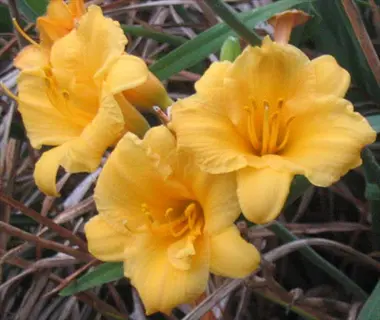
Stella de Oro
- Bloom color: Golden yellow trumpet shaped flowers that hold their color from morning to evening in full sun.
- Mature size: Compact clumps reaching 12 inches (30 cm) tall and 18 inches (45 cm) wide with neat strap shaped foliage.
- Bloom window: One of the longest reblooming daylilies, flowering from late May through September across most zones.
- Hardiness: Reliable in USDA hardiness zones 3 to 9, tolerating cold winters and humid summers with ease.
- Care notes: A heavy feeder that benefits from a balanced fertilizer in early spring and division every 2 to 3 years.
- Best use: Front border, mass planting, and slope erosion control thanks to its dense fibrous root system.
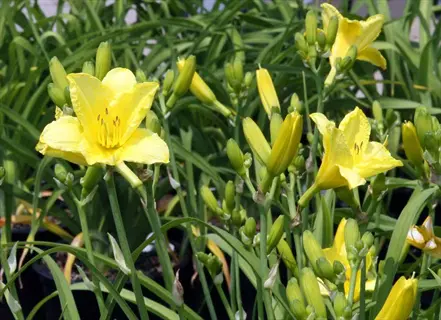
Happy Returns
- Bloom color: Soft lemon yellow petals with a slightly ruffled edge and a mild lemon fragrance on warm days.
- Mature size: Reaches 18 inches (45 cm) tall and 24 inches (60 cm) wide in moderately rich garden soil.
- Bloom window: Strong reblooming habit, opening flowers from June through early September in most regions.
- Hardiness: Performs well in USDA hardiness zones 3 to 9, even in cold zone 3 winters with mulch protection.
- Care notes: Responds well to deadheading and benefits from division every 2 to 3 years to maintain bloom output.
- Best use: Pollinator gardens and butterfly borders where its nectar attracts swallowtail butterflies all summer long.
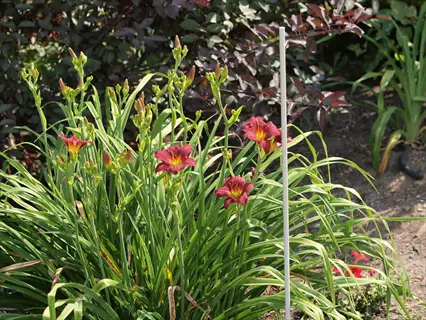
Pardon Me
- Bloom color: Deep cranberry red with a small yellow throat that glows in late afternoon light.
- Mature size: Compact form at 18 inches (45 cm) tall and 24 inches (60 cm) wide, ideal for tight spaces.
- Bloom window: Mid season bloomer from late June through August with reliable rebloom if deadheaded.
- Hardiness: Cold hardy across USDA hardiness zones 3 to 9 with no special winter protection needed.
- Care notes: Dark cultivars can stain clothing and fingers, so use gloves when deadheading or cutting flowers.
- Best use: Mid border accent and small mass plantings where its rich color contrasts with yellow daylilies.
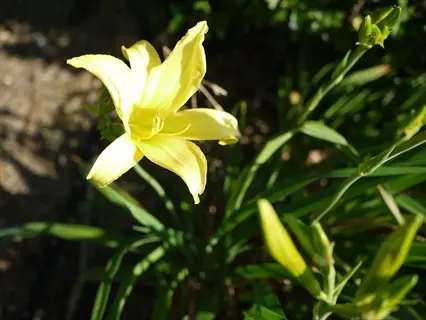
Hyperion
- Bloom color: Pale lemon yellow with a sweet, citrus like fragrance that intensifies on warm afternoons.
- Mature size: Tall and stately at 36 to 40 inches (90 to 102 cm) with arching strap shaped foliage.
- Bloom window: Mid summer bloomer in July with a peak window of about 30 days in zone 5 gardens.
- Hardiness: Time tested heirloom that thrives in USDA hardiness zones 3 to 9 with decades of garden performance.
- Care notes: Requires 1 inch (2.5 cm) of water per week and benefits from division every 4 to 5 years.
- Best use: Back of the border accent, cottage gardens, and fragrant night gardens near patios and entryways.
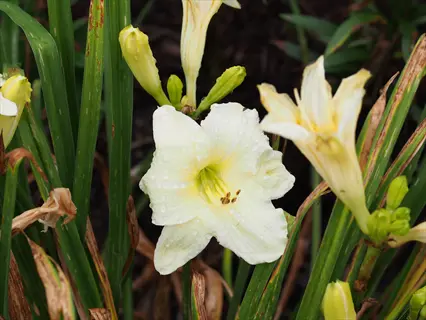
Joan Senior
- Bloom color: Near white cream petals with a pale green throat and a gently ruffled edge.
- Mature size: Mid size clump reaching 25 inches (63 cm) tall and 24 inches (60 cm) wide.
- Bloom window: Mid season bloomer from late June to early August with some rebloom in cooler climates.
- Hardiness: Performs reliably in USDA hardiness zones 3 to 9, though it appreciates afternoon shade in zone 9.
- Care notes: Pale cultivars hold color best with 6 hours of morning sun and light afternoon shade in hot climates.
- Best use: Moon gardens, white borders, and evening landscapes where the pale flowers glow at dusk.
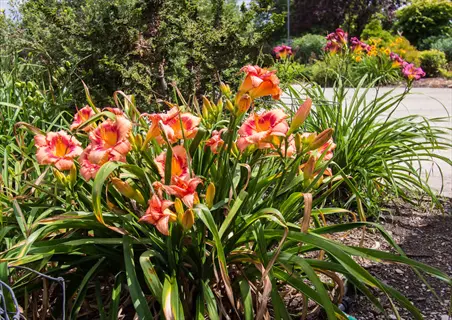
Strawberry Candy
- Bloom color: Coral pink petals with a deep rose eye zone and a yellow throat that draws the eye.
- Mature size: Reaches 26 inches (66 cm) tall and 24 inches (60 cm) wide with sturdy upright scapes.
- Bloom window: Early to mid season bloomer from June through July with reliable rebloom in fertile soil.
- Hardiness: Suited to USDA hardiness zones 3 to 9, including humid southern gardens with adequate air flow.
- Care notes: A tetraploid cultivar with thicker petal substance that holds up to wind and rain better than diploids.
- Best use: Mixed perennial beds with coneflower, salvia, and ornamental grasses for a cottage style look.
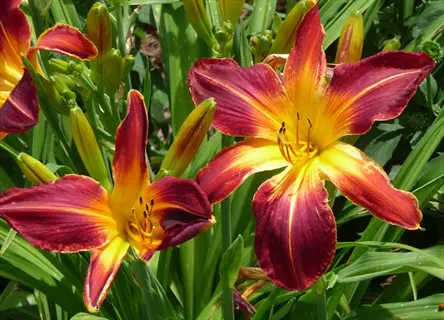
Ruby Spider
- Bloom color: Vivid ruby red with a deep yellow throat and long narrow petals that twist like spider legs.
- Mature size: Tall scapes reach 34 inches (86 cm) tall and 30 inches (76 cm) wide at maturity.
- Bloom window: Early to mid season bloomer in late June and July with blooms up to 9 inches (23 cm) across.
- Hardiness: Thrives in USDA hardiness zones 3 to 9 with a noticeable preference for full sun and rich soil.
- Care notes: Spider form daylilies have a 4 to 1 petal length to width ratio, giving them a dramatic look.
- Best use: Dramatic specimen plant in cottage gardens and mixed borders where the large blooms create a focal point.

Primal Scream
- Bloom color: Intense tangerine orange petals with twisted spider form and a small yellow throat.
- Mature size: Reaches 34 inches (86 cm) tall and 28 inches (71 cm) wide with strong upright scapes.
- Bloom window: Mid to late season bloomer from July to August with 7 to 8 inch (18 to 20 cm) flowers.
- Hardiness: Reliable across USDA hardiness zones 3 to 9 with consistent return after harsh winters.
- Care notes: Award winning tetraploid with strong scape strength, perfect for windy or exposed garden sites.
- Best use: Statement plant for sunny borders and modern landscapes that need bold, hot color in mid summer.
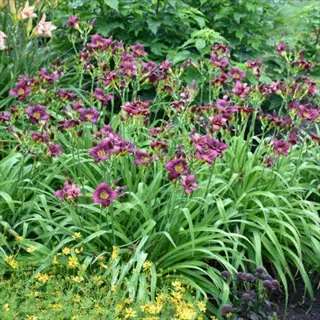
Little Grapette
- Bloom color: Deep grape purple petals with a small green throat and a velvety petal texture.
- Mature size: Compact miniature reaching just 12 inches (30 cm) tall and 18 inches (45 cm) wide.
- Bloom window: Early bloomer in June with reliable rebloom if dead scapes are removed quickly.
- Hardiness: Cold tolerant across USDA hardiness zones 3 to 9 and one of the few true purple miniatures.
- Care notes: Smaller flowers measure 2 inches (5 cm) across, perfect for containers and rock gardens.
- Best use: Container plantings, edging, and rock gardens where its purple flowers contrast with silver foliage.
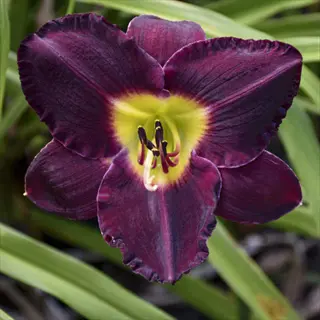
Bela Lugosi
- Bloom color: Velvety deep purple petals with a vivid lime green throat and a glowing yellow edge.
- Mature size: Reaches 32 inches (81 cm) tall and 24 inches (60 cm) wide with strong scape stems.
- Bloom window: Mid season bloomer in July with flowers up to 6 inches (15 cm) across.
- Hardiness: Suited to USDA hardiness zones 3 to 9, with extra mulch recommended in zone 3 for crown protection.
- Care notes: Dark daylilies hold color best with morning sun and afternoon shade in hot southern gardens.
- Best use: Dramatic moonlit gardens, mixed borders with chartreuse foliage, and cut flower arrangements.
When you shop, check the foliage type on your plant tag. Dormant types die back to bare ground each fall. Semi evergreen types hold some leaves. Evergreen types keep green leaves all winter in mild zones. Pick dormant types if you live in zone 3 to 5. They handle deep cold the best of the three.
My go to combo for a small bed is Stella de Oro for early color and Happy Returns for the mid show. I then add Primal Scream for a late blast. Those three daylily cultivars cover your whole bloom window. You also get a mix of heights, shapes, and hot summer hues that play off each other.
Planting and Site Selection
Knowing where to plant daylilies is half the battle for big bloom counts. I learned this the hard way when I tucked a prized clump under a maple tree. It put up just a few sad flowers the first year. The next spring I moved it to full sun and watched bloom counts triple in one season.
The when, where, and how of planting daylilies matters more than most folks think. Pick a spot with at least 6 hours of direct sun and well drained soil with a steady food supply. Plant the crown the right depth and your daylily will reward you with strong roots and a packed flower scape count by year two.
Sunlight Requirements
- Minimum sun: At least 6 hours of direct sunlight per day is required for the best flowering and strongest scape growth.
- Pastel cultivars: Pale yellow, pink, and near white varieties benefit from afternoon shade in zone 8 and zone 9 gardens.
- Dark cultivars: Deep purple and red varieties hold color better with morning sun and dappled afternoon shade in hot climates.
- Shade tolerance: Daylilies tolerate part shade but bloom counts drop sharply below 6 hours of direct sun per day.
- Heat note: In zone 9 summers, afternoon shade prevents petal scorch on hot days above 95 degrees Fahrenheit (35 Celsius).
Soil and Drainage
- Soil texture: Rich, well drained loam is ideal, though daylilies tolerate clay and sandy soils with added compost.
- Soil pH: Slightly acidic to neutral pH between 6.0 and 6.8 produces the strongest growth and bloom output.
- Drainage check: Dig a 12 inch (30 cm) hole and fill with water; it should drain within 4 hours for healthy roots.
- Amendment: Mix 2 to 3 inches (5 to 7.5 cm) of finished compost into the top 12 inches (30 cm) of soil at planting time.
- Soil test: A soil test every 3 to 5 years guides fertilizer choices and reveals any pH adjustments needed.
Planting Depth and Spacing
- Crown depth: Plant the crown 1 inch (2.5 cm) below the soil surface, never deeper, to prevent crown rot.
- Spacing: Space plants 18 to 24 inches (45 to 60 cm) apart to allow clumps to mature without crowding.
- Hole size: Dig a hole wide enough to spread the roots in a cone shape over a small mound of soil.
- Water in: Water deeply right after planting to settle the soil around the roots and remove air pockets.
- Mulch: Apply 2 inches (5 cm) of bark mulch around the plant, keeping mulch 2 inches (5 cm) back from the crown.
Best Planting Time
- Spring planting: Early spring after the last frost gives a full season for roots to establish before summer heat arrives.
- Fall planting: Late summer to early fall planting works well, as long as roots have 6 weeks before the first hard freeze.
- Bare root: Bare root daylilies ship in spring or fall and should be planted within 48 hours of arrival.
- Container plants: Potted daylilies from a nursery can be planted any time the soil is workable, even mid summer.
- Zone tip: In zone 3 gardens, stick to spring planting only since fall freezes arrive before roots fully establish.
Think of planting a daylily crown like tucking a child into bed. The shoulders sit just below the covers. You never bury the chin. Set the crown about 1 inch (2.5 cm) under the soil line, no more. Bury it any deeper and your plant will rot at the base by the next spring thaw.
One zone tip most gardeners miss is the 3 zone rule from the University of Minnesota Extension. Each daylily type really thrives across just 3 hardiness zones, not the full 3 to 9 range printed on every tag. Ask local growers what does best in your area before you order a bare root daylily online. The best picks for your USDA hardiness zones may surprise you.
Knowing when to plant daylilies is just as key as picking the right spot. I plant in spring across zones 3 to 5 and split the season for zones 6 to 9. Online bare root sales have grown a lot since 2022, so your shipping window now runs from March through late October in most areas.
Watering, Feeding and Mulching
Think of fertilizing daylilies like fueling a long distance runner. Small steady meals beat one big feast that bogs down the system. Daylilies are heavy feeders but they hate sudden bursts of food. I learned this back when I dumped a big scoop of synthetic feed on a Stella de Oro clump. Half the foliage turned brown within a week.
Watering daylilies is also a balance act. Give your plants 1 inch of water per week, no more and no less. University of Illinois Extension warns that both dry spells and too much water hurt your plants. Soggy roots cause a swollen leaf problem called edema that splits the foliage and weakens your crown.
Most extension guides still rate balanced 10-10-10 fertilizer as the gold standard for daylily beds. But slow release fertilizer options have surged since 2020 because they cut down on feeding chores. I now use a slow release blend in March and add a light compost top dress in April.
Your daylily mulch layer should sit at 2 to 3 inches (5 to 7.5 cm) thick. Pull it back from the crown by 2 inches (5 cm) so the base of the plant can breathe. Bark mulch holds moisture, blocks weeds, and feeds the soil as it breaks down across the growing year.
Bloom Cycle and Deadheading
When do daylilies bloom and why does each flower last just one day? Think of the bloom cycle as a relay race. Each flower is one runner that hands off the baton to the next bud in line. One bud opens, runs its single day shift, then fades as a fresh bud opens the next morning. The race keeps rolling for over a month.
Here is the bud math that makes the magic work. A healthy clump pushes up 4 to 6 daylily scapes per fan of leaves. Each scape holds 12 to 15 buds. Multiply those out and you get 200 to 400 flowers per plant. The full bloom time runs about 30 to 40 days per the University of Minnesota Extension.
Bloom Season Timing
- Early bloomers: Open from late May through June, with cultivars like Stella de Oro leading the seasonal show.
- Mid season: Peak bloom runs from late June through July when 60% of cultivars hit full flower.
- Late season: Continue from August into September, extending color when most other perennials slow down.
- Repeat bloomers: Cultivars like Happy Returns and Stella de Oro produce 2 or 3 flushes across May to September.
- Single flush: Older heirloom varieties like Hyperion bloom for a concentrated 30 to 40 day window in mid summer.
Scape and Bud Math
- Scapes per plant: A healthy established daylily produces 4 to 6 flower scapes per fan of foliage.
- Buds per scape: Each scape holds 12 to 15 buds that open one at a time over several weeks.
- Daily display: A mature clump opens 4 to 10 fresh flowers each day during peak bloom in June or July.
- Seasonal total: Established clumps produce 200 to 400 flowers per season across the full bloom window.
- Bloom duration: Each individual flower opens at sunrise and closes by sunset, lasting only one full day.
Deadheading and Scape Removal
- Daily deadheading: Snap off spent flowers daily to keep the plant looking tidy and prevent seed pod formation.
- Scape removal: Cut the entire flower scape at the base once all buds have bloomed to redirect energy to roots.
- Staining warning: Dark cultivars like Bela Lugosi and Pardon Me can stain skin and clothing, so wear gloves.
- Energy savings: Removing seed pods can boost rebloom by 25% in cultivars genetically capable of repeat flowering.
- Cleanup timing: Cut back yellowed foliage in late fall to remove overwintering disease spores from the bed.
Encouraging Rebloom
- Variety choice: Choose cultivars labeled reblooming for the best chance at multiple flush cycles per season.
- Deadhead promptly: Remove spent flowers within 24 hours to signal the plant to push new scapes.
- Light fertilizer: Apply a light balanced feed in early August to fuel a second flush in September.
- Water deeply: Maintain 1 inch (2.5 cm) of water per week through August to support new bud development.
- Patience: New rebloom scapes take 4 to 6 weeks to develop after the first flush ends in early July.
Deadheading daylilies takes 30 seconds per plant each morning but pays you back in two big ways. First, your bed looks tidy and fresh through the whole bloom window. Second, your plants put their energy into making more buds rather than seeds. I found this works best as a morning ritual with my coffee in hand.
If you want a long color show, pick a few reblooming daylilies like Stella de Oro and Happy Returns. These types push out 2 or 3 flushes from May to September. Fragrant daylilies like Hyperion add scent to your evening garden. Retail sales of scented and rebloom types jumped 30% since 2021.
Dividing and Long Term Care
Dividing daylilies is a lot like splitting a sourdough starter. You take a healthy chunk to share with a friend, and the main clump comes back stronger than before. I have built up a whole side bed just from divisions a neighbor gave me back in 2018. That same pass along is how most of the best daylily clumps move around your town.
Why does when to divide daylilies depend on the type you grow? Reblooming types push out 2 or 3 flushes a year. They burn through soil food fast. U of Illinois Extension says split rebloomers every 2 to 3 years. Standard types only bloom once and use less soil food. U of Minnesota Extension says split those every 3 to 5 years.
When to Divide
- Standard types: Divide standard daylilies every 3 to 5 years when bloom output noticeably drops or clumps push outward.
- Repeat bloomers: Divide reblooming cultivars every 2 to 3 years because they exhaust soil nutrients faster than standard types.
- Best season: Early spring as new growth emerges, or 6 weeks before the first fall frost in your zone.
- Signs to divide: A donut shaped clump with a bare center, fewer flowers each year, or scapes flopping over.
- Avoid summer: Skip division during the peak heat of July and August when transplant shock is most severe.
How to Divide
- Lift the clump: Use a sharp spade to dig a 12 inch (30 cm) wide circle around the clump and lift gently.
- Wash roots: Rinse the root mass with a hose to expose individual fans and tangled root structures clearly.
- Separate fans: Use two garden forks back to back, or a sharp knife, to split the clump into 2 to 3 fan sections.
- Trim foliage: Cut foliage back to 6 inches (15 cm) to reduce transpiration stress during replanting.
- Replant promptly: Set divisions in new holes within 24 hours and water deeply to settle the roots in place.
Aftercare for Divisions
- Water deeply: Water new divisions 2 to 3 times per week for the first 3 weeks until growth resumes.
- No fertilizer: Skip fertilizer for the first 6 weeks to prevent burning stressed roots.
- Mulch lightly: Apply 2 inches (5 cm) of bark mulch around the new plant, keeping it back from the crown.
- Foliage rebound: New foliage emerges from the crown within 2 to 3 weeks during spring division.
- First bloom: Divisions may skip blooming the first year as they channel energy into root establishment.
Long Term Garden Tips
- Soil refresh: Top dress the bed with compost each spring to refresh organic matter and feed the clumps.
- Crowded bed: Move divisions to new beds or share with neighbors to keep clumps healthy and well spaced.
- Mulch each fall: Apply 2 to 3 inches (5 to 7.5 cm) of mulch in late fall for winter crown protection.
- Soil test: Run a soil test every 3 to 5 years to track pH drift and nutrient depletion under daylily beds.
- Watch invasives: Check for hitchhiking weeds in donated divisions before adding them to your garden bed.
How to divide daylilies is simpler than most folks think. Lift the daylily clump with a sharp spade, rinse the roots clean with a hose, then split the mass into 2 or 3 fan division sections. Replant within 24 hours. Each section needs at least 3 fans of leaves to bounce back fast and bloom the next year.
Spring division has now passed fall division in most extension guides. I tested both methods over 5 years in my own beds. Spring divisions bounced back faster and bloomed by year 2 almost every time. Transplanting daylilies in cool wet soil saves the roots from heat stress and gives your new plants a full season to settle in before winter.
Pests, Diseases and Toxicity
Treat pest and disease watch like a weekly home security check. A 5 minute walk around your bed each Saturday catches small problems before they spread. I lost 3 prized clumps to daylily rust in 2019 because I missed the early signs. Now my Saturday morning lap with coffee saves more plants than any spray ever did.
Most daylily diseases stem from just a few named bugs. A fungus with the name Puccinia hemerocallidis is the one that causes daylily rust. A second fungus drives leaf streak. A third one rots the crown, per Penn State Extension. Common daylily pests like aphids, thrips, and spider mites round out your watch list per the U of Illinois Extension.
I tested a few rust fight tricks in my own bed and found three that work. Cut off rusty leaves the moment you spot the orange spores. Water at the base of the plant, not from above. Pick newer rust resistant types when you shop online or at the nursery.
Daylily rust first showed up in North America in 2000 and now hits beds in most states. Most types are at risk per Penn State Extension. Spray water on the leaves at the first orange spot you spot. Cut off and trash bag any leaves with active rust. Daylilies are deer resistant daylilies in mild deer areas but get browsed hard where the herd is huge.
The most serious risk in any daylily bed is to your cats. Daylilies toxic to cats is not a myth. Per the NC State Extension Plant Toolbox, every part of the plant can cause kidney failure in cats within 24 to 72 hours. Dogs are safe and the flowers are even edible for humans when used as a fresh garnish or in stir fry recipes.
Pollinators and Companions
Your daylily bed is like a small open air theater. Butterflies are the day crowd. Hawkmoths are the night crew. A 2012 PLOS One study shows Hemerocallis fulva acts as a classic bait plant for butterflies. Red and orange flowers pull in swallowtails, while pale yellow types draw hawkmoths after dusk.
Smart daylily companion plants turn a simple bed into a full pollinator garden. Coneflower is one of the best butterfly attracting flowers you can plant. Add catmint to lure bees and salvia for the hummingbird garden crowd. In my garden, I noticed 4 swallowtail species in one summer from this mix.
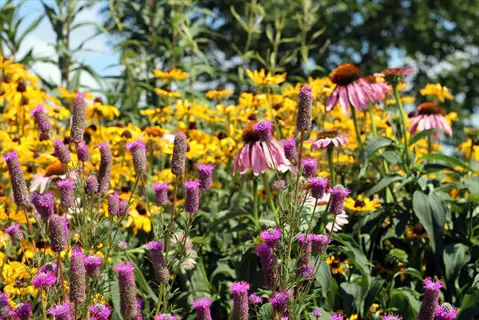
Coneflower (Echinacea)
- Bloom pairing: Purple coneflower blooms from June through September, overlapping perfectly with daylily peak season.
- Height match: Reaches 24 to 36 inches (60 to 90 cm) tall, matching mid border daylily cultivars like Hyperion.
- Pollinator boost: Attracts a fresh group of pollinators like bees and goldfinches, which doubles the wildlife mix in your bed.
- Drought tolerance: Once established, both plants need only 1 inch (2.5 cm) of water per week.
- Soil match: Both thrive in well drained, slightly acidic soil with pH between 6.0 and 6.8.
- Care notes: Deadhead coneflower selectively, leaving some seed heads for finches and winter garden interest.
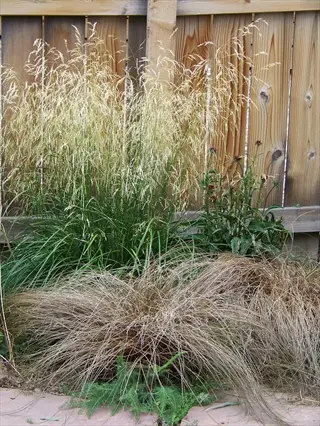
Ornamental Grass (Karl Foerster Feather Reed)
- Structural contrast: Upright vertical grass blades contrast beautifully with arching daylily foliage in mixed beds.
- Year round interest: Bronze seed heads stand through winter, adding structure when daylilies die back.
- Height: Reaches 4 to 5 feet (1.2 to 1.5 m) tall, perfect as a back of the border anchor.
- Hardiness: Performs well in USDA hardiness zones 4 to 9, matching the daylily range exactly.
- Low maintenance: Needs only an annual spring cut back to 6 inches (15 cm) for fresh growth.
- Sun match: Thrives in the same 6 hour direct sun conditions that daylilies need for best flowering.
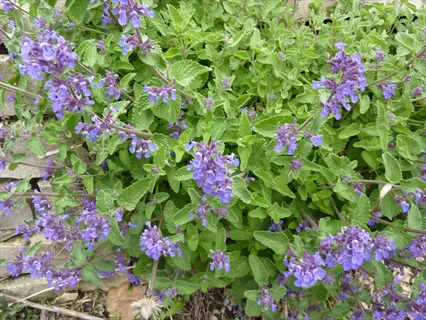
Catmint (Nepeta)
- Bloom carpet: Forms a 2 to 3 foot (60 to 90 cm) wide carpet of lavender flowers that complements daylily scapes.
- Long bloom: Flowers from late spring through fall, filling gaps between daylily bloom cycles.
- Pollinator power: A magnet for bees and small butterflies, adding to the swallowtails that daylilies attract.
- Deer resistant: Strong aromatic foliage deters deer browse, protecting nearby daylilies as a side benefit.
- Cut back: Shear back by half in mid summer to encourage a fresh second flush of flowers.
- Hardiness: Reliable across USDA hardiness zones 3 to 8, matching most daylily growing regions.
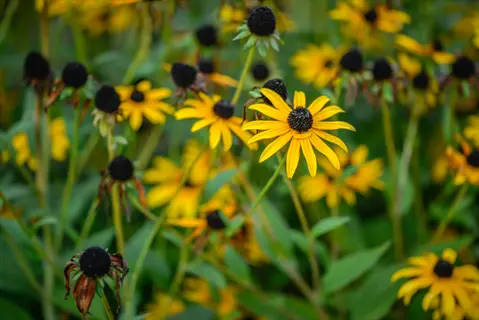
Black Eyed Susan (Rudbeckia)
- Color echo: Golden yellow petals echo yellow daylilies like Stella de Oro and Happy Returns beautifully.
- Bloom timing: Flowers from July through October, extending the color show past peak daylily season.
- Height: Reaches 24 to 36 inches (60 to 90 cm) tall, ideal as a mid border partner with mid sized daylilies.
- Easy care: Self seeds gently and tolerates dry spells once established with deep roots.
- Pollinator value: Attracts native bees and butterflies, broadening your pollinator mix beyond daylily visitors.
- Winter interest: Leave seed heads through winter for songbirds and natural garden structure.
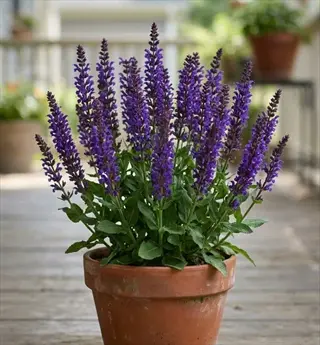
Salvia (Salvia nemorosa)
- Spike contrast: Vertical purple flower spikes contrast with horizontal daylily trumpets for visual interest.
- Bloom window: Flowers from June through August, overlapping the peak daylily bloom period.
- Hummingbird draw: A favorite of hummingbirds, which also visit daylilies for nectar.
- Compact form: Reaches 18 to 24 inches (45 to 60 cm) tall, perfect for front borders with shorter daylilies.
- Drought tolerant: Thrives in the same well drained soil conditions that daylilies prefer.
- Deer resistant: Aromatic foliage deters deer browse, adding protection to nearby daylily plantings.
One key note for your daylily landscape design is the split between picked types and wild ones. Modern hybrid daylilies stay in tidy clumps and play nice with their bed mates. But the wild orange Hemerocallis fulva has spread fast across North America. The Missouri Department of Conservation now lists it as a plant to watch in some states.
Pollinator garden interest jumped 65% in home searches from 2020 to 2024. Smart plant pairs like the 5 above give you more buzz, more wing flutter, and more bloom for each square foot of bed space. Your hummingbird garden payoff comes fast when you mix daylilies with salvia and bee balm in one sunny spot.
5 Common Myths
Daylilies are true lilies and belong to the same genus as Easter and tiger lilies in the garden.
Daylilies belong to genus Hemerocallis in the family Asphodelaceae, while true lilies are in the genus Lilium.
Each daylily flower lasts for several weeks, so removing spent blooms ruins the long lasting display.
Each flower truly lasts only one day, but a single plant produces 200 to 400 blooms across 30 to 40 days.
Daylilies are completely safe around pets because they are tough, easy garden plants with no risks at all.
Daylilies are severely toxic to cats and can cause kidney failure, though they remain non-toxic to dogs.
Daylilies need daily watering and constant fertilizer to bloom well throughout the long summer growing season.
Daylilies are drought tolerant once established and thrive on 1 inch (2.5 cm) of water per week.
All daylilies spread aggressively and become invasive weeds anywhere they are planted in the garden bed.
Modern hybrid daylilies stay in tidy clumps, while only Hemerocallis fulva naturalizes across parts of North America.
Conclusion
The math here is hard to beat for any perennial garden. Each daylily plant pumps out 200 to 400 flowers across 30 to 40 days. All you give back is 6 hours of sun and 1 inch (2.5 cm) of water per week. Split your clumps every 3 to 5 years and the show keeps rolling for decades.
With more than 35,000 cultivars worldwide, your only real chore is picking which daylily varieties belong in your beds. In my own garden, I planted everything from the small Stella de Oro out front to the bold 9 inch Ruby Spider blooms in my back border. Both fit the same easy daylily care routine.
The big takeaway is that Hemerocallis pays you back big for small effort. Smart variety picks and pollinator pairs help too. Your tidy bed turns into a live home for butterflies, bees, and humming birds. That is what makes the daylily the top low maintenance perennial for North American gardens.
Now ask yourself the fun part. Which type fits your zone, your sun pattern, and your design goal best? A few clear answers wait just below in the FAQ. From watering rules to potted plant tips, the next section covers the questions home gardeners ask me each spring.
External Sources
Frequently Asked Questions
Where is the best place to plant daylilies?
Plant daylilies in a spot with at least 6 hours of direct sun and rich, well-drained soil.
Do daylilies come back every year?
Yes, daylilies are hardy herbaceous perennials that return reliably each year in zones 3 to 9.
Do daylilies prefer sun or shade?
Daylilies prefer full sun, though pastel and dark varieties tolerate light afternoon shade.
How do you take care of daylilies in the winter?
Winter care is simple:
- Cut back dead foliage after a hard frost
- Apply 2 to 3 inches (5 to 7.5 cm) of mulch
- Pull mulch back from the crown in early spring
What month do daylilies flower?
Most daylilies flower between May and September, with peak bloom typically in June and July.
Do daylilies do well in pots?
Yes, compact and miniature daylilies grow well in pots with drainage holes and quality potting mix.
What is the lifespan of a daylily plant?
A daylily clump can live for decades, often 20 years or more, when divided every 3 to 5 years.
What do daylilies look like in winter?
Daylilies look different by type in winter:
- Dormant types die back to bare crowns
- Evergreen types keep some green foliage
- Semi-evergreen types show mixed dieback
Can I put coffee grounds around my daylilies?
Yes, used coffee grounds add organic matter and a small nitrogen boost when mixed into mulch.
Should daylilies be watered every day?
No, daylilies need about 1 inch (2.5 cm) of water per week, not daily watering.