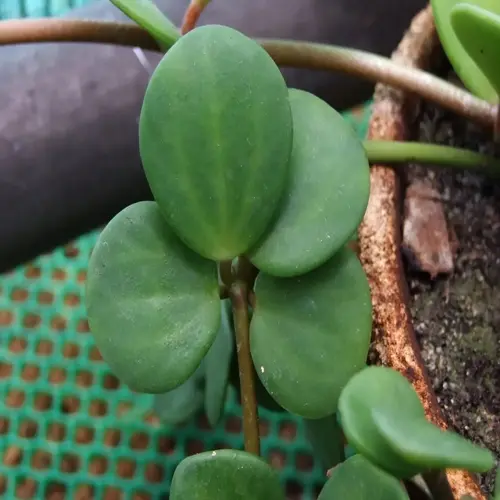

Press a finger into the top inch (2.5 cm) of the pot before you reach for the watering can. That quick check tells you more than any calendar, because the same plant drinks fast in a warm summer window and far slower in a cold winter room. The right rhythm for watermelon peperomia watering is simple: water only when that top inch feels dry.
So the honest answer to how often to water peperomia is that there is no fixed day. Most people land somewhere between every 5 and 12 days, but that range shifts with light, heat, and pot size. Tying your watermelon peperomia watering to the soil, not the calendar, keeps the plant happy.
Here is why the soil check matters so much. This plant grows wild on tree bark and rocks, so its roots are small and shallow. They sip moisture and then dry out fast in the open air. Keep the pot soggy and those fine roots sit in water with no oxygen. They start to rot. Overwatering peperomia is the top way people kill it, far more than neglect.
The cited numbers help as a starting point. Plant experts at the New York Botanical Garden suggest every 5 to 6 days in summer. They drop that to every 7 to 12 days in winter. A widely cited Arkansas extension guide lists a similar range. Treat those as rough examples, not strict rules. Use room-temperature water too. Cold water can shock the roots, so let tap water sit out for an hour first.
Pot size and light change the math as well. A small pot dries out faster than a big one, so it needs water more often. A plant in a bright spot drinks more than one tucked in a dim corner. Heat from a vent or a sunny sill speeds things up even more. None of this breaks the rule. You still water when the top inch goes dry, and these factors just move that day around.
Checking the soil takes two seconds. Push your finger down to the first knuckle, or lift the pot to feel its weight. This is the whole trick to good watermelon peperomia watering. A light pot with dry soil means it is time to water. A heavy, damp pot means you wait. You can also slide a wooden skewer into the soil and pull it out. Soil clinging to the wood is a clear sign moisture still sits down low, so hold off another day or two.
Reading the leaves tells you if you got the balance wrong. Soft, drooping, yellowing leaves usually point to too much water and roots that are starting to rot. Wilting leaves with bone-dry soil mean the opposite, and a good drink will perk the plant back up within a day. When in doubt, wait one more day before you water again.
When you do water, give it a proper drink. Pour slowly until water runs out the drainage holes, then let the pot drain fully. This soaks the whole root ball and flushes out old salts. A pot without drainage holes is a trap, so move the plant into one that drains if you can. Half-watering little and often keeps the surface wet while the bottom dries, which confuses your finger test.
Winter calls for the most restraint by far. Growth slows to a crawl, so the plant uses much less water and the soil stays wet for longer. Keep the same finger test, but expect long gaps of a week or more between drinks. Always tip out any water that collects in the saucer, since a pot standing in runoff stays soggy at the bottom. Get the soil check right and your watermelon peperomia rewards you with firm stems and bright, striped leaves.
Read the full article: Watermelon Peperomia Care Guide