
Introduction
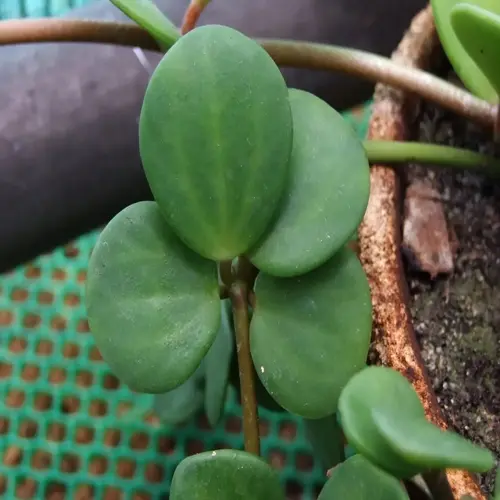
The first time you spot a peperomia watermelon, you understand the name in a second. Its rounded leaves carry the same silver-and-green stripes you see on a watermelon rind. Each leaf sits on a deep red stalk that makes the whole plant pop. I bought my first one on a whim, set it on my desk, and watched visitors ask if the stripes were painted on. They were not. It looks fancy, but the care behind it stays simple enough for a total beginner.
This plant has the credentials to back up its looks. It is a true member of the pepper family, the same plant group that we label with the name Piperaceae. In the books and on the plant tags you will see it listed by its proper name, which is Peperomia argyreia. It grows wild in the shady forests of Brazil, where it stays small. Indoors it tops out at just 6 to 12 inches (15 to 30 cm) tall. It even won the Royal Horticultural Society Award of Garden Merit, which is high praise for an indoor plant.
This guide goes past the quick-care basics you find on most pages. You get real propagation steps that work. You get a symptom-by-symptom fix list for sad-looking leaves. You get straight answers on pet safety and those air-purifying claims you may have read. And every key fact here points back to a named source you can check.
Good watermelon peperomia care breaks down into a few clear parts. You will move through care basics, then light and water, then soil and feeding. After that come propagation, problem solving, and pet safety. By the end you will know how to keep this small, pet-safe plant happy for years.
Watermelon Peperomia Care
Good watermelon peperomia care comes down to one idea. Your plant wants to be left mostly alone. Its true name is Peperomia argyreia, and it sits in the pepper family, Piperaceae. It grows wild in the forests of Brazil. It stays small, tops out around 6 to 12 inches (15 to 30 cm) tall, and gives you years of striped leaves for very little work.
It earns its reputation as a low maintenance houseplant for one reason. In the wild, most peperomias are epiphytes, which means they perch in treetops with little or no soil. That gives them a small, shallow root system. So your plant drinks less than you think and never needs a big pot.
That same forest origin explains why your plant is slow growing and happy to stay pot-bound. Tight roots match the cramped pockets of bark and moss it would cling to in the wild. Cram it into a roomy pot full of wet soil and those tiny roots sit in water they cannot use, which leads to rot. Keep it in a snug pot and you let the soil dry out at a pace the roots like.
Here is the at-a-glance version before we get into the why behind each step.
They make great houseplants in medium light situations and will hang around for years with minimal care.
You will sometimes hear it called the radiator plant because it likes the warm, bright spots a radiator once sat near. Its small size and slow pace make it a tidy tabletop or shelf plant that holds its shape for years. Each care step in this guide ties back to that forest past, so you understand why it works instead of just following rules.
Light, Water and Temperature
One of my watermelon peperomia plants went soft and droopy after a long winter on a shelf set back from a north-facing window. The leaves lost their stiff snap and the lower stems felt mushy when I touched them. I had kept watering it on the same routine all through the cold months. So I pulled it from its pot, trimmed the rotted roots, and moved it into a smaller, faster-draining pot. Then I watered it far less. The small root system rots fast in cold, wet soil, and that plant only firmed back up once the soil could dry out between drinks.
Light, water, and warmth are the three things that decide whether your plant thrives or sulks. The good news is your plant tells you when watermelon peperomia light is wrong. You just have to read the leaves.
Aim for bright indirect light, and a north-facing window is ideal. When the silver stripes start to fade or bleach out, the plant gets too much direct sun. When the leaves lose their variegation and the stems stretch out tall and leggy, it wants more light. Move it closer to that window and the new growth comes back crisp and patterned.
Water only when the top inch (2.5 cm) of soil feels dry. Your watering frequency will land near every 5 to 6 days in summer. In winter it drops to every 7 to 12 days. Those numbers are examples, not rules, so check the soil with your finger first. It is so easy to give this plant too much water. The danger peaks in winter when growth slows right down. Cut back your watering in the cold months. Use only room-temperature water, and never pour cold water straight onto the roots.
Keep your plant above 65°F (18°C) and never let it sit below 55°F (13°C). It comes from tropical forests, so cold drafts and chilly windowpanes make it drop leaves. Humidity is helpful but not essential here. Average household air suits it fine, and a little extra moisture in summer is a bonus rather than a must. The table below sums up the three pillars at a glance.
Never water on a fixed schedule in winter. Growth slows in the cold months, so the same routine that worked in summer can quickly drown the small roots and cause root rot.
Soil, Potting and Feeding
My watermelon peperomia perked up fast after one small change. I moved it out of a wide decorative pot and into a smaller one with drainage holes. New leaves came in within a few weeks. The older ones stopped going soft at the base. The big pot had held so much soil that the center stayed wet for days, and those tiny roots just sat in it.
That swap makes sense once you know where this plant comes from. It grows in the forests of Brazil, clinging to trees with little or no soil around its roots. So the root system stays small, and it rots fast in dense, wet soil. The right watermelon peperomia soil is light and drains fast. Water runs through it, and it never pools near those small roots.
A peat mix cut with perlite gives you that drainage. An even blend of the two is a solid starting point. A slightly acidic to neutral pH around 5.0 to 7.0 suits it well. Most general houseplant mixes already land in that range, so you don't need anything fancy. The bigger win is well-draining soil in a pot with holes that let extra water escape.
This plant likes to be snug, so hold off on repotting until the roots clearly fill the pot. When that day comes, do it in spring as growth picks back up, and move it just one size up. Feed it from April through September with a balanced houseplant food. Use it at half strength every 4 weeks, then stop over winter. Too much food builds up salts in a small pot and burns the roots, so less is more here.
Choose a fast-draining mix
- Mix: Use a light, peaty, fast-draining potting mix so water moves through quickly and never sits around the small, rot-prone roots.
- Add-in: A roughly equal blend of potting mix and perlite is a reasonable starting point that boosts drainage and air around the roots.
- pH: A slightly acidic to neutral range of about 5.0 to 7.0 suits it well, though most general houseplant mixes already fall in this zone.
Pick a small pot with drainage
- Size: Choose a pot only slightly larger than the root ball, because this plant actually thrives when it is pot-bound and snug.
- Drainage: Make sure the pot has drainage holes so excess water escapes, since standing water is the fastest route to root rot.
- Material: A pot that breathes, such as terracotta, helps the mix dry out between waterings and suits its dislike of soggy soil.
Repot only when necessary
- Timing: Repot in spring when growth resumes, and only when the plant is clearly root-bound, not on a yearly habit.
- Step up: Move it just one pot size up so the roots are not surrounded by a large volume of slow-drying soil.
- Care: Handle the brittle, fleshy stems gently and water lightly after repotting to let the roots settle into the fresh mix.
Feed lightly in the growing season
- When: Feed from April through September while the plant is actively growing, and stop feeding over the slow winter months.
- Strength: Use a balanced houseplant food at half strength every four weeks, because this slow grower needs only light feeding.
- Caution: Avoid overfeeding, as too much fertilizer can build up salts in the small pot and damage the sensitive roots.
How to Propagate It
I slid the blade through one of the firmest leaves on the plant shelf by my north-facing window, taking the red petiole with it. Then I pressed the cut edge into a small pot of moist mix and set it back where the light stays soft. For weeks the leaf just sat there. Then, near the two-month mark, two tiny plantlets finally pushed up at the base.
That slow wait sums up watermelon peperomia propagation in one word: patience. The plant multiplies for free, which is one big reason it stays cheap and common instead of rare. Hobbyists make new plants from a single parent and share or sell the babies, so you rarely pay a premium.
You have two easy routes here. Leaf cuttings use a single leaf with its petiole. Stem cuttings use a short piece of stem with a leaf or two attached. NC State Extension says you can propagate this plant by division and leaf cutting. The University of Arkansas Extension backs both, and notes it roots easily from stem or leaf. Both methods work, so pick whichever feels simpler to you.
Here is the leaf cutting method, step by step.
Pick a firm, undamaged leaf and cut it cleanly with the red petiole attached using sterilized scissors or a sharp blade.
Set the cutting aside for a few hours so the cut end can callus over, which helps reduce the risk of rot once it is potted.
Insert the petiole end into a small pot of moist, fast-draining mix, or place it in water if you prefer to watch the roots form.
Place it in bright indirect light and keep the mix lightly moist but never soggy while the cutting works on rooting.
Be patient, as rooting and tiny new plantlets can take several weeks to a couple of months on this slow grower.
Stem and leaf cuttings both work, and a light touch of rooting hormone on the cut end can speed things along. Whatever method you use, keep the medium just barely moist so the fresh cut does not rot.
Prefer to watch the rooting happen? Water propagation is the other option. Drop the petiole end into a small glass of water, keep it bright, and swap the water every few days so it stays fresh. Many growers find soil roots end up sturdier than water roots, so plenty of people skip the glass and go straight to soil.
The one thing to expect is a wait. This is a slow grower, so cuttings can take several weeks to a couple of months before new growth shows. Don't toss the pot if nothing happens fast. Keep the light bright and the mix barely damp, and those little plantlets will come.
Common Problems and Pests
Most watermelon peperomia problems trace back to two things. You either gave the plant too much water or the wrong amount of light. This is a tough, forgiving little plant, so try not to panic when a leaf looks off. Read the symptom, find the likely cause, and act.
Overwatering is the number one killer, and it leads straight to root rot. Those small roots sit in soggy soil and start to break down. Catch it early and you almost always save the plant. The good news is that the fixes here are simple, and your plant wants to bounce back.
Use the table below to read your plant fast. Each symptom pairs with its most likely cause first, so you know where to look before you do anything drastic.
Watering trouble shows up in a few ways. Yellowing leaves and soft, drooping growth point to too much water and the start of root rot. Leaves curling or wilting on dry soil tell you the plant is thirsty. Slide it out of the pot and check the roots. White and firm is healthy, while brown and mushy means you need to trim and repot in fresh fast-draining mix.
Pests are less common, but watch for mealybugs, scale, and aphids. You will spot mealybugs as small cottony spots, while scale and aphids leave a sticky residue. Wipe a light infestation off with a cotton swab dipped in diluted rubbing alcohol. For a bigger problem, rinse the plant and treat it with insecticidal soap. Move the plant away from your others while you work, so the bugs do not spread.
The most common problem is over-watering which can quickly kill a plant.
Pet Safety and Benefits
The watermelon peperomia pet safe question has a clear answer, and it comes straight from the ASPCA. They classify this plant as non-toxic to cats, non-toxic to dogs, and safe around horses too. That makes it a smart pick for any home with a nosy cat or a puppy that chews first and thinks later.
Here is the detail worth knowing. Non-toxic does not mean pet food. A pet that over-chews any houseplant can still get a mild upset stomach, and your peperomia looks far better with its leaves whole. Keep it on a shelf your dog cannot reach and everyone stays happy.
You will see this plant sold as an air purifier, but that claim comes from small sealed-chamber lab tests. A real room would need hundreds of plants for any measurable effect, so grow it for its looks, not for cleaner air.
About that air purifying label you see on shop tags. The popular claim of a 47% drop in formaldehyde traces back to old tests run in tiny sealed boxes. Your living room is not a sealed box. You would need hundreds of plants packed in one room to clean the air in any real way, so enjoy this one for how it looks.
The honest benefits still make a strong case. It stays small at 6 to 12 inches, so it fits a desk or a crowded shelf. It earned the RHS Award of Garden Merit, which judges hand out only to plants that perform well for normal growers. In Brazil it doubles as a symbol of luck and a popular gift, and it asks for almost no effort from you. Pet-safe, compact, and beautiful is plenty to love without faking health perks.
5 Common Myths
Watermelon peperomia is a type of succulent, so you can let it dry out completely and water it only rarely like a cactus.
It is not a succulent. Its leaves are fleshy, but the small roots still need steady, moderate moisture once the top inch of soil dries out.
It is a kind of begonia or related to watermelon plants because of its common names and its leaf pattern.
It is neither. It belongs to the pepper family, Piperaceae. The names only describe the silver watermelon-rind look of the leaves.
Watermelon peperomia needs constant high humidity and daily misting or it will not survive in a normal home.
Humidity helps but is not essential. It grows well in average household air, and gardeners have kept it healthy in very dry desert climates.
More sunlight is always better, so a bright south-facing windowsill in direct sun will give you the best leaf color.
Direct sun scorches the leaves and bleaches the striping. Bright indirect light, such as a north-facing window, keeps the variegation crisp.
This plant cleans the air in your home in a measurable way and removes household toxins like formaldehyde.
The air-purifying claim comes from sealed-chamber lab tests. A real room would need hundreds of plants, so enjoy it for looks, not air quality.
Conclusion
Good watermelon peperomia care comes down to four simple points. Give it bright indirect light. Water it only when the top inch (2.5 cm) of soil feels dry. Keep it in a small well-draining pot, and feed it lightly in spring and summer. Get those points right and the rest takes care of itself.
The biggest mistake is kindness with the watering can. Overwatering is the number one killer of this plant, so when you feel unsure, wait a day and check the soil again. Those tiny roots came from forest treetops, and they would rather stay a little dry than sit in a soggy pot.
This is also one of the safest plants you can bring home. Peperomia argyreia is non-toxic to cats, dogs, and horses. That makes it a true pet safe houseplant for a busy home. It won the RHS Award of Garden Merit too. It stays a tidy 6 to 12 inches (15 to 30 cm), so it fits a shelf, a desk, or a packed windowsill.
Few plants give back this much for so little. The practical takeaway is simple. It is a genuinely forgiving beginner houseplant that rewards correct, low-key care for years. You can even root a single leaf to make more of it for free. My own plants taught me to read two simple signals, so watch how yours drinks and how it leans toward the window. Let it tell you when to water and where to sit. Read those two signals and you will keep this little tropical happy for a long time.
Glossary
- epiphyte
- A plant that grows on another plant or surface and takes moisture from the air rather than rooting in soil.
- epiphytic
- Describes a plant that grows on trees and draws moisture from the air rather than rooting in deep soil.
- Peperomia argyreia
- The botanical name for the watermelon peperomia, a small forest plant from the pepper family grown as a houseplant.
- petiole
- The slender stalk that connects a leaf to the main stem, which is red on watermelon peperomia.
- Piperaceae
- The pepper plant family that the watermelon peperomia belongs to.
- pot-bound
- When a plant's roots fill the pot, a condition watermelon peperomia actually prefers.
- root rot
- Decay of a plant's roots caused by soggy soil, usually the result of overwatering.
- variegation
- The pattern of different colors on a leaf, such as the silver and green banding on watermelon peperomia.
External Sources
Frequently Asked Questions
How do you care for a watermelon peperomia?
Give it bright indirect light, water only when the top inch of soil is dry, keep it warm, and grow it in a small, well-draining pot.
Does watermelon peperomia need sunlight?
It needs bright indirect light, not direct sun. A north-facing window is ideal because harsh sun bleaches the striped variegation.
How often should I water a watermelon peperomia?
Water when the top inch is dry, which is roughly every 5 to 6 days in summer and every 7 to 12 days in winter, never on a fixed schedule.
Is watermelon peperomia easy to grow indoors?
Yes. It is low-maintenance and forgiving for beginners, with overwatering being the main mistake to avoid.
Is watermelon peperomia rare?
It is not genuinely rare. It is widely propagated and sold, though stock and price can vary by store and season.
How do I make my watermelon peperomia bushy?
Provide even bright indirect light, rotate the pot, and pinch back leggy stems. Low light is the usual cause of a sparse, stretched plant.
What is the lifespan of a watermelon peperomia?
With correct watering and light it can live for many years, and extension sources note peperomias hang around for years with minimal care.
Do watermelon peperomia like bathrooms?
A warm bathroom with bright indirect light can suit it, but humidity is helpful rather than essential, so a dim bathroom is not ideal.
What does the watermelon peperomia symbolize?
In Brazilian culture it is associated with luck and is given as a gift, and its compact, long-lasting foliage makes it a popular present.
Is watermelon peperomia an air purifier?
Not in a meaningful way. The popular air-purifying claim comes from sealed-chamber lab tests, and a real room would need hundreds of plants.