
The watermelon peperomia air purifier claim does not hold up, at least not in any meaningful real-world way. Like all plants it does swap a little carbon dioxide for oxygen. Its leaves can take in trace gases too. But one small plant on your shelf will not clean the air in your room in any way you could measure. Walk through any garden center and you will see this plant tagged among the air purifying houseplants on the shelf. That label sounds impressive. It only falls apart once you look at where the claim comes from.
The whole idea traces back to one famous experiment. The NASA clean air study ran in 1989. It sealed common houseplants inside small test chambers. Then it pumped in single pollutants like formaldehyde and benzene. The plants did pull some of those gases out of the air. Those numbers spread fast. Soon almost every leafy plant got a green air-cleaning halo it never truly earned. The watermelon peperomia rode that wave along with the rest.
The problem is the gap between a sealed chamber and your living room. A test chamber is a tiny, airtight box with no fresh air coming in. Inside that box, even a small plant looks like a powerful filter. Your home is huge by comparison. It has doors, windows, and gaps that swap the air all day long. Fresh air leaks in faster than any plant could ever scrub it. When scientists later did the math for a normal room, the result was blunt. You would need hundreds of plants, packed into a single space, to match the cleaning rate of even a slightly leaky house. One peperomia does not move the needle. A whole windowsill of them barely does either.
Treat the air-purifying label as marketing, not science. One small plant will not measurably clean a room. Enjoy watermelon peperomia for its striking leaves and pet safety, and open a window for real fresh air.
So the famous figures are not fake. They are just badly overstated. They came from small sealed-chamber tests, not from real homes where air mixes and moves. Take one chamber result and stretch it to a furnished bedroom. That is where the myth begins. The honest read is simple. The plant does a little. The lab proved that. But marketers blew that little bit into a big selling point. Knowing the source lets you judge the label with clear eyes instead of taking it on faith.
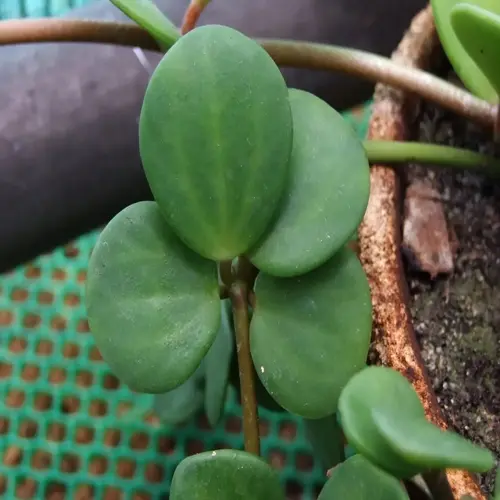
None of this means you should skip the plant. A watermelon peperomia earns its spot for reasons that have nothing to do with the air. The striped silver leaves look great on a shelf or desk, and the plant stays small and tidy for years. It is also safe around cats and dogs, which matters in a home with curious pets. And it asks very little, needing only bright indirect light and water when the top inch of soil dries out. Those are real, useful traits you can count on every day, unlike the air-cleaning promise on the tag.
If clean indoor air is your real goal, lean on airflow instead of foliage. Cracking a window for a few minutes does more than a whole shelf of plants ever could. A simple HEPA air purifier handles dust and fine particles far better. Run an exhaust fan while you cook or shower and it clears moisture and fumes fast. Use those tools for the air. Then let your peperomia simply be a pretty, low-fuss plant. That is the job it does well. The clean leaves and the clean air are two separate things, and only one is the plant's strength.
Read the full article: Watermelon Peperomia Care Guide