
Water your Peperomia Hope only once the top inch (2.5 cm) of soil feels dry, which usually lands every 7 to 10 days indoors. The honest answer is that watering Peperomia Hope runs on the soil, not the calendar. Push a finger an inch into the pot and you learn more than any weekly reminder can tell you.
That finger test matters because the dry-down time keeps shifting. Light, pot size, and the season all change how fast the mix loses moisture. A plant in a small pot near a bright window dries out in days, while the same plant in a big pot in a dim corner can stay damp for two weeks. So a fixed Peperomia Hope watering schedule misses the mark more often than it hits.
Hope is a semi-succulent, and that fact drives everything. It stores water in its plump, round leaves, so it carries its own backup supply between drinks. The roots sit shallow and stay thin, and they rot fast if they sit in wet soil. Letting the mix dry out part way gives those roots the air they need and keeps them healthy.
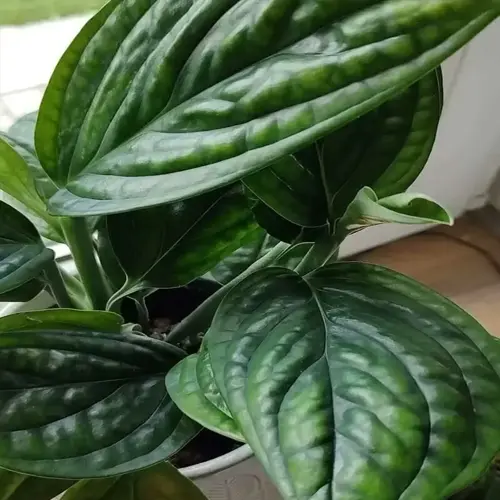
Read the leaves and they will tell you the rest, which is the heart of smart watering Peperomia Hope by feel. Firm, plump foliage means the plant is happy and you can wait. Slightly soft or curled leaves mean it is thirsty and ready for a drink. This check beats any timer because it shows you what the plant actually feels.
Use these rough targets, then confirm with the soil before you pour.
Summer pushes the pace. In a bright, warm room the leaves work harder and the soil dries quicker, so weekly watering often fits. Winter flips it. A cool, dim room slows growth to a crawl, and the mix can hold moisture for two weeks or more. Cut back hard in the cold months and you avoid the most common cause of a sick Hope.
So watch out for the top mistake, which is overwatering peperomia by far. Soggy soil shuts out air, and the shallow roots start to rot within days. Mushy stems, yellow lower leaves, and a sour smell from the pot all point to a plant left in too much water. If you spot these signs, hold off and let the mix dry out fast.
A few habits make this easy to avoid. The pot itself does a lot of the work, and so does the mix you choose. Get both right and the dry-down stays in a safe range no matter how busy your week gets. Here is what to lean on.
- Pot: Use a pot with a drainage hole so extra water can escape instead of pooling at the roots.
- Mix: Blend a chunky, airy mix with perlite or bark so the soil breathes and dries from the top down.
- Material: Pick terracotta if you tend to overwater, since the clay pulls moisture out and dries faster than plastic.
- Match the pot size to the plant, because an oversized pot holds water far longer than the roots can use.
When the soil is ready, water with intent. Pour slowly until water runs out the drainage hole, which soaks every root rather than just the surface. Let it finish draining, then empty the saucer so the pot never sits in a puddle. This deep-then-dry rhythm copies how the plant drinks in the wild, where rain soaks the ground and then the sun bakes it dry.
Two small tools take the guessing out of it. A wooden chopstick pushed into the soil comes out clean when the mix is dry and damp when it is still wet. A cheap moisture meter works too, though your finger does the same job for free. Either way, you check before you pour and the plant tells you when it is time.
The one rule to keep is simple. Never water on a fixed calendar without checking the soil first. Skip the test and you are guessing, and a guess in winter is how roots drown in a cold, slow pot. Feel the top inch, glance at the leaves, and water only when both say go. Do that and your Hope will reward you with firm, glossy leaves for years.
Read the full article: Peperomia Hope Care: Complete Guide