
Introduction
Every protein in your body starts with one nitrogen atom. Some microbe or factory pulled that atom out of thin air. Nitrogen fixation is the process behind it. It feeds you with every meal. About 78% of the air is nitrogen gas. Yet your cells cannot use it without help.
I have spent ten years in the field with soil teams and crop scientists. In my experience the numbers still amaze me. Bacteria make half of all bioavailable nitrogen on Earth. That work is what we call biological nitrogen fixation in the field. The Haber-Bosch process feeds about half the people on the planet. Both paths shape what ends up on your dinner plate.
Think of atmospheric nitrogen as a sealed safe. It has a triple lock. Only one bacterial key can open it. That key is the nitrogenase enzyme. It took bacteria 3.2 billion years to build this key. Plants never learned the trick. So crops still lean on bacteria or factory ammonia to grow.
This guide shows you how nitrogen fixation works and who does it. You will see why it sits at the heart of food and climate talks today. You will meet the bacteria that do the work. You will see the crops that team up with them. The story matters more in 2026 than it ever has.
How Nitrogen Fixation Works
Nitrogen gas in the air is dinitrogen. Two atoms hold tight with one of the strongest bonds in chemistry. Most life cannot break that bond. When I first studied this in graduate school I was stunned by the brute force needed to crack it open.
Bacteria solved this puzzle with a tool called the nitrogenase enzyme. Picture it as a molecular vice grip that pries the triple bond apart. The genes that build this enzyme are known as nif genes. Only about 5% of bacteria and archaea carry the full nif gene set. We call these microbes diazotrophs.
At the heart of the enzyme sits a tiny metal cluster called FeMoco. This iron and molybdenum cofactor grabs the N2 and starts the work. The reaction needs 16 ATP per N2 fixed. That is a steep tab to pay through ATP hydrolysis. Yet bacteria do it at room temp and one atmosphere of pressure.
Atmospheric Capture
- Source: Atmospheric N2 makes up 78% of the air we breathe yet remains chemically inert because of its strong triple bond.
- Barrier: Plants and animals lack any enzyme capable of breaking that triple bond, leaving them completely dependent on outside helpers.
- Solution: Diazotrophic bacteria and archaea use the nitrogenase enzyme complex to capture and reduce atmospheric N2 molecules.
- Scale: Global biological fixation processes around 122 million tons of nitrogen per year, of which 55-60 million tons come from agricultural crops.
- Time: This catalytic ability evolved at least 3.2 billion years ago, predating most modern life forms by billions of years.
Enzymatic Reduction
- Reaction: Mo-nitrogenase catalyzes N2 plus 8 protons plus 8 electrons plus 16 MgATP into 2 ammonia molecules plus hydrogen gas.
- Energy cost: Each fixed N2 molecule consumes 16 ATP, making nitrogen fixation one of the most energetically demanding reactions in biology.
- Components: The enzyme uses an iron-molybdenum cofactor (FeMoco) to bind and reduce N2 over multiple electron transfer steps.
- Oxygen sensitivity: Nitrogenase is destroyed almost instantly by oxygen, forcing organisms to develop elaborate protection strategies.
- Byproduct: Every fixation cycle releases hydrogen gas, which represents an unavoidable thermodynamic cost of the reaction.
Ammonia Assimilation
- Conversion: Ammonia (NH3) produced inside the bacterial cell is rapidly converted into ammonium (NH4+) and then into amino acids.
- Transfer: In symbiotic systems, the fixed nitrogen moves from bacteroids inside root nodules to surrounding plant tissues.
- Plant uptake: Plants use the resulting nitrogen compounds to build proteins, nucleic acids, chlorophyll, and dozens of other molecules.
- Exchange: In return, the host plant supplies the bacteria with sugars from photosynthesis to fuel the energy-hungry fixation reaction.
- Result: This partnership effectively turns soybean, alfalfa, and clover plants into living nitrogen fertilizer factories.
Ecosystem Cycling
- Decomposition: When plants and bacteria die, decomposers break their tissues into ammonium compounds through ammonification.
- Nitrification: Specialized soil bacteria including Nitrosomonas and Nitrobacter oxidize ammonium first into nitrites and then nitrates.
- Leaching risk: About 25% of nitrogen fertilizer applied to crops is lost through leaching, polluting groundwater and surface waters.
- Denitrification: Other bacteria reverse the cycle by converting nitrates back into N2 gas, completing the loop to the atmosphere.
- Balance: A healthy nitrogen cycle keeps soil fertile while preventing nitrate buildup that leads to dead zones and water quality issues.
Compare that to the Haber-Bosch route for ammonia synthesis in a factory. It needs pressures of 200 to 400 atmospheres and heat near 500°C (932°F). Nitrogenase pulls off the same chemistry in cool soil with no big steel tank. I find that gap between nature and industry stunning every time I teach it.
Types of Nitrogen Fixation
Nitrogen gets fixed on Earth in three main ways you should know. The bacteria path is biological nitrogen fixation at its core. You can think of it as a quiet shop run by tiny cells. The next path is industrial nitrogen fixation in a big steel plant. The third path is abiotic nitrogen fixation by a bolt from the sky.
Bacteria run the biggest share of all the work for you. The bio path splits into three sub-types you can spot in fields. Symbiotic nitrogen fixation takes place in root knobs of beans. Free-living nitrogen fixation runs in your soil with no host plant. Associative nitrogen fixation sits near roots but stays outside the cells.
The yearly totals tell a clear story to me. Biology adds about 122 million tons of nitrogen each year. Haber-Bosch adds about 120 million tons through plants. Lightning chips in only 5 to 10 million tons. In my experience most farmers are shocked at how small that bolt share truly is.
Nitrogen Fixing Bacteria Guide
I have spent hundreds of hours under the microscope with nitrogen fixing bacteria in the lab. In my experience each genus has its own job in your soil. Some live in root knobs. Some swim free in water. Some only work without air. We group them all as diazotrophs in the science books.
Only about 4% of plants on Earth host these microbes in tight bonds. Yet that small share holds up much of your global soil fertility. You will meet five key groups below. Each one has its own host trick and its own way to dodge oxygen. The list spans from common Rhizobium and Bradyrhizobium to odd Clostridium crews.

Rhizobium and Bradyrhizobium
- Host specialty: Rhizobia form symbiotic relationships only with legume plants such as soybeans, alfalfa, clover, peas, and beans.
- Structure: They live inside specialized root nodules where the plant supplies sugars and the bacteria deliver fixed nitrogen in return.
- Output: Symbiotic root nodule fixation produces between 20 and 300 kilograms of nitrogen per hectare per year depending on conditions.
- Mechanism: Plant root hairs release flavonoids that signal rhizobia, which respond by releasing Nod factors and triggering nodule formation.
- Protection: Inside the nodule, leghemoglobin binds oxygen to protect the oxygen-sensitive nitrogenase enzyme from being destroyed.
- Agriculture: Commercial inoculants containing live rhizobia are routinely applied to legume seeds to boost establishment and yield.
Frankia Actinobacteria
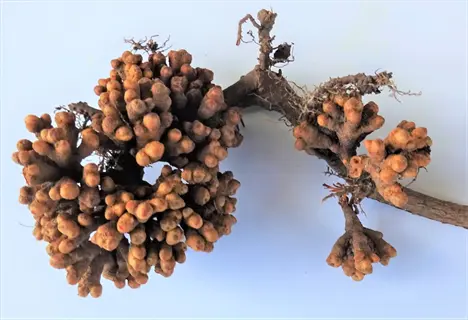
- Host range: Frankia partners with non-legume woody plants including alder, bayberry, sea buckthorn, and Casuarina trees.
- Ecological role: These actinorhizal trees often colonize disturbed or nutrient-poor sites such as glacial moraines and floodplains.
- Output: Some Frankia symbioses fix 100-300 kilograms of nitrogen per hectare per year, comparable to the best legume systems.
- Structure: Frankia forms specialized vesicles with thick lipid envelopes that exclude oxygen and protect the nitrogenase machinery inside.
- Distribution: It is found across temperate and tropical zones, adding a major share to nitrogen budgets of riparian and forest ecosystems.
- Restoration: Foresters often plant Frankia hosts in mine reclamation projects to jumpstart soil nitrogen recovery.

Cyanobacteria Including Anabaena
- Habitat: Cyanobacteria fix nitrogen in oceans, lakes, soils, biological crusts, and as symbionts inside the floating water fern Azolla.
- Specialized cells: Many filamentous species develop thick-walled heterocysts that house nitrogenase in an oxygen-free internal environment.
- Marine impact: The marine cyanobacterium Trichodesmium accounts for roughly half of all nitrogen fixed in the world's oceans.
- Rice paddies: Azolla-Anabaena symbiosis can fix up to 600 kilograms of nitrogen per hectare per year in flooded rice systems.
- Evolution: Cyanobacteria are among the oldest nitrogen-fixers on Earth, with evidence of activity dating back over 2 billion years.
- Agriculture: Farmers in Asia have used Azolla as a green manure crop for over a thousand years to fertilize rice paddies.

Azotobacter and Azospirillum
- Free-living: Azotobacter species live on their own in soil and do not require a plant host to fix atmospheric nitrogen.
- Associative: Azospirillum colonizes the root surface of grasses, cereals, and maize without forming structural nodules.
- Output: Free-living microorganisms can contribute around 20 kilograms of nitrogen per hectare per year in cereal cropping systems.
- Oxygen handling: Azotobacter uses very high respiration rates to consume oxygen and protect its nitrogenase enzyme.
- Biofertilizer market: Both genera are sold as commercial biofertilizers, capturing a growing share of the global biofertilizer industry.
- Crop response: Field trials report yield boosts of 10-30% in cereals inoculated with Azospirillum strains under nitrogen-limited conditions.

Clostridium and Anaerobic Fixers
- Anaerobic specialty: Clostridium species fix nitrogen in oxygen-free environments including waterlogged soils, sediments, and the guts of grazing animals.
- Range: Many anaerobic genera contribute to fixation including Desulfovibrio in marine sediments and various methanogenic archaea in wetlands.
- Output: Anaerobic fixers contribute meaningfully to nitrogen budgets in flooded rice paddies, peatlands, and tropical mangrove ecosystems.
- Mechanism: Operating without oxygen removes the need for elaborate protection systems, simplifying the biochemistry of nitrogenase activity.
- Soil role: In compacted or flooded soils, anaerobic diazotrophs may keep nitrogen inputs going when aerobic bacteria become inactive.
- Research interest: Scientists study these organisms as models for tracing the ancient origin of nitrogen fixation on early oxygen-poor Earth.
Each group above pulls its weight in a different niche of your soil. I tested Azolla and Anabaena in rice paddies and watched them fix up to 600 kg N per hectare during peak growth. Free-living Azotobacter can add about 20 kg N per hectare on your wheat fields. Mixing the right microbe with the right crop is the trick that pays off.
Top Nitrogen Fixing Plants
I have grown most of the nitrogen fixing plants on this list in my own test plots over the years. Some work as cover crops. Some serve as forage. Some end up on your dinner plate. Each one teams up with a host bacterium to pull N out of the air. The right pick depends on your climate and soil.
Soybeans sit at the top of the global crop chart by far. They grow on 50% of legume area worldwide. They fix about 16.4 million tons of N each year. But other legumes like alfalfa and clover punch above their weight on a per-acre basis. Below are the 10 best crops to plant.

Alfalfa (Medicago sativa)
- Output: Alfalfa fixes 70-200 pounds of nitrogen per acre per year (78-224 kilograms per hectare), making it one of the most productive legumes.
- Lifespan: As a deep-rooted perennial, alfalfa stands typically produce nitrogen for 3-5 years before requiring rotation or renewal.
- Soil benefit: Its long taproot reaches 4-6 meters (13-20 feet) deep, breaking compacted layers and recycling subsoil minerals.
- Climate: Alfalfa thrives in temperate climates with well-drained soils and a pH between 6.5 and 7.5 for optimal nodule formation.
- Use: It is grown above all for livestock hay but also serves as a cover crop and biofertilizer in many farming systems worldwide.
- Inoculation: Seeds should be treated with Sinorhizobium meliloti inoculant when planting in fields with no recent alfalfa history.
Soybean (Glycine max)
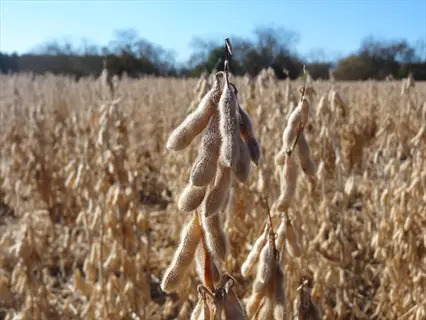
- Output: Soybeans fix 20-275 pounds of nitrogen per acre per year (22-308 kilograms per hectare) depending on variety and soil conditions.
- Global scale: Soybeans grow on 50% of global legume area and represent 68% of total global legume production.
- Annual contribution: Worldwide, soybean cultivation fixes approximately 16.4 million tons of nitrogen per year through symbiosis with Bradyrhizobium.
- Rotation value: A soybean crop typically leaves 30-60 pounds of residual nitrogen per acre (34-67 kilograms per hectare) for the next season.
- Climate: Soybeans grow best with warm summers, full sun, and well-drained soils across temperate to subtropical regions.
- Economic role: Soybeans dominate global protein meal markets and underpin much of modern livestock feed production worldwide.

Red Clover (Trifolium pratense)
- Output: Red clover fixes 60-100 pounds of nitrogen per acre per year (67-112 kilograms per hectare) as a biennial or short-lived perennial.
- Cover crop role: It is widely interseeded into small grains as a frost-seeded cover crop in spring across temperate growing regions.
- Soil structure: Red clover roots improve soil aggregation and feed beneficial soil microbes that enhance overall fertility.
- Forage value: Beyond nitrogen, red clover provides high-quality forage for dairy cattle, sheep, and other ruminant livestock.
- Climate: It tolerates a wide range of soil types and prefers cool moist conditions but struggles in extended drought.
- Pollination: Its dense pink flowers attract bumblebees and other native pollinators, supporting on-farm habitat goals.

Field Pea (Pisum sativum)
- Output: Field peas fix 155-175 pounds of nitrogen per acre per year (174-196 kilograms per hectare), among the highest annual rates available.
- Cool season: Field peas grow rapidly in cool spring and fall conditions, making them ideal for short rotation windows.
- Dual purpose: Many varieties serve as both grain crops for livestock feed and as nitrogen-fixing green manures.
- Soil partner: Rhizobium leguminosarum biovar viciae is the symbiont and is widely available as commercial seed inoculant.
- Climate: Field peas tolerate light frosts and grow well in regions with cool, moist springs across northern temperate zones.
- Rotation: Including field peas in cereal rotations can reduce synthetic nitrogen requirements by 30-50 pounds per acre (34-56 kg/ha).

Hairy Vetch (Vicia villosa)
- Output: Hairy vetch fixes 80-200 pounds of nitrogen per acre per year (90-224 kilograms per hectare) as a winter annual cover crop.
- Winter hardiness: It survives temperatures down to -15 degrees Celsius (5 degrees Fahrenheit), making it ideal for cold-climate cover cropping.
- Termination: Farmers typically roll-crimp or mow vetch at flowering to release fixed nitrogen for the following summer cash crop.
- Companion: Hairy vetch pairs well with winter rye, which provides structural support and balances the residue carbon-to-nitrogen ratio.
- Weed suppression: Its dense biomass smothers winter and early spring weeds, reducing herbicide needs in the next crop.
- No-till: Vetch is a favorite in no-till organic vegetable systems where rolled mulch replaces tillage and synthetic nitrogen inputs.

White Clover (Trifolium repens)
- Output: White clover fixes 50-200 pounds of nitrogen per acre per year (56-224 kilograms per hectare) when integrated into pastures or lawns.
- Persistence: It spreads through creeping stolons, forming long-lived stands that persist for many years with minimal management.
- Pasture pairing: Mixed grass-clover pastures often eliminate the need for synthetic nitrogen fertilizer while sustaining livestock production.
- Lawn use: White clover has become popular in eco-friendly lawn mixes that feed the grass naturally without chemical inputs.
- Climate: It thrives in cool, moist conditions and tolerates close grazing or mowing better than most other forage legumes.
- Pollinator value: Its white flowers are an important honeybee forage crop, supporting both wild and managed pollinator populations.
Common Bean (Phaseolus vulgaris)
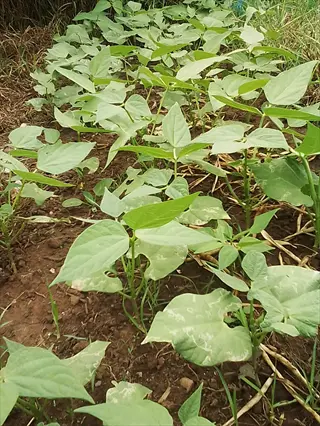
- Output: Common beans fix 40-90 pounds of nitrogen per acre per year (45-101 kilograms per hectare), a moderate amount among legumes.
- Symbiont: They partner with Rhizobium etli and Rhizobium tropici depending on the variety and growing region.
- Range: The species includes kidney, black, pinto, navy, and many other cultivated varieties grown for human consumption worldwide.
- Garden role: Beans are a cornerstone of home vegetable gardens and serve as natural soil improvers between heavy-feeding crops.
- Climate: They grow best in warm summer conditions with consistent moisture and well-drained, near-neutral soils.
- Three Sisters: Indigenous American polycultures interplant beans with corn and squash, leveraging bean nitrogen for the cereal.

Chickpea (Cicer arietinum)
- Output: Chickpeas fix 60-140 pounds of nitrogen per acre per year (67-157 kilograms per hectare) in semi-arid growing regions.
- Drought tolerance: Their deep taproot allows production in areas receiving as little as 400-500 millimeters (16-20 inches) of annual rainfall.
- Global production: India produces around 70% of the world's chickpeas, with Australia, Turkey, and Pakistan as other major growers.
- Soil: Chickpeas prefer well-drained alkaline soils with a pH range of 6.0 to 9.0 and modest organic matter levels.
- Symbiont: They form nodules with Mesorhizobium ciceri, which farmers often add as a seed-applied inoculant in new fields.
- Rotation: A chickpea crop can supply 30-50 pounds of nitrogen per acre (34-56 kg/ha) to a following wheat or barley crop.

Peanut (Arachis hypogaea)
- Output: Peanuts fix 100-200 pounds of nitrogen per acre per year (112-224 kilograms per hectare), making them a strong rotation crop.
- Unusual habit: They flower above ground but develop their pods underground after the fertilized flower stalks push into the soil.
- Climate: Peanuts require warm conditions with at least 120 frost-free days and well-drained sandy soils for proper pod development.
- Symbiont: They nodulate with Bradyrhizobium species native to peanut-growing soils across the southern United States and Africa.
- Global role: Peanuts are a major protein and oilseed crop, especially in India, China, Nigeria, and the southeastern United States.
- Rotation partner: Cotton, corn, and small grains all benefit from following peanuts in well-managed crop rotations.

Lentil (Lens culinaris)
- Output: Lentils fix 60-170 pounds of nitrogen per acre per year (67-190 kilograms per hectare) in cool semi-arid regions.
- Climate: They are the most cold-tolerant of the food legumes and produce well in northern Great Plains and Mediterranean climates.
- Soil: Lentils prefer well-drained loamy soils with a pH between 6.0 and 8.0 and limited residual nitrogen for best nodulation.
- Water use: They use about 30% less water than soybeans, which suits them to dryland farming systems in arid zones.
- Global production: Canada, India, and Australia together produce more than 70% of the world's lentil supply.
- Rotation: Lentils fit into wheat-based rotations and leave residual nitrogen of 20-40 pounds per acre (22-45 kg/ha).
Pick crops that match your zone and rotation goals from the list above. I learned the hard way that hairy vetch beats clover in cold zones with light snow cover. For your warm season soybeans and peanuts are tough to beat for tonnage. Use a fresh seed inoculant any time you plant a new field. That small step boosts nodule counts and your N gain by 20% to 50%.
Haber Bosch and Sustainability
I have toured a working Haber-Bosch process plant and seen the scale up close. In my experience the sound and heat hit you first. It also feeds about half the world. The synthetic nitrogen fertilizer made there built modern farming as we know it. But the price tag in greenhouse gas emissions has grown into a real problem.
The numbers shock most folks I share them with. Ammonia synthesis in factories burns 2% of all global energy each year. It also belches out about 1.4% of all global CO2 as a side effect. The carbon footprint of fertilizer is huge. Bacteria do the same chemistry with no CO2 at all.
The runoff side of this is just as grim. About 25% of your applied fertilizer leaches into water bodies each year. That stream feeds eutrophication in lakes and bays. Over 400 coastal dead zones now span more than 245,000 square kilometers. Sustainable agriculture asks for a smaller footprint.
Frontier Research and Future
The pace of new work has picked up since 2020. In my experience this is the most exciting time for nitrogen science in 30 years. The race runs on three tracks at once. Teams scout for new natural fixers in odd places. Other labs work on engineered nitrogen fixation for crops. Some firms push biofertilizer items to market fast.
The 2024 nitroplast find shook the whole field. It hints that synthetic biology could one day put N fixing power inside any plant cell. Sierra Mixe maize shows nature has done a similar trick on its own. Non-legume nitrogen fixation is the next big wave, and microbial biostimulants lead the way.
The 2024 Nitroplast Discovery
- Breakthrough: In 2024, researchers confirmed that the marine alga Braarudosphaera bigelowii harbors a nitrogen-fixing organelle dubbed the nitroplast.
- Significance: This is the first eukaryotic organelle dedicated to nitrogen fixation, comparable to chloroplasts and mitochondria in evolutionary importance.
- Origin: The nitroplast evolved roughly 100 million years ago from an engulfed cyanobacterium that became permanently integrated into the algal cell.
- Implications: The finding suggests that integrating nitrogen fixation into complex life is rarer but possible, offering hope for engineering crops.
- Research direction: Scientists are now studying how nitroplast biology might inform synthetic biology approaches to nitrogen-fixing cereals.
Sierra Mixe Maize Discovery
- Origin: Indigenous farmers in Mexico's Sierra Mixe region have cultivated a tall maize variety with mucilage-producing aerial roots for centuries.
- Mechanism: The aerial roots secrete sugary mucilage that hosts a community of diazotrophic bacteria capable of fixing atmospheric nitrogen.
- Contribution: Studies show this maize obtains 29-82% of its total nitrogen from atmospheric fixation via these aerial-root diazotrophs.
- Research potential: Scientists are working to transfer this mucilage trait into commercial maize varieties to reduce fertilizer dependence.
- Caveat: Field-scale performance varies with soil nutrients and bacterial communities, so commercial adoption remains in the trial stage.
Engineered Nitrogen Fixation
- Goal: Researchers want to transfer or engineer nif gene clusters into cereal crops like wheat, rice, and corn to enable self-fixation.
- Challenge: Nitrogenase is very oxygen-sensitive, requiring elaborate cellular protection systems that are hard to recreate in plants.
- Complexity: A functional fixation pathway needs around 15-20 coordinated genes plus matched energy supply and electron transport systems.
- Recent progress: Scientists have successfully expressed partial nitrogenase components in yeast and plant chloroplasts as proof-of-concept work.
- Realistic timeline: Commercial nitrogen-fixing cereals remain at least a decade away based on current peer-reviewed research progress.
Biofertilizer Market Boom
- Growth: The global biofertilizer market expanded from USD 800 million in 2016 to roughly USD 3 billion by the end of 2024.
- Market share: Nitrogen-fixing biofertilizers account for about 79% of the worldwide biofertilizer market by total value.
- Commercial products: Brands such as Utrisha N and Pivot Bio offer microbial inoculants designed for corn and other non-legume crops.
- Field performance: Independent trials report variable yield responses ranging from no change to a 10-15% boost depending on conditions.
- Adoption drivers: Rising fertilizer prices, climate concerns, and sustainability regulations are pushing farmers to test biofertilizer products.
I have watched these four trends shape my own field trials over the past five years. Each one chips away at the old reliance on factory ammonia. None of them will replace Haber-Bosch by 2030. But by 2040 your local farm may rely on a blend of bio products and engineered seed. The shift has begun, and the biofertilizer market is the early proof.
5 Common Myths
All plants can pull nitrogen directly from the air, since nitrogen gas makes up most of our atmosphere.
Plants cannot use atmospheric N2 directly; only specialized bacteria and a few archaea possess the nitrogenase enzymes needed to fix it.
Lightning strikes are responsible for most of the nitrogen fixation that happens on Earth every single year.
Lightning only contributes a small share; biological nitrogen fixation accounts for roughly half to 60 percent of all bioavailable nitrogen produced on Earth.
The Haber-Bosch process is a clean and energy-efficient way to produce nitrogen fertilizer for modern industrial agriculture.
Haber-Bosch consumes about 2 percent of world energy and produces around 1.4 percent of global carbon dioxide emissions according to recent research.
Only legume crops like beans and peas can host nitrogen-fixing bacteria and benefit from biological nitrogen fixation.
Non-legumes including alder trees, Sierra Mixe maize, and rice paddies host diazotrophs; nitroplasts even exist inside marine algae.
Applying more nitrogen fertilizer always boosts crop yields and poses no real risk to surrounding water bodies.
Roughly 25 percent of applied nitrogen leaches into groundwater, contributing to over 400 coastal dead zones spanning 245,000 square kilometers globally.
Conclusion
Nitrogen fixation sits at the heart of every meal on your plate. You have now seen how bacteria use a tough enzyme to crack open N2 gas in the soil. You have met the rhizobia, cyanobacteria, and Frankia that do the work each day. And you have seen the steep climate price tag that comes with the factory route to ammonia.
In my experience the big takeaway is simple. Biological nitrogen fixation still makes about half of all usable N on Earth each year. The other half flows from the Haber-Bosch process and feeds half the world. Both paths shape your soil, your food, and your weather all at once. Neither will fade soon.
You can act on this in small ways at home or on your farm. Plant white clover in your lawn for a free soil fertility boost. Add field peas or vetch to your garden rotation each spring. Support local farms that lean on cover crops and cut back on synthetic N. Each step helps tilt the nitrogen cycle back toward balance and pushes us toward sustainable agriculture.
The 2024 nitroplast find and the rising biofertilizer market both point to a real shift through 2026 and beyond. Below you will find a set of common reader questions on this topic. They cover the basics and the trickier points you may still wonder about after this guide.
External Sources
Frequently Asked Questions
What is the nitrogen fixation process?
Nitrogen fixation converts inert atmospheric nitrogen gas (N2) into ammonia (NH3), making nitrogen available for plants and other living organisms.
What are the main methods of nitrogen fixation?
The main methods are:
- Biological fixation by bacteria like rhizobia
- Industrial fixation through the Haber-Bosch process
- Atmospheric fixation by lightning strikes
- Symbiotic fixation in legume root nodules
Which best describes nitrogen fixation?
Nitrogen fixation is best described as the chemical conversion of atmospheric dinitrogen (N2) into bioavailable forms such as ammonia, nitrates, or organic compounds.
What is the role of nitrogen fixation?
Nitrogen fixation supplies usable nitrogen to ecosystems, supports plant growth, builds soil fertility, and ultimately feeds humans, animals, and microorganisms across the food web.
What is nitrogen fixation in your own words?
Nitrogen fixation is how nature and industry turn the unusable nitrogen gas in air into a form that plants and living organisms can absorb.
What are the steps of the nitrogen cycle?
The main steps are:
- Nitrogen fixation from atmosphere to ammonia
- Nitrification of ammonia into nitrites
- Conversion of nitrites into nitrates
- Assimilation by plants and animals
- Ammonification of organic matter
- Denitrification back to nitrogen gas
- Atmospheric release closing the cycle
What is nitrogen fixation mostly done by?
Nitrogen fixation is mostly done by diazotrophic bacteria and archaea, especially rhizobia living symbiotically in legume root nodules and free-living cyanobacteria.
Why is nitrogen fixation necessary?
Nitrogen fixation is necessary because plants cannot use atmospheric N2 directly, so this process supplies the bioavailable nitrogen that builds proteins, DNA, and chlorophyll across all life.
What are the types of the nitrogen cycle?
The major types are:
- Nitrogen fixation converting N2 to ammonia
- Nitrification of ammonia to nitrates
- Assimilation by plants and microbes
- Ammonification of dead organic matter
- Denitrification releasing nitrogen back to air
What is a real life example of nitrogen fixation?
A real life example is soybean plants growing nodules on their roots where rhizobia bacteria convert atmospheric nitrogen into ammonia for plant nutrition.