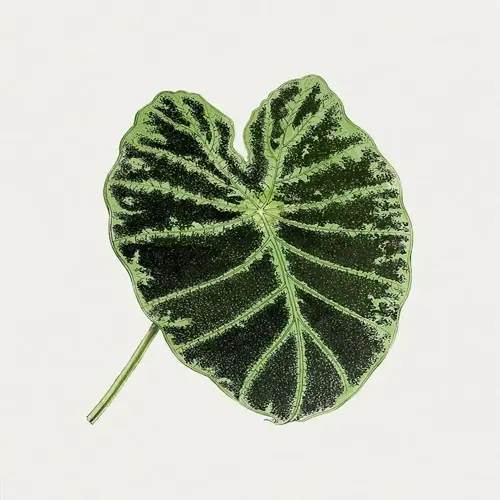

Misting an Alocasia zebrina does far less than most people expect. A quick spray makes you feel like you helped, but the effect fades within minutes. You can skip it without hurting the plant at all. Your real goal is to raise humidity around this fussy tropical. For that job, misting alocasia zebrina leaves is the wrong tool, and a steadier method will serve you better.
Watch a freshly misted leaf and the problem shows itself. The surface looks damp and feels humid for two or three minutes. Then the water beads up, slides off the slick leaf, or dries into the room air. The leaf goes back to bone dry, and the air around it never changed.
Here is the part that trips people up. Humidity is about the air around the plant, not the water sitting on a leaf. The Alocasia zebrina pulls moisture from the air through tiny pores all day long. A mist droplet wets the outside of the leaf for a moment, but it does nothing to load the surrounding air with the steady moisture this plant wants.
Wet leaves can also work against you, and this is the real risk of misting alocasia zebrina foliage. Water that lingers in the crook of a stem or pools on a flat leaf gives fungal leaf spots an easy start. Alocasia leaves stay damp longer than many houseplants because of their broad shape. Mist a few times a day in a still room and you trade a tiny humidity bump for brown rot spots you will be cutting out later.
Aim to hold humidity above 60% instead of chasing a quick spritz. A small humidifier is the most reliable way to get there. Set it near the plant on a timer and the air stays moist for hours, not minutes. A cheap hygrometer next to the pot tells you the real number, so you stop guessing and start dialing it in.
A pebble tray humidifier trick is the low cost backup. Fill a shallow tray with stones and water, then set the pot on top of the stones. Keep the pot base above the waterline so the roots never sit in it. As the water evaporates, it lifts the moisture in the air right around the leaves. It works best in a small space rather than an open, drafty room.
Grouping plants together does real work too. Each plant releases water vapor through its leaves, so a tight cluster builds its own humid microclimate. Push three or four leafy plants close to the zebrina and you create a damp pocket of air that one lonely plant on a shelf never gets. This costs nothing and runs on its own. Pair it with a tray or a humidifier and the effect stacks even higher.
- Wets the leaf for only two or three minutes.
- Leaves no change in the surrounding air humidity.
- Pooled water can invite fungal leaf spots.
- Needs you to repeat it many times a day.
- Holds moist air around the plant for hours.
- Pushes ambient humidity toward the 60% target.
- Keeps leaves dry, so spotting risk stays low.
- Runs on its own with little daily effort.
A quick mist is not always a crime. In a bright, airy room where leaves dry within an hour, an occasional spray to knock dust off the surface is harmless. It backfires when you mist a few times daily in a still, cool corner. The water just sits there, the air never moves, and the spots start to creep in. So save the spray for cleaning dust, not for humidity.
If you want one habit that matters, run a humidifier or pebble tray and let the misting bottle gather dust. Watch the hygrometer, keep the number above 60%, and the zebrina rewards you with firm leaves and bold stripes. That steady moist air, not a passing spritz, is what this plant has wanted all along.
Read the full article: Alocasia Zebrina Care Guide