

Introduction
Before you buy a single bag of anything, get a soil test. The right soil amendments depend on what your dirt actually lacks, not on what is trending this year. A $15 test tells you that in a way no blog post can. Spend the money there first, and you stop guessing.
Here is the payoff that should grab your attention. Each 1% rise in soil organic matter holds roughly 16,500 to 20,000 more gallons of water per acre. Those figures come from MSU Extension and USDA-NRCS. That means richer soil that shrugs off drought, fewer trips with the hose, and plants that keep growing when your neighbor's wilt.
Think of it this way. A soil amendment fixes the ground itself, like rebuilding the foundation under a house. A fertilizer only feeds the plant for one season, the way a meal feeds you for a day. Both have a place, but they do different jobs, and people waste real money buying the trendy product instead of the one their soil structure truly needs.
Most plants want at least 2% organic matter in the soil, and vegetable and flower beds do best at 5 to 10%, per UMD Extension. Compost is the cornerstone that gets you there, so we'll start with it. You'll also learn how to fix heavy clay and loosen sandy ground. We'll cover how to handle manure safely, and how to apply each amendment at the right rate.
Best Soil Amendments
Water sat on my back bed for two full days after every rain. The soil was heavy clay on a gentle slope, and it puddled in the same low spot near the fence each time. I worked compost into that bed for three seasons straight. By the third spring the clay had turned crumbly, and the water drained right through where it used to pool.
That bed is why you should trust organic matter to rebuild soil structure, not just feed your plants. The best soil amendments all share that trait. Some add fertility, some add drainage, and the strongest ones do both while they fix the texture of your soil over time. Pick the right one and your worst bed becomes your best one.
Here are the six amendments I reach for most. Each one has a real number behind it, so you know what you are getting. Compost leads because it does the most work. But aged manure, perlite, biochar, and leaf mold each earn a spot for a job of their own.

Compost
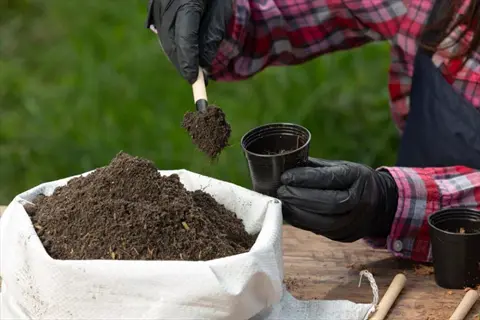
- What it is: Finished compost is decomposed plant and food waste that becomes the cornerstone amendment for nearly every soil type and garden goal.
- Why it works: It feeds soil biology, with as many as a billion microorganisms in a single teaspoon according to UMD Extension.
- Organic matter: Quality compost should be 40% to 60% organic matter by dry weight, per Colorado State University Extension guidance.
- Water benefit: Organic matter can retain up to ten times its weight in water, which is why compost improves both clay and sandy soils.
- How to apply: Spread about 3 cubic yards over 1,000 square feet for a 1 inch layer, then work it into the top 6 inches.
- Best for: Building long-term fertility and structure in any bed, from vegetables to perennial flowers.
Aged Or Composted Manure
- What it is: Manure from cows, horses, or poultry that has been aged or fully composted to reduce pathogen and salt risk.
- Why it works: It adds nutrients and organic matter, though plant-based compost runs only about 1-0.5-1 N-P-K (UMD Extension).
- Safety: Fresh manure must be applied at least 4 months before harvest for soil-contact vegetables and 3 months for other crops (CSU Extension).
- Composting heat: A pile must reach at least 131 degrees Fahrenheit (55 degrees Celsius) for 3 consecutive days to compost fully, per UMD Extension.
- Caution: Salty manure-based products can cause salt burn if over-applied, so test and apply conservatively.
- How to apply: Use only aged or composted manure in active beds and incorporate it well into the topsoil.
Perlite
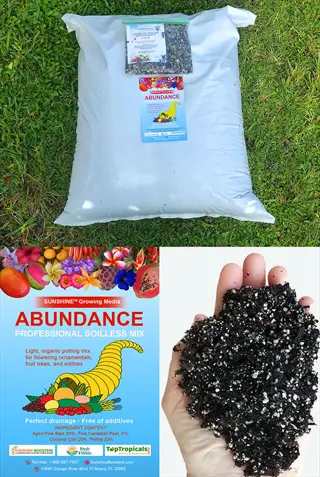
- What it is: Perlite is a lightweight inorganic volcanic mineral that has been heated until it expands into white porous granules.
- Why it works: It creates permanent air pockets that improve aeration and drainage without breaking down over time.
- Best use: It shines in container mixes and raised beds where lasting drainage matters more than fertility.
- Limitation: Perlite adds no nutrients and can be expensive to use across large in-ground areas.
- Pairing: Combine it with compost so you get both structure from perlite and fertility from organic matter.
- How to apply: Blend it into the root zone or potting mix rather than layering it on the surface.
Biochar
- What it is: Biochar is a stable charcoal-like material made by heating organic matter with little oxygen, used as a long-lasting amendment.
- Why it works: Its porous structure holds water and gives soil microbes a place to live, acting as a near-permanent fix.
- Research backing: A peer-reviewed Spitalniak 2021 study in Materials measured its water holding capacity against bentonite, attapulgite, and superabsorbent polymer.
- Comparison: In that study a water absorbing geocomposite beat biochar by 3.6 percentage points at minus 10 kilopascals, showing biochar is solid but not the top performer.
- Best for: Gardeners wanting a one-time structural improvement that keeps working for years.
- How to apply: Charge it with compost or nutrients first, then mix it into the root zone so it does not rob nitrogen early on.
Leaf Mold
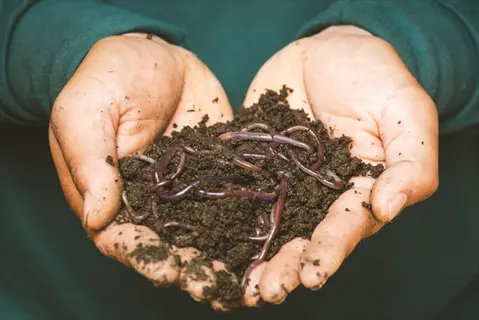
- What it is: Leaf mold is the dark crumbly material left after fallen leaves break down over a year or two.
- Why it works: It mimics the forest floor, dramatically improving moisture retention and soil structure in both clay and sandy beds.
- Water benefit: Like other organic matter it can hold many times its weight in water, easing drought stress between waterings.
- Cost: It costs almost nothing if you collect your own autumn leaves, which makes it one of the most affordable amendments you can find.
- Best for: Gardeners who want a gentle, low-nutrient conditioner that builds long-term soil health.
- How to apply: Work finished leaf mold into the top few inches or use it as a moisture-holding mulch layer.
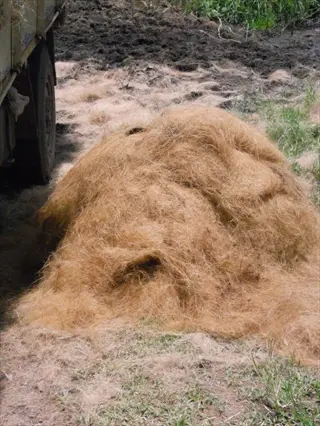
Peat Moss And Coconut Coir
- What it is: Peat moss and its renewable substitute coconut coir are fibrous materials prized for holding water in light soils.
- Why it works: Peat moss absorbs 10 to 20 times its weight in water according to UMD Extension, which boosts moisture retention in light soils.
- Sustainability: Peat harvesting raises environmental concerns, so coconut coir is often recommended as a more renewable alternative.
- Caution: Both are low in nutrients and peat is acidic, so they suit moisture-loving and acid-tolerant plants best.
- Best for: Sandy or fast-draining soils and container mixes that dry out too quickly.
- How to apply: Pre-moisten before mixing into the root zone, since dry peat and coir resist absorbing water at first.
Pick based on the job, not the price tag. Start with compost in any bed. Add perlite when a container or raised bed needs lasting drainage. Reach for leaf mold when you want a near-free fix for clay or sand. Mix two or three of these and your soil gets better every season.
Organic vs Inorganic Types
Every product you can dig into your beds falls into one of two camps. The first is organic amendments, which come from living things and feed your soil as they break down. The second is inorganic amendments, which are mineral or man-made and mostly fix how your soil drains and breathes.
Organic amendments like compost, aged manure, and leaf mold do double duty. They add nutrients, and they raise your organic matter, which is the part of the soil that holds water and food for your plants. They also wake up the soil biology, since a single teaspoon of good compost can hold close to a billion microorganisms.
The mineral group does a different job. Perlite and vermiculite are light grains. These inorganic amendments loosen heavy ground and let air and water move through it. They work as a soil conditioner for structure. But they barely touch fertility, so you still need to feed your plants another way.
- Add nutrients and feed soil microbes, with up to a billion microorganisms in a teaspoon of compost.
- Break down over time, so you must replenish them every season or two.
- Examples include compost, aged manure, leaf mold, peat moss, and coconut coir.
- Improve fertility, water holding, and structure all at once.
- Mainly change physical structure such as drainage and aeration, not fertility.
- Last for years because minerals do not decompose, giving a near-permanent fix.
- Examples include perlite, vermiculite, expanded shale, gypsum, and biochar.
- Add little or no nutrients, so you often pair them with organic matter.
The big split comes down to time. Organic matter decomposes and feeds the soil, so it fades and needs a top-up every season or two. Minerals like perlite do not rot, so they stay put for years and give you a near-permanent fix for compacted or sticky ground.
This is why a smart plan often uses both. Organic amendments feed the soil and build life. Inorganic amendments build the skeleton and hold it open. One last word of caution from CSU Extension. Many bagged products have no rules on quality or salt content. So buy from a source you trust. Never assume the label tells the whole story.
Fixing Clay Soil
Heavy clay soil packs down hard, holds water on top, and chokes roots that try to push through it. You have likely read two fixes for this. One camp tells you to dig in sand, and the other swears by organic matter. Only one of those holds up to the science.
Here is the fix that saves you money. To improve clay soil for good, you build it up with compost and aged manure, not sand. Sand or gravel in clay often makes drainage worse, says CSU Extension. The research papers back this up.
The reason comes down to how clay acts. Organic matter pulls tight clay bits into small crumbs, a clumping action called flocculation. Those crumbs open up pore space. Now water drains and roots move through ground that used to be brick-hard. Sand mixed into wet clay does the opposite and sets almost like concrete.
People reach for gypsum as a quick clay breaker too. It earns its keep on sodic clay, where it swaps out sodium and loosens the structure. On ordinary heavy clay it does little, so test your soil before you spend a dime on it. Here is how to work with clay the right way.
Lead With Organic Matter
- Why it works: Compost and aged manure help clay particles clump into crumbs, opening the pore space that compacted clay lacks.
- How much: Work a generous layer into the top 6 inches, since clay improvement happens in the root zone you actually loosen.
- Timing: Apply in fall so the amendment settles and integrates before spring planting season.
- Payoff: Better structure means water drains instead of pooling, and roots penetrate ground that was once brick-hard.
Skip The Sand And Gravel
- The myth: Many guides still recommend coarse sand to loosen clay, but it often backfires.
- The science: Colorado State University Extension reports that adding gravel or sand to clay often makes drainage worse.
- Why: Sand mixed into clay can set up almost like concrete rather than creating the open pores you want.
- Better choice: Use organic matter, expanded shale, or biochar for lasting structural improvement instead.
Use Gypsum Only For Sodic Clay
- What it does: Gypsum (calcium sulfate) can displace sodium and improve structure in sodium-affected, or sodic, clay soils.
- The limit: It does little for ordinary heavy clay, so a soil test should confirm a sodium problem first.
- How to apply: Follow rate guidance and water it in, since it works by chemistry rather than by adding bulk.
- Set expectations: Do not expect gypsum alone to fix compaction that organic matter handles better.
Add Structure With Minerals
- Expanded shale: This heat-expanded clay product adds permanent pore space and resists compacting back down.
- Biochar: Its stable porous structure improves aeration and water movement in dense soils for years.
- Perlite: Useful in raised beds and containers built on clay sites where drainage must be reliable.
- Combine wisely: Pair any mineral with compost so you build both structure and fertility together.
Do not till coarse sand into heavy clay to fix drainage. Colorado State University Extension reports it often makes drainage worse rather than better. Reach for organic matter instead.
Clay is slow to turn around, so give it time and keep feeding it. Each fall layer of compost chips away at compaction and builds the crumb structure that drains and breathes. Stick with it, and within a couple of seasons that heavy ground starts to work for your plants instead of against them.
Sandy Soil And Water Holding
Sandy soil drains so fast that water races past your plant roots before they can drink. You water in the morning, and by afternoon the bed feels bone dry again. The fix is not more water. The fix is building organic matter so the soil grips moisture instead of letting it slip away.
Here is the headline that should change how you garden. Each 1% rise in soil organic matter holds roughly 16,500 to 20,000 gallons more plant-available water per acre. Michigan State Extension puts it near 16,500 gallons. USDA-NRCS gives a higher figure, near 20,000. Either way, a small bump in organic matter pays off in a big way.
The lab numbers back this up. A silt loam with 4% organic matter holds more than double the water of one stuck at 1%, based on Hudson's 1994 work. Michigan State found compost-amended soil held 1.9 inches of water. Plain ground held just 1.3 inches. That extra water is about two weeks of supply for thirsty vegetables in a dry spell.
Why does organic matter grip water so well? Think of static cling. The charged surfaces of organic particles pull water molecules in and hold them tight. It works the same way a sock clings to a warm shirt from the dryer. That is the real reason building organic matter drought-proofs sandy soil and gives you lasting moisture retention.
The best sandy soil amendments all work this way. Compost leads the pack, while peat moss soaks up 10 to 20 times its weight in water and coconut coir does much the same as a renewable swap. Each one raises your soil's water holding capacity so roots stay damp between waterings. This matters beyond your garden too, since 70 to 80% of the world's fresh water goes to farming, and soil that holds more is soil that wastes less.
Manure And Food Safety
Manure feeds your soil and your plants, but it can also carry pathogens like the ones that make raw meat dangerous. Treat a pile of fresh manure the way you would treat raw chicken in your kitchen. Time and heat are what make it safe to use near the food you grow.
CSU Extension gives you firm days to harvest rules. Spread fresh manure at least 4 months before you pick any vegetable that touches the soil. For other crops, you can drop that wait to 3 months. Those buffers give the soil time to break down the bugs that make you sick.
The same goes for the numbers out of Maryland. Raw manure needs 90 days before you pick a crop that grows up high. Crops that sit on the soil need 120 days. Want to compost the manure first? The pile has to get hot. It needs to hit at least 131°F (55°C) for 3 days. That composting temperature is what kills off the trouble.
The table below puts every wait time in one place so you can match it to your own beds.
Want to kill most pathogens and weed seeds, not just slow them down? CSU notes the pile needs to climb above 145°F (63°C). Well-aged manure that has gone through that heat is the safest bet for any bed near your food. Watch the salt too, since salty manure products can burn roots, so spread aged manure with a light hand and lean on the longest wait time that fits your crop.
How To Apply Amendments
Learning how to apply soil amendments comes down to four moves you do in order. You test the soil, you work out how much to add, you mix it in, and then you water. Skip the testing step and you end up guessing at application rates that may be far too high or far too low for what your bed actually needs.
Water pooled on top of my heavy clay bed by the fence for a full week after I spread fresh compost over it one spring. I had dumped the pile on the surface in a rush and never mixed it in. The puddles only drained once I went back and forked the compost into the top 6 inches of soil. The same amount of compost did nothing sitting on top, and everything once it reached the root zone.
That is why a soil test has to come first. The same backyard can need very different amounts depending on its starting organic matter and its pH. A bed already sitting at 5% organic matter needs far less than bare clay starting near zero. Test, then you amend for the real numbers instead of a number off a bag.
Run a soil test to learn your pH and organic matter level before buying anything, so you amend for what the soil actually needs rather than guessing.
Use the standard rate of about 3 cubic yards of compost per 1,000 square feet for a 1 inch layer, then scale to your bed size.
Lay the amendment in an even layer across the bed so no patch gets too much salt or nutrients from a concentrated pile.
Work the amendment into the top 6 inches (15 centimeters) so it reaches the root zone instead of sitting on the surface.
Water the bed to settle the amendment and keep in mind that organic matter builds soil over seasons, with only 5 to 10% of compost nitrogen available the first year.
On amount, the rate most extension offices agree on is 3 cubic yards of compost per 1,000 square feet for a 1 inch layer. Scale that to your own bed and the compost per square foot math stays simple. Spread it even, then incorporate organic matter into that top 6 inches where the roots live.
Do not expect a fertilizer-style jolt from this. Organic matter breaks down slow, and only about 5 to 10% of the nitrogen in compost is plant-available the first year. You are building the soil over seasons, not feeding the plants this week. Each year you add a little, the soil holds more water and grows richer, and the work you put in this spring pays off for years.
When To Apply Amendments
Half the popular garden blogs tell you to amend in fall and leave it there. They never say why. The reason is simple once you know how compost feeds the soil. Only 5 to 10% of the nitrogen in plant-based compost feeds plants in the first year. The rest needs time to break down.
That slow release is the whole case for fall application. When you spread compost and aged manure in autumn, you give the organic matter months to settle in before spring. Soil microbes keep working through the cooler months, and by spring the bed is ready. Fall is also the safest window for manure. CSU says to put it down at least 4 months before harvest for any vegetable that touches the soil.
But knowing when to apply soil amendments is not a once-a-year chore. The best gardeners treat it as a rhythm that runs through all four seasons. Here is the calendar I follow, with one clear action tied to each season.
Fall
The best time to add compost and aged manure, giving the soil months to integrate organic matter before spring planting. This is also the window for fresh manure, kept well ahead of harvest.
Late Winter
Order your amendments and run or review a soil test so you know exactly what each bed needs before the season starts. A test now saves you from guessing in the spring rush.
Spring
Work amendments into the top 6 inches of soil before planting, and apply fresh manure only well ahead of any harvest. Skip manure on early salad beds you plan to pick soon.
Summer
Use top dressing with a thin layer of compost and add organic mulch to hold moisture, since organic matter helps soil retain far more water during heat. Side-dressing feeds hungry crops with compost as they grow.
See how each season hands off to the next. Fall builds the base, winter plans the work, spring puts it to use, and summer keeps your plants fed and watered. Follow this loop year after year and your beds get richer every season instead of starting from scratch each spring.
5 Common Myths
Adding coarse sand or gravel to clay soil is the fastest way to improve its drainage and break it up.
Colorado State University Extension reports that adding sand or gravel to clay often makes drainage worse; organic matter is the reliable fix.
Soil amendments and fertilizers do the same job, so you can use either one to feed your plants and improve your soil.
Amendments improve the soil itself such as structure and water holding, while fertilizers supply nutrients to plants; they serve different purposes.
Gypsum is a universal clay breaker that will loosen and improve any kind of heavy clay soil in your garden.
Gypsum mainly helps sodium-affected, or sodic, clay; for ordinary heavy clay, organic matter does far more to improve structure.
You can pile fresh manure onto a vegetable bed any time because it is natural and always safe for growing food.
Fresh manure carries pathogen risk; CSU advises applying it at least 4 months before harvest for soil-contact vegetables and 3 months for other crops.
More soil amendment is always better, so adding extra compost or manure will only help your plants grow faster.
Over-applying salty amendments causes salt burn and plant death, per CSU Extension; match amounts to a soil test instead of overloading.
Conclusion
Good soil work follows a simple order. Start with a soil test so you know what your dirt actually lacks. Then build organic matter with compost, match the right amendment to the real problem, and apply it safely at the right time of year. Soil amendments reward patience, not panic, and that order keeps you from wasting money on fixes your soil never needed.
Keep one number in your head. Each 1% jump in soil organic matter holds about 16,500 to 20,000 more gallons of water per acre. Those figures come from MSU Extension and USDA-NRCS. That extra water buys your plants days of cushion in a dry spell. It is the clearest payoff you get for the work you put in.
If one fact sticks, let it be this. Compost is the cornerstone amendment for nearly every soil you will ever work. It feeds clay and sand alike, lifts your organic matter toward the 2% floor most plants want and the 5% to 10% range that vegetable and flower beds love. Lead with compost and most other problems shrink on their own.
Think in seasons, not weekends. You are growing living soil, where a single teaspoon can hold up to a billion microorganisms that do the slow work of feeding roots. Each amended bed builds on the last, so your soil health climbs year after year. Stay with it, and the ground will hold more water, grow stronger plants, and ask less of you every season that follows.
Glossary
- Biochar
- A stable charcoal-like material made by heating organic matter with little oxygen, used as a long-lasting soil amendment.
- Expanded shale
- A heat-expanded clay product that adds permanent pore space to soil and resists compacting back down.
- Flocculation
- The process where clay particles clump together into larger crumbs, opening up pore space for water and roots.
- Leaf mold
- The dark, crumbly material left after fallen leaves break down slowly over a year or two.
- Organic matter
- The decomposed plant and animal material in soil that feeds biology and holds water and nutrients.
- Sodic clay
- Clay soil with high sodium content, the specific type of clay that gypsum can actually help improve.
- Soil amendment
- Any material mixed into soil to improve its physical, chemical, or biological properties for plant growth.
- Water holding capacity
- The amount of water a soil can store and make available to plant roots between waterings.
External Sources
Frequently Asked Questions
How do I know if I need to amend my soil?
Watch for water pooling after rain, hard compacted soil, or pale plants, then confirm with a soil test for pH and organic matter.
What is the difference between a soil amendment and compost?
Soil amendment is the broad category of any material added to improve soil; compost is one specific organic amendment.
What is the difference between a soil amendment and fertilizer?
Amendments improve the soil itself such as structure and water holding, while fertilizers supply nutrients directly to plants.
Are coffee grounds a good soil amendment?
Coffee grounds add a little organic matter and nitrogen but work best composted first rather than piled on raw.
When should I apply soil amendments?
Fall is the best time so amendments integrate before spring; apply fresh manure well before harvest.
How long does it take for soil amendments to work?
Structural amendments work right away for drainage, but organic matter builds soil over several seasons.
Can you use too much soil amendment?
Yes; over-applying salty amendments can cause salt burn, so match amounts to a soil test.
What are the most common soil amendments?
The most common are:
- Compost
- Aged manure
- Perlite
- Peat moss or coconut coir
- Gypsum and biochar
How do I amend soil for better drainage?
Use organic matter, expanded shale, or biochar in clay; never till in sand, which often makes drainage worse.
How do I amend soil naturally?
Use natural organic matter:
- Compost
- Leaf mold
- Aged manure
- Cover crops