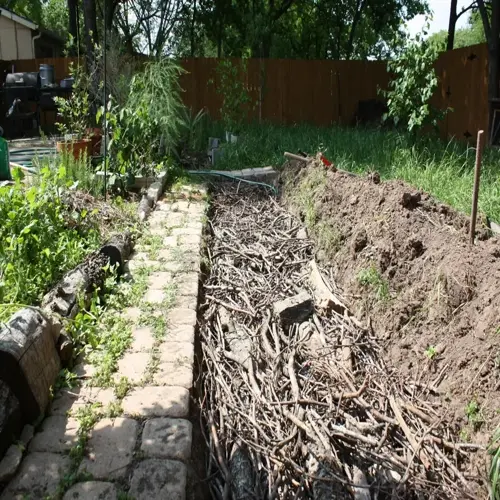

The best mulch for weeds is a coarse, chunky one. Coarse wood chips and bark beat every other option because they stack into a dense, opaque layer that blocks light. As a weed suppression mulch, both hold their shape for months and keep weed seeds in the dark where they cannot sprout.
Weeds kept pushing up through the back bed by the woods edge no matter how often I pulled them. The mulch there sat barely 1 inch deep, thin enough to see soil between the chips. I stripped it back, dumped in fresh bark, and raked it out to a full 3 inches. The next month the same bed threw up a handful of weeds instead of a carpet. The bed two feet over got the same bark but only a thin spread, and it stayed weedy all season.
Here is how mulch actually stops your weeds. It works as a light barrier. Most small weed seeds need a flash of light to trigger germination, so when you bury them under an opaque layer, they stay dormant. A thin layer leaks light through the gaps and lets your seeds wake up. A thick coarse layer does not. Aim for 3 to 4 inches (7.5 to 10 cm) of depth, and you cut off the light those weeds depend on.
You can test your own beds in seconds. Push a finger straight down through the mulch until you hit dirt, then check how deep it went. If you see soil between the chips or your finger barely sinks, you have a thin spot, and that is where weeds will break through. The bed by my woods edge passed the finger test only after the second load of bark went down. Walk your whole bed and check the edges, since that is where mulch always runs thin first.
The research backs up that depth matters more than brand or color. A 1995 study from the ISA measured weed cover as low as 3.5% in beds under deep mulch. SDSU Extension reports that wood chip mulch works well for native plant restoration. Crews there pile it up to 8 inches (20 cm) deep to hold back weeds across wide, rough ground. Both point to the same thing. Stack it deep and keep it coarse, and the weeds stay down.
Texture is the part most people get wrong. Fine mulch like shredded leaves or sawdust looks tidy, but pile it on thick and it breaks down into a rich, damp bed. Weed seeds blow in, land on top, and sprout inside the mulch itself. The roots never touch your soil, so the layer that was supposed to stop your weeds becomes the thing growing them. Coarse chips drain fast and dry out on top, which gives drifting seeds nothing to grab. That is why your texture choice matters as much as your depth.
Refresh your mulch each spring to keep the layer at a full 3 to 4 inches. Chips settle and rot down over a year, and a sunken bed lets the light back in.
So skip the dyed fine bits and the thin decorative dusting. Buy coarse wood chips or shredded bark, spread them 3 to 4 inches deep, and top off the bare patches once or twice a year as they settle. Keep your mulch back about an inch from plant stems so they do not rot. Pull the few weeds that do slip through while they are small, since they lift out easy from loose chips. That combination of coarse texture plus real depth is what keeps your bed clean.
Read the full article: 10 Types of Mulch for Every Garden