
There is no single best mulch to use for every garden, because the right one depends on the bed you are covering. Shredded hardwood bark wins for most ornamental beds, coarse wood chips suit trees and paths, and straw fits vegetable rows best. Match the mulch to the job and you get better results than chasing one perfect product.
Two bags of bagged bark sat by my back gate while a free pile of arborist chips spilled across the humid zone 7 yard. I had a bed under a young red maple to cover and only one would go down that day. I grabbed the coarse chips and spread them 3 inches deep around the trunk, leaving a gap at the bark. The chips held moisture through a dry August week while the maple kept pushing new growth.
The trade-offs are what decide the winner for each spot in your yard. Shredded bark mulch knits together and stays put on slopes, so you can use it for flower beds, shrub borders, and anything near the house where looks matter. It breaks down at a steady pace and feeds your soil as it goes. This is the default I reach for when a bed needs to look clean and hold its shape. If you want one product that handles most of your beds, this is it. The dark color also makes your plants pop, which is why you see it in front yards everywhere.
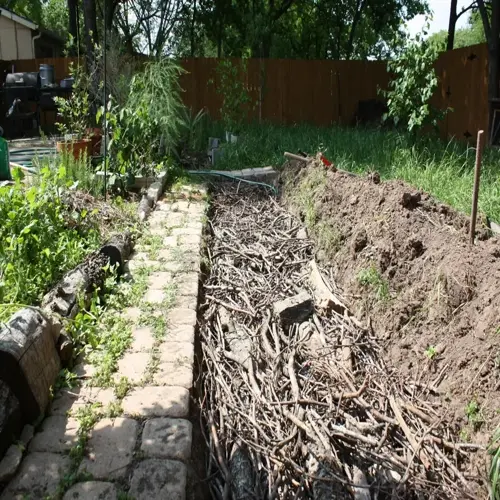
For bigger jobs, wood chip mulch earns its place around your trees and along pathways. The chunky pieces lock together underfoot and last far longer than fine bark before they thin out. Around a tree, chips keep your mower and string trimmer away from the trunk, which stops the bark damage that kills young trees. On a path they drain fast and stay firm even after heavy rain. You can often score chips free from a local tree crew, so they cost almost nothing for a big area. They look rougher than bark, so save them for the spots where you care more about function than looks.
Straw plays a different role in your vegetable patch. It is light, cheap, and easy to rake aside when you plant or harvest. Spread it 4 to 6 inches (10 to 15 cm) deep between your rows and it blocks weeds while keeping the soil cool and damp. Straw rots fast over one season, which is fine since you turn the bed each year anyway. Skip hay though, since it carries seeds that sprout into a weedy mess you will be pulling all summer. Buy clean straw from a feed store and you avoid that headache.
Depth changes with the material, so do not treat them all the same. Lay bark and chips at 2 to 3 inches (5 to 7.5 cm) around your shrubs and trees, since piling it higher smothers roots and traps too much water. Straw goes thicker at 4 to 6 inches (10 to 15 cm) because it settles and packs down fast. Keep all mulch a few inches off your stems and trunks to stop rot and pests. That little gap is the one rule people break most, and it costs them plants every year.
Pick your mulch by the area and the goal in front of you, not by one rule for the whole yard. Use chips around trees, straw in the veggie beds, and bark everywhere you want a tidy look. When you are unsure, default to shredded hardwood bark for general beds and you will rarely go wrong. Buy a small bag, try it in one bed, and judge how it ages before you mulch the rest.
Read the full article: 10 Types of Mulch for Every Garden