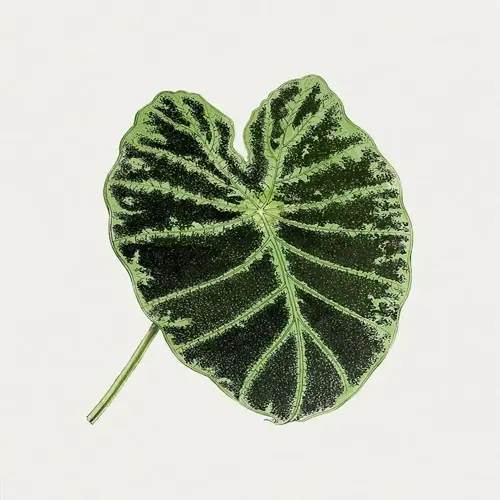

The best alocasia zebrina location is a bright spot a few feet from an east or west window. There the plant soaks up plenty of bright indirect light all day. Put the same plant in a dim corner and you see the cost fast. Its leaves turn pale, the stems stretch and lean toward the nearest light, and the whole plant looks thin. Move it near a bright window and it grows full and upright, with thick stems that hold the leaves up on their own.
That difference is not just about looks. It points to how your plant actually builds new growth. Light is the fuel, and the brighter the spot you pick, the more your plant can make.
A peer reviewed study on Alocasia tracked plants across the year. It found that more monthly sunshine lined up with more mature leaves. So a bright spot is not about bare survival. You get real growth and steady leaf production. A plant in low light may hang on for months, but it stops pushing out new leaves and slowly thins out.
For most homes, your best alocasia zebrina location sits at an east or west window. An east window gives you soft morning sun, and a west window gives warm afternoon sun. Both stay gentle enough that your leaves do not scorch. Hang a sheer curtain if your glass gets a strong, direct beam. The thin fabric softens the light without stealing much of it.
East Window
- Best fit: Soft morning sun lands here, which the plant takes without any leaf burn.
- Placement: Right at the glass or a foot back works well for steady growth.
- Watch for: Little risk of scorch, so this is the easiest window to get right.
West Window
- Best fit: Warm afternoon light feeds strong growth through the second half of the day.
- Placement: Pull the pot back a foot or two if the afternoon sun feels hot on your hand.
- Watch for: A sheer curtain tames the strongest summer rays without darkening the room.
South Window
- Best fit: Strong light all day, but the direct beam is too harsh up close.
- Placement: Keep the plant a few feet back so it gets the glow, not the burn.
- Watch for: Crispy brown edges mean the sun is too direct and you need more distance.
A south window can work too, but only with some distance. The light there is strong all day, and your leaf pressed against hot glass burns at the edges. Set your pot a few feet back and the plant gets the brightness without the damage. If you see crispy brown tips, slide it farther from the glass.
Where you place your plant matters as much as which window you pick. Keep it away from cold drafts near doors and old windows, since sudden chills make your plant drop leaves. Keep it clear of heating vents too. The dry, hot air dries your soil out in a flash and crisps the leaf edges. A steady, draft free spot beats a bright one that swings hot and cold.
Not sure if a spot is bright enough? Use the shadow test. Hold your hand a foot above the soil around midday. A clear, sharp shadow means strong light. A soft, fuzzy shadow means the light is too weak for good growth, and a spot with no shadow at all is far too dim. This quick check tells you more than guessing by eye.
Once your plant settles in, give the pot a quarter turn every week or two. Alocasia leans hard toward its light source, so turning it keeps your growth even and the stems upright. Do not lean on this trick to fix a dark corner, though. Rotating helps the shape, but it cannot replace the bright window your plant needs to grow.
Read the full article: Alocasia Zebrina Care Guide