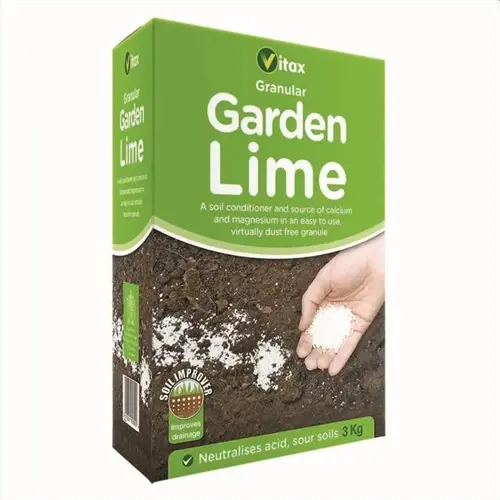

No, gypsum will not raise the pH in your soil. Plenty of gardeners mix it up with garden lime because both are white powders that add calcium. But the two work in very different ways. Lime pushes pH up, while the link between gypsum and soil pH is close to zero. You can spread it on an acidic bed all season and the pH reading will hold steady.
So does gypsum change pH at all? Not in any way you would notice on a test. Gypsum is calcium sulfate, which is a neutral salt. It hands your soil calcium and sulfur, and that is the whole job. Iowa State Extension lists it as pH-neutral, meaning it neither sweetens nor sours the ground the way other amendments do.
The chemistry is the part most people miss. Lime is calcium carbonate, and that carbonate is what raises pH. Carbonate grabs the acid in your soil and neutralizes it, so the number on your test climbs. Gypsum carries no carbonate at all. It splits into calcium and sulfate ions, and neither one mops up acid. So you get the calcium benefit with no pH swing. That is why farmers reach for gypsum when they need calcium but want to leave the pH alone.
Sulfate is the other half of the gypsum story. Plants need sulfur, and gypsum is a clean way to feed it without changing your pH. Iowa State Extension pegs commercial gypsum at about 22% calcium and 17% sulfur. Both are useful nutrients. Neither one acts on acid. So the amendment stays neutral while it still feeds the soil, which is a rare and handy combination.
Here is a quick gypsum vs lime breakdown so the difference is easy to keep straight.
- Calcium sulfate, a neutral salt that adds calcium and sulfur.
- Does not change pH, so it leaves acidic or alkaline soil where it is.
- Best for sodic soil, calcium needs, or a sulfur shortage.
- Calcium carbonate, which adds calcium plus acid-neutralizing carbonate.
- Raises pH and sweetens sour, acidic soil over a few months.
- Best for soil that tests too acidic for your plants.
If your real goal is a pH fix, gypsum is the wrong tool. To raise pH, use garden lime. To go the other way and lower pH, use elemental sulfur. Soil microbes turn that sulfur acidic over a few weeks. Each of these moves the number on purpose. Gypsum just sits there pH-wise. Swap it in for lime and your acidic bed stays just as sour as before, which wastes both your time and your money.
Always test your pH before you buy anything. A cheap soil test tells you the actual number, and that one reading decides your amendment. Read below 6.0 and your soil is too acidic for most vegetables, so lime is your pick. Sit above 7.5 and sulfur brings it down. Land in the 6.0 to 7.0 range and you likely do not need a pH amendment at all. Guessing here is how people end up spreading the wrong product. The reading takes ten minutes and saves a whole season of slow plants.
Save gypsum for the jobs it actually does. It works on sodic soils, where sodium has wrecked the structure and calcium can knock that sodium loose. It also helps when a soil test shows a real calcium or sulfur shortage, since gypsum delivers both at once. Some gardeners use it on blossom end rot too, where the fruit needs calcium but the bed already sits at a fine pH. In each of those cases the neutral behavior is the point, not a flaw.
So treat gypsum as a pH neutral amendment and nothing more. Reach for it when you want calcium or sulfur and want your pH left alone. For an acid or alkaline problem, lime and sulfur are the only two that move the needle. Test first, match the product to the number, and skip gypsum for good if pH is the thing you are trying to fix.
Read the full article: Gypsum Soil: What It Does and When to Use It