Bulb · Iridaceae
Bearded Iris
Iris germanica
Plant the rhizome shallow in full sun, keep it lean and dry, and the bearded iris charges back every spring for years.
Full sun
Every 7–14 days
USDA 3–10
1–3 ft · 0.2–1 m
Overview
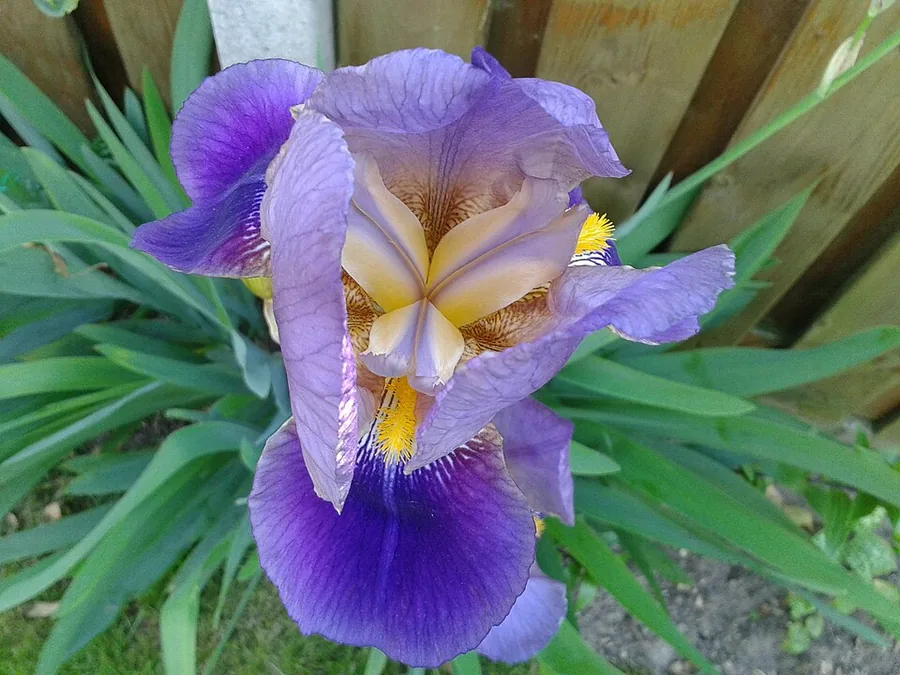
The bearded iris hits a sweet spot for any keen grower: huge spring payoff for almost no effort. It powers up from a fat surface rhizome instead of a buried bulb, then throws up sword-shaped leaves and tall stalks crowned with ruffled blooms in late spring. That fuzzy strip running down each lower petal is the beard, and yes, it is exactly where the name comes from.
Hardly any perennial gives back this much for so little. The bearded iris laughs off cold down to -40°F (-40°C) and heat past 100°F (38°C), rolls through drought once it roots in, and asks for next to nothing. Just dodge two slip-ups, wet feet and deep planting, since both rot the rhizome and kill the show.
Pick a sunny, well-drained spot, set the rhizome shallow, and watch it take off. Every few years you lift the clump and pull it apart, which keeps the blooms firing and drops free new plants in your lap to scatter around the garden or hand to fellow growers.
Care
The short version: full sun and free-draining soil, the rhizome set shallow with its back near the surface, watered sparingly once established, and fed lean. Split the clump every few years and the blooms keep firing while the free plants pile up.
Light
Bearded iris craves full sun, ideally six or more hours a day, to crank out the best blooms. It shrugs off a little afternoon shade, but pile on too much and it swaps flowers for floppy leaves.
Water
Once it roots in, this drought-tolerant plant thrives on the dry side. Let the top half of the soil dry between waterings, roughly every 7 to 14 days, and ditch overhead watering, which kicks off rhizome rot.
Soil
Nail the drainage and you have won half the battle. A well-drained loam with some organic matter is ideal, sand works great, and heavy clay needs sand or compost worked in. Hold the pH between 6.0 and 7.0.
Temperature
This perennial is built tough, cruising from -40°F to 100°F (-40°C to 38°C), which spans USDA zones 3 through 10. Brutal winters do not scare it, and most summers barely register.
Humidity
Plain outdoor humidity suits it fine, so chase no number here. Air movement does the heavy lifting, since still, damp pockets around crowded clumps are what spark leaf spot.
Feeding
Feed light with a low-nitrogen fertilizer such as 5-10-10, once after bloom and again in early spring. Scatter it around the clump, not over the rhizomes, because too much nitrogen pumps up soft rot instead of flowers.
Pruning
Snip the spent flower stalks after bloom so the plant stops pouring energy into seed. In late fall, cut the foliage back to 3 to 6 inches (8 to 15 cm) to clear out leaf spot and any borer eggs lurking in the leaves.
Repotting
Iris skips the pot, but the clumps beg for lifting every 3 to 5 years in late summer once they crowd up. Slowing flowers, packed clumps, and dead old centers that no longer bloom shout that it is time to divide.
Size & spacing
Plants stretch from about 9 to 39 inches (23 to 100 cm) tall depending on the class. Space them 12 to 24 inches (30 to 61 cm) apart so air rips between the fans and leaf spot stays out.
When to plant
Get bearded iris in as a rhizome in late summer to early fall so the roots grab hold before winter hits. The payoff lands the next spring to early summer, when the stalks light up around May, and a handful of cultivars even push out a second flush later on.
Northern hemisphere
Southern hemisphere
Typical months for a temperate climate: start earlier in warm zones, later where spring frosts linger.
- Plant: Plant rhizomes in late summer to early fall
- Harvest: Spring to early summer (May), some cultivars rebloom
Hardiness
USDA hardiness zones: 3–10
Temperature: down to -40°C
Troubleshooting
Most iris trouble brews out of sight, underground or down at the base of the leaves, so it slips by until the top tells the tale. Pounce on the borer or the rot early and you save the whole clump. Match the signs below, then move before it tears through the rest.
Browning leaf tips with sawdust-like grains piling up low
Track this one straight to the iris borer, a caterpillar that hatches in spring, eats its way down the leaves, and drives into the rhizome below. Hunt for the sawdust-like frass gathering at the leaf bases, then squeeze the foliage to crush the young larvae while they are still small and easy to beat. Move fast, because once a borer reaches the rhizome and leaves it soft and tunneled, that piece is done, so dig it out and clear it away.
Fix:
- Crush infected leaves early in the season
- Dig up and destroy affected rhizomes
Mushy rhizomes that reek and give way
A soft, foul-smelling rhizome that caves in points straight to bacterial soft rot, which moves in when plants sit in soggy ground, get buried too deep, or smother under mulch and rich feeding. Skip any rescue attempt, because a rotted rhizome is gone for good. Cut out and bin the affected plants, sharpen up the drainage, and replant the firm pieces shallow with their tops riding at or just above the soil to get the clump charging back.
Fix:
- Remove and destroy infected plants entirely
- Improve drainage and replant healthy rhizomes shallowly
Spotted leaves on a clump losing steam
Spots breaking out across the foliage flag fungal leaf spot, which tears through a crowded clump where the air goes stagnant. Strip off and bin the marked leaves the moment they show up. When a planting packs in tight and tangles together, lift it and split it so every fan grabs light and a fresh breeze, and the clump powers back into shape.
Fix:
- Remove and destroy affected foliage
- Divide overcrowded clumps to improve air circulation
Toxicity
Bearded iris is a feast for the eyes, not the stomach. The whole plant runs mildly toxic and the rhizome packs the strongest punch, loaded with irritant terpenoids that upset the gut if swallowed and can leave skin red and itchy on contact. Keep the rhizomes clear of pets and kids, and pull on gloves before you dig or divide.
Toxic to
Cats · Dogs · Horses · Rabbits · Livestock · Birds · People
Cats Mild
A cat that nibbles a leaf or digs at a rhizome usually drools, throws up, and turns quiet and uninterested in food for a stretch, with loose stools sometimes joining in. Tuck the rhizome, the worst part, well out of a cat's reach.
Dogs Mild
Dogs zero in on the rhizome, the most irritating part of the plant, and a chew brings drooling, an upset stomach, and a dog that mopes around with no appetite. Loose stools tag along often, though the upset usually stays mild.
Horses Moderate
The same irritant compounds churn a horse's gut and set off drooling and diarrhea. Horses seldom chase iris down, but plant clumps clear of paddock edges so a bored animal cannot wander over and browse them.
Rabbits Moderate
Iris is no treat for a rabbit. The terpenoids running through the rhizome and leaves irritate a rabbit's digestive tract, so fence the plants off and never pass along trimmings as a snack.
Livestock Moderate
Cattle, sheep, and goats can pick up a sore mouth and a churning stomach if they graze the foliage or dig up a rhizome. Most steer clear unless the pasture runs short, so keep clumps well away from grazed ground.
Birds Caution
Little is settled either way for birds, and since the rhizome stays an irritant, the smart move is to treat iris as off-limits. Keep poultry and pet birds from pecking at the roots or foliage.
People Caution
No part of a bearded iris belongs on the plate, and the rhizome is the most irritating piece if swallowed. Handling it can leave skin red or itchy, so snap on gloves before you dig or divide and keep children from chewing the leaves.
Wear gloves when handling rhizomes, as the sap can cause minor skin irritation or contact dermatitis.
Helpline numbers

United States
ASPCA Animal Poison Control: (888) 426-4435 (fee applies)
Poison Control: (800) 222-1222



Canada
Poison Centres: 1-844-764-7669
Varieties
Bearded iris splits into classes by height, from ankle-high dwarfs to stalks that rocket past your knee. Picking one is mostly a call on how tall you want the flowers to stand.
Tall Bearded
The tallest and most popular class, shooting up to 2.5 to 3 feet (71 to 97 cm) and flaunting the big, ruffled flowers most people picture the second they hear bearded iris.
Intermediate Bearded
A go-to mid-height group at 16 to 27 inches (41 to 69 cm) that bridges the dwarfs and the tall types and kicks off its bloom a touch earlier.
Standard Dwarf Bearded
A compact class at 8 to 15 inches (20 to 38 cm) that fits right into the front of a border or a rock garden.
Miniature Dwarf Bearded
The smallest class, topping out around 8 inches (20 cm), and the one that leaps into flower first each spring.
How to propagate
Bearded iris practically multiplies itself, because a thriving clump outgrows its patch and begs to be split. Division is the fast, sure-fire route every grower can nail, while seed is a slow game best handed to breeders.
DivisionEasy
Mid to late summer, after flowering · Blooms typically resume the following season
Division is the winning way to multiply bearded iris, and the moment to jump on it is mid to late summer once the flowers have faded. Lift the clump and snap the rhizomes apart with your hands, grabbing the young, firm pieces from the outside and ditching the tired old centers that no longer bloom. Trim each fan of leaves down, replant shallow with the top exposed, and the divisions dig in to flower again the very next season.
SeedModerate
Sow after seed ripens; named cultivars do not come true from seed · Several years to flowering
Seed is the breeder's playground, since a named cultivar will not come true from its own seed. Sow the seed once it ripens and brace for the long haul, because a seedling can take several years to hit its first bloom. If breeding is not the goal, just snip off the spent flower stalks to stop the plant setting seed at all.
Myths
Bearded iris should be planted deep like a tulip or daffodil bulb.
Bearded iris grows from a rhizome, not a true bulb, so it wants to ride shallow with its back at or just below the surface. Bury it deep like a tulip and it rots and sulks instead of flowering. Plant it shallow and let the top soak up the sun, and it rewards you fast.