Bulb · Iridaceae
Siberian Iris
Iris sibirica
Cold-proof, easy to grow, and endlessly rewarding, Siberian iris turns a damp patch into grassy fans and a rush of late-spring bloom.
Full sun
Every 3–7 days
USDA 3–8
2–4 ft · 0.6–1.2 m
Overview
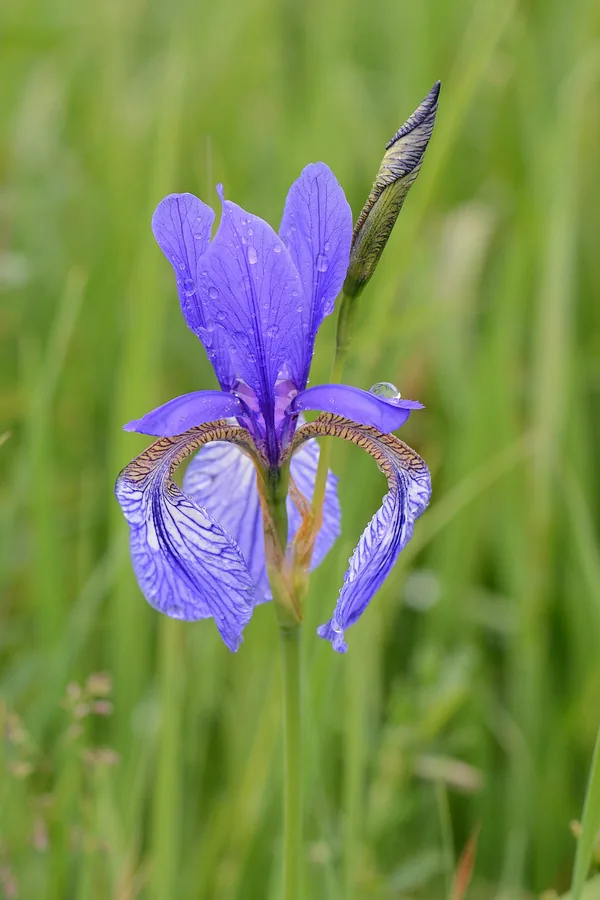
Here is a perennial that delivers real payoff for almost no effort, and it leaves the temperamental bearded iris in the dust. It shoots up slim, clump-forming fans of grassy leaves and floats airy flowers over them each late spring, and borers find no fat surface rhizome to attack. Get it rooted once and it powers on with barely a nudge.
Cold holds no fear for this plant. It powers through lows of -40°F (-40°C) and thrives in spot after spot, from a plain border to the wet rim of a pond. It laughs off the kind of soggy, boggy footing that finishes most perennials, so that stubborn wet corner suddenly becomes prime real estate.
Feed it sun and steady water and it rockets into a strong, upright clump that holds its lines long past the last flower. The slender leaves stay crisp all summer, so the plant pulls hard for its spot in the border even with nothing in bloom.
Care
The short version: full sun to part shade, even moisture right through the season, and rich soil that drains fast but happily takes a boggy patch. Split the clump about every 3 years and this plant practically grows itself.
Light
Chase big flowering and you want full sun, though the plant still performs in partial shade. Deliver 6 hours or more of direct sun daily; fall short and the clump flops and holds back nearly all its blooms.
Water
This iris drinks steadily, so keep the soil moist from the first spring push right until a few weeks past bloom, its hardest-working stretch. Wet, boggy ground? It thrives there, and once a clump has a season or two under its belt, it can power through a short dry snap.
Soil
Plant into rich, moist, humusy soil that drains well, but do not sweat wet feet, because it handles soil way soggier than other perennials will tolerate. Keep the pH between 6.0 and 7.0 and it romps away.
Temperature
The cold tolerance here is off the charts, spanning -40°F to 86°F (-40°C to 30°C). That range powers it through savage winters and hot summers with no fuss at all.
Humidity
Forget chasing a humidity number, the open air handles that easily. Strong airflow is the real win, since crowded, damp foliage is what sets up the odd bout of rot.
Feeding
A single hit of food in early spring is all it takes. Work in a balanced general-purpose fertilizer or a scoop of compost as growth fires up, and that one feed drives the clump clear through to fall.
Pruning
Snip the finished flower stems off after bloom to keep things sharp. Come dividing time, or in late fall once the leaves brown out, cut the foliage down to 6 to 8 inches.
Repotting
Roughly every 3 years, dig the clump up and split it, or move faster if the middle hollows out and flowers dwindle. That empty core and shrinking bloom count are the clump begging for more room.
Size & spacing
A grown clump powers up to 2 to 4 feet (60 to 120 cm) tall and fans out to about 2.5 to 3 feet (76 to 91 cm) wide. Give it that elbow room and air rushes right through the fans.
When to plant
The calendar could hardly be easier to run with. Cold-winter gardeners plant and divide in spring, while the southeast gets going in fall. Blooms burst out in May and June, then the foliage keeps the clump powering forward into the year ahead.
Northern hemisphere
Southern hemisphere
Typical months for a temperate climate: start earlier in warm zones, later where spring frosts linger.
- Plant: Spring in cooler-winter regions; fall in the southeast
- Harvest: May to June
Hardiness
USDA hardiness zones: 3–8
Temperature: down to -40°C
Troubleshooting
Siberian iris is a low-drama grower, streets ahead of bearded iris on that front. The rare snag almost always ties back to shade, a clump packed too tight, or a run of wet weather. Spot your sign below and jump on the fix, because most take only minutes.
Soft, stinking rot down at the base
Soft, slimy, foul-smelling breakdown at the base means bacterial soft rot, though Siberian iris shrugs it off far better than bearded iris ever does. Carve out every rotten scrap and bin it, then fix the drainage and quit planting the crown down low. Sharp drainage and clean soil slam the door on it.
Fix:
- Remove and destroy affected tissue
- Improve drainage and avoid burying the crown too deeply
Hardly any bloom and leaves sprawling loose
Weak flowering over loose, sprawling leaves nearly always traces to thin light or a clump jammed too tight. Shift it into a spot with a good 6 hours of direct sun, and if the middle has hollowed and turned woody, lift it and split it up. Divide it every 3 years and you shut this problem down before it ever starts.
Fix:
- Relocate or thin surroundings to provide full sun
- Divide the clump and replant healthy fans with at least two fans each
Chewed, ragged leaf edges
Ragged edges and glinting slime trails flag slugs and snails grazing under cover of dark. It is purely a cosmetic knock, so head out at night and pluck them off, then rake away the damp cover they hole up in. Dry things out around the clump and they clear off fast.
Fix:
- Hand-pick slugs and snails
- Reduce moist hiding spots near plants
Toxicity
Love this plant for the border, just never for the table, and keep that in mind around animals. Every part is loaded with irisin and terpenoids, and the rhizome packs the heaviest punch, so a pet that chews it can wind up drooling and queasy. Pull on gloves before you dig into the roots, because the sap can leave skin stinging.
Toxic to
Cats · Dogs · Horses · Rabbits · Livestock · Birds · People
Cats Mild
A cat that chews it will drool and throw up, then go flat and skip its food. The rhizome hits hardest, so a digging, gnawing cat cops the worst of it.
Dogs Mild
Expect heavy drool and a rolling stomach, often with diarrhea and a washed-out, sluggish mood. Dogs that dig up and chomp the roots take the biggest dose.
Horses Mild
A grazing horse can drool, turn queasy, and pass loose droppings. Most horses steer clear, but keep iris well out of reach regardless.
Rabbits Toxic
The same irisin and terpenoids that flatten cats and dogs put rabbits at the same risk, so park iris far from any hutch or run.
Livestock Toxic
Cattle, goats, and sheep can drool and take a digestive hit from munching the leaves and roots, so keep it fenced away from any pasture they can get to.
Birds Toxic
Birds run the same risk from these toxins, so keep hens and pet birds from nibbling the foliage or roots.
People Caution
None of this plant is food, and with the rhizome the most toxic part, curious kids are best kept clear. The cut roots can irritate skin too, so gloves are the smart call whenever you split a clump.
Wear gloves when dividing or handling, as the sap can cause skin irritation.
Helpline numbers

United States
ASPCA Animal Poison Control: (888) 426-4435 (fee applies)
Poison Control: (800) 222-1222



Canada
Poison Centres: 1-844-764-7669
Varieties
Siberian iris rolls out in a huge range of colors and sizes, from towering purples to pint-sized whites, so there is always another one to chase. Here are a few standout cultivars to start with.
Caesar's Brother
A vigorous old champion that fires up rigid stems of deep purple to about 3 feet, and it has bagged a Plant of Merit.
Butter and Sugar
A punchy bicolor that stacks pale yellow falls under bright white standards on one bloom.
White Swirl
A crisp pure white that fires light into a shady patch of the border.
Baby Sister
A compact firecracker that stops at just 1 to 1.5 feet, perfect for the border's front line or a tight little garden.
How to propagate
Multiplying this iris is half the fun, and there are two ways to do it: split a clump or sow seed. Division wins on speed, and it is the only route that keeps a cultivar identical to the parent, so most growers reach straight for it.
DivisionEasy
Late summer or early spring (after bloom) · 6 to 8 weeks to root; may take more than one season to bloom
Division is the fast, foolproof way to bulk this iris up, and it takes rough handling that a bearded iris never would. Get stuck in during late summer or early spring after bloom: chop the foliage to 6 to 8 inches, drive a sharp blade through the clump so every piece keeps two fans or more, then tuck the pieces under 1 to 2 inches of soil and keep them wet. Roots grab hold in roughly 6 to 8 weeks, though a new piece often skips flowering for its first season.
SeedModerate
Sow when ripe · Several seasons to reach blooming size
Seed is the long game, and it pays off best with the wild species, not the hybrids, since crosses refuse to come true. Fire the seed into the ground the moment it ripens and hang on, because a seedling takes several seasons to bulk up to flowering size.
Myths
Siberian iris demands the same nonstop dividing and borer control bearded iris does.
Not even close. Siberian iris builds neat, well-behaved clumps, gives borers no fat fleshy rhizome to tunnel into, and brushes off the soft rot that hammers the bearded types. Split it just about every 3 years and it cruises along nearly pest-free the whole time in between.
Iris is no threat to pets.
Wrong on that one. Iris is toxic to cats, dogs, and horses, and the rhizome carries the biggest hit. A pet that gnaws it can end up drooling and vomiting, and you may see diarrhea plus a flat, dragging mood right behind, so keep it well out of their way.