Ornamental · Poaceae
Feather Reed Grass
Calamagrostis × acutiflora
Set it in full sun and feather reed grass shoots up tall and feathered, holding the show from June all the way through winter.
Full sun
Every 5–10 days
USDA 4–9
3–5 ft · 0.9–1.5 m
Overview
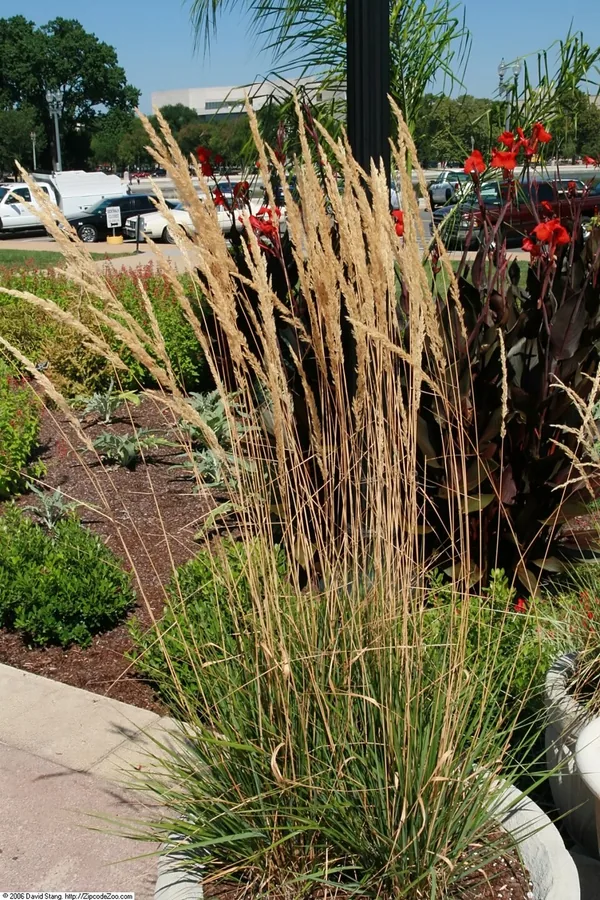
Feather reed grass is that crisp upright grass you spot edging driveways and anchoring the back of a border. It comes from a sterile cross of two European grasses, and its star form, Karl Foerster, took Perennial Plant of the Year honors in 2001. The clump pushes up slim green blades each spring, then launches tall flower stalks that feather open in early summer.
Its real signature is that ruler-straight vertical habit. The stems rocket upward and keep their line even after the plumes ripen to wheat, so the plant holds its form long after looser grasses have toppled. It grows cool-season style, doing its work in the gentler weather of spring and fall and easing off during the harshest summer heat.
It barely asks for anything once it roots in. Hardy from zone 4 to zone 9, it powers through heavy clay, bitter winters, and soggy ground that would rot lesser grasses. Let the plumes ride out the cold for winter structure, then shear the whole clump low before the fresh shoots break in spring.
Care
The short version: full sun, average to moist soil, and almost no fuss. Water it through a long dry spell, go easy on feeding so the stems hold tall, and shear the clump to the ground once each year in late winter.
Light
Hand feather reed grass full sun and you get the straightest, sturdiest stems going. It will accept partial sun or light shade, but the deeper the shade, the more the stalks lean and slump and the fewer plumes climb up.
Water
Once rooted in it takes a lot in stride, from parched banks to wet, heavy ground that drowns most grasses. It thrives in fertile soil that never cooks bone dry, so water the clump through a long drought. In a dry stretch, water every 5 to 10 days, and the rest of the time let the sky handle it.
Soil
Just about any soil works for it. Well-drained fertile loam is the sweet spot, yet it manages heavy clay, lean ground, and damp spots far better than other ornamental grasses, which is a huge reason gardeners keep planting it.
Temperature
This is a rugged, cold-hardy grass, happy from roughly -29°F to 100°F (-34°C to 38°C). The deep freeze of zone 4 winters rolls right off it, though it may sulk and brown a touch through the thick of a hot, humid summer.
Humidity
Outdoor humidity simply does not register, so skip the numbers. What counts far more is air movement, because still, muggy air inside a crowded planting is exactly what gives rust a foothold on the leaves.
Feeding
Feed sparingly in spring with a balanced fertilizer or a thin scatter of compost, and call it done. Rich, overfed ground drives soft growth that flops and wrecks the upright shape you planted it for.
Pruning
Just one cut all year keeps it sharp. Shear the entire clump down to a few inches above the ground in late winter or very early spring, before the green shoots break, and it refills within weeks.
Repotting
In the ground, the real chore is dividing, not repotting. Every few years, once the center thins or the clump loses steam, lift and split it in spring or fall, save the strong outer pieces, and pitch the dead middle.
Size & spacing
A clump climbs 3 to 5 feet (91 to 152 cm) tall in bloom while staying slim, spreading roughly 18 to 30 inches (46 to 76 cm) wide. That trim footprint is exactly what makes it shine as a vertical accent or a clean row.
When to plant
Plant feather reed grass in spring or fall, when the soil runs cool and the roots can dig in without summer strain. The flower plumes climb in early summer, around June, then linger as tan spikes right through fall and deep into winter.
Northern hemisphere
Southern hemisphere
Typical months for a temperate climate: start earlier in warm zones, later where spring frosts linger.
- Plant: Spring or fall
- Harvest: Early summer (June); plumes persist through fall and winter
Hardiness
USDA hardiness zones: 4–9
Temperature: down to -34°C
Troubleshooting
Nearly every snag with feather reed grass traces back to too much shade, too much summer heat, or a clump that has aged out. The clues are quick to spot once you know them. Match what you see below, then make the single change that turns it around.
Rusty, powdery flecks that wipe off onto your fingers
Those orange pustules signal rust disease, which moves in after long rainy spells or hot, wet weather. Pull off the worst-marked blades, thin the clump so breezes can pass right through, and keep the foliage dry. Clear away any sick growth during the late-winter cutback so the trouble does not return next year.
Fix:
- Improve air circulation and avoid overhead watering
- Remove and discard badly affected foliage
- Cut back and dispose of infected growth at the late-winter cleanup
An empty, dead spot opening in the heart of the clump
An aging clump hollows out at its core while the outer ring marches on, and that is your signal to divide. Lift it in spring or fall, set the strong outer pieces back in the ground, and discard the spent middle. Repeat the job every few years and the clump stays full and lush.
Fix:
- Dig and divide the clump in spring or fall
- Replant healthy outer divisions and discard the dead center
Heat-weary, browning leaves at the peak of summer
Feather reed grass is a cool-season grower, putting on its real growth in spring and fall, so it often pauses when the air turns hot and sticky, and gardeners in the South see this most. Resist the urge to chop it down. Keep it watered through the worst stretch and it bounces back green once cooler days return.
Fix:
- Water during prolonged heat and drought
- Tolerate the temporary summer decline; do not cut the whole plant back
- Site in full sun in cooler regions for best vigor
Stalks tipping over instead of standing to attention
When that crisp vertical line softens and sags, point the finger at too much shade or soil that is too rich. Shift the clump into full sun and back off the feeding. Lean, sunny conditions are precisely what keep the stems standing arrow-straight.
Fix:
- Transplant to a full-sun location
- Reduce fertilization and avoid overly rich soil
Toxicity
This grass is a breeze to live alongside. Feather reed grass is non-toxic and stays off the ASPCA poison lists, so it sits safely around cats, dogs, and everyone else at home. The one true catch is purely physical: the blades and seed heads pack sharp edges that can scratch, and a pet that munches a mouthful of grass may bring it right back up.
Safe for
People · Cats · Dogs · Horses · Rabbits · Livestock · Birds
Cats Safe
Perfectly safe company. A curious cat that gnaws a blade might bring it back up just as it would with any lawn grass, but nothing inside it is poisonous.
Dogs Safe
Zero toxins, so a dog can sniff around and chew freely without worry. At most you might spot a bit of vomiting after a hearty mouthful of greens.
Horses Safe
Carries no warning for horses. Just watch those stiff, sharp blades, which can leave a scratch as they brush past.
Rabbits Safe
Holds nothing toxic for rabbits. The rough, sharp-edged leaves make a poor snack, so bunnies usually pass it by anyway.
Livestock Safe
Cattle, goats, and sheep can graze nearby with no risk of poisoning. It earns its keep as a looker rather than feed, so they seldom touch it.
Birds Safe
Completely harmless to birds, who like to peck at the seed heads. Since the favorite forms are sterile, though, there is barely any seed to claim.
People Safe
Poses no danger to people. Slip on gloves at cutback time, since the leaf edges and seed spikes can nip bare skin.
Foliage and seed heads have sharp edges and points that can scratch; grass pollen may bother allergy sufferers, and pets that nibble grass may vomit, but it is not poisonous.
Varieties
Just a handful of named forms account for nearly every feather reed grass you will run into at the garden center. Here are the ones worth knowing by name.
Karl Foerster
The benchmark upright sterile hybrid, crowned Perennial Plant of the Year in 2001, pairing green blades with tan vertical plumes that stay put and never sow themselves.
Overdam
A neat variegated pick standing about 3 feet tall, its green leaves trimmed with crisp white margins.
Avalanche
A variegated form reaching close to 4 feet, set apart by a wide white band tracking right down the middle of every leaf.
Calamagrostis brachytricha (Korean feather reed grass)
A warm-season relative that forms a looser, arching mound and unfurls pinkish plumes in late summer and fall.
How to propagate
Since the popular forms are sterile, you build more feather reed grass by dividing a clump rather than sowing seed. It is the very same easy task that keeps an aging plant young.
DivisionEasy
Spring or fall · One growing season
Splitting a clump is how you build more feather reed grass, and it pulls double duty as the remedy for an aging plant gone hollow at its core. Lift and divide a mature clump in spring or fall, set the strong outer pieces back in, and they take hold across a single growing season.
SeedDemanding
Not applicable for sterile cultivars · Not applicable; sterile cultivars set little or no viable seed
Seed leads nowhere for the cultivars most gardeners grow. Sterile hybrids such as Karl Foerster yield little or no viable seed, so there is nothing worth sowing, and raising the named forms from seed just is not workable.
Myths
All ornamental grasses self-seed and take over the garden.
The garden favorites among feather reed grass, Karl Foerster included, are sterile and produce little to no viable seed. They hold their spot and never scatter offspring, which makes the standard cultivars tidy and non-invasive. The wild species and a stray seedling can roam, but the hybrids on the shelf will stay exactly where you plant them.