Ornamental · Poaceae
Fine Fescue
Festuca rubra
Hand it shade, lean soil, and a light touch, and fine fescue rewards you with a soft, low-care lawn.
Partial shade
Every 7–21 days
USDA 3–7
3–4 in · 8–10 cm
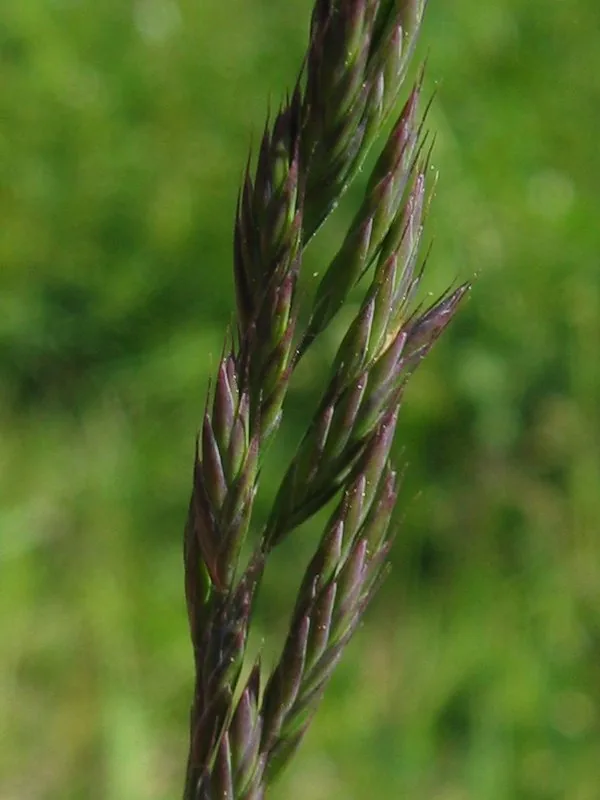
Overview
Reach for fine fescue when other lawns throw in the towel. This cool-season turf gathers a handful of close relatives, every one wearing thin, needle-like blades that feel soft and fine underfoot. Across regions where summers stay mild and the ground turns dry or shady, it spreads into a calm, even carpet.
Its real charm is how little it demands of you. Fine fescue powers through deep shade, drought, and poor soil, runs on a sliver of the water and feeding a bluegrass lawn expects, and keeps itself short. That earns it a place at the heart of low-input and no-mow lawns, where mowing slows to once a month or even once a year.
Heat is where the bargain bites. As a cool-season grass it browns and thins across a hot, humid summer and takes foot traffic badly, then springs back green the moment cooler weather rolls in. Plant it to play to its strengths, in cool shade with sharp drainage, and it pays back the lighter hand.
Care
The short version: set it in cool shade or sun with well-drained, lean soil, water it rarely and let it go dormant through heat, feed lightly in fall and late spring, and mow high or skip the mower entirely.
Light
No cool-season turf takes shade like fine fescue, settling in anywhere from full sun to full shade, with partial shade its sweet spot. Holding its own in those dim, dry pockets under trees is exactly what lifts it above other lawn grasses.
Water
Keep this grass thirsty and it thanks you. It rarely calls for watering and will go dormant and brown through hot, dry stretches, then green back up on its own once the air cools. Only through a drought running four weeks or longer should you offer about a half inch to carry the crowns, and never leave it standing in soggy ground.
Soil
Set it in well-drained, dry, sandy or even infertile soil, the lean ground where other grasses pout. It shrugs off low fertility and a low pH, hitting its stride between 5.5 and 6.5. Wet soil is the one slight it never lets slide.
Temperature
Being a cool-season grass, it covers a wide span, riding out cold down near -29°F (-34°C) and holding up to about 84°F (29°C). Drive past that summer heat and it tucks into dormancy rather than giving up.
Humidity
Dry air and low humidity are what it favors. Still, muggy conditions are precisely what call up the leaf diseases it leans toward, so airflow earns its keep here far more than any moisture overhead.
Feeding
Keep feeding light and stick to the cool seasons, in fall from late August to October and again in late spring from May to late June, but skip summer entirely. Target a low-nitrogen plan of roughly a half to 2 pounds of nitrogen per 1,000 square feet a year, parceled into one or two applications. Pour on more and you only call up disease and soft, weak growth.
Pruning
Cut it high, around 2.5 to 4 inches, and lift shaded spots a half to a full inch higher again. In a no-mow lawn you can hand it off and run the mower just once a month, or even once a year, since it holds low all by itself.
Repotting
none
Size & spacing
Fine fescue keeps low, topping out at just 3 to 4 inches (8 to 10 cm) as turf. Most types clump up, but creeping red fescue runs modest rhizomes out to about 6 inches (15 cm), lacing thin patches back together.
When to plant
Cool weather is when fine fescue digs in best, never the heat. Drop the seed in late summer to early fall, from about early August to late September, and the grass roots down before winter arrives. Spring sowing pulls through as well, yet that fall window builds the densest, strongest stand.
Northern hemisphere
Southern hemisphere
Typical months for a temperate climate: start earlier in warm zones, later where spring frosts linger.
- Plant: Seed in late summer to early fall, about early August to late September, in cool northern regions; spring seeding is also possible
- Harvest: Grown for foliage as turf; not grown for bloom
Hardiness
USDA hardiness zones: 3–7
Temperature: down to -40°C
Troubleshooting
Most fine fescue trouble turns up as thinning, browning, or off-colored patches once the weather goes warm and damp. Pin down what you are seeing below before you grab the hose, the feed, or the fungicide, because the wrong move often digs a deeper hole. Catch the early signs and a small correction usually carries the day.
Heat and humidity thin the stand and brown it out
Being a cool-season grass, fine fescue eases into semi-dormancy and browning once summer heat and humidity climb. Pile on foot traffic, summer watering, and extra feeding and the thinning gets worse fast. Pull back the water and the fertilizer, route people around the worn paths, and the grass bounces back green once cooler, moister days come around.
Fix:
- Reduce summer watering and fertilizer; let the grass go dormant
- Avoid heavy traffic during heat and drought
- Raise mowing height to 2.5 to 4 inches or higher in summer
- Overseed thin areas in late summer or early fall
Red threads ride the blade tips in pink-tinged patches
Spot bright red or pink strands clinging to the leaf tips and you are looking at red thread, a fungus that moves in when nitrogen drops and the weather turns cool and damp. The look startles, but it seldom kills your grass. Nudge fresh growth along with a modest feeding, sharpen the drainage and airflow, and it fades out.
Fix:
- Apply adequate nitrogen to promote vigorous growth
- Improve drainage and air circulation
- Remove infected clippings and debris
- Fungicides only on high-value turf in severe cases
Coin-sized straw spots that pool together in muggy weather
When round, silver-dollar spots blur into each other through warm, sticky spells, you have dollar spot, a fungus that thrives on long leaf wetness and thin soil. Water deep and early so the blades dry off by midday, then take the bite out with a light spring feeding. Open up the airflow and thin the thatch to stop it from creeping outward.
Fix:
- Apply nitrogen in late spring or early summer to reduce severity
- Water deeply and early in the day, not in the evening
- Reduce thatch and improve airflow
- Fungicides only if severe on high-value turf
Toxicity
Pet owners and parents of small children can relax: fine fescue is not toxic. It ranks among the everyday lawn grasses, fine to roll across, graze, or nibble. The single point worth flagging is grass pollen, which can trip hay fever in people already sensitive to it.
Safe for
People · Cats · Dogs · Horses · Rabbits · Livestock · Birds
Cats None
A cat is in no danger from fine fescue, and a quick nibble of the blades does nothing. Should one wolf down a big mouthful of any grass, it may bring it back up, but that traces to the sheer amount, not to any poison.
Dogs None
A dog can sprawl across a fine fescue lawn or gnaw a blade or two and come away fine. Nothing in the grass holds any poison for them.
Horses Safe
Horses crop fescue lawns and pastures and take no harm from the grass itself. The thing to keep an eye on is endophyte fungus, the genuine worry for broodmares, rather than any toxin sitting in the plant.
Rabbits Safe
Rabbits get to graze fine fescue as much as they like, because the grass carries no toxins. Tender blades slot right into their everyday diet.
Livestock Safe
Cattle, goats, and sheep take fine fescue in stride with zero poisoning risk. It pulls double duty as a low-input forage and a turf grass.
Birds Safe
Birds pick at fescue seed and the soft new shoots with nothing to fear. Backyard hens scratch and forage across a lawn of it all day long.
People Safe
Children and adults alike are perfectly safe around fine fescue. The one caveat is grass pollen, which can trigger hay fever in folks who already react to it.
The grass itself is non-toxic. Grass pollen can trigger hay-fever-type allergies in sensitive people, and some fine fescues carry beneficial endophytes that deter insect pests; at typical lawn use these are not a notable hazard to pets.
Varieties
Fine fescue is really a tight cluster of grasses bundled and sold as one, and they part ways in how they spread and what they shrug off. Here are the ones worth picking apart.
Creeping red fescue (Festuca rubra subsp. rubra)
This one runs on short rhizomes, the lone spreader of the bunch, so it patches thin spots and bounces back from wear faster than its cousins.
Chewings fescue (Festuca rubra subsp. commutata)
Grows in tidy clumps, claims the strongest shade tolerance in the group, and takes a close cut without missing a beat.
Hard fescue (Festuca brevipila / F. trachyphylla)
Another clump former, valued for laughing off poor soil and stretches of drought with hardly any attention.
Sheep fescue (Festuca ovina)
Clumps up and craves more sun than the others, yet powers through dry spells, which earns it a spot in no-mow ornamental plantings.
Companions
Fine fescue is usually blended with other cool-season grasses rather than grown alone, pairing well with those that cover the sunny ground it would rather leave to the shade.
Plant near
Kentucky bluegrass: Commonly blended with fine fescue in cool-season lawn mixes; bluegrass handles sun while fine fescue fills shaded areas
Perennial ryegrass: Used in seed blends with fine fescue for quick establishment in cool-season lawns
Keep apart
Tall fescue: Coarse, wide-bladed tall fescue does not blend well with fine-textured fine fescue and looks clumpy in mixed stands
How to propagate
Seed starts fine fescue nearly every time, though the creeping kind takes to division as well. Whichever route you pick, the labor stays light and the timing carries more weight than the effort.
SeedEasy
Late summer to early fall (about early August to late September) in cool regions; spring also works · Several weeks to germinate and a full season to establish
Seed is how most growers kick off fine fescue. Scatter about 3 to 6 pounds per 1,000 square feet from early August to late September in cool regions, and a spring sowing does the job too. Give it several weeks to break the surface and a full season to dig in, and count on it as a go-to for shade, low-input, and no-mow seed mixes.
DivisionModerate
Cool weather of spring or early fall · One season
Creeping red fescue is the one that takes to division, thanks to its modest rhizome spread that can stitch thin patches back together. Dig and split it in the cool weather of spring or early fall, then hand it a season to root in. The clump-forming kinds barely spread, so splitting them rarely earns its keep.
Myths
A shared name means fine fescue and tall fescue must be one and the same grass.
Two separate grasses sit behind that look-alike name. Fine fescue carries thin, needle-like blades and powers through shade and drought on barely any water or feeding. Tall fescue runs coarse and broad-bladed at roughly 5 to 10 mm, basks in sun, drives deep roots, and demands a lot more water and inputs. One name papers over two plants that pull in opposite directions.