Ornamental · Poaceae
Fountain Grass
Pennisetum alopecuroides
Set it in full sun and lean soil, and fountain grass surges up into a soft, plumed mound that keeps the garden alive straight through winter.
Full sun
Every 7–14 days
USDA 5–9
2–5 ft · 0.6–1.5 m
Overview
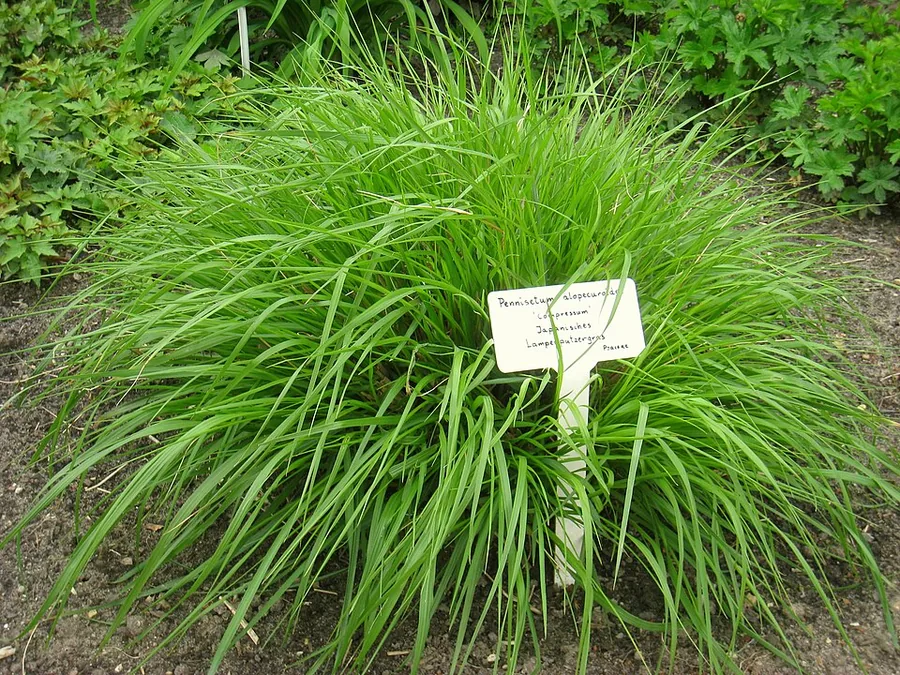
Fountain grass lives up to the name. Its leaves shoot up and cascade back over into a neat mound, and by late summer the soft, bottlebrush plumes climb above the foliage and ride every passing breeze. This warm-season clump-former in the grass family thrives across a broad band of cold-hardy ground, all the way from zone 5 to zone 9.
Its real selling point is how little it demands. Once rooted in, it brushes off drought, craves next to no feeding, and drags along no serious pests. The plumes open silvery to pinkish, then the whole clump glows gold in fall and holds that shape and color well past the first hard frosts.
The single thing to track is its knack for seeding itself around. Hardy fountain grass can sow into nearby beds and even break loose into wild ground, and its tender cousin, crimson fountain grass, runs as a serious weed across warm, dry regions. Cut the plumes before the seed drops and you pocket all the good looks with none of the headache.
Care
The short version: hand it full sun and average, well-drained soil, water it steadily until it roots in and then largely leave it be, and shear the entire clump to the ground in late winter before fresh growth breaks.
Light
Fountain grass craves full sun to show off, where it fills out dense and stands tall. It will put up with partial shade, but starved of light the stems turn soft and the whole clump splays open.
Water
Water it steadily through that first season while the roots dig in. From there it turns drought tolerant and coasts on rain in most spots, though it leans happiest in soil that stays medium to wet, so a deep soak during a long dry stretch keeps it crisp.
Soil
Average, well-drained soil suits it just fine, and pH does not faze it. Steer clear of rich, heavily amended beds, since too much fertility breeds floppy stems that lose the fountain shape.
Temperature
It powers through a wide range, hardy from roughly -20°F to 100°F (-29°C to 38°C). That cold toughness is what lets it run as a true perennial all the way through zone 5.
Humidity
Plain outdoor humidity covers everything it needs, so skip chasing a number. Air moisture simply does not register for a grass this hardy.
Feeding
This is a low-feed plant through and through. A light hit of balanced fertilizer or a scoop of compost in spring does the job, and plenty of growers skip it entirely, since rich soil only sends the clump flopping.
Pruning
Shear the whole clump back to a few inches above the ground in late winter or early spring, before the new growth breaks through. Where self-seeding worries you, clip the plumes off in fall before the seed drops.
Repotting
Split a clump every 2 to 4 years to keep it charging along. Once the center dies out and bare ground rings the middle, it is flagging you that a division is overdue.
Size & spacing
A clump reaches 2 to 5 feet (60 to 150 cm) tall and roughly the same across. Hand it that much room to spread so the fountain shape can arch over freely without crowding the neighbors.
When to plant
Fountain grass keeps time with the warm season. Sow seed indoors in late winter or set divisions out in spring once the chill has lifted and the soil has warmed, and the plumes show up in late summer, then hang on through fall and into winter.
Northern hemisphere
Southern hemisphere
Typical months for a temperate climate: start earlier in warm zones, later where spring frosts linger.
- Sow: 8 to 10 weeks before last frost
- Plant: spring after last frost once soil has warmed
- Harvest: late summer into fall, plumes often persisting through winter
Hardiness
USDA hardiness zones: 5–9
Temperature: down to -29°C
Troubleshooting
Fountain grass almost never falls ill, so most of its troubles trace back to habit instead of disease. The handful of things that go sideways turn up in the shape of the clump or in seedlings sprouting where you never sowed them. Match what you spot below and the fix is usually quick.
Stray seedlings springing up all around the clump
Those handsome plumes throw seed by the hundreds, and where winters stay mild that seed pulls through to sprout come spring. Self-seeding is exactly how fountain grass slides into weed territory and slips out into wild ground. Snip the plumes off in fall before they shatter, then pull or hoe the volunteers while they are still tiny.
Fix:
- Cut off and remove flower plumes before seeds mature and shatter
- Pull or hoe volunteer seedlings while young
- Choose sterile or low-seed cultivars where available
A hollow, dead middle wrapped in living growth
Come a certain age, an old clump simply gives up in the middle while it keeps pushing strong around the rim. That center die-out is the plant getting on in years, not a sign of disease. Lift the whole thing in early spring, toss the spent core, and replant the vigorous outer pieces.
Fix:
- Dig and divide the clump in early spring
- Discard the dead center and replant healthy outer divisions
Stems splaying open instead of arching upright
The whole charm of this grass is the way it springs up and tumbles over like its namesake, so a splayed, sprawling clump usually points to thin light or soil that is too rich. Flopping traces back to shade and overfeeding, which push out soft, floppy growth. Shift it into full sun, back off the fertilizer, and the stems stiffen right back up.
Fix:
- Move or plant in full sun
- Avoid heavy fertilizing and overly rich soil
Toxicity
Pet owners can breathe easy: fountain grass is not poisonous to animals or people. The one thing to handle thoughtfully is the plant itself, since the leaf edges can be sharp and the bristly seed plumes carry barbed awns that snag in fur or skin like a foxtail.
Safe for
People · Cats · Dogs · Horses · Rabbits · Livestock · Birds
Cats Safe
A curious cat can nibble a blade with zero risk of poisoning. The one part to keep tabs on is the bristly seed head, since those barbed awns can snag in fur or burrow into skin like a foxtail.
Dogs Safe
Foliage is fair game for a chewing dog, no poisoning to fear. Stay alert to the seedy plumes, though, since the tiny barbed awns can wedge between toes or settle into the ears.
Horses Safe
Horses can graze it freely with no harm done. The ripe seed heads are the lone nuisance, packing stiff awns that can scratch the mouth, so mow or cut it before it sets seed in a pasture.
Rabbits Safe
Rabbits eat the leaves with no trouble at all, and they go for the soft spring growth first.
Livestock Safe
Cattle, goats, and sheep can graze it with no toxic effect at all. The sharp-edged blades and bristly seed heads are the only worry, since the awns can pester the mouth once the plumes toughen up.
Birds Safe
Birds face no danger here, and finches and other seed-eaters love picking through the ripe plumes all through fall and winter.
People Safe
Nothing in this plant will poison a person. Pull on gloves when cutting it back, since the leaf edges are keen enough to deliver a paper-cut sting.
Not chemically poisonous, but the bristly flower and seed plumes carry tiny barbed bristles and awns that can act as a mild mechanical or foxtail-type irritant, and the leaf edges can be sharp; handle plumes with care around pets and children.
Varieties
A handful of fountain grass cultivars are worth knowing, mostly grouped by size and plume color. Here are the ones you will bump into most.
Hameln
A tidy dwarf selection that flowers sooner and weathers hard winters with more grit than the straight species.
Little Bunny
The pint-sized champion of the group, peaking near 12 to 18 inches, which makes it a tidy pick for edging and small pots.
Moudry
Prized for its deep, near-black purple plumes, but it sows itself harder than any other cultivar and can wear out its welcome.
Pennisetum setaceum 'Rubrum' (purple/crimson fountain grass)
A frost-tender, burgundy-leaved relative grown as an annual where it gets cold, this one turns badly invasive in warm, dry country and belongs nowhere near those gardens.
How to propagate
Fountain grass is a breeze to multiply, whether you split an existing clump or sow the plain species from seed.
DivisionEasy
Early spring before new growth · One growing season
Splitting a clump is the surest route to more fountain grass. Lift it in early spring before the fresh growth breaks, pitch any dead core, and break the healthy outer ring into chunks that knit back together inside a single season. It is also the only way to keep a named cultivar true, since those refuse to come back the same from seed.
SeedEasy
Spring · One to two growing seasons
The plain species sprouts readily from spring-sown seed, filling out into a full clump over one to two seasons. Tread carefully here, though, since the named cultivars will not breed true this route and seed-grown plants can self-sow hard enough to become a weed.
Myths
All fountain grass is the same and safe to plant anywhere.
Two wildly different plants answer to that name. The hardy, clump-forming Pennisetum alopecuroides is the well-mannered garden grass, while the tender Pennisetum setaceum, 'Rubrum' included, gets grown as an annual and tears loose across warm, dry places like California, Hawaii, and the arid Southwest. Even the hardy one can sow itself around and go weedy, so cut the plumes before the seed drops wherever spread worries you.