Houseplant · Arecaceae
Lady Palm
Rhapis excelsa
Slow to grow, easy in shade, and safe around pets, the lady palm rewards you with steady, effortless green.
Bright indirect
55–81°F · 13–27°C
USDA 9–11
4–15 ft · 1.2–4.6 m
Overview
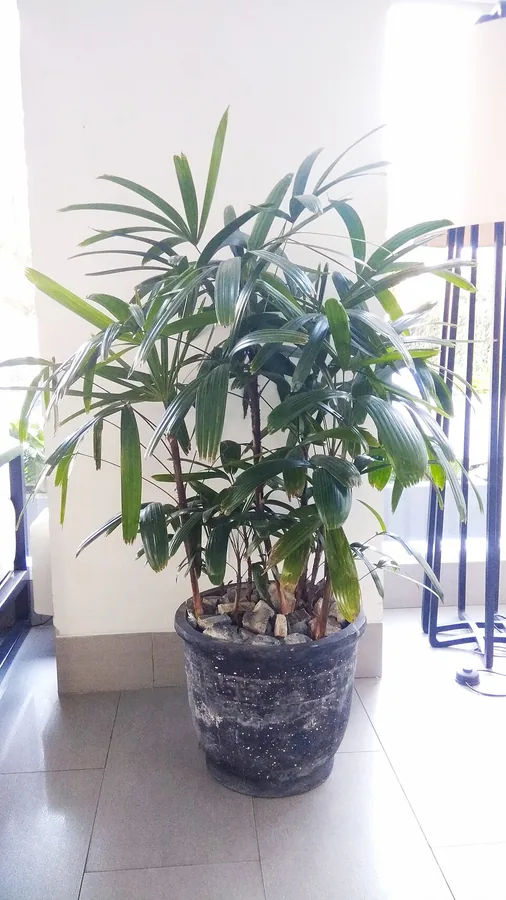
The lady palm hails from the shaded forests of southern China and Vietnam, thriving under the cover of taller trees, and that woodland upbringing is exactly what makes it such a winner indoors. It fires up slim, bamboo-like canes wrapped in dark fiber, each one crowned with glossy fans of broad leaf segments. Growing it feels rewarding from day one, because it looks the part while asking so little.
It grows slowly, and that pays off: a lady palm keeps its shape for years and never bullies a room for space, spreading instead through steady offshoots from the base until it builds a full, leafy clump. Indoors it settles around 6 feet, with plenty of headroom to climb higher as it matures. Watching that clump thicken over the seasons is half the fun.
Best of all, it is tough and forgiving, shrugging off low light, plain household air, and the odd stretch of neglect, and it is non-toxic to people and pets. Hand it bright indirect light and steady water and it powers along, yet it keeps its cool when life gets busy and a watering slips.
Care
The short version: aim for bright indirect light, though it happily takes shade and low light, and keep the soil evenly moist while it grows and drier in winter. Feed it lightly, give it ordinary room humidity, and leave it a touch root-confined; it grows slowly and asks for next to nothing.
Light
Lady palm powers along best in bright indirect light, but here is the fun part: it is one of the rare palms that also takes medium light, partial shade, and even true low light in stride. Keep it clear of harsh direct sun, which scorches the fronds. Dimmer light just slows the pace, it does not sap the plant.
Water
Through spring and summer, keep the mix evenly moist and water freely, letting the surface dry a touch between thorough soakings. Pull back in winter, and never let the pot sit in standing water. A couple of times a year, drench it hard to flush out fertilizer salts.
Soil
Plant it in a rich, porous, well-drained mix loaded with organic matter, and an African violet type blend nails it. It leans acidic, a pH of 5.0 to 6.0, so steer clear of limey or heavy soils.
Temperature
Normal room warmth keeps it humming, ideally 55°F to 81°F (13°C to 27°C). Bring it indoors before the cold rolls in, since it wants nothing to do with near-freezing temperatures.
Humidity
Everyday household air suits it fine, so there is no number to chase. It rides out dry rooms, and the one sign it craves more moisture is brown leaf tips, which a bit of extra humidity heads off.
Feeding
This slow grower barely needs a bite to eat. A balanced liquid or slow-release fertilizer at low rates, only through the spring and summer growth, is all it takes. Pile on more and you invite trouble, since overfeeding is the classic cause of brown tips.
Pruning
Cut away any dead or damaged canes and fronds right at the base. Never lop the growing tip off a living cane, though, because a topped cane will not bounce back; the clump renews itself from fresh shoots at the soil.
Repotting
Repot only every 2 to 3 years, and only once roots have packed the pot. This palm actually thrives a little root-confined, so hold off on bumping it into a much bigger container.
Size & spacing
Indoors it usually hits around 6 feet, but the species runs 4 to 15 feet (1.2 to 4.5 m) tall and fans out 6 to 15 feet (1.8 to 4.5 m) wide as the clump fills in. Give it room so the fronds can arch out without crowding.
Troubleshooting
A lady palm rarely throws you a curveball, and when something is off, the leaves flag it fast. Two things top the list: brown tips and the marks of pests. Match what you spot below and pounce early, while the fix is still a breeze.
Sticky film, yellow speckling, or tiny bumps riding the fronds
Top of the watch list are scale insects, the headline pest on lady palms, and they burrow into the fibrous leaf bases where they slip right past a quick glance. Fine webbing over faded, speckled leaves flips the script to spider mites, which pounce when the air turns warm and dry. Pull the plant away from the others, scrub the scale off and hit it with horticultural oil or insecticidal soap, and rinse the fronds hard to drive the mites back.
Fix:
- Isolate the plant from other houseplants
- Wipe or wash off scale and treat with horticultural oil or insecticidal soap, repeating as needed
- Raise humidity and rinse foliage to discourage spider mites
- Inspect new growth and leaf bases regularly
Brown tips creeping onto the older, lower leaves
The prime suspect is fertilizer salt buildup, which piles up in the mix when you feed too eagerly and strikes the oldest leaves first. Dry air or skimpy watering can brown the tips more broadly too. Jump on it by drenching the pot a couple of times to wash the salts clear, dialing back the feed, and holding the soil at an even, steady moisture.
Fix:
- Drench the pot heavily and repeatedly to leach excess salts (do this about twice a year)
- Reduce fertilizer to low rates and only during active growth
- Keep the mix evenly moist and avoid letting it fully dry
- Trim only the dead tip tissue if desired
Toxicity
Running a house full of curious pets? Great news, because the lady palm rates non-toxic straight across the board. The ASPCA marks it safe for cats and dogs, and it poses no threat to horses, rabbits, livestock, birds, or people. Worst case, a pet chews a frond and gets a quick, mild stomachache from the fiber, and that is where it ends.
Safe for
People · Cats · Dogs · Horses · Rabbits · Livestock · Birds
Cats None
Cats get the green light here, thanks to the ASPCA listing this palm non-toxic to them. A curious cat that gnaws a frond might get a mildly upset stomach from the fiber, and it clears up fast.
Dogs None
Dogs land on the safe list too, per the ASPCA. Chew through a big pile of foliage and a dog may drool a bit or pass a loose stool, but nothing beyond that.
Horses Safe
Nothing in this palm can harm a horse. The tough, fibrous fronds hold zero poison and offer little a horse would want to graze.
Rabbits Safe
Rabbits stay in the clear around it, since none of the plant is poisonous to them. A big mouthful of the coarse leaves might loosen the gut for a day, and that is the whole story.
Livestock Safe
Cattle, goats, and sheep can share the space and stay fine. The fronds pack no toxin, just fiber that is tough to digest in bulk.
Birds Safe
It earns a safe spot beside pet birds. The foliage carries nothing that would bother them.
People Safe
People are safe too, which is a big reason this palm keeps winning fans indoors. Nobody grows it for eating, so there is no call to taste it.
Varieties
Lady palm mostly shows up as the plain green species, but a couple of forms are well worth knowing by name.
'Variegata'
Creamy white stripes streak its leaves, and it grows even slower than the plain green form while running on less light and less feed.
Rhapis humilis (reed rhapis / slender lady palm)
This close relative shoots up taller, more slender canes and packs more narrow leaf segments than R. excelsa.
How to propagate
The quickest way to grow your lady palm collection is to split a thriving clump, since it keeps launching new shoots from the base on its own. Seed works too, if you have the patience for a slow, fiddly run.
DivisionEasy
Spring · Several months to root and resume active growth
Division is the fast track to more of this palm, and it plays right into the plant's habit of throwing offshoots from the base. Come spring, ease out a rooted sucker with as much root as you can rescue, keep the parent unhurt, and pot the sucker just big enough to cradle its roots. Then let it run its own clock, giving it several months to root down and fire back into growth.
SeedModerate
When ripe seed is available · Slow; germination and growth take a long time
Seed is on the table too, though it rewards real patience. The plant is dioecious, so a male and a female both have to be in play before any viable seed forms, and even then the germination and early growth inch forward across many months.
Myths
Lady palm needs constant high humidity to survive indoors.
Skip that worry, because this palm thrives in ordinary household air and wants very little humidity. It enjoys a damp room, sure, but dry air mostly shows up as brown leaf tips, not a dying plant, so there is no need to crowd it with humidifiers.
A cut or topped lady palm cane will branch and regrow from its cut.
Not a chance, since each cane grows from one tip and cutting it stops that cane cold. The real action happens at the base, where the clump keeps renewing itself from fresh offshoots, so you cut spent canes low and let new ones charge up on their own.