Ornamental · Poaceae
Maiden Grass
Miscanthus sinensis
Plant it in full sun and lean soil and maiden grass rockets up tall, silvery plumes that hold strong all winter.
Full sun
Every 7–14 days
USDA 5–9
4–12 ft · 1.2–3.7 m
Overview
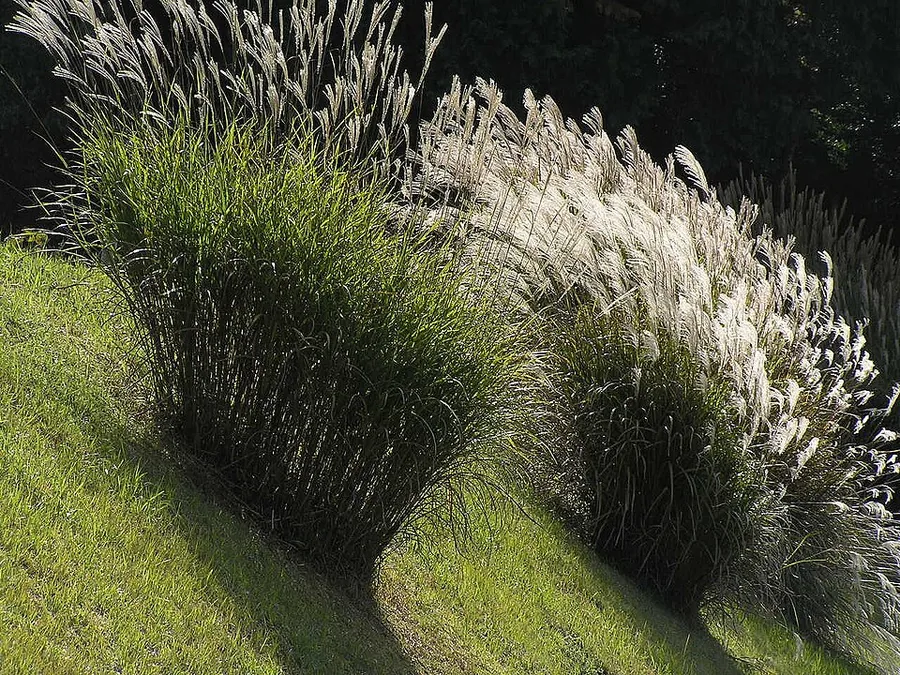
Maiden grass puts on a real show, a big, fountain-shaped ornamental grass from East Asia that dances in every breeze and throws up silvery plumes come late summer. It sits in the grass family and packs on size each year, clearing head height by the time the season winds down. Leave it standing over winter and the bleached blades and seed heads keep the garden alive and moving right through the cold.
The best part is how much reward it hands back for so little effort. Full sun and average, lean soil cover nearly everything it wants, and once the roots dig in it powers through dry spells and big temperature swings without blinking. All that is left is one hard cut in late winter and dividing the clump every few years.
Just one habit needs watching. Many of the older, fertile cultivars fling wind-blown seed out into wild ground, which is why the grass is listed as invasive across much of the eastern and central US. Plant a sterile or low-seed selection and cut the plumes before they ripen, and you get every bit of the drama without seeding the neighborhood.
Care
The short version: full sun, average well-drained soil kept on the lean side, and once it is established, a deep drink only when things turn dry. Cut the whole clump down in late winter and divide it every 3 to 4 years.
Light
Plant maiden grass in full sun, where it stands tall and flowers with gusto. It will handle a bit of afternoon shade, but a shaded plant goes soft and flops open from the center, so the brighter the spot, the stronger the show.
Water
Keep a new plant evenly moist while the roots dig in. After that it turns genuinely drought tolerant, so a deep soak every 7 to 14 days during a dry stretch does the trick, and it would much rather run dry than sit wet.
Soil
It is no diva about soil and thrives in loam, clay, or sand as long as the drainage holds up. A pH anywhere from 5.5 to 7.5 works, and average, medium-moisture ground beats rich soil here, since rich soil just makes it flop.
Temperature
This is a tough, cold-hardy grass that powers through roughly -20°F to 100°F (-29°C to 38°C). It dies back to the ground over winter and rockets out fresh growth once the soil warms in spring.
Humidity
Ordinary outdoor humidity is all it needs, so there is no number to chase. Air movement is the real player, because a crowded, damp clump is exactly where blight and rust get rolling.
Feeding
Keep it light. A balanced fertilizer or some compost in spring is plenty, and too much nitrogen turns the stems soft and flops the whole clump, so lean soil really does serve it best.
Pruning
One job a year, and it is quick: cut the entire clump back to a few inches above the ground in late winter or early spring, right before new growth breaks. Leave the old foliage up through winter for the look and to shelter the crown.
Repotting
Out in the ground it is all about division, not repotting. Split the clump every 3 to 4 years, or sooner if the center dies out, lifting it in early spring and replanting the strong outer pieces.
Size & spacing
A mature clump shoots up 4 to 12 feet (1.2 to 3.7 m) tall and spreads 3 to 6 feet (91 to 183 cm) wide, so give it real room. Set plants far enough apart that air moves between them and the blades are not battling for space.
When to plant
Maiden grass is a hardy perennial for zones 5 through 9 that charges back bigger every year. Set new plants out in spring, let the clump bulk up through summer, and the plumes burst open from late summer into fall before drying to a striking winter silhouette.
Northern hemisphere
Southern hemisphere
Typical months for a temperate climate: start earlier in warm zones, later where spring frosts linger.
- Plant: spring
- Harvest: late summer to fall
Hardiness
USDA hardiness zones: 5–9
Temperature: down to -29°C
Troubleshooting
Most hiccups with maiden grass come down to siting and clump age, not disease, so they are easy wins. A clump that flops, hollows out, or seeds itself around is flagging something simple. Spot your symptom below and act while the fix is still quick.
Seedlings sprouting far beyond the parent clump
Here is the one habit to stay on top of. Fertile types launch wind-borne seed that rides the breeze past the bed and roots in roadsides, fields, and wild ground, which lands this grass on the invasive list across much of the eastern and central US. Snip the flower plumes off before the seed ripens, and yank any volunteers the moment they appear. Better still, plant a proven sterile or low-seed selection, or a native grass, wherever a bed sits near natural areas.
Fix:
- Deadhead flower plumes before seed matures
- Remove volunteer seedlings promptly
- Replace fertile cultivars with proven sterile or low-seed selections or native grasses
A hollow center circled by strong growth
Great news, this is just an aging clump and not a disease at all. The outer ring keeps powering ahead while the middle runs out of steam and drops away. Dig the whole clump in early spring, ditch the dead center, and replant those vigorous outer pieces to launch it fresh.
Fix:
- Dig and divide the clump in early spring
- Discard the dead center and replant healthy outer divisions
Stunted growth with spots, streaks, or orange pustules
Three culprits can gang up on the foliage here. Miscanthus mealybug burrows into the leaf sheaths and kinks the new growth, Miscanthus blight streaks the blades and sheaths, and leaf rust flecks the foliage with orange pustules. Strip off and destroy the affected leaves, open the clump up so air rushes through, and reach for disease-resistant cultivars next round.
Fix:
- Remove and destroy affected foliage
- Improve air circulation and avoid overhead watering
- Choose disease-resistant cultivars
Stems flopping open so the clump splays apart
Catch this early and it is a quick turnaround. Shade or overly rich soil softens the stems and pops the clump open from the center, and flowering trails off too. Shift it into full sun, dial back the nitrogen, and watch the new stems snap back to standing tall.
Fix:
- Move or plant in full sun
- Avoid high-nitrogen fertilizer and rich soil
Toxicity
Here is the good news for pet owners and parents: maiden grass is not toxic to cats, dogs, horses, or people, and it never turns up on the ASPCA's poison lists. The one thing to respect is the foliage, since the blade edges are sharp enough to nick skin, so glove up before you cut it back.
Safe for
People · Cats · Dogs · Horses · Rabbits · Livestock · Birds
Cats None
Zero poison worries. A curious cat that grabs a blade might drool a bit or cough it back up, and that is as far as it goes.
Dogs None
Totally fine to plant with a dog around. A chewer might get a quick, mild stomach upset, but real poisoning is off the table.
Horses None
No toxins in play, so horses can graze the foliage and come away just fine.
Rabbits None
Rabbits get a free pass to browse the leaves, with no poisoning risk hanging over them.
Livestock None
Cattle, goats, and sheep can tuck into it freely, because the grass packs nothing that would make them ill.
Birds None
Birds can peck the seed heads or nest down in the clump with zero poisoning danger.
People None
Not toxic to people at all. The one thing to respect is the blade edges, sharp enough for a paper-cut, so glove up before you cut it back.
Leaf edges and blades can be sharp and may cause minor skin cuts, so wear gloves when handling or cutting back. Grass pollen may aggravate seasonal allergies.
Varieties
Dozens of maiden grass cultivars are up for grabs, splitting on leaf width, banding, size, and how much seed they set. These are the ones you will run into most, and that last group is the one to watch if your region treats the species as invasive.
Gracillimus
A fine-textured maiden grass that flaunts very narrow, weeping medium-green leaves striped with a white midrib.
Morning Light
A fine-leaved, white-striped standout that gardeners chase because it sets little to no viable seed.
Zebrinus
The famous zebra grass, named for the horizontal yellow bands that stripe across its leaves.
Strictus
Porcupine grass, a bolt-upright form that sports the same horizontal yellow banding.
Adagio
A compact, narrow-leaved pick that stays smaller and bursts into flower earlier than most.
My Fair Maiden / Bandwidth
Clever NC State triploid types bred sterile or low-fertility so they never self-seed and turn invasive.
How to propagate
Maiden grass gets multiplied by division almost every time, a move that keeps the cultivar true and freshens up a tired clump in one go. Seed works too, but it comes with a serious catch worth knowing.
DivisionEasy
Early spring before new growth · 1 to 2 growing seasons
Division is the fun, reliable way to multiply this grass, and it doubles as the cure for a tired clump. Dig it in early spring before new growth breaks, then carve it into sections with a sharp spade or saw. Replant the vigorous outer pieces, chuck the dead center, and the divisions take off and settle over 1 to 2 growing seasons.
SeedModerate
Spring · 1 to 2 growing seasons
Seed is the route to skip. Plants raised from it wander off from the parent cultivar and can come up highly fertile, the exact trait that makes this grass invasive, so dodge it anywhere the species breaks loose. Sow it in spring and seedlings still take 1 to 2 growing seasons to bulk up.
Myths
All maiden grass is sterile and safe to plant anywhere.
Not so, since plenty of Miscanthus sinensis cultivars pump out viable, wind-blown seed and self-sow into wild ground, where they shove aside native plants. Grab proven sterile or low-fertility cultivars in at-risk regions, and deadhead the plumes so nothing gets away.