Bulb · Amaryllidaceae
Nerine
Nerine bowdenii
Leave the bulbs crowded and undisturbed in full sun, and nerines set the fall border ablaze with pink.
Full sun
Every 5–10 days
USDA 7–10
14–20 in · 36–51 cm
Overview
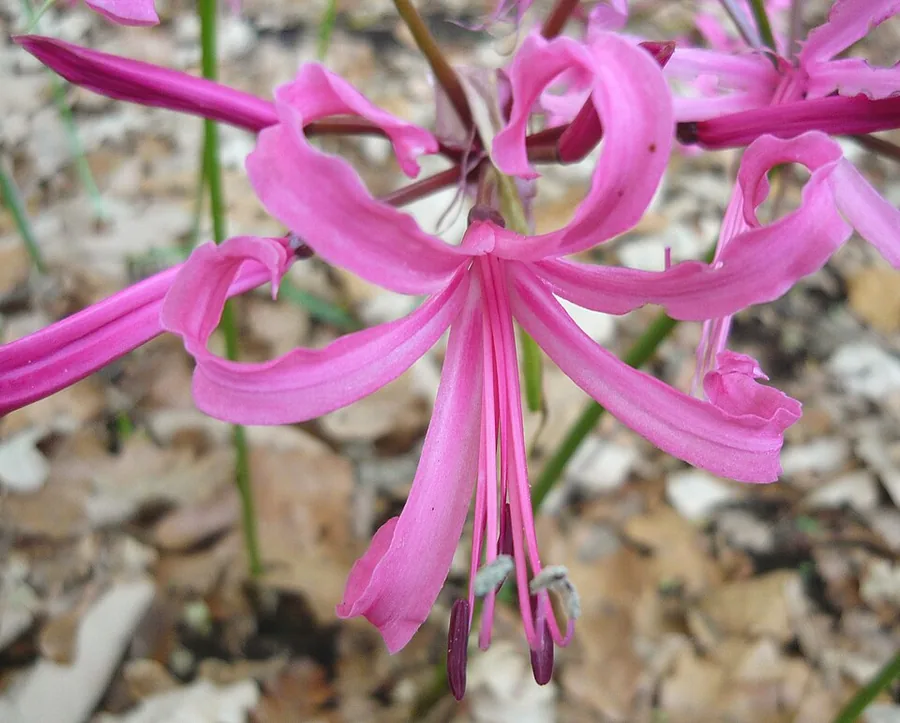
Nerines pull off a brilliant trick: they flower right as the rest of the garden clocks off for the year. These South African bulbs launch bare stems in fall, each one crowned with a loose cluster of pink, lily-like blooms whose narrow petals ripple at the edges. The strappy leaves march to their own beat, often turning up before or after the flowers rather than beside them.
Nerine bowdenii is the powerhouse of the group, shrugging off cold to about 25°F (-4°C) and diving happily into a sunny border across zones 7 through 10. It grows from a bulb that wants its neck sitting above the soil line instead of buried, and nailing that small detail is a big lever on how hard it flowers.
Get it planted right and this bulb practically runs itself. Give it full sun, sharp drainage, and a clump it can crowd into, then step back and let it rip. The one habit to drop is constant lifting and dividing, which hands away the very flowers that make growing it such a thrill.
Care
The short version: full sun, sharp drainage, and a bulb set shallow with its neck above the soil. Water it through the growing season, keep it bone dry while dormant, and leave the clump crowded and undisturbed to let it fly.
Light
Nerines crave full sun to flower with real gusto, though they'll take a little afternoon shade in stride. All that growing-season sun is what packs the bulb and loads up next year's blooms, so never bury them in a shady corner.
Water
Water freely while the leaves are charging along, then cut the bulbs off dry once they slip into dormancy. They laugh off drought, sure, but they still want steady moisture through the growing season, roughly a drink every 5 to 10 days in dry stretches.
Soil
Plant them into rich, well-drained loam with a good helping of organic matter forked in. Sharp drainage is the make-or-break here, since bulbs left stewing in wet ground are the ones that rot.
Temperature
Nerine bowdenii is the tough one, shrugging off cold to about 25°F (-4°C) and heat up to roughly 86°F (30°C). Drop below 25°F (-4°C) and the bulbs risk injury, so mulch them or grow them in pots wherever winters bite harder.
Humidity
Regular outdoor humidity suits them just fine, so there's no number to chase. These are dry-country bulbs at heart, and they care way more about drainage than about moisture in the air.
Feeding
Feed a dilute balanced fertilizer while the leaves are charging along, once or twice across the season. Once the bulb goes dormant, stop cold, since it isn't drawing anything up.
Pruning
Snip the spent flower stalks off after bloom, then let the foliage yellow and die back on its own. That fading leaf is busy loading next year's bulb, so resist the urge to tidy it away early.
Repotting
Since these bulbs flower best jammed together, just leave them undisturbed for several years at a run. Only lift and replant when the bulbs start shouldering up to the soil surface or flowering tails off after a long, strong run.
Size & spacing
Stems shoot to 14 to 20 inches (36 to 51 cm) tall, while the slim foliage spreads a mere 1 to 3 inches (3 to 8 cm) across. Plant the bulbs tight so they can knit into the crowded clumps they love.
When to plant
Nerines run on a fall clock, and it pays to work with it. Drop the bulbs in during spring with the neck above the soil, keep the water coming through the growing season, and the flower stems rocket up in fall, from September into November.
Northern hemisphere
Southern hemisphere
Typical months for a temperate climate: start earlier in warm zones, later where spring frosts linger.
- Sow: sow fresh seed when ripe; seedlings take 3-4 years to flower
- Plant: spring, with the bulb neck above the soil line
- Harvest: fall (September to November)
Hardiness
USDA hardiness zones: 7–10
Temperature: down to -18°C
Troubleshooting
Track nearly every nerine problem straight back to the bulb, whether it has been disturbed, kept too wet, or found by a pest. Match what you see below, then jump in while the bulb is still firm and full of life.
Bulbs turning soft, hollow, or rotten
When a bulb goes soft or hollow, narcissus bulb fly larvae are usually the raiders, boring in and eating it out from the middle, or the bulb has rotted after sitting in wet soil through dormancy. Dig the bulbs up and hunt for grub tunnels and any mush. Chuck anything tunneled or rotten, cut the watering the moment the bulb goes dormant, and replant the good ones in soil that drains far harder.
Fix:
- Discard infested or rotted bulbs
- Withhold water while bulbs are dormant
- Improve drainage of the growing medium
Great leaves, still chasing flowers
Leaves are storming ahead but the flowers are stalling, and the usual answer is a bulb that got lifted or split recently, since a division typically costs a year of bloom. The other common culprit is a clump that has too much elbow room, because these bulbs really fire up once they crowd each other tight. Leave the planting be, park it in full sun for the whole growing season, and the flowers charge right back.
Fix:
- Leave clumps undisturbed and allow them to become crowded
- Site in full sun during active growth
- Avoid unnecessary division
White cottony fluff packed into the leaf joints
Spot that white, waxy fluff crammed into the leaf axils and around the bulb neck and you have found mealybugs, a pest every nerine seems to draw. Go after the colonies with a cotton swab dipped in rubbing alcohol, then hit the plant with insecticidal soap or horticultural oil to finish the job. Pull the affected plant off to one side until it clears.
Fix:
- Wipe off colonies with a cotton swab dipped in rubbing alcohol
- Treat with insecticidal soap or horticultural oil
- Isolate affected plants
Toxicity
Treat the whole plant as poisonous and grow it with eyes open. Like its daffodil and amaryllis cousins, nerine is loaded with lycorine and related alkaloids, and the bulb hoards the most of all. Swallow any part and drooling, vomiting, and diarrhea follow, so keep the bulbs clear of pets, livestock, and children, and never let them get mixed up with onions in the kitchen.
Toxic to
Cats · Dogs · Horses · Rabbits · Livestock · Birds · People
Cats Toxic
A cat that chews any part will likely drool, then vomit, with loose stools chasing soon after. The bulb packs the most lycorine, so a dug-up bulb is the real danger to guard against.
Dogs Toxic
Dogs that dig up and chew the bulbs cop the worst of it, drooling hard alongside vomiting and diarrhea. Down a whole bulb and a dog can stay sick for hours, so keep those bulbs out of digging range.
Horses Toxic
Those same alkaloids stir up a horse's gut, sparking drooling, colicky discomfort, and diarrhea. Keep clippings and lifted bulbs well clear of paddocks.
Rabbits Toxic
Rabbits must steer clear of the leaves and bulbs, which leave them drooling and badly upset in the stomach. This one is off the menu for browsing, full stop.
Livestock Toxic
Grazers like cattle, goats, and sheep can be poisoned by the foliage and bulbs, showing salivation, vomiting where they can, and scouring. Fence the bulbs off from anywhere stock can roam.
Birds Toxic
The lycorine in the plant is unsafe for birds, so keep pet and poultry birds away from the leaves and bulbs entirely.
People Caution
No part of a nerine is for eating, and the bulb especially can trigger drooling, vomiting, and diarrhea if swallowed. Keep kids from mistaking the bulbs for onions, and wash your hands after handling them.
Keep bulbs and plants away from pets and children; the bulb is the most toxic part.
Helpline numbers

United States
ASPCA Animal Poison Control: (888) 426-4435 (fee applies)
Poison Control: (800) 222-1222



Canada
Poison Centres: 1-844-764-7669
Varieties
Most nerines come in pink, but a handful of named forms are worth chasing for their color or size.
Alba
A crisp white-flowered form that breaks from the usual run of pink nerines.
Mark Fenwick
A vigorous, get-up-and-go selection prized for its strong stems and rich pink flowers.
Pink Triumph
Throws flowers noticeably larger than the plain species does.
How to propagate
Build up your nerine stock by splitting off the bulbs they crank out, or, if you've got patience to spare, raise them from seed.
Offsets & pupsEasy
After flowering or during dormancy · May delay blooming for a year after separation
The quickest win for more nerines is to lift a crowded clump once it wraps up flowering, or while it sits dormant, and pop the offset bulbs off the parent. These bulbs resent disturbance and thrive crowded, so split them only when the clump is genuinely jammed, and count on the pieces to sit a season out before they flower again.
DivisionModerate
After flowering or during dormancy · Often skips a year of bloom after division
Go ahead and split an overgrown clump after bloom or during dormancy, but keep a light hand. The bulbs flower best left alone, so a freshly divided clump often skips a year of bloom while it settles, then roars back.
SeedDemanding
Sow fresh seed when ripe · 3-4 years until seedlings flower
Seed is the long haul, so bring patience to the party. Sow the big, fleshy seeds fresh the instant they ripen, since they won't keep, and settle in for 3 to 4 years before a seedling powers up to flowering size.
Myths
Nerine bulbs must be divided regularly to keep them blooming.
Not a bit of it, because these bulbs hate being moved and hit their stride when they sit packed together. Splitting them on a schedule works against them and usually costs you a year of bloom. Grab the spade only once a clump has truly outgrown its patch.