Ornamental · Poaceae
Pampas Grass
Cortaderia selloana
Few plants throw a bigger show than a pampas grass clump in full plume, but those silver feathers ride on razor-sharp leaves.
Full sun
Every 7–14 days
USDA 7–10
6–12 ft · 1.8–3.7 m
Overview
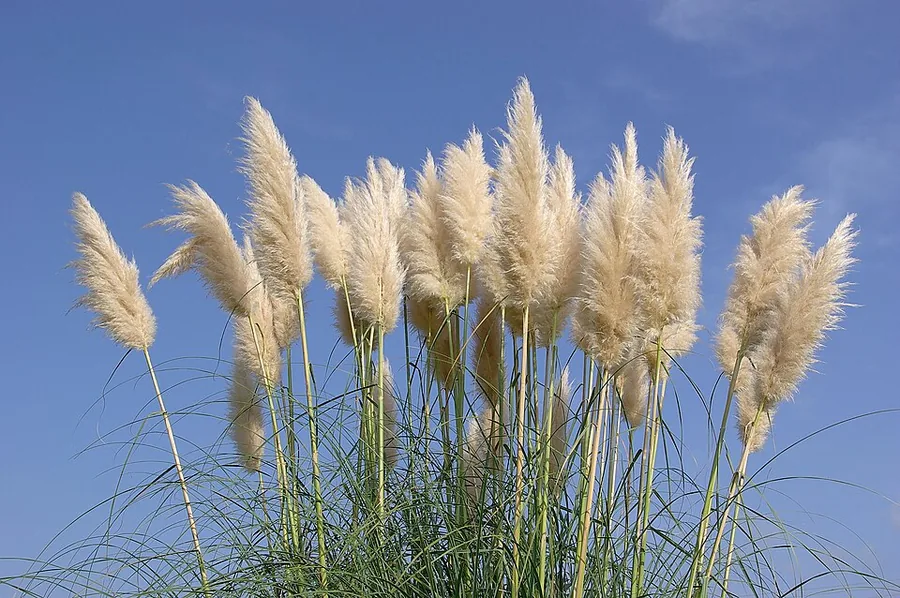
Pampas grass is the towering, feather-plumed grass that anchors big borders and screens views with real flair. It hails from South America, carries the botanical name Cortaderia selloana, and belongs to the grass family. Once it digs in, it asks for almost nothing and powers right through drought, heat, salt spray, and wind.
The plumes steal the show. Come late summer, each clump launches a fountain of silver-white feathers that hold their shape well into winter, riding high on arching foliage that can sweep over 12 feet across. That same foliage packs a genuine catch, since every blade runs with fine, razor-sharp serrations that slice bare skin the instant they touch it.
One more thing to weigh before you grab a spade. In mild-winter regions along the Pacific coast and in Hawaii, pampas grass self-seeds into a serious invasive, muscling out native plants and feeding wildfire. Where it stays in bounds it makes a bold, low-effort feature that pays off every year; where it does not, it is one to pass up.
Care
The short version: hand it full sun and well-drained ground, water it only while it establishes, and cut the whole clump down hard each late winter, with gloves and long sleeves on every single time.
Light
Pampas grass craves full sun to plume hard and stand up straight. It will scrape by in partial sun or light shade, but too little light leaves the clump loose and floppy and thins those famous feathers right out.
Water
Water a new plant regularly through its first season to drive the roots deep. After that it turns highly drought, heat, salt, and wind tolerant and asks for little to no extra water. Steer clear of wet, poorly drained spots, which shorten its life and invite winter damage.
Soil
This grass grabs almost any well-drained soil, from clay to loam to sand to rocky ground, anywhere from dry to medium moisture. It rolls with a wide pH band, roughly 5.5 to 8.5, so soil chemistry rarely holds it back.
Temperature
It stays tough across a huge range, from about 10°F to 100°F (-12°C to 38°C), which covers zones 7 through 10. Cold below that line can kill the crown, but the heat at the top of the range does not faze it in the least.
Humidity
Everyday outdoor humidity suits it fine, so there is no figure to chase. Air movement matters more than moisture in the air, and an open, breezy site is exactly where this wind-tolerant grass wants to be.
Feeding
Feed lightly with a balanced general-purpose fertilizer in spring during the growing season. An established clump barely needs it, and piling on the feed only pushes soft, weak growth.
Pruning
Cut the whole clump back hard to about 1 to 2 feet (30 to 60 cm) in late winter, before new growth kicks off, using hedge shears, loppers, or power pruners. Always work in gloves, a long-sleeve shirt, and eye protection, because the serrated blades cut skin with ease.
Repotting
Pampas grass rarely gets repotted and settles in for years in one place. Move or divide it only when it outgrows its space, the center of the clump goes dead and thatchy, or the crowded crown starts lifting out of the soil.
Size & spacing
A mature clump rockets to roughly 6 to 12 feet (1.8 to 3.7 m) tall and spreads about 4 to 7 feet (120 to 205 cm) wide, so hand it plenty of open room. Set it well clear of paths and play areas, so no one brushes those sharp leaves in passing.
When to plant
Pampas grass is a warm-region perennial that thrives across zones 7 to 10, and its calendar is easy to work. Set new plants out in spring so they root hard through the growing season, cheer on the silver plumes as they climb from late summer into fall, then cut the clump to the ground in late winter before fresh growth breaks.
Northern hemisphere
Southern hemisphere
Typical months for a temperate climate: start earlier in warm zones, later where spring frosts linger.
- Plant: spring
- Harvest: late summer to fall, plumes persist into winter
Hardiness
USDA hardiness zones: 7–10
Temperature: down to -18°C
Troubleshooting
Pampas grass hardly ever buckles to a pest or a disease. Two problems actually count, the cuts its blades deal out and the way it spreads past its bounds, and both are quick to spot and quick to shut down.
Fresh clumps shooting up far from where you planted
This is invasive self-seeding, and it ranks as the plant's most serious flaw. A single plume can fling well over 100,000 wind-borne seeds in a year, and stray root or rhizome fragments strike root just as fast in moist ground, so volunteers keep popping up downwind on disturbed, coastal, or open land. Get ahead of it: dig young crowns out whole while they stay small, and cut and bag the plumes before the seed ripens instead of composting them or shuttling seed-laden soil around.
Fix:
- Remove volunteer seedlings while young by digging out the entire crown
- Cut and bag flowering plumes before seeds mature and disperse
- Do not compost plumes or move soil containing seed
Stinging cuts turning up on your hands and arms after a bout with the plant
Skip the hunt for a pest or disease, because the foliage itself did this. Every blade wields razor-sharp, finely serrated edges that bite the moment you close your hand around a clump, and the slices land thin, clean, and deeper than you would guess. Gear up first with thick gloves, a long-sleeve shirt, long pants, and eye protection, then let shears or loppers do the cutting so you never drag the foliage across bare skin.
Fix:
- Stop handling bare-skinned and wash and dress any cuts
- Always wear thick gloves, a long-sleeve shirt, long pants, and eye protection
- Cut the clump back with hedge shears, loppers, or power pruners rather than pulling foliage by hand
Toxicity
Great news on poison, plus a real heads-up on the hardware. No part of pampas grass is toxic, and the ASPCA rates it safe for cats, dogs, and horses. The genuine hazard is physical, since the leaf edges are razor-sharp and slice skin like paper, so handle it in gloves and keep pets and children from tearing through the clump.
Safe for
People · Cats · Dogs · Horses · Rabbits · Livestock · Birds
Cats None
A cat can nose around this grass all it likes, since nothing in it will poison a taster. Just mind the blade edge, which can nick a mouth, so wave a curious cat off any chewing.
Dogs None
A dog can romp near this plant with no poisoning risk whatsoever. Keep an excited one from crashing through the clump, though, because the serrated leaves can score a thin cut on a nose or paw.
Horses None
A horse runs into no toxic trouble from pampas grass. A grazing horse could still catch its lips or tongue on the sharp-edged blades, so fencing the clump off is the smarter move.
Rabbits Safe
A rabbit faces no toxin here to cause any bother. The stiff, cutting leaves are just too coarse to graze, so a rabbit rarely gives the plant a second glance anyway.
Livestock Safe
Cattle, goats, and sheep can range across the same pasture without any poisoning risk. Most steer clear on their own, put off by the harsh, blade-edged foliage that offers little worth chewing.
Birds Safe
Birds meet no chemical harm and love to shelter deep in the plumes. The catch stays the same, the edges are sharp, but winged visitors seldom brush against them.
People Safe
No part of the plant will poison anyone handling it or standing nearby. The real thing to respect is mechanical, since the razor-sharp leaf edges cut skin like paper, so pull on gloves and long sleeves whenever you dive in close.
Not poisonous, but the sharp-edged leaves can inflict deep cuts on skin. Wear gloves, long sleeves, and eye protection when planting, handling, or pruning, and keep pets and children from running through or chewing the foliage to avoid mouth and skin cuts.
Varieties
Pampas grass rolls out in a handful of named forms that split on size, plume color, and leaf markings. These are the ones you are most likely to track down.
Pumila
A compact dwarf that caps out around 4 to 6 feet and brushes off cold better, which shoots it to the top as the most widely planted pick.
Rosea
Swaps the usual silvery-white plumes for a soft pink glow.
Sunningdale Silver
A tall, vigorous grower that pumps out big, full, silvery-white plumes.
Silver Comet
A variegated form that runs white-and-green stripes right down the foliage.
Gold Band
A variegated form flashing gold-banded leaves striped yellow and green.
How to propagate
There are two ways to crank out more pampas grass, but only one keeps those showy plumes true. Whichever you grab, the sharp leaves make gloves and long sleeves non-negotiable.
DivisionModerate
Late winter to early spring · 1-2 growing seasons
Division is the top way to multiply pampas grass, tackled in late winter to early spring, and it is the only route that keeps those showy female plants true to type. Give a fresh division one to two growing seasons to dig in and fill out into its full glory. The crowns pack in dense and the leaves cut, so glove up and cover your skin before you start splitting one apart.
SeedEasy
Spring · 1 growing season to first flowering in favorable climates
This grass self-seeds with real gusto, and in a friendly climate a spring sowing can burst into flower within a single growing season. The catch is variable seedlings, with plenty of plain, less-showy male plants riding along. Steer clear of seed entirely wherever pampas grass is invasive, since sowing it only fuels the spread.
Myths
All large, feathery pampas grass is the same plant.
Not quite, so untangle the two before you plant. The showy ornamental most gardeners grow is Cortaderia selloana, a separate species from jubata grass, or purple pampas grass, which goes by Cortaderia jubata. Jubata grass charges ahead as the far more aggressive invader, setting seed without any pollination and swallowing coastal and redwood-forest land. The two look nearly identical and share those sharp serrated leaves, yet jubata grass clings to cool, foggy coasts while selloana also powers through hot, dry inland heat.
Pampas grass is poisonous to pets.
Not so, so grow it with confidence. The ASPCA lists Cortaderia selloana as non-toxic to cats, dogs, and horses, and it packs no poison at all. The one real danger is a mechanical cut from the razor-sharp leaf edges, never anything that could poison a pet.