Ornamental · Apiaceae
Sea Holly
Eryngium planum
Plant sea holly in full sun and lean, dry ground and it comes alive with steel-blue, thistle-like flowers right through summer.
Full sun
Every 10–21 days
USDA 5–9
2–3 ft · 0.6–0.9 m
Overview
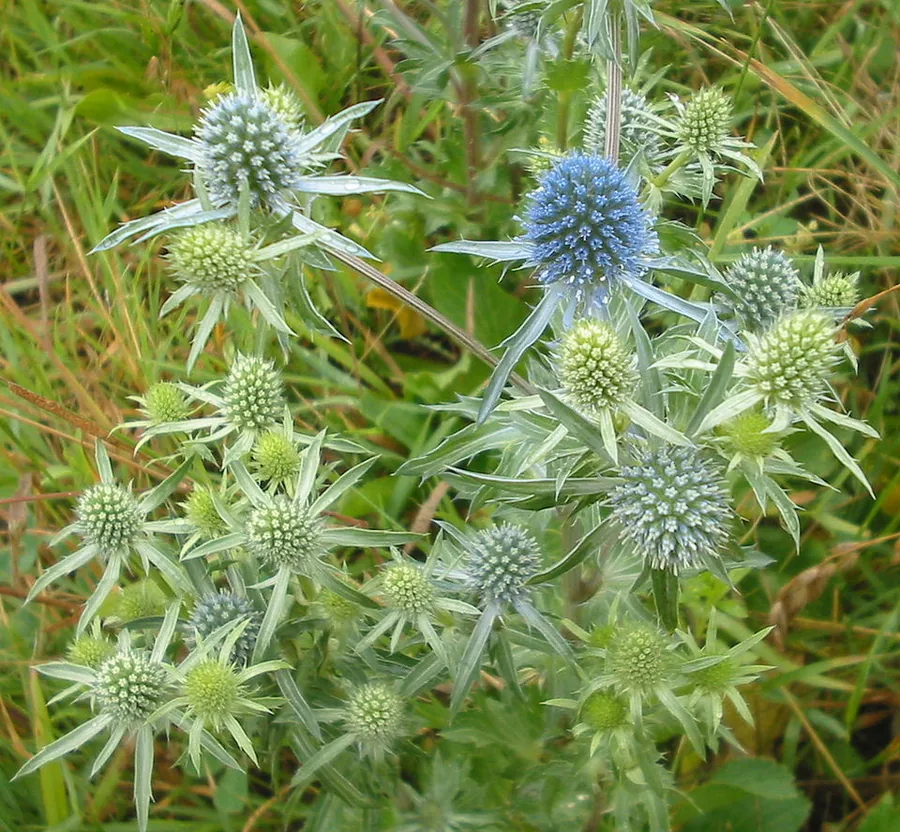
Sea holly grabs attention with spiny, steel-blue flower heads that look pure thistle, even though it is no holly at all. It runs in the carrot family and comes back as a tough, long-lived perennial across USDA zones 5 to 9. Each cone-shaped bloom rides in a collar of stiff, silvery bracts and keeps that color coming from June into September.
Here is what makes it so fun to grow: it thrives on next to nothing. Sea holly powers along in lean, dry soil and full sun, exactly where pampered perennials fizzle out. Pile on rich soil or water and it flops, so the winning move is to hold back and let it do its thing.
The flowers keep on giving. Bees and other pollinators work them nonstop all summer, and cut stems dry brilliantly for arrangements that hold their blue long after the beds fade. A deep taproot drives down to carry the plant through drought, which is great news, though it also means sea holly digs in and hates being shifted once it settles.
Care
The short version: full sun, poor fast-draining soil, and barely any water or feeding once it takes hold. Leave that deep taproot alone and one plant keeps performing for years.
Light
Sea holly lives for full sun, and all that light is what powers its stiff, upright stems. It will handle a bit of partial sun, but push it into real shade and the stems stretch, lean, and topple, so hand it the brightest spot you have.
Water
Once it takes hold, this plant is a drought-tolerant star that wants to dry out completely between drinks. Watering every 10 to 21 days is plenty, and only when a real dry spell hits. Go easy, because too much water is the one thing that can take it down.
Soil
Sea holly digs dry, sandy or loamy soil that drains fast, and it powers right through poor, gritty ground that would stall other perennials. It rolls with a wide pH from 5.5 to 8.5, so most gardens work. Just steer clear of rich, wet soil, which invites floppy growth and rot.
Temperature
Talk about tough. Sea holly shrugs off winter lows near -20°F (-29°C) and cruises through summer heat to about 90°F (32°C), which carries it easily through zones 5 to 9 with zero fuss.
Humidity
Low humidity is exactly its speed, and there is no number to chase. Damp, stagnant air around the leaves is the real enemy, so keep the air moving freely and the plant stays in top form.
Feeding
This is a plant that runs on neglect, and it loves it. It needs little to no fertilizer, and one light feed in spring is all you would ever give. Overfeed it and you just get soft, leggy stems that flop, so keep the feeding to a minimum.
Pruning
A little cutting keeps it firing. Deadhead the spent blooms to keep the plant tidy, and cut the stems back once flowering wraps up. When the season winds down, take the foliage right to the ground in late fall or early spring and it charges back with fresh growth.
Repotting
Sea holly almost never needs lifting or repotting, and that is exactly how it likes it. Its deep taproot hates disturbance, so leave an established plant right where it is. Only grab the spade when a long-standing clump gets crowded or clearly starts to fade.
Size & spacing
Expect a plant that shoots up 2 to 3 feet (61 to 91 cm) tall in bloom and spreads 12 to 24 inches (30 to 61 cm) across. Give each one about that much room so the clumps bulk up and air moves freely between them.
When to plant
Sea holly rolls through the year like a classic cold-winter perennial, and it is a satisfying one to start. Kick things off by sowing seed indoors in late winter after a cold, moist chill, get young plants out in spring once frost clears, and watch the steel-blue flowers fire up from June through September.
Northern hemisphere
Southern hemisphere
Typical months for a temperate climate: start earlier in warm zones, later where spring frosts linger.
- Sow: Late winter, 8-10 weeks before last frost; seed germinates best after cold-moist stratification
- Plant: Spring after last frost, while young so the taproot is undisturbed
- Harvest: June to September
Hardiness
USDA hardiness zones: 5–9
Temperature: down to -29°C
Troubleshooting
Sea holly is a champ that rarely stumbles, and when it does, the cause is almost always too much pampering, not too little. Extra water, rich soil, and shade knock it around far more than any dry spell. Spot your symptom below and the fix usually means backing right off.
Wilting plant and a base gone to mush
When the plant wilts and the base turns soft and brown, you are looking at root rot, and it comes straight from soggy soil, not a disease you can spray off. The roots go brown and mushy and the crown caves in. Dig sand or grit into the bed to open up the drainage, cut off the watering so it dries out, and pull any plant that has rotted past saving.
Fix:
- Improve drainage by amending with sand or grit
- Stop supplemental watering and allow soil to dry
- Remove and discard severely rotted plants
Stems flopping and shooting up leggy
Floppy, leaning stems almost always come down to soil that is too rich or a spot that is too shady. Sea holly stands tall and stiff only in lean ground and full sun, so that is where to aim. Cut the feeding, move it into brighter light if you can, and chop the sprawling stems back after it blooms to get it firing again.
Fix:
- Grow in lean, dry, well-drained soil and avoid fertilizing
- Site in full sun for stiff, self-supporting stems
- Cut back floppy stems after flowering
Twisted new shoots and chewed, ragged leaves
Two pests drive most of this, so target them fast. Aphids swarm the soft new shoots and warp them, while slugs and snails rasp ragged holes and leave slime trails. Blast the aphids off with a hard jet of water or hit them with insecticidal soap, pick the slugs by hand or set out bait, and sweep away the damp debris that shelters them.
Fix:
- Spray aphids off with a strong jet of water or use insecticidal soap
- Hand-pick slugs and snails or use bait
- Keep area free of debris that shelters slugs
Toxicity
Great news for pet owners and parents: sea holly packs no toxin and is completely safe to grow around. It only borrows the holly name, since it sits in the carrot family with nothing poisonous in its leaves, stems, or roots. The one thing to respect is the spiny bracts and leaf edges, which can prick, so pull on gloves before you cut the stems.
Safe for
People · Cats · Dogs · Horses · Rabbits · Livestock · Birds
Cats None
Sea holly will not poison a cat, so a curious nibble does no harm. The only thing to watch is the stiff, prickly bracts, since a sharp point can scratch a nose that gets too close.
Dogs None
Dogs can chew the foliage with zero risk of poisoning. The spiny flower heads usually send them off after softer prey long before any trouble starts.
Horses Safe
Horses have no toxin to worry about here at all. The rigid, thistle-like bracts steer them off to graze elsewhere, so it rarely becomes an issue.
Rabbits Safe
Rabbits face no poisoning from sea holly whatsoever. The prickly leaves and stems usually convince them to skip it entirely.
Livestock Safe
Cattle, goats, and sheep can graze right by sea holly without harm, since it packs no toxin. Its sharp, spiny growth just makes it a tough sell, so they move on.
Birds Safe
Birds have nothing toxic to fear, and plenty swoop in for the seeds. The stiff bracts are the only obstacle they clear on the way.
People Safe
The plant is safe around kids and adults alike, with nothing poisonous to worry about. The real catch is the spiny bracts and leaf edges, so throw on gloves before you cut or arrange the stems.
The spiny, stiff bracts and leaf margins can prick or scratch skin; wear gloves when handling or cutting stems.
Varieties
Plant breeders have had fun with sea holly, and a handful of standout cultivars push the wild plant in new directions, from tiny dwarfs to heavy bloomers and a frosty variegated form. Here are the ones to chase down.
Blue Hobbit
Blue Hobbit is a punchy little dwarf that packs into a tidy, globe-shaped mound of just 8 to 12 inches in bloom.
Blue Glitter
Blue Glitter puts on a real show, loading up glittering steel-blue heads on freely branching stems.
Jade Frost
Jade Frost brings the flash, with variegated blue-green leaves rimmed in creamy white under violet-blue blooms.
Tiny Jackpot
Tiny Jackpot stays tight and holds itself up on strong stems to only about 14 inches tall.
Companions
Sea holly looks its best next to other plants that share its taste for sun and dry, lean ground, where their colors and textures play off its steel-blue spikes.
Plant near
Black-eyed Susan: Shares full-sun, dry, well-drained conditions and contrasts with the steel-blue flower heads.
Ornamental grasses: Thrive in the same lean, sunny, drought-tolerant settings and complement the spiky texture.
Yarrow: Drought-tolerant, full-sun perennial that pairs well in dry borders and pollinator plantings.
How to propagate
The best way to build up a stand of sea holly is from seed, since that deep taproot turns any root-disturbing method into a real gamble. Start with seed and you are off to a strong start.
SeedModerate
Sow in late winter to spring; cold-moist stratification improves germination · Blooms typically in the second year from seed
Seed is the most reliable way to crank out more sea holly. Sow from late winter into spring, and give the seed a cold, moist chill first to snap it out of dormancy. Get the young plants in the ground before the taproot runs deep, and most reward you with their first flowers in the second year.
DivisionDemanding
Spring, only if necessary · Slow and unreliable to recover
Division is strictly a last resort with this one. The deep taproot fights being cut and lifted, so a split clump transplants poorly and is slow and unreliable to recover. Only try it in spring, and only when you have no other option, since an undisturbed plant always outpaces a divided one.
Myths
Sea holly is a true holly, so it must be poisonous like holly berries.
Not a chance. Sea holly runs in the carrot family, nowhere near the true hollies, and no source pins any toxicity on it for pets or people. The only real hazard is the spiny bracts, not anything a curious mouth could swallow.
Sea holly clumps need regular digging and dividing to keep their vigor.
That advice backfires here. The deep taproot hates being moved, so dividing sea holly usually knocks it back instead of reviving it. Leave an established clump right where it grows, and raise new plants from seed or root cuttings instead.