Ornamental · Poaceae
Northern Sea Oats
Chasmanthium latifolium
A native grass that turns problem shade into a highlight, then dances flat oat-like seed heads from summer clear into winter.
Partial shade
Every 3–7 days
USDA 3–9
2–5 ft · 0.6–1.5 m
Overview
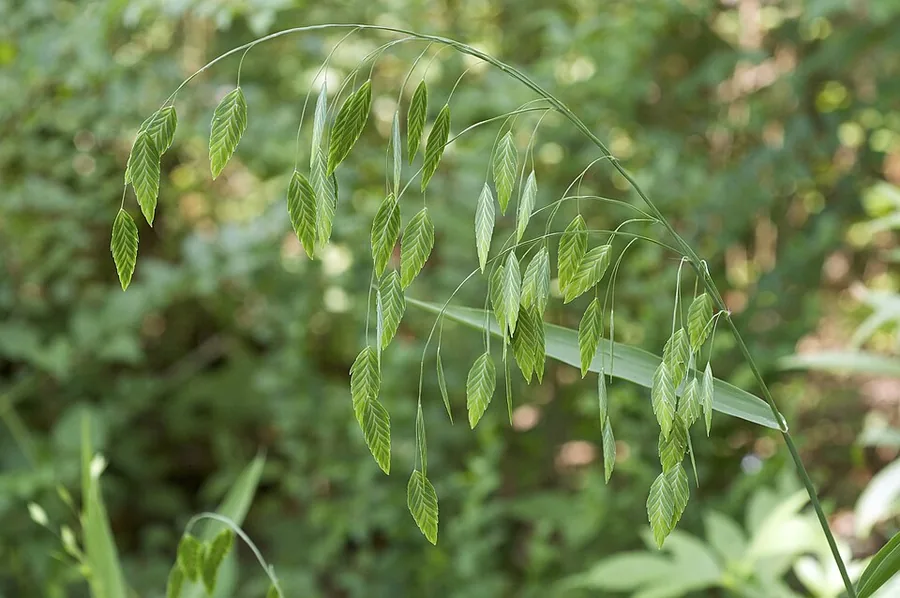
Northern sea oats earns its spot fast. This clumping native grass digs into the shade of the woodland edge, that tricky damp corner where ordinary grasses quit, and thrives there. The payoff is the seed head, a flat, layered spikelet that mimics a real oat and swings from long arching stems. It opens green in summer, deepens to coppery bronze, then dries to tan and keeps dancing well into winter.
Growing it feels almost too easy. It runs from full sun to full shade, powers through clay, sand, wet ground, and even a quick flood, and stays hardy across a huge chunk of the country. Keep one thing on your radar: moisture. A dry, sunny spot browns the leaf edges, so a good soaking keeps it looking sharp.
That same energy makes it a real mover. It self-sows with gusto and pushes outward on short rhizomes, so one clump can build into a whole stand in just a few seasons. Turn it loose where you want it to fill in, or clip the seed heads before they ripen and steer exactly where it goes.
Care
The short version: hand it part shade and steady moisture and it takes off, though it rolls with almost any light and soil. Cut the clump down in late winter, and snip the seed heads before they drop to keep it right where you planted it.
Light
This grass runs the whole gamut from full sun to full shade, which throws the door wide open on where to plant it. Part shade brings out its best, keeping the blades greenest and the clump full. Push it into full sun and it drinks more, so keep the water coming or the foliage scorches.
Water
Steady moisture is the one lever that really counts, so keep the soil evenly damp and lean wet, not dry. It powers through wet ground and even short floods, so that low, boggy corner works great. Just soak sun-grown clumps more often, since they dry out and brown quicker.
Soil
Soil hardly slows it down, and it charges ahead in clay, loam, sand, or soggy ground that stumps pickier plants. Average to moist, fertile, well-drained earth gets you top growth, but it makes do with plenty less. Skip the pH test, because it sets no demand there.
Temperature
This one is genuinely rugged, cruising from -40°F to 100°F (-40°C to 38°C), a span that blankets most of the map. Brutal winters barely register, and it bounces back every spring without fail.
Humidity
Regular outdoor air covers all its humidity needs, so cross that off the list. The real win comes from keeping the roots moist when summer cranks up the heat.
Feeding
It runs lean as a light feeder and rarely wants a boost. An optional splash of balanced fertilizer or compost in spring does the trick, and piling on more just fires up its spreading, which you likely want to dial back.
Pruning
Chop the whole clump to the ground once a year in late winter to early spring, before new shoots break. Want to slow the reseeding? Clip and clear the seed heads before they ripen and fling their seed.
Repotting
This is a garden grass, not a houseplant, so forget the pot. The move here is dividing the clump every few years, once the center thins out or a jam-packed clump loses steam.
Size & spacing
Clumps shoot up to 2 to 5 feet (60 to 152 cm) tall and spread 12 to 30 inches (30 to 76 cm) wide. Give each one space to arch and show off, and count on it to stretch past whatever room you hand it.
When to plant
The calendar makes this one a treat to plan. Sow the seed in late winter to spring after a cold, moist chill, drop plants in the ground in spring once frost clears or again in fall, and then let the seed heads run the show from late summer straight through winter.
Northern hemisphere
Southern hemisphere
Typical months for a temperate climate: start earlier in warm zones, later where spring frosts linger.
- Sow: Late winter to early spring; seed benefits from cold-moist stratification before sowing
- Plant: Spring after frost, or fall
- Harvest: Flowers August to September; showy flat oat-like seed heads emerge green in summer, turn coppery-bronze then tan and persist into winter
Hardiness
USDA hardiness zones: 3–9
Temperature: down to -40°C
Troubleshooting
Here is the best part: northern sea oats laughs off serious pests and diseases. That leaves just two things it does to itself, spreading with real enthusiasm and scorching in dry sun. Spot the match below and jump on it early, while it is still a quick fix.
Seedlings sprouting everywhere you look
Meet a champion self-seeder: those flat oat-like heads sling ripe seed way past the parent clump, while short rhizomes shove the clump wider, fastest in moist, fertile soil with a little sun. Cut and clear the seed heads before they ripen, yank the young volunteers while they slip out easily, and split the clump to keep the whole thing in line.
Fix:
- Cut and remove the seed heads before they ripen and drop to stop new seed
- Pull or dig out unwanted volunteer seedlings while young; they pull easily
- Divide and reduce the clump to contain rhizomatous spread
- Keep stalks cut down low to gradually starve out an established colony
Blades browning or bleaching by midsummer
That is leaf scorch, and it fires up in hot, dry, full sun when the roots run short on water. Plants tucked in part shade with steady moisture barely flinch. Soak sun-grown clumps more often and deeper, spread mulch to trap the moisture, and shift the hardest-hit ones into dappled shade to bring them roaring back.
Fix:
- Provide more frequent, deeper watering for sun-grown plants
- Apply mulch to conserve soil moisture
- Site or transplant into part shade with moist soil for best appearance
Toxicity
Plant lovers with pets and kids get a green light here, because this grass is not poisonous. Nothing in it threatens cats, dogs, horses, livestock, birds, or people. Just two small footnotes: a pet that devours a load of foliage might get a quick stomach upset, like with any grass, and grass pollen can nag people who battle allergies.
Safe for
People · Cats · Dogs · Horses · Rabbits · Livestock · Birds
Cats None
Cats are in the clear. A cat that grazes a big helping of foliage might bring it back up, the same harmless move any grass triggers.
Dogs None
Dogs get the all-clear too, since it packs no toxins. Wolf down a huge mouthful and a little vomiting can follow, but nothing worse than a lawn chew.
Horses Safe
Horses are totally fine with it, because it holds no toxins if they graze a bit out in the pasture.
Rabbits Safe
Rabbits can chomp the leaves without harm. As with any fresh green, roll it in gradually so their gut keeps up.
Livestock Safe
Cattle, goats, and sheep can graze it freely, since it packs nothing that would give them grief.
Birds Safe
Backyard birds thrive around it, and loads of them raid the ripe seed heads for the little grain inside.
People Safe
People are safe around it, no danger from the plant at all. The lone catch is grass pollen, which can rile up allergy-prone folks.
As with any grass, pets that nibble a lot of foliage may vomit or have mild stomach upset, and grass pollen can be an allergen for sensitive people; the plant itself is not poisonous.
Varieties
The straight species wins over most growers on its own, but one named pick deserves a spot on your list.
River Mist
River Mist is the white-variegated pick, firing off blades striped vertically in white and green with whitish seed heads, a bright change-up from the plain species and its solid blue-green foliage and green heads.
How to propagate
Two easy routes will multiply it fast, and the plant kicks off the first one all by itself.
SeedEasy
Sow in late winter to spring; cold-moist stratification improves germination · One to two growing seasons
Sow seed in late winter to spring, but chill it cold and moist first to snap it awake. Even better, this grass self-sows so eagerly that the fastest play is to scoop up the volunteer seedlings it throws out on its own and plant them where you want, and a young one bulks up over one to two growing seasons.
DivisionEasy
Spring or early fall · One growing season
Dig up an established clump and split it in spring or early fall, a slick two-for-one that hands you new plants while reining a spreading clump back in, and every division roots in within a single growing season.
Myths
Northern sea oats is the protected dune grass you cannot legally grab at the beach.
They just happen to share a name. This shade-garden dynamo is Chasmanthium latifolium, a grass of inland streambanks and woodlands. The protected beach plant is a whole separate, unrelated species, true sea oats (Uniola paniculata), a dune stabilizer plenty of coastal states make it illegal to collect. Grow the inland kind in your yard and you break zero rules.