Ornamental · Poaceae
Sorghum-sudangrass
Sorghum × drummondii
A fast, towering summer grass that charges through weeds and cracks open packed soil, paired with a real cyanide warning for grazing animals.
Full sun
Every 7–14 days
45–90 days
USDA 3–11
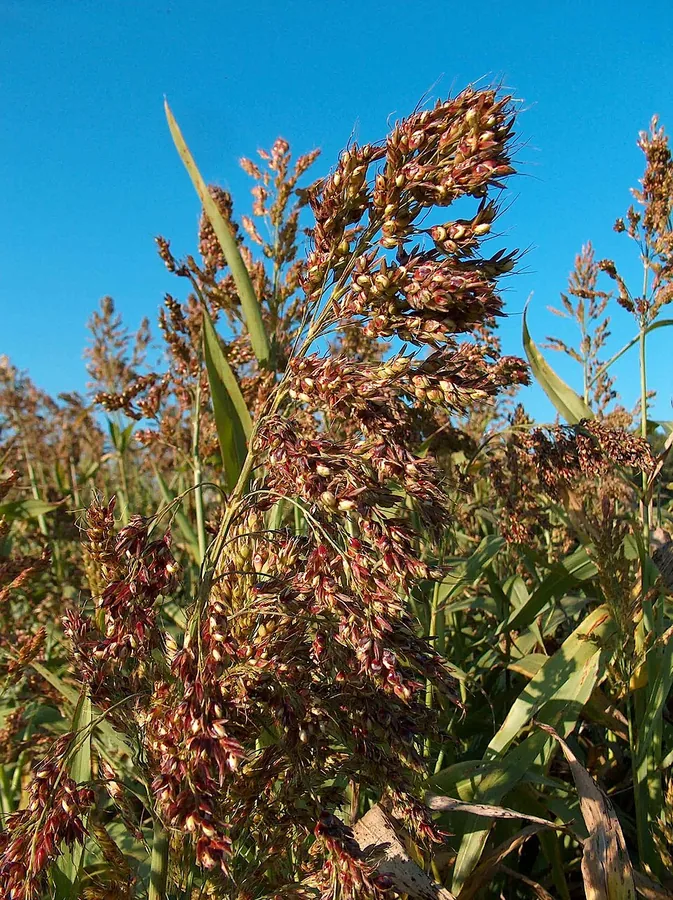
Overview
Sorghum-sudangrass is a powerhouse, and it grows for results rather than good looks. Cross sorghum with sudangrass and out comes a fast, heat-loving annual that surges from seed to several feet of dense growth in just weeks. Growers put it to work as a cover crop and forage, where it races ahead of the weeds and feeds the soil with fresh organic matter.
The best action happens underground, and it is a thrill to watch play out. The thick canopy buries weed seedlings in shade, and one well-timed mow at 3 to 4 feet fires the roots downward to smash through compacted soil. Those roots pump out sorgoleone, a natural compound that shuts down many weed seeds before they sprout, so a rough, weedy patch comes roaring back clean.
One thing keeps this grass in check, and it is worth respecting. It and its sorghum kin pack cyanogenic compounds that unleash prussic acid, the cyanide form of the poison, and they load up nitrate the moment the plant hits stress. That turns it dangerous for horses and grazing livestock, above all when the growth is young, drought-hit, wilted, or frosted. Grow it hard for the soil, and treat any grazing as the real hazard it is.
Care
The short version: hand it full sun and warm soil and it takes off with barely any help. Sow it after frost into well-drained ground, water it lightly since it powers through drought, and mow at 3 to 4 feet before it turns woody.
Light
Hand it full sun and blazing heat. This grass thrives in the open and races ahead where summers run hot, so plant it in a bright, exposed spot and let it fly.
Water
Once it roots in, it powers through drought, going nearly dormant instead of collapsing when things dry out, so water only every 7 to 14 days and skip it whenever rain steps up. Never overwater it and never leave it in soggy ground. And keep this front of mind: drought-stressed plants carry the most cyanide and must not be grazed.
Soil
It thrives in almost any well-drained loam and shrugs off a wide pH from 5.5 to 9.0, a huge range that opens up all kinds of ground. The only deal-breaker is waterlogged soil, which stops it cold.
Temperature
As a true warm-season grass, it charges through the heat across roughly 32°F to 100°F (0°C to 38°C) and hits full stride near the top of that range. Frost drops it outright, which handily doubles as the way a cover crop wraps up in fall.
Humidity
No dialing in humidity here, since plain outdoor air is all it needs. Heat and sun power its growth far more than any moisture floating in the air.
Feeding
Load nitrogen at planting, around 75 to 100 pounds per acre, and it builds a mountain of biomass. Ease off the throttle, though, because piling on nitrogen against low phosphorus and potassium drives up the cyanide and nitrate the plant stores.
Pruning
The signature move is a single mow-kill at about 3 to 4 feet, which unleashes a surge of root growth and tillering that busts compaction and stacks up biomass. Cut or terminate before it rockets past 4 feet toward its full 5 to 12 feet, or the stalks harden to wood and the residue turns tough and slow to break down.
Repotting
none
Size & spacing
Sown thick, it rockets to 5 to 12 feet (1.5 to 3.7 m) when left alone, with each plant filling about 1 to 3 feet (30 to 91 cm). That dense canopy is exactly the goal, since the shade it throws is what smothers the weeds.
When to plant
This grass runs on summer heat and wants nothing to do with cold. Launch it in late spring or summer once frost clears and the soil climbs above 60°F to 65°F (16°C to 18°C), let it tear through the warm months, and finish it with a mow or the first fall frost.
Northern hemisphere
Southern hemisphere
Typical months for a temperate climate: start earlier in warm zones, later where spring frosts linger.
- Sow: not recommended
- Plant: Late spring to summer after all frost danger has passed and soil is warm (above about 60-65 degrees F)
- Harvest: Mow or harvest at about 3-4 ft; grown for biomass/cover, not bloom
Hardiness
USDA hardiness zones: 3–11
Temperature: down to -40°C
Troubleshooting
Trouble here almost always lands in one of two spots: a poisoning risk to animals, or a plant that has bolted past what you can manage. Track the growth stage closely, because the same forage that pays off at one height turns dangerous or unruly at another. Pin down the symptom below and jump on it fast.
Grazing animals drop fast and fight for breath
This is acute cyanide (prussic acid) poisoning, the one genuinely deadly move this grass makes. The plant unleashes hydrogen cyanide from a compound called dhurrin, and it spikes in young growth under 18 to 24 inches, in the fast regrowth after a cut, and in drought-stressed, wilted, or frosted plants. Signs hit within minutes and animals seldom last two hours, so pull livestock off that growth, hold out 5 to 7 days after a frost, and call a vet the second you suspect it.
Fix:
- This is a veterinary emergency - contact a veterinarian immediately
- Remove all animals from the forage at once
- For pets, call ASPCA Animal Poison Control at (888) 426-4435
Stalks shoot up woody and battle the mower
Let it blow past 4 feet and it rockets toward its full 5 to 12 feet, hardening the stems into coarse, woody stalks up to half an inch thick. That mass jams the mower, rots down slowly, and blocks your spring planting. Mow at about 3 to 4 feet before the stalks toughen, then terminate it or let winter finish it so the residue clears in time.
Fix:
- Mow at about 3-4 ft before stalks turn woody
- Terminate (mow or let winterkill) before residue becomes excessive
- Chop or mow finely to speed breakdown
Stressed foliage packs on nitrates before frost shuts it down
Drought and heavy nitrogen drive nitrate up into the leaves, and that stressed forage can poison livestock all on its own, on top of the cyanide. Test any stressed or heavily fed growth before you offer it, and dilute or ditch whatever tests high. As a frost-tender warm-season annual, it blackens and dies at the first hard freeze, which is the standard way this cover crop gets terminated.
Fix:
- Test stressed forage before feeding
- Dilute or avoid feeding high-nitrate forage
- Accept winterkill as the cover-crop termination method
Toxicity
Give this one your full respect. The plant unleashes prussic acid (cyanide) and banks nitrate, and both can drop horses and grazing livestock in a hurry, hitting hardest in young, drought-stressed, wilted, or frosted growth. Pets and people face far less risk since they do not graze it, but the foliage still is not safe to chew, so keep animals and children clear of it.
Toxic to
Cats · Dogs · Horses · Rabbits · Livestock · Birds · People
Cats Caution
The ASPCA marks Sudan grass as non-toxic to cats, so a nibbled blade is not the worry here. Even so, cyanide loads up in young, wilted, or frosted growth, so keep a curious cat off stressed plants.
Dogs Caution
The ASPCA does not tag this grass as toxic to dogs, and most dogs breeze right past it. The real hazard hides in stressed or frost-bitten foliage, so steer a grass-chewing dog away from it just in case.
Horses Toxic
Horses take the biggest hit. Beyond acute cyanide poisoning with labored breathing, foaming, and tremors, they can develop a distinct cystitis and ataxia syndrome: wobbly hind legs, a paralyzed bladder that dribbles urine, and permanent nerve damage. Pregnant mares can abort or carry malformed foals. Keep horses off this forage, and note the danger climbs in young, drought-stressed, wilted, or frosted growth.
Rabbits Caution
A grazing rabbit runs straight into the same cyanide that loads up in young, wilted, drought-stressed, or frosted blades. Keep rabbits off this growth, since a small animal can take a fatal dose in a flash.
Livestock Toxic
Cattle, sheep, and goats are the classic casualties and crash fast from cyanide and nitrate poisoning, with rapid breathing, staggering, and convulsions inside 15 minutes to 2 hours. The risk spikes on young growth under 18 to 24 inches, on fast regrowth, and on drought-stressed, wilted, or frost-damaged plants, which must never be grazed.
Birds Caution
Poultry and other birds that peck the foliage meet the same cyanogenic compounds that endanger grazing animals. The seed shows up in feed, but keep birds off young, stressed, or frosted green growth.
People Caution
This is a forage and cover crop, not a food plant, so nothing here gets eaten raw. The fresh foliage carries the cyanide and nitrate that poison livestock, so skip nibbling it and keep children from chewing on the stalks.
Keep grazing animals off young (under 18-24 in), drought-stressed, wilted, or frost-damaged growth and off fast regrowth - these have the most cyanide and can kill within an hour. Wait at least 5-7 days after frost; properly cured hay/silage is generally safer. Not for use as forage for horses without testing. Contact a vet or ASPCA Animal Poison Control at (888) 426-4435 immediately if poisoning is suspected.
Helpline numbers

United States
ASPCA Animal Poison Control: (888) 426-4435 (fee applies)
Poison Control: (800) 222-1222



Canada
Poison Centres: 1-844-764-7669
Varieties
Breeders have pushed this grass in several exciting directions, from richer forage to sky-high stands to raw cover-crop power. Here are the standouts you will run into.
Brown midrib (BMR) types
Spot these by the reddish-brown streak down the leaf midrib that flags a recessive low-lignin trait, which cranks up digestibility and energy as forage even as it leaves the plants standing a bit weaker against wind and weather.
Photoperiod-sensitive types
These hold their seedhead back until day length drops below about 12 hours and 20 minutes, so they shoot up very tall and stretch the window for cutting leafy, high-quality forage.
Forage hybrids vs cover-crop selections
Both bring coarser stems and broader leaves than true sudangrass with stronger regrowth and yield, but the forage types are built for grazing and silage while the cover-crop types are built for biomass, smothering weeds, and busting compaction.
How to propagate
There is one route in, and it is gloriously simple. Sow the seed straight into warm ground and watch it launch.
SeedEasy
Late spring to summer once soil is warm (above about 60-65 degrees F) and frost danger has passed · Germinates in days; reaches mowable 3-4 ft and dense canopy within several weeks
Wait for the soil to climb past about 60°F to 65°F (16°C to 18°C) with frost gone, then sow, ideally at least two months ahead of the fall frost. Drill it at 20 to 40 pounds an acre or broadcast 30 to 50 pounds, dropping the seed about half an inch to 2 inches deep. It bursts up within days and packs into a mowable 3 to 4 foot canopy in just a few weeks.
Myths
Sorghum-sudangrass is just grain sorghum or perennial Johnsongrass under a different name.
Not a chance. It is a frost-tender annual hybrid grown for summer cover and forage, not grain sorghum and not the perennial weed Johnsongrass. All three are Sorghum relatives that share the prussic-acid hazard, but the annual cover crop stands apart from perennial Johnsongrass, which acts nothing like it in the field.
Cured hay stays every bit as dangerous as the fresh, growing plant.
Far from it. Most of the prussic acid burns off as the forage cures into hay or ensiles into silage, so well-made hay and silage run much safer than fresh young, stressed, or frosted growth. Horses are the exception and still should not be fed it long-term without testing.