Ornamental · Poaceae
Switchgrass
Panicum virgatum
Hand it full sun and lean soil and switchgrass rockets up, standing proud from summer clear into winter.
Full sun
Every 7–14 days
60–90 days
USDA 3–9
Overview
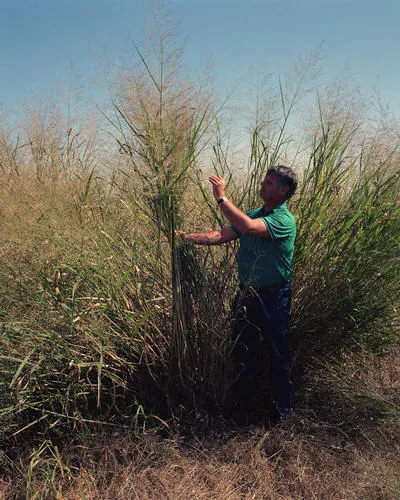
Switchgrass packs all the grit of the North American tallgrass prairie into one rewarding warm-season native. It rockets up into an upright, vase-shaped clump of slender blades, then crowns itself with airy, pink-tinged panicles by midsummer. Once the season turns, the whole plant blazes to golden-tan and keeps that shape marching right into winter.
Best of all, it thrives on next to nothing. It powers through cold as brutal as -40°F (-40°C), brushes off drought and standing water alike, and takes root in clay, sand, poor dirt, even salty ground. Just resist the urge to pamper it, because rich, damp soil and shade turn it soft and floppy, so a lean, sunny spot is what launches it skyward and keeps it there.
What really wins gardeners over is the structure and constant movement, well beyond any flower. The blades dance at the faintest breeze, the seed heads pull in hungry birds, and the clump left standing all winter delivers cover and drama once everything else has bowed out. Chop it back once in late winter and you have handled just about all it asks.
Care
The short version: full sun and lean, well-drained soil, barely any water once established, and almost no feeding. Chop it right down in late winter, then split the clump every few years the moment the center starts to thin.
Light
Switchgrass craves full sun, first and last. It will scrape by in partial sun or light shade, but that only buys soft, leaning growth, so the more sun you pour on it, the taller and sturdier it stands.
Water
Keep it watered through the first season while the roots dig in, then step way back, because it barely needs a drink after that. Once established it powers through both drought and flooding, thriving across the whole span from wet to dry soils.
Soil
This grass grabs hold almost anywhere, from wet to dry and clay to sand, and salt hardly slows it down. It performs best kept on the lean side at a pH of 5.0 to 8.0, since rich ground only tips it toward flopping.
Temperature
Talk about tough: it shrugs off winter cold to -40°F (-40°C) and summer heat to 100°F (38°C). That huge range means it charges ahead in nearly any temperate garden, no special protection needed.
Humidity
Outdoor humidity barely registers, so there is no level to chase. Airflow is the real lever, because crowded, muggy clumps are exactly where the odd bout of rust sneaks in.
Feeding
In most gardens, ditch the fertilizer entirely. Rich or over-fed soil fuels weak, floppy growth, so hand it at most a light spring feeding, and only where the ground is truly starved.
Pruning
Chop the clump to a few inches above the ground in late winter or early spring, right before new growth breaks. Until then, leave the foliage and seed heads standing all winter for the look and the wildlife that piles in for shelter.
Repotting
Lift and split the clump every few years, or sooner if the center dies out and leaves a bare hole. A thinning ring of growth or slacking flowers is your green light to divide and replant.
Size & spacing
Expect it to shoot up 3 to 6 feet (91 to 183 cm), taller still in flower. Give each clump 2 to 3 feet (61 to 91 cm) of breathing room so air rips through and that upright form has space to strut.
When to plant
Switchgrass is a warm-season powerhouse, so it holds off until real warmth arrives, then takes off. Fire up seed indoors in late winter after a cold, moist chill, plant out in spring once frost clears or in early fall, and cheer on the flower heads as they surge from midsummer into a long, standing winter show.
Northern hemisphere
Southern hemisphere
Typical months for a temperate climate: start earlier in warm zones, later where spring frosts linger.
- Sow: Late winter to early spring, 6 to 8 weeks before last frost; seed benefits from cold-moist stratification
- Plant: Spring after last frost, or in early fall; warm-season grass that establishes as soils warm
- Harvest: Airy pink-tinged panicles from mid to late summer (July onward), maturing to golden-tan and persisting into winter
Hardiness
USDA hardiness zones: 3–9
Temperature: down to -40°C
Troubleshooting
Here is the good part: switchgrass throws up almost no problems, and the few it does trace back to its spot rather than any pest or disease. Catch the early signs below and the fix is nearly always quick: more sun, leaner soil, or a well-timed split.
Volunteer seedlings pop up and the old clump caves in at the center
A thriving switchgrass cranks out loads of seed and marches on short rhizomes, so seedlings sprout around the planting and it can naturalize past its bounds. Snip and clear the seed heads in fall before they scatter, and dig out the strays. Down the road the center dies out as well, your cue to lift the clump, split off the vigorous outer growth, and replant.
Fix:
- Cut back and remove seed heads before they drop if self-seeding is unwanted
- Dig and remove unwanted seedlings
- Lift, divide, and replant vigorous outer divisions when the center dies out
Stems keel over and the clump busts open in the middle
Flopping nearly always comes from too much shade or soil that runs too rich and moist, both of which pump out soft, weak growth. Shift it into full sun, throttle back the water and feed, and let those stems stiffen up. On a naturally lush site, grab a rock-solid upright cultivar like 'Northwind' or 'Heavy Metal', then chop the clump back hard in late winter for a clean relaunch.
Fix:
- Move or plant in full sun
- Withhold fertilizer and avoid rich, overly moist soil
- Choose sturdy strongly upright cultivars such as 'Northwind' or 'Heavy Metal'
- Cut back hard in late winter to renew growth
Orange rust pustules or dark smut streaking the leaves
Hot, muggy weather can fire up rust, peppering the blades with orange-brown pustules, and every so often smut blackens the tissue. Neither one does lasting damage. Open the clump up with wider spacing and a division, park it in full sun where the air rushes through, and clip off the marked foliage in late winter.
Fix:
- Improve air circulation by proper spacing and dividing crowded clumps
- Cut back and remove affected foliage in late winter
- Site in full sun with good airflow
Toxicity
Grow it with a clear conscience, because switchgrass is safe around cats, dogs, rabbits, birds, and people, with nothing toxic in the clump you tend. The single flag to keep in mind is for grazing animals, since its natural saponins can spark photosensitization in livestock, sheep most of all and horses a little less, when they wolf down large amounts as forage or hay.
Safe for
People · Cats · Dogs · Horses · Rabbits · Livestock · Birds
Cats None
A curious nibble of the ornamental grass hands a cat zero toxin and zero harm. Like any tough leaf, a big mouthful might come right back up, but there is truly nothing to fear.
Dogs None
Dogs can gnaw on switchgrass or bound right past it with no risk at all. The ornamental clump packs nothing that could poison them.
Horses Caution
A horse snatching the odd blade is perfectly fine, but hammering large amounts over time can spark liver-linked photosensitization, with jaundice and sunburn-like sores on pale or exposed skin. Stay alert to grazing wherever this grass overruns a pasture.
Rabbits Safe
Rabbits can graze switchgrass freely, since the leaves and stems carry no toxin whatsoever.
Livestock Caution
Sheep sit at the top of the risk list, and goats and cattle can react too: heavy grazing or switchgrass hay can trigger liver damage and photosensitization, flaring as jaundice and sunburn-like sores on light skin. Just keep this grass a modest slice of the ration.
Birds Safe
Birds pounce on the seed and dive into the foliage for cover without a hitch. It is a prized food and shelter plant, never a hazard.
People Safe
Handling and growing switchgrass is completely safe for people, and the ornamental clump is great to have around children.
Safe for pets and people as a garden ornamental. However, switchgrass and other Panicum species contain steroidal saponins (yielding diosgenin) that can cause hepatogenous photosensitization (liver damage with sunburn-like skin lesions) in grazing livestock, especially sheep, goats, and horses, when they graze or are fed large amounts. This is a grazing/forage concern only and does not affect the safety of the ornamental clump for cats, dogs, or humans.
Varieties
Plain switchgrass already delivers, but the named cultivars are where the excitement kicks in, split mostly by height, how upright they stand, and the fall color they fire off. These are the ones to chase.
Heavy Metal
A slim, ramrod-upright grass flashing metallic blue-green blades that flip to clear yellow come fall.
Northwind
Built to stand tall, this sturdy, emphatically upright form drives up an olive-green column that almost never flops.
Shenandoah
Its foliage fires up a red tint that deepens to wine-red as late summer and fall roll in.
Cheyenne Sky
A compact, shorter dynamo that colors early, blazing wine-red well ahead of the taller kinds.
Cloud Nine
A towering grass shooting to 6 feet or more, with blue-green blades and a soft, billowing sweep.
Companions
Switchgrass shines next to sun-loving prairie flowers that share its taste for lean, dry ground, setting off their bloom with its upright blades and seed heads.
Plant near
Echinacea purpurea (purple coneflower): Classic prairie/meadow companion with matching full-sun, lean-soil needs and contrasting flower form
Rudbeckia (black-eyed Susan): Native prairie partner sharing sun and soil tolerance for naturalistic plantings
Sedum / Hylotelephium (autumn stonecrop): Sun-loving, drought-tolerant companion that complements the grass for fall and winter interest
How to propagate
There are two great ways to bulk up your switchgrass, and the pick comes down to whether keeping a named cultivar true is on your list.
DivisionEasy
Spring as new growth begins, or early fall · One growing season
Division is a sure winner, and the only method that keeps a named cultivar true to type. In spring as growth wakes up, or in early fall, dig up an established clump, ditch the dead center, and drop the vigorous outer pieces back in. They grab hold and fill out inside a single growing season.
SeedModerate
Sow indoors in late winter or direct sow in spring; cold-moist stratification improves germination · One to two growing seasons
Seed is a breeze, though the seedlings vary and will not match a named cultivar. Sow indoors in late winter or scatter seed straight out in spring, and a cold, moist chill first gives germination a real boost. As a warm-season grass it bursts up once soils warm, then powers through one to two growing seasons to reach full size.
Myths
A tough native prairie grass like switchgrass never hits garden trouble and cannot harm a thing nearby.
It is refreshingly low fuss, but that is not the same as trouble-free. It flops in heavy shade or rich, moist ground, self-seeds enough to naturalize, and its aging center caves in and needs splitting. Happily it stays harmless to pets and people, though its steroidal saponins can spark photosensitization in grazing livestock, sheep most of all and horses to a lesser degree, that eat large amounts.