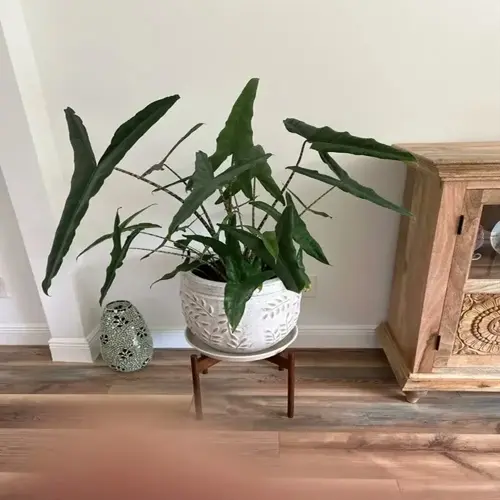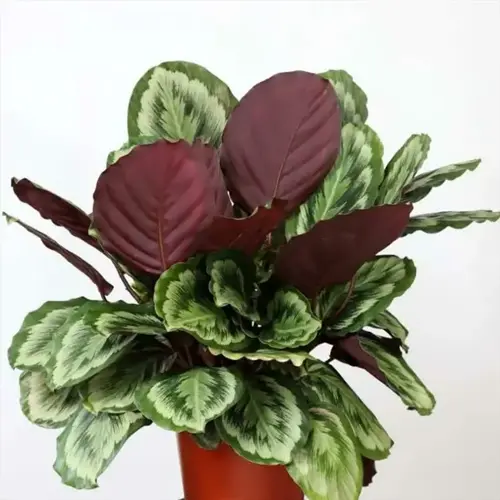

Brown, papery tips crept along three leaves of my orbifolia. It sat on the frosted north-facing windowsill in my bathroom. The edges felt crisp and dry, like burnt paper. The damage spread a little further each week, and I had no idea what was wrong. Then I started filling a bucket with rainwater off the porch. The new leaves came in clean and green, and the crispy tips stopped marching inward.
So the short answer is that calathea orbifolia tap water is risky. Your plant can survive on tap, but it often pays for it with brown leaf tips. Distilled water or collected rainwater is the safer choice and keeps those edges soft and green.
The culprit is fluoride. Many city water supplies add it, and this plant is very sensitive to it. Fluoride builds up in the soil over weeks. Then it moves to the edges of each leaf, where water leaves the plant. That buildup burns the most delicate tissue at the margins. This is why fluoride leaf tips show up here so fast. A pothos or a spider plant in the same room would shrug off the same water for a long time.
This is a tougher plant to please than most for one reason. It reacts to water quality far more than the average houseplant does. A snake plant shrugs off tap water for years. The orbifolia logs every drop, and the damage stacks up at the leaf margins where you notice it most. Those big, round leaves are part of the appeal, so a row of brown edges stands out and ruins the look fast.
The brown from bad water has a clear look. It sits right at the very edge or tip of the leaf and feels dry and crisp. A thin band of yellow often runs just inside the brown. Compare that to a soft, mushy brown spot in the middle of a leaf, which points to a different problem like rot. Once you can spot the dry tip pattern, you can catch the water issue early and switch sources before more leaves take the hit.
The NC State Extension backs this up. They note that distilled water or rain water is preferred for this plant, since the fluoride in tap water can cause the leaf tips to brown. That lines up with what the crispy edges on my own plant were telling me.
You have a few good ways to skip the fluoride problem. Each one keeps the harsh stuff out of the pot.
- Best: Collected rainwater is free and naturally low in fluoride. Set out a clean bucket or bin during a storm and you have a stash for weeks.
- Reliable: Distilled water has the minerals and fluoride stripped out, so it is the most consistent choice. Buy it by the gallon if you have no easy way to catch rain.
- Filtered water from a reverse osmosis system also works, since that process pulls out most of the fluoride along with other minerals.
One common tip only solves half the problem. Letting tap water sit out overnight does off-gas the chlorine, which helps a little. But sitting does nothing to remove fluoride, since that mineral stays dissolved no matter how long the glass waits. So resting your water is a partial fix at best.
If rain and distilled are both out of reach, you can use tap as a last resort and watch the leaves. Flush the pot with plenty of water every month or two to wash built-up minerals out the bottom. Still, the cleaner water wins. Catch rain when you can, keep a jug of distilled water on the shelf, and your orbifolia will reward you with wide, unblemished leaves.
Read the full article: Calathea Orbifolia Care: A Full Guide