
Introduction
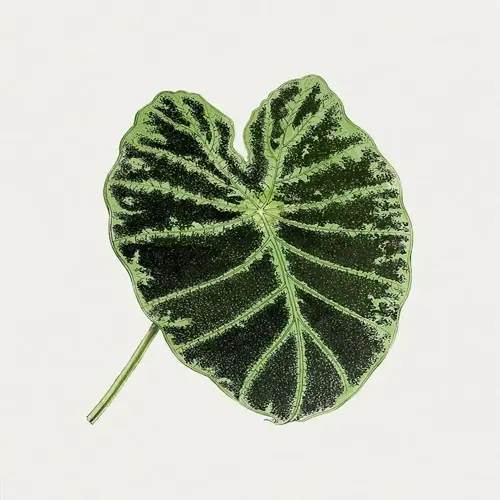
Those big round leaves are the reason you fell for the calathea medallion. Each one fans out in deep green with a creamy feathered brushstroke on top and a rich burgundy underside. It looks like a painting that grows.
Here is what most care cards never tell you. The real botanical name is Goeppertia veitchiana. It grows in one small patch of Ecuador, and it now sits on the IUCN watch list as Near Threatened. It is a true prayer plant in the Marantaceae family, but it breaks one famous rule. This species does not fold its leaves up at night the way its cousins do.
The good news for your home is that this tropical houseplant stays small. It tops out around 1 to 2 feet (30 to 60 cm) tall and wide, so it fits a shelf or a desk. The ASPCA lists the prayer plant group as non-toxic to cats and dogs, so a curious pet and a chewed leaf will not send you to the vet.
People call this plant a diva, and that scares a lot of buyers off. The truth is kinder. My first medallion crisped at the edges within a month on a sunny sill. I moved it to a north-facing shelf and the new leaves came in clean. The so-called drama always traced back to one of three things. Good calathea medallion care comes down to those three honest demands. They are humidity, clean water, and steady indirect light. Get them right and the fuss stops. The rest of this guide hands you the exact numbers. They come from plant science labs and botanical records. This is not the copy-paste advice you keep finding everywhere else.
Calathea Medallion Care
My Calathea Medallion now sits on the shelf by my east bathroom window. Every leaf comes in thick, flat, and clean. For its first two months it looked nothing like that. The edges turned brown. The new leaves curled up tight. Two older ones went yellow and dropped before I knew what the plant wanted.
First I moved it three times to chase better light. Then I switched it to distilled water. Then I parked it in the bathroom, where the shower keeps the air damp. None of those fixes worked on their own. The plant only settled once the light, the water, and the humidity all came together. Good calathea medallion care is less about one perfect number. It is about getting three things to line up at once.
Here are the numbers I rely on, all backed by NC State Extension. Use this as your quick reference, then read on for the why behind each one.
Use distilled or rain water to water this plant since tap water contains fluoride that can cause the leaf edges and tips to brown.
The reason these factors travel together comes down to the leaf. Calathea Medallion leaves are big, thin, and always losing water through their surface. Bright indirect light drives that water loss, so the brighter the spot, the more the plant drinks and the more moisture the air has to give back. Push the light up and skimp on water or humidity, and the leaf edges brown almost on cue.
That is why learning how to care for calathea medallion as a single system saves you so much guessing. A struggling plant in dry air is rarely fixed by watering more, and a plant in tap water keeps browning no matter how good the light is. Match all three, and the leaves stay flat and whole.
Size makes this easy to manage. The Medallion stays compact at 1 to 2 feet tall and wide, and it grows slowly, so it rarely outpaces a stable spot. It suits USDA zones 10a to 11b, which means almost everyone keeps it indoors all year. Pick one good shelf, dial in the three demands, and you can mostly leave it alone.
Light and Placement
Getting the calathea medallion light right does more for this plant than almost anything else you can do. The leaves act like a meter you can read, so a quick glance tells you whether your spot is working or quietly hurting them.
This plant wants bright indirect light all day long. A north or east-facing window is the sweet spot, since the light there stays soft and steady without ever turning harsh. The NC State Extension is clear on this too. The plant needs bright indirect light or partial shade, and direct sun scorches the leaves.
Most homes default to the brightest south sill for any tropical, and that is the trap here. Strong midday rays cause leaf scorch that shows up as bleached, crispy patches you cannot undo. If your only bright window faces south or west, hang a sheer curtain. That thin layer filters the strong rays into the gentle light this plant loves.
Too little light is just as telling. The lime-green and creamy pattern starts to fade, and the contrast goes flat. Soltech notes this dulling first hand, and variegation loss is your early warning to move the plant before real damage sets in. A dim corner far from any window slows growth even more, so read the foliage and adjust the spot fast.
During dark winter months, even a good window may not give enough. A simple grow light fills the gap and keeps the color sharp until the days stretch back out. Use the quick comparison below to check your current spot at a glance.
- Near a north or east-facing window keeps the leaves bright and evenly colored.
- A sheer curtain on a sunny window filters strong rays into the soft light this plant prefers.
- Steady indirect light preserves the lime-green and creamy pattern on the leaves.
- Direct midday sun scorches the leaves and bleaches the patterned surface.
- Deep shade dulls the variegation and slows the plant's already slow growth.
- A spot far from any window often needs a grow light to keep the plant healthy.
Watering and Water Quality
Watering calathea medallion plants is less about a strict schedule and more about what goes in the pot. This plant likes lightly moist soil, so most people water it every 1 to 2 weeks. But that gap shrinks in a warm, bright spot and stretches out in winter when growth slows down.
The bigger issue is your water. NC State Extension points to tap water sensitivity as the main cause of those brown, crispy leaf edges and tips. The fluoride in tap water builds up and burns the leaves over time. That is why distilled water or collected rainwater keeps the foliage clean and green.
Check the top inch of soil before you reach for the watering can, then pour until water runs out the drainage holes. The last step matters most. Tip out the saucer so the roots never sit in standing water, since soggy soil is the fast track to root rot. The steps below walk you through the full routine.
Press a finger into the mix and water only when the top inch feels dry, since this plant likes lightly moist soil but rots in soggy soil.
Use distilled or rain water at room temperature, because the fluoride in tap water browns the leaf edges and tips over time.
Pour evenly until water runs from the drainage holes, which moistens the whole root ball rather than just the surface.
Empty the saucer after a few minutes so the roots never sit in standing water, which is the fastest path to root rot.
Letting tap water sit out overnight only releases chlorine, not fluoride, so brown tips can still appear. Switch to distilled or rain water instead.
Humidity and Temperature
Calathea medallion humidity is the part most new owners get wrong, and crispy brown edges are the proof. NC State Extension sets the target at above 60%, which matches the wet Ecuador cloud forest this plant comes from. Some retail guides list a gentler 50 to 60% instead. That lower range can work in a forgiving spot, but the higher number keeps the leaves looking their best.
Temperature matters just as much as moisture for this plant. NC State Extension puts the range at 65 to 85 degrees Fahrenheit (18 to 29 degrees Celsius). The bigger danger is sudden change, not the number itself. A blast of cold air or a wave of dry heat stresses the leaves fast. So avoid cold drafts near doors, heating vents, and windows you open often.
Misting feels like the obvious fix, but it does little for humidity for calathea plants. The water dries off in minutes and leaves you back where you started. A humidifier or a pebble tray raises the moisture in the air far more reliably. Grouping several plants together also builds a shared humid pocket around them all. Pick one method below based on your home and budget.
Room Humidifier
- How it works: A small humidifier releases a steady stream of moisture that lifts the whole room above the 60% target this plant prefers.
- Best for: Dry homes and winter months when heating systems strip moisture from indoor air and cause crispy leaf edges.
- Tip: Place it a few feet from the plant so leaves get even humidity rather than a constant wet spray that can spot the foliage.
Pebble Tray
- How it works: A shallow tray of water and pebbles under the pot evaporates slowly, raising humidity right around the plant without wetting the roots.
- Best for: A simple, low-cost option for a single plant when a humidifier feels like too much equipment.
- Tip: Keep the pot base above the waterline on the pebbles so the roots never sit in standing water and risk rot.
Grouping Plants
- How it works: Clustering several plants together lets them share the moisture they release, forming a more humid pocket of air around the group.
- Best for: Plant collectors who already own several tropicals and want an effortless humidity boost.
- Tip: Leave a little space between plants for airflow, which keeps humidity up while lowering the chance of fungal leaf problems.
Warm, Draft-Free Spot
- How it works: Keeping the plant in stable warmth between 65 and 85 degrees Fahrenheit (18 to 29 degrees Celsius) helps it hold moisture and avoid cold stress.
- Best for: Every home, since steady temperature works alongside any humidity method you choose.
- Tip: Keep the plant away from cold drafts, heating vents, and frequently opened doors, where sudden temperature swings stress the leaves.
Your room choice can do half the work for you. Bathrooms and kitchens hold more moisture than the rest of the house thanks to showers, sinks, and cooking steam. Both make a strong home for this plant, but only if they also offer the bright indirect light it needs. A windowless bathroom stays humid yet too dark, so check the light first and let humidity be the bonus.
Soil, Feeding and Repotting
Good calathea medallion soil does one job above all else. It holds enough moisture to keep the roots happy but lets the rest drain away fast. The best soil for calathea is a light, airy blend, not the dense potting mix straight from the bag.
Roots circled the surface of my Calathea Medallion on the bathroom shelf. Water ran straight through the pot and out the bottom in seconds. I tipped it out and the whole root ball came free in one solid plug. Barely any soil was left between the roots. I packed it into a one-size-up pot with fresh well-draining mix that spring. By midsummer it had pushed out four new leaves, each one bigger than the last.
This is a slow-growing rhizomatous perennial, so it asks for very little. Feed it a light balanced fertilizer only through spring and summer, and skip the rest of the year. Plan on repotting calathea plants every one to two years, and resist the urge to disturb the roots more than that.
When you want more plants, propagation runs through one route only. You make new plants by division, splitting the root clump into sections at repotting time. Leaf and stem cuttings will not root on this plant, so do not waste a healthy leaf trying.
The Right Soil Mix
- Texture: Use a moist but well-draining mix, blending standard potting soil with perlite, bark, or coco coir so excess water drains freely.
- pH: Aim for acidic to neutral soil, from below 6.0 up to neutral, which suits this rainforest plant according to NC State Extension.
- Why it matters: A dense, water-logging soil suffocates roots and is a frequent hidden cause of root rot, so airy structure protects the plant.
Feeding Lightly
- When: Feed only during the active spring and summer growing season, since this plant grows slowly and does not need heavy feeding.
- What: Use a diluted balanced liquid fertilizer, and stop feeding in winter when growth naturally pauses.
- Caution: Over-fertilizing builds up salts that can brown the leaf tips, mimicking the damage caused by poor water quality.
Repotting
- How often: Repot every one to two years, or when roots circle the surface and water runs straight through the pot.
- Pot size: Move up just one pot size, because an oversized pot holds extra wet soil that the slow-growing roots cannot use.
- Timing: Repot in spring as growth resumes, which gives the plant the full season to settle into its fresh mix.
Propagation By Division
- The only method: Make new plants by gently dividing the root clump into sections, each with roots and leaves, since cuttings will not root.
- When: Divide at repotting time in spring so each new section has the growing season ahead to establish.
- Aftercare: Keep the divisions warm, humid, and lightly moist while new roots form, and expect slow early growth.
The perlite, bark, and coco coir in your mix all do the same quiet work. They keep air pockets between the roots so water never sits and stagnates. A dense, soggy soil is one of the most common hidden causes of root rot. New owners get caught off guard by it, but the right mix protects against it from day one.
Troubleshooting Common Issues
Most calathea medallion problems trace back to the same three care factors from earlier in this guide. Water quality, humidity, and light cause the vast majority of the damage you will see. Get those right and your plant tells you so with fresh, clean leaves.
The table below maps each warning sign to its likely cause and the fix that works. Brown leaf edges point to tap-water fluoride or dry air, while yellow leaves usually mean you watered too much. Curling leaves signal thirst or low humidity. Fine webbing across the foliage means spider mites have moved in. Jump straight to the row that matches what you see.
Spider mites deserve a closer look since dry air invites them in. They thrive when humidity drops, so the same boost that cures crispy edges also keeps them away. Watch for aphids, mealybugs, scale, and thrips too, but the fine webbing of spider mites is the telltale sign you catch first.
Here is the part that should ease your mind. A scorched or browned leaf will not turn green again, so do not wait for it to heal. Fix the water, humidity, or light behind the issue and the next leaf comes in clean. New growth is your real progress report, not the old damage.
Origin and Plant Identity
Your plant has lived under more than one name. The store tag might say Calathea veitchiana. But its true name now is Goeppertia veitchiana. Plant experts moved it into the Goeppertia group in 2012. The old Calathea label just stuck around in shops and on care sheets.
This is more than trivia. The real name tells you where the plant comes from and what it wants. The medallion is native to Ecuador. It grows there in wet, shady forest at roughly 400 to 1,200 meters (1,300 to 3,900 feet) up. That damp, dim home explains the humidity and light needs you read about earlier.
The history is short and clear. Here is how this plant traveled from an Ecuadorian hillside to your shelf.
1862
Victorian plant collector Richard Pearce found the plant near Cuenca in Ecuador while collecting for the nursery firm James Veitch and Sons.
1865
It entered horticultural literature as Calathea veitchiana, named in honor of the Veitch nursery family.
2004
The IUCN Red List assessed the species as Near Threatened, reflecting pressure on its native Ecuadorian forest habitat.
2012
Botanists reclassified the species into the genus Goeppertia, making Goeppertia veitchiana the accepted name today.
That Near Threatened status matters. In the wild, the plant faces real pressure from habitat loss in Ecuador. Yet it is common in homes all over the world. The ones you buy come from nursery stock, so growing one does no harm to the wild forests.
The native range of this species is Ecuador. It is a perennial and grows primarily in the wet tropical biome.
One more thing trips up shoppers. You may spot a medallion sold as Calathea roseopicta, a different plant with its own look. The genus name on the tag does not change what you own. Your medallion still belongs to the prayer plant family, the Marantaceae. The care stays the same whether the label reads Calathea or Goeppertia.
5 Common Myths
The Calathea Medallion folds its leaves up dramatically every single night like all prayer plants do.
NC State Extension notes this particular species does not fold its leaves in the evening the way other prayer plants do.
Misting the leaves once or twice a day is the best way to give a Calathea Medallion enough humidity.
Misting barely raises room humidity and can encourage leaf disease. A humidifier or pebble tray keeps humidity above 60 percent far better.
The Calathea Medallion is dangerous to keep around curious cats and dogs because it is toxic.
The ASPCA lists the prayer plant group as non-toxic to dogs, cats, and horses, though large amounts of foliage may cause mild stomach upset.
Any normal tap water is perfectly fine for watering a Calathea Medallion on a regular basis.
Tap-water fluoride browns the leaf edges and tips. NC State Extension recommends distilled or rain water to prevent this damage.
You can grow new Calathea Medallion plants from a single leaf or a cut stem placed in water.
This plant only propagates by dividing the root clump. Leaf and stem cuttings will not root into new plants.
Conclusion
Good calathea medallion care comes down to a steady routine, not constant fussing over the plant. Give it the conditions it wants and then leave it alone. The plain fact is that this plant rewards patience far more than daily attention.
Keep three things in mind one last time and the rest falls into place. Set it in bright indirect light, hold the room between 65 and 85°F (18 to 29°C), and push humidity above 60%. Water with distilled water or rain water so the leaf edges stay clean and green.
When this prayer plant looks unhappy, the cause is almost always one fixable thing. Most brown tips point to your water, crisp edges point to dry air, and faded color points to the light. You rarely face a lost cause, just one factor to adjust.
One final, reassuring note about this plant. It stays a compact 1 to 2 feet (30 to 60 cm) in both height and width, so it fits a shelf, a desk, or a bright corner with ease. It is also pet-safe, which means curious cats and dogs are no reason to skip it.
Keep watching the leaves to know how you are doing. As long as those bold green brushstrokes and burgundy undersides stay vivid, your routine is working. A medallion that keeps its pattern is a plant that feels right at home.
Glossary
- Bright indirect light
- Plenty of light that does not include harsh direct sun falling on the leaves.
- fluoride
- A mineral added to most municipal tap water that can build up in plant soil and burn the leaf edges of sensitive plants like calathea.
- Goeppertia veitchiana
- The accepted botanical name for the Calathea Medallion after it was reclassified out of the genus Calathea.
- Marantaceae
- The prayer plant family of tropical plants to which the Calathea Medallion belongs.
- Near Threatened
- An IUCN Red List category for a species likely to become threatened with extinction in the near future.
- Nyctinasty
- The nightly raising or folding of a plant's leaves, the trait that gives prayer plants their name.
- Rhizomatous
- Growing from a rhizome, an underground stem that lets the plant form clumps and be divided.
- Variegation
- The patterned light and dark markings on a leaf, which can fade if the plant gets too little light.
External Sources
Frequently Asked Questions
Is the Calathea Medallion a good indoor plant?
Yes, for the right home. It is non-toxic, stays compact at 1 to 2 feet, and has striking foliage, but it needs steady humidity and clean water.
How often should I water a Calathea Medallion?
Water when the top inch of soil feels dry, often about every 1 to 2 weeks, keeping the mix lightly moist but never soggy.
Is the Calathea Medallion toxic to cats and dogs?
No. The ASPCA lists the prayer plant group as non-toxic to dogs, cats, and horses, though eating a lot of foliage may cause mild stomach upset.
Should you mist a Calathea Medallion daily?
Daily misting helps little and can invite leaf disease. A humidifier or pebble tray raises humidity above 60 percent far more reliably.
Why is my Calathea Medallion difficult to keep alive?
It is fussy because it needs high humidity, clean water, and stable warm indirect light. Miss any one and leaves brown or curl quickly.
Is the Calathea Medallion rare?
Not as a houseplant, since it is widely propagated and sold. In the wild it is endemic to Ecuador and listed as Near Threatened.
Does the Calathea Medallion fold its leaves at night?
Not dramatically. NC State Extension notes this species does not fold its leaves in the evening the way other prayer plants do.
How long does a Calathea Medallion live?
With consistent humidity, clean water, and repotting, it lives for several years. Dividing the clump renews it and can keep it going indefinitely.
What does the Calathea Medallion symbolize?
As a prayer plant relative it is linked to new beginnings and fresh starts, often summed up as turning over a new leaf.
Can a Calathea Medallion live in just water?
Only briefly. It may survive a short while in water, but it needs a moist, well-draining soil mix to grow and stay healthy long term.