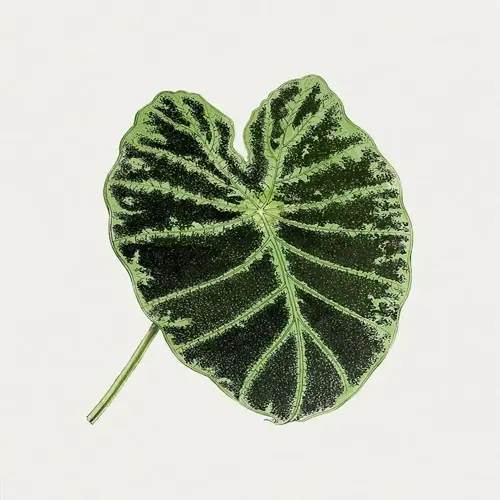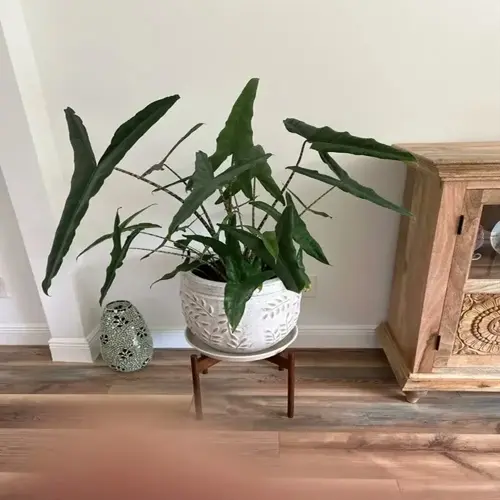

"Wait till tonight," my friend said over the kitchen counter, nodding at my new pot. "That prayer plant will close right up, like praying hands." So I went to check the medallion on my bathroom shelf at dusk. The leaves barely moved. They tipped up a touch and that was it. I had read that the calathea medallion leaves at night stay mostly open, and now I saw it for myself. Do not expect a big fold from this one.
This trips up a lot of new owners. The plant gets sold under the prayer plant label. That name sets a clear picture in your head. You wait for the big nightly show. With a medallion, you get a small lift and a slight curl at the edges instead. The first week I owned mine, I kept checking at night and saw the same gentle shift each time.
Here is what the prayer plant name points to. Many plants in this family raise and lower their leaves on a daily clock. Tiny cells at the base of each leaf stalk swell and shrink with water. That pumping action drives the prayer plant leaf movement you have heard about. Leaves rise in the evening. They drop back down by morning.
The science word for this nightly motion is nyctinasty. The family got its common name from the look of those raised leaves. Two leaves pressed together at night seem to form a pair of praying hands. That image stuck, and the name stuck with it. Not every member of the group puts on the same show, though.
This is where the medallion stands apart. NC State Extension notes that this species does not fold its leaves in the evening the way other prayer plants do. So if you bought yours expecting the classic fold, and you feel a bit let down, the plant is fine. You have a species that keeps its movement quiet. The big folders are usually the Maranta types. Those are the showy ones with red veins that people line up next to a medallion for contrast.
You will still catch some motion if you watch over a few days. The leaves sit a bit higher at night and tip up at a soft angle. By day they settle and spread wider to catch more light. Mine turns its leaves toward the window each morning. The medallion still has nyctinasty calathea roots. It just dials the trait way down next to the showier cousins in the same family.
I tracked my own plant for two weeks to be sure. Each night around 9 p.m. the leaves rose maybe an inch and tilted up. By 7 a.m. they had flattened out again and faced the glass. No folding, no praying hands, just a slow daily sway. That pattern held steady the whole time, in good health and on a normal watering schedule. You can run the same check at home if you want proof. Mark the leaf height one evening, then look again the next morning, and you will see the small shift for yourself.
A gentle nightly lift is healthy and normal. Worry only when the leaves curl in tight and stay that way through the day. That points to dry air, thirsty roots, or harsh tap water, not the daily clock.
So do not stress if your medallion skips the praying-hands trick. A soft tilt at dusk and a wider spread by day is what this species should do. Put your attention on the things that keep it healthy. That means steady moisture and bright indirect light above all. The leaf clock will keep ticking on its own. You do not need a nightly performance to know your plant is happy.
Read the full article: Calathea Medallion Care: Full Guide