
The same plant stacked five-deep on garden-center shelves is quietly losing ground in the wild. That gap is the whole answer. Anyone asking is the Calathea Medallion rare really gets two answers at once. On a shop bench it is everywhere and cheap. In its native forest it sits much closer to the edge. So the Calathea Medallion rare question turns on one thing. Where are you looking when you ask it?
As a houseplant it is not rare at all. You can walk into most plant shops and find one for $15 to $30 any week of the year. Big growers push them out in huge numbers, so supply almost never runs short. That steady flow is why you never see it tagged as a collector's prize. It is one of the most common patterned houseplants you can buy today.
Growers lean on tissue culture to make this happen. They take a tiny piece of plant tissue and coax it into thousands of clones in a lab. Each clone grows into a plant that matches its parent leaf for leaf. Home growers add to the pile too. A healthy clump splits into new plants by simple division every year or two, and friends pass the spares around.
So the price stays low and the stock stays deep. You are not hunting for a rare find when you buy one. You are picking from a plant that nurseries grow on a huge scale. That is exactly why it lands in so many starter collections. New plant owners reach for it because it is easy to find and easy to replace.
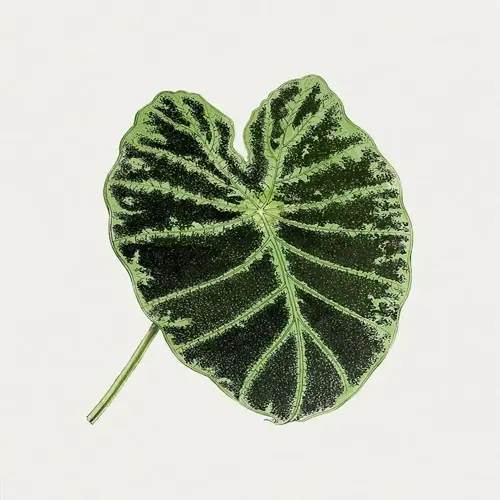
The wild story runs the other way. Botanists now file this plant under the name Goeppertia veitchiana. That is the formal name behind the old Calathea label you see on the pot. It is a calathea native to Ecuador, where it grows on the wet eastern slopes of the Andes. You find it in a narrow band from about 400 to 1,200 meters (1,300 to 3,900 feet). It grows nowhere else on earth.
That tight home range is what puts it at risk. The IUCN Red List marks the species as Near Threatened, in an assessment made back in 2004. Logging and farm clearing chip away at the cloud forest it needs to live. The work of Goeppertia veitchiana conservation is to slow that loss and guard what is left. The plant has nowhere else to go once that slope is cleared. A species stuck in one small place is fragile by nature, and this one has no backup home to fall back on.
Here is the part that trips people up. The threat hangs over the wild species, not the plant on your windowsill. Your houseplant came from a lab tray or a parent clump, not from a forest dig. Buying a nursery-grown plant takes pressure off wild stands instead of adding to it. No collector needs to strip a wild slope when every shop is already full of clones.
Treat it as both things at once. You own a plant that is cheap and easy to find. You also own a slice of a species that needs its homeland kept safe. Buy from growers who propagate their own stock, and skip any seller who hints at wild-collected plants. Do that and you keep the houseplant common while the wild one hangs on. So the short answer is no, your plant is not rare, but the forest it came from still needs help.
Read the full article: Calathea Medallion Care: Full Guide