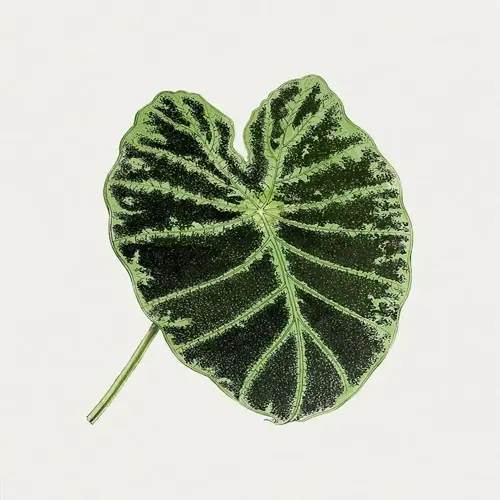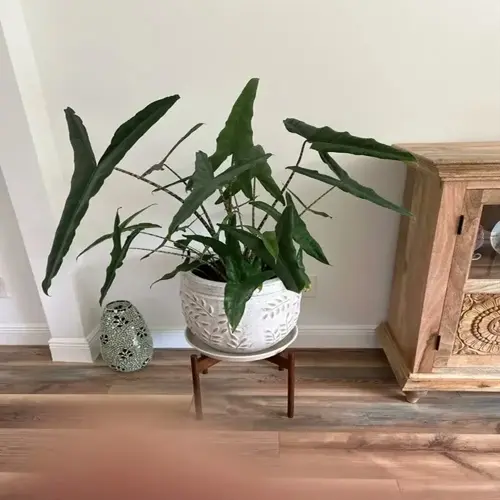

My calathea medallion indoor plant looked its best on the shelf by the east-facing bathroom window. The leaves fanned open with that deep green and purple medallion pattern, catching the morning steam from the shower. It got there the hard way. The first three weeks it sat in my dry living room. Every new leaf came in with crispy brown edges that I kept trimming off. So here is the honest answer for you: yes, this is a good indoor plant, but only for the right home.
The reason it pays off is the foliage. Each round leaf has a painted look. The top is dark green and the underside is a deep wine-purple that shows when the plant folds up at night. You also get a plant that stays small. It tops out around 1 to 2 feet (30 to 60 cm), so it fits your desk, a shelf, or a tight corner without taking over the room.
It is safe around your animals too. The ASPCA lists it as non-toxic to cats and dogs. That makes it a real pet safe houseplant rather than one you have to hang out of reach. If you have a curious cat that chews on leaves, you can set this one on the floor and not lose sleep over it. That alone moves it ahead of pothos or many other common picks for pet owners.
The catch is what it asks for in return. This plant wants humidity above 60%, water with no fluoride or chlorine, and bright indirect light. The crispy edges I fought were the plant telling me the air was too dry and the tap water was too harsh. Once I moved it near the bathroom and switched to filtered water, the new growth came in clean and whole. You get beauty, but you pay for it with attention.
So who should buy one? It shines in small spaces and in pet households. It loves a steamy bathroom with a window, where the air stays moist most of the day. You will see it open and close its leaves on a daily rhythm, which is half the fun of owning it. The plant feels alive in a way many houseplants do not.
It struggles in very dry homes and with forgetful waterers. If you let the soil swing from soaked to bone dry, the edges brown and the leaves curl. The same thing happens if your home sits below 40% humidity in winter. I learned this with my own plant once I moved it away from the steam. The edges started crisping within days. A small humidifier changes the whole game here. It turns a fussy plant into a steady one, and it costs you less than replacing a dead plant twice.
You should also think about where you put it. Bright indirect light keeps the leaf colors deep, but harsh afternoon sun fades and scorches them. I keep mine a few feet back from the window so it catches the glow without the direct rays. If your only bright spot gets full sun, you can hang a sheer curtain to soften it. Your plant will thank you with bolder color and fewer brown patches.
Be honest with yourself before you buy one. Check the humidity in the room where it will live. Ask if you will really water it with filtered water on a set schedule. Good calathea medallion care comes down to three things. You need clean water, steady moisture in the soil, and air that does not dry out the leaves. Pair the plant with a humidifier, keep it out of direct sun, and you get one of the most striking plants you can own. Skip it if you want something you can ignore for two weeks at a time.
Read the full article: Calathea Medallion Care: Full Guide