
Introduction
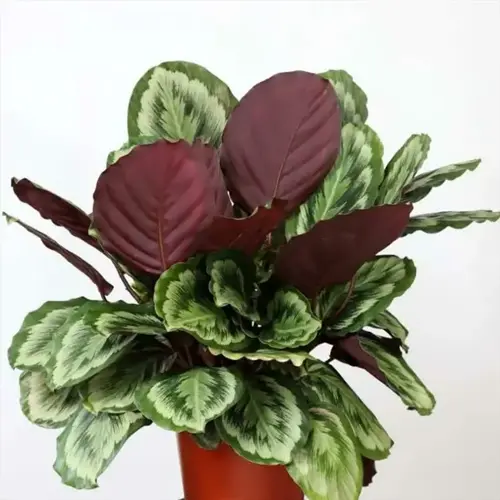
The first thing you notice is the leaves. The calathea orbifolia grows big, round leaves in dark green. Each one is striped with broad bands of silver-green, and they spread out like dinner plates. That bold pattern is why this round-leaved calathea sits near the top of so many plant wish lists. One mature leaf can stretch up to 12 inches wide, and a healthy plant fills a corner fast.
It also carries two names, which trips up a lot of new owners. Shops still sell and list it as Calathea orbifolia. But its true name today is goeppertia orbifolia. Botanists moved it after a 2012 DNA study sorted out the family tree. Either way, it belongs to the prayer plant family Marantaceae. That is the group whose leaves rise and fall with the light each day.
Here is where this guide splits from the crowd. Most quick reads recycle the same vague care list and call it done. I built this calathea orbifolia care guide on trusted plant authorities. Those are Kew, NC State Extension and the Royal Horticultural Society. So you get sourced numbers instead of guesses. That matters with a plant this picky. One wrong setting shows up on the leaves within days.
Four things decide whether yours thrives or sulks: light, water quality, humidity and steady warmth. Get those four right and the rest falls into place. The article walks through each with exact targets you can act on, like the 65 to 75°F range it wants and the reason tap water browns its tips. People call this plant fussy, and it can be. But it turns predictable once its conditions hold steady, and that is far easier than it sounds. Let's start with the care basics.
Calathea Orbifolia Care Basics
One small plant I bought 3 years ago now fills a wide 10-inch pot on my frosted north-facing bathroom windowsill, with round leaves the size of a dinner plate. I did almost nothing clever to get it there. The first few months were pure guesswork, and I shuffled it between rooms chasing the right light.
I tried a sunny ledge that scorched the edges, then a dark corner where new growth stalled. Once it landed on that humid bathroom sill and stayed put, it took off. Steady conditions did more for it than any amount of fussing on my part.
Good calathea orbifolia care comes down to a few numbers you can hit and then hold. This is an evergreen perennial. A full-grown plant stands 2 to 3 feet (60 to 90 centimeters) tall and spreads 1 to 2 feet (30 to 60 centimeters) wide. Its true name is goeppertia orbifolia, but most shops still sell it under the old calathea label.
Give it bright indirect light or partial shade, never direct sun on the leaves. Pot it in well-draining soil that stays evenly moist but never soggy. Keep humidity at 60% or higher. That one number separates a happy plant from one with crispy brown edges.
Temperature trips up a lot of growers. Aim for a steady 65 to 75°F (18 to 24°C) all year. Live somewhere cooler? The Royal Horticultural Society sets a hard floor of a constant 16°C (61°F). Treat that as your minimum, and keep the plant away from cold drafts and frosted glass.
Keep this grid as your baseline and the rest gets easier. Two facts are worth knowing up front. You make new plants by rhizome division in spring. And it is non-toxic to cats and dogs, so a curious pet is no cause for panic. The sections below break down each number into the how and the why.
Light, Warmth and Placement
Think of the rainforest floor where this plant grows wild in eastern Brazil. The big trees overhead soak up the harsh sun, so the light that reaches the ground stays soft and filtered all day. Your goal at home is to copy that. Give your plant bright indirect light or partial shade, and it will reward you with bold silver-green stripes.
The fastest way to get this right is to set the pot a few feet back from a window instead of right on the sill. A spot near an east, north or west-facing window works well because the light there stays gentle through most of the day. A north-facing window is a safe pick for beginners since it almost never delivers the kind of glare that hurts these leaves.
Avoid harsh midday sun on the leaves at all costs. More than a couple of hours of direct sun scorch the broad leaves and leave crispy brown patches that never heal. South-facing windows can still work, but only if you pull the plant back from the glass or hang a sheer curtain to soften the rays.
Warmth matters just as much as light here. The Royal Horticultural Society says this plant needs a constant temperature of at least 16°C (61°F). It should also stay away from draughts. A steady 65 to 75°F (18 to 24°C) band keeps it happy, so skip cold rooms and any spot near a door, window gap, or air vent.
Light Level
- Best spot: Bright indirect light or partial shade keeps the silver-green striping vivid without bleaching it.
- Avoid: More than two hours of direct sun a day can scorch the broad leaves, leaving crispy patches.
- Too dark: In very low light the plant grows leggy and slow, reaching toward the nearest window.
Temperature
- Comfort band: Steady warmth of 65 to 75 degrees Fahrenheit (18 to 24 Celsius) suits it best year round.
- Hard floor: The RHS advises a constant minimum of 16 degrees Celsius (61 Fahrenheit), so avoid cold rooms.
- Stability matters: Sudden swings stress the plant more than a steady cool spot ever would.
Drafts and Vents
- Keep away from: Cold drafts from doors and windows, plus the dry blast of heating and cooling vents.
- Why it matters: Moving dry air pulls moisture from the leaves faster than the roots can replace it.
- Quick check: If a curtain flutters in the spot, the plant will feel that draft too.
Window Direction
- Good choices: East, north or west-facing windows give bright but gentle light through most of the day.
- South-facing: Workable only if you set the plant back from the glass or filter the light with a sheer curtain.
- Rotate it: Turn the pot a quarter every week or two so growth stays even on all sides.
Your plant will tell you when the light is off. Faded, washed-out striping means it gets too much light, so move it back or filter the sun. Leggy, reaching growth with long gaps between leaves means the spot is too dark.
Watch out for cold drafts too, since they hide in plain sight. A blast of dry air from a door, a window gap, or a heating vent pulls moisture from the leaves faster than the roots can replace it. That sudden chill stresses your plant more than a steady cool corner ever would.
Watering and Water Quality
The brown tips started on one leaf. Then they crept across every round leaf of the orbifolia on my bathroom windowsill. They felt crispy and bone dry, no matter how often I topped up the pot. So I swapped my tap water for rainwater from a bucket on the balcony. Within a few weeks the new leaves opened up with clean green edges.
That fix points straight at the real cause. The fluoride in tap water builds up in the leaves and burns the tips brown. That is why distilled water or collected rainwater works so much better for your plant. Leaving tap water out overnight lets the chlorine escape. But it does nothing to the fluoride, so the browning comes right back.
Learning how to water calathea orbifolia is less about a set schedule. It is about reading the soil with your own hands. Push a finger or a chopstick about an inch into the mix. Only water when that top layer feels dry. Keep the soil moist but never soggy, in a loose, slightly acidic blend that drains well.
Soggy soil is where things go wrong fast. When the roots sit in water with no way to drain, they drown and rot. And root rot is far harder to fix than a few brown tips. Water your plant well while it grows in spring and summer. Then ease back in winter and keep the soil just barely moist, since the roots drink far less when growth slows.
Press a finger or a chopstick about an inch (2.5 centimeters) into the soil and only water when that top layer feels dry.
Reach for distilled water or collected rainwater, since the fluoride in ordinary tap water can brown the leaf tips over time.
Pour slowly until water runs from the drainage holes, wetting the whole root ball rather than just one side of the pot.
Let every drop drain away and never leave the pot sitting in a saucer of water, which invites root rot.
During the cooler months keep the soil just moist, as growth slows and the roots need far less water.
Distilled water or rain water is preferred since the fluoride in tap water can cause the leaf tips to brown.
Humidity and Brown Leaf Tips
Dry air is the hardest part of growing this plant in most homes. Your calathea wants steady moisture in the air. The humidity requirements sit at 60% or higher, the target set by NC State Extension. Drop below that for weeks and the leaf edges turn dry and brown.
Those crispy edges rarely come from one missed watering. They build up over time from low humidity and hard tap water working together. So before you reach for the watering can again, fix the air around the plant first. More water in dry air just risks root rot without saving the leaves.
Misting feels like the easy fix, but it does little for this plant. A quick spray bumps the humidity for a few minutes, then the water evaporates and you are back where you started. The Brooklyn Botanic Garden makes the same point about calatheas. Steady high humidity is what keeps the leaves whole, not a damp mist that fades fast.
Think of it like this. A quick mist is a sip of water on a hot day, gone in minutes. A humidifier is a tall glass you keep refilling, so the air stays moist all day long. Here is how the real fixes stack up against the ones that fall short.
- A room humidifier holds the air steady near 60% through the day.
- A pebble tray with water under the pot lifts local humidity gently.
- Grouping several plants together raises the moisture they share.
- A bright, warm bathroom naturally stays humid after showers.
- Misting raises humidity for only a few minutes before it evaporates.
- A single daily spray cannot hold the level the plant needs.
- Wet leaves left sitting can invite fungal spots instead of helping.
- Relying on misting alone often leaves the crispy edges unchanged.
Pick one or two of these and stick with them. A humidifier near the plant does the most work, and a pebble tray under the pot adds a gentle boost on top. A small hygrometer takes the guesswork out of it, so you can read the room instead of guessing why the edges keep browning.
If brown, crispy edges keep returning, treat it as a humidity and water-quality problem rather than thirst, and check the room with a small hygrometer before adding more water.
Soil, Feeding and Repotting
My hands were buried in the soil, working a three-year-old orbifolia free from its pot on my frosted north-facing bathroom windowsill. I teased the rhizomes apart slow and gentle, splitting the clump into pieces so each one kept its own stem and a healthy leaf. No knife, no rush, just fingers easing the underground stems open until they came loose.
That split gave me two strong plants from one, and it beats every trick you might try to force a calathea bigger faster. Rhizome division is how this plant spreads, not leaf cuttings, so do it in spring while you have the rootball out anyway. Each piece you cut needs at least one stem and one leaf to carry on.
The best soil for calathea orbifolia starts with a peat-free or coir base that holds gentle moisture without packing into dense mud. Loosen it with perlite and a handful of orchid bark so your water drains and the roots still get air. Skip the vermiculite though, since it traps too much water and leaves your roots sitting soggy. This plant likes a slightly acidic mix that stays moist but never waterlogged.
Feed it a balanced liquid fertiliser once a month through the active growing season. Use a diluted dose so salt buildup does not burn the leaf edges. Pause your feeding in autumn and winter while growth slows. For repotting, move up only one pot size and keep the rootball mostly intact rather than washing it clean. A divided plant settles best in a snug pot, not a big one full of cold wet soil. Give every new piece time, since full mature size still takes you 2 to 5 years to reach.
The Right Soil Mix
- Base: A peat-free or coir base holds gentle moisture without turning into dense, airless mud.
- Drainage: Loosen it with perlite and orchid bark so excess water drains and roots get air.
- Avoid: Skip vermiculite, which holds too much water and keeps the roots soggy.
- pH: Aim for a slightly acidic mix, which the plant prefers over neutral or alkaline soil.
Feeding Schedule
- When: Apply a balanced liquid fertiliser about once a month through the active growing season.
- Strength: Use a diluted dose, since salt buildup from heavy feeding can burn the leaf edges.
- Rest: Pause feeding in autumn and winter while growth naturally slows down.
- Doubt: When unsure, feed less rather than more, as this plant is sensitive to excess.
Repotting
- How often: Repot every couple of years or once roots crowd the pot and circle the base.
- Pot size: Move up only one size, so the roots are not surrounded by cold, wet soil.
- Handle gently: Keep the rootball largely intact rather than washing or teasing it apart to fix issues.
- Timing: Spring is the natural window, as the plant is entering its strongest growth.
Propagation By Division
- Method: Split the plant at the rhizomes, the underground stems, rather than taking leaf cuttings.
- Each piece: Make sure every division carries at least one stem and one healthy leaf.
- Best time: Divide in spring, ideally while you are already repotting the parent plant.
- Patience: Reaching full mature size takes 2 to 5 years, so give new divisions time to settle.
Why the Leaves Move
Watch your plant in the evening and you'll catch the leaves lift and fold upward, like a pair of hands closing in quiet. By morning they open flat again to face the light. This daily rise and fall is the famous prayer plant movement. It runs on the plant's own clock, not on anything you did right or wrong.
The proper name for this rhythm is nyctinasty. It works through a small swollen joint where each leaf meets its stalk, a part called the pulvinus. The plant shifts water in and out of that joint to change its pressure, and that pressure swing is what tilts the whole leaf up at night and spreads it back out by day.
All calathea have leaves that move! This characteristic, called nyctinasty, allows the plant to move to a circadian rhythm by changing the water pressure at the joint where the leaf meets the stalk (pulvinus).
The science here gets interesting. A 2015 study in PLOS ONE looked at fast movement across the Marantaceae family, the group this plant belongs to. The team found that the quick movement comes from a shift in tissue pressure. It is not set off by electric signals like the ones that snap a Venus flytrap shut.
So when you see the leaves droop a little in the day or fold up tight at night, read it as a healthy rhythm and not a warning sign. A plant on the move is doing exactly what its wild cousins do. You should only worry when the leaves curl hard, brown at the edges, or stay limp through the morning hours.
It helps to know where this rhythm comes from. The plant's native habitat is the warm, wet forest floor of Eastern Brazil. That is the range Kew and NC State Extension accept, and there it grows in the shade under taller trees. You may also see Bolivia listed as the home. A few sources such as NParks Singapore still cite it, but Brazil is the range the top plant experts back.
One more bit of background clears up a common mix-up. Plant experts moved this plant from the genus Calathea to Goeppertia. The switch came after a 2012 study in Systematic Botany sorted out the family with DNA. That is why shops still sell it as calathea orbifolia. Its accepted name is now Goeppertia orbifolia. Both names point to the same round-leaved plant on your shelf.
5 Common Myths
Calathea orbifolia comes from Bolivia, which many plant labels and care blogs state as its definite country of origin.
Leading botanical authorities Kew and NC State Extension record the native range as Eastern Brazil, though some sources do still list Bolivia.
Misting the leaves often is the best way to give a Calathea orbifolia the high humidity it constantly craves indoors.
Misting raises humidity only briefly and is widely called ineffective; a humidifier, pebble tray or grouping plants together works far better.
Calathea orbifolia is poisonous, so it is an unsafe houseplant to keep in homes with curious cats, dogs or children.
It is listed as non-toxic to dogs and cats, though eating any houseplant can still cause mild stomach upset in pets.
Any tap water is fine for a Calathea orbifolia, and brown leaf tips are simply a sign that the plant needs more water.
Fluoride in tap water can brown the leaf tips, so distilled water or rainwater is preferred to keep the foliage clean and healthy.
The drooping or folding leaves you see in the evening mean a Calathea orbifolia is sick, stressed or badly in need of water.
Leaves rising and folding on a daily rhythm is normal nyctinasty, driven by water pressure at the joint where each leaf meets its stalk.
Conclusion
Good calathea orbifolia care rests on four steady conditions. You do not need to fuss over every leaf. Give the plant bright indirect light, clean water, high humidity, and steady warmth. Get those four right and the plant settles into a rhythm you can count on.
This plant is native to Eastern Brazil, where it grows in the warm, wet tropics under the forest canopy. Its accepted name is Goeppertia orbifolia, though most people still know it by the older calathea label. At maturity it reaches about 2 to 3 feet (60 to 90 centimeters) tall, with those big round leaves that make it worth the trouble. It is also non-toxic to cats and dogs, so a curious pet is no reason to pass it up.
Brown tips and folding leaves scare off a lot of new owners, but neither one is a crisis. Brown edges usually point back to fluoride in tap water, so a switch to distilled or rain water fixes the cause. Leaves that lift and fold at night are normal movement, not a sign of trouble. Once you sort the water and humidity, you stop reading every twitch as an alarm.
None of this makes the plant hard, just picky. Set its conditions once and goeppertia orbifolia stays steady for years. It pays you back with fresh round leaves season after season. Still have questions about placement, water, the bathroom, pets, or how long the plant lives? The FAQ below covers each one in plain terms.
Glossary
- Bright indirect light
- Strong light that reaches a plant without the sun's rays striking the leaves directly, like the light a few feet back from a window.
- Goeppertia
- The accepted botanical genus that many former Calathea species, including orbifolia, were moved into after a 2012 DNA study.
- Goeppertia orbifolia
- The current accepted botanical name for the plant long sold as Calathea orbifolia.
- Marantaceae
- The prayer-plant family of tropical plants, known for leaves that move on a daily rhythm, to which Calathea orbifolia belongs.
- Nyctinasty
- The daily rising and folding of a plant's leaves in response to day and night, driven by changes in water pressure.
- Pulvinus
- The flexible, joint-like swelling where a leaf meets its stalk that moves the leaf by changing its internal water pressure.
- Rhizome
- An underground stem that stores energy and sends up new shoots, which is how Calathea orbifolia is divided and propagated.
- rhizome division
- A propagation method where you split a plant's underground stem into pieces that each grow into a new plant.
External Sources
Frequently Asked Questions
How do you care for a Calathea orbifolia?
Give it bright indirect light, consistently moist soil watered with distilled or rainwater, humidity of at least 60 percent, and warmth between 65 and 75 degrees Fahrenheit.
Where is the best place to put a Calathea orbifolia?
Place it a few feet from an east, north or west-facing window with bright indirect light, away from cold drafts, heating vents and direct sun.
Is the Calathea orbifolia hard to care for?
It has a reputation for being fussy, mainly about humidity and water quality, but it becomes predictable once those conditions are stable.
How big does a Calathea orbifolia get?
Indoors it grows about 2 to 3 feet tall and 1 to 2 feet wide, with round leaves reaching up to 12 inches across, over 2 to 5 years.
Can Calathea orbifolia drink tap water?
Tap water often causes brown leaf tips because of its fluoride content, so distilled water or rainwater is the preferred choice.
Should you mist a Calathea orbifolia?
Misting raises humidity only briefly and is considered ineffective, so a humidifier or grouping plants together is a stronger choice.
Should I put my Calathea orbifolia in the bathroom?
A warm bathroom with a bright window can suit its humidity needs well, as long as it gets enough indirect light and stays warm.
Is Calathea orbifolia toxic to cats and dogs?
No, Calathea orbifolia is non-toxic to cats and dogs, making it one of the safer houseplant choices for homes with pets.
What problems are common with Calathea orbifolia?
The most common problems are brown leaf tips, yellowing leaves, curling, drooping and root rot, usually tied to water, humidity or light.
How long does a Calathea orbifolia live?
As a perennial houseplant it can live for many years, and dividing the rhizomes lets you keep the plant going almost indefinitely.