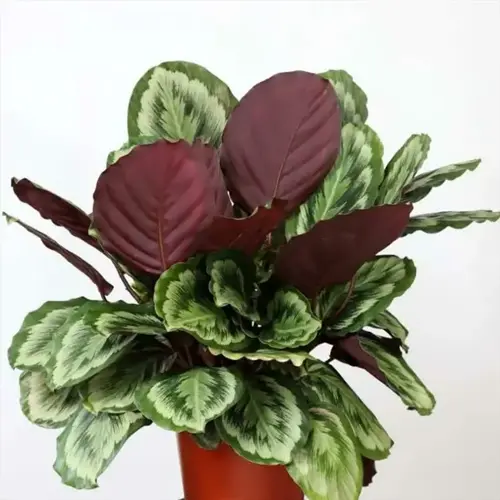

The best calathea orbifolia placement is a few feet back from a bright window. You want a spot where you can see the sky but the sun never lands on the leaves. A spot near an east or north-facing window works well. Just keep the pot clear of heating vents and cold door drafts.
A corner that looks bright to your eyes is often much dimmer for a plant. Your eyes adjust fast, so a room can feel sunny while the light reaching a leaf is weak. Stand where the pot will sit and look toward the window. If you can see open sky without the sun shining straight onto the spot, you have found bright indirect light the plant will be happy with.
This plant grows on the floor of tropical forests in Brazil. Tall trees catch the sunlight before it reaches the ground. So the orbifolia evolved for soft, scattered light, not harsh rays. Those wide, striped leaves have a lot of surface area, and direct sun cooks them. You get crispy brown edges and faded stripes that never come back. A few feet of distance from the glass is all it takes to keep the light gentle.
The Royal Horticultural Society points to east, north or west-facing windows as good homes for this plant. It calls for a sheltered aspect, away from cold and wind. NC State Extension warns that more than a couple of hours of direct sun will scorch the leaves. So the window direction matters less than one simple thing. What counts is whether the sun hits the leaves at all.
A north-facing window is one of the safest picks because the light stays even all day with little risk of direct rays. East-facing glass gives you soft morning sun that the plant can handle. West-facing works too, though you may need to pull the pot back in late afternoon when the sun gets stronger and lower in the sky.
South-facing windows are the tricky ones. They pour in the most direct light, so set the plant well back from the glass or hang a sheer curtain to soften the rays. A thin white curtain turns brutal midday sun into the diffused glow this plant wants. You keep the brightness without the burn.
Once you pick a spot, watch the air around it. Keep the plant away from heating and cooling vents, which blast dry air that browns the leaf tips fast. The same goes for radiators and the top of a warm appliance. Cold drafts from an exterior door or a leaky window frame stress it just as much. This plant likes steady warmth and steady moisture in the air. A calm corner beats a busy doorway every time. A bathroom or kitchen with a bright window is often a great home, since the air there stays a little more humid.
A few other spots cause trouble more than people expect. Right against a hot summer window, the glass itself can heat up and burn nearby leaves even with a curtain. A tight nook with no airflow can trap stale, damp air and invite mold on the soil. And the back of a dim room, far from any window, simply will not give enough light. The plant slowly fades, the new leaves come in small, and the bright pattern dulls. Aim for that middle ground of bright but soft, with a little air moving through. Good calathea orbifolia placement is really just bright, indirect light in a draft-free spot.
Plants lean toward the light, and this one is no exception. Give the pot a quarter turn every week or two so each side gets equal light and the plant grows full and even instead of stretching to one side. It takes two seconds and saves you from a lopsided plant down the road. Find a calm, bright spot, keep the sun off the leaves, and your orbifolia will reward you with broad, healthy foliage.
Read the full article: Calathea Orbifolia Care: A Full Guide