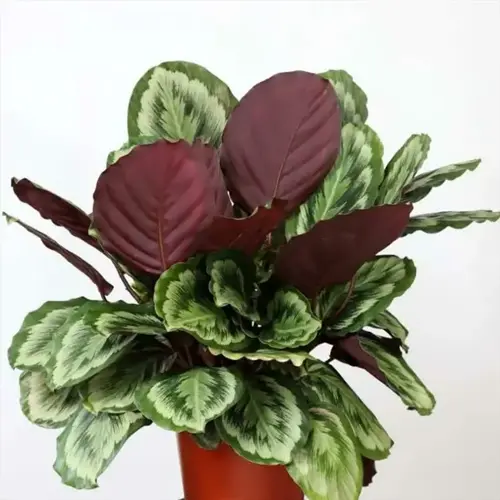

The brown edge of a leaf crackled like dry paper between my fingers on the orbifolia by my frosted north-facing bathroom window. I checked the tap water that same afternoon, and it pointed straight at the cause. My own plant had been telling me the answer for weeks. Most calathea orbifolia problems show up first in the leaves, and the big five are brown tips, yellowing, curling, drooping and root rot.
The good news is each symptom maps to one cause. Once you read the leaf, you know the fix. I tested this on the same plant over a full season, and the pattern held every time. Brown leaf tips are the most common complaint of all, and they almost always trace back to your water or your air.
Brown leaf tips come from fluoride in tap water or from air that is too dry. NC State Extension notes that fluoride builds up and burns the leaf edges over time. The old crisp edges will not turn green again, so judge your fix by the fresh growth instead. Swap to distilled or rainwater and the new leaves come in clean. Dry air does the same damage, so aim for at least 60% humidity to stop the crisping.
Yellowing leaves point a different way. They mean the roots sit in water too long. Overwatering is the cause here, so let the top inch of soil dry before you water again. Poke your finger in to be sure, since the surface can look dry while the root ball stays wet. A well-drained mix keeps this from turning into something worse.
Curling leaves are a thirst signal. The plant pulls its blades inward to save water when the soil runs dry or the air gets parched. Water on an even schedule and raise the humidity around the pot with a tray of pebbles or a small humidifier. You often see curling leaves and dry air together, so fixing one tends to fix the other.
Drooping can fool you. Sometimes it means the plant needs a drink, so check the soil with your finger first. But this plant also lifts and lowers its leaves on a daily rhythm, and that motion is normal. Press into the soil before you assume a real problem.
Root rot is the one to fear. It starts in soggy soil and ends with mushy stems and a sour smell at the base. A well-drained mix prevents the overwatering that feeds it. Healthy roots are firm and pale, while rotted ones turn dark and slip apart in your hand. If you catch it, repot into fresh soil and trim away the soft roots with clean scissors.
Watch for pests too, since stressed plants draw them in. Spider mites, mealybugs, aphids and scale all target this calathea. Wipe the leaves down and check the undersides each week, where spider mites leave fine webbing. Most calathea orbifolia problems trace back to one of three things, so fix the water, humidity or light first. The leaves heal on their own instead of you chasing one at a time.
Read the full article: Calathea Orbifolia Care: A Full Guide