
Introduction
You push the spade into your yard on a hot July afternoon, and it bounces back off ground that feels like brick. After a storm, water sits in puddles for days and will not drain. If that sounds like your garden, you have heavy clay soil, and the right clay soil amendment will turn that frustration around. Most advice online stays vague and tells you to add compost and move on. This guide gives you real numbers and honest answers instead.
Here is the fact that changes how you see all of this. Each 1% rise in soil organic matter lets your soil hold up to 20,000 more gallons of water per acre. That number comes from the USDA NRCS. It explains why organic matter beats every other trick people try, and why the work pays you back season after season.
Most clay soil guides repeat the same few surface tips and stop. They skip the gypsum rates that matter. They dodge an honest timeline. And they never explain why organic matter loosens hard ground. This guide fixes all three gaps. You get the why and the how, with sources you can check.
Here is the part nobody tells you. Clay is not bad soil. It grips water and food for your plants far better than loose, sandy ground. So it is worth fixing rather than digging out and hauling away. You just have to work with it, not against it, and the payoff is rich ground that other gardeners envy.
Next you will learn the best amendments for clay soil and why you should never reach for sand. You will see the real reason organic matter works and how to put it down the right way. You will learn how to use gypsum without wasting money, plus a realistic plan to improve clay soil. Some gains show fast, but full results build over one to three seasons. So let's get your hands dirty.
Best Amendments for Clay Soil
The damp back corner of my yard now grows crumbly soil I can dig with my bare hands. Rain used to pool there for days after every storm. For three summers before that, the ground baked into brick-hard slabs that cracked in the heat and turned to grey paste the moment it rained. I dumped compost and leaf mold on it every fall for four years, and the change crept up on me until one spring the shovel just slid in.
Organic matter is the best clay soil amendment you can use. Every extension service agrees on this. It can hold up to 10 times its own weight in water, so it drains your soil in wet spells and holds moisture in dry ones. The same handful fixes both problems at once. That is why no bag of sand or gypsum comes close.
Good compost is 40 to 60% organic matter by dry weight. Aim to get your soil up to 4 to 5% organic matter, the goal that soil experts at Colorado State set for a healthy bed. At that level the soil feeds plants on its own with little added fertilizer. The four amendments below all get you there. Pick one or mix them based on what you have.
Garden Compost
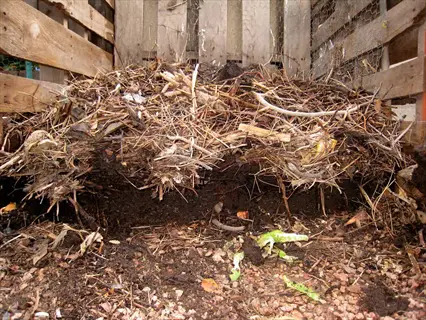
- What it is: Finished compost made from decomposed yard and kitchen waste, the most recommended amendment across every authoritative source on clay soil.
- Why it works: It feeds soil microbes that bind clay particles into crumbly aggregates, improving both drainage and water holding at the same time.
- Quality target: Good compost is forty to sixty percent organic matter by dry weight, so look for dark, crumbly material that smells earthy rather than sour.
- How to use: Spread one to four inches and work it into the top six to ten inches of soil, then top up about a quarter inch each year.
- Best for: New beds and established gardens alike, since it is the safest all-purpose choice for heavy clay soil.
- Watch for: Buy from a trusted source because amendments are not regulated like fertilizers and cheap compost can carry weed seeds or salts.
Leaf Mold
- What it is: Partially decomposed leaves, one of the gentlest and cheapest organic amendments you can make from fallen autumn leaves.
- Why it works: It holds large amounts of water and improves soil structure without adding the salts that some manures bring to heavy clay.
- How to make it: Pile damp leaves in a bin or bag and let them break down for one to two years until dark and crumbly.
- How to use: Spread it as a surface mulch or work it into the top several inches alongside compost for faster structure gains.
- Best for: Gardeners who want a low-cost, low-salt amendment and have access to plenty of tree leaves each fall.
- Watch for: It is low in nutrients, so pair it with compost or a balanced fertilizer if your plants are heavy feeders.
Aged Manure
- What it is: Well-rotted animal manure, recommended by University of Missouri Extension as a strong organic amendment for clay.
- Why it works: It adds organic matter plus nutrients, feeding both plants and the soil life that builds long-term structure.
- Use it aged: Always use composted or well-rotted manure, never fresh, because fresh manure can burn roots and carry weed seeds.
- How to use: Work a one to four inch layer into the top six to ten inches, the same as compost, and reapply yearly.
- Best for: Vegetable beds and hungry crops that benefit from the extra nutrients manure provides.
- Watch for: Manure-based composts can be high in salts, so use moderate amounts and balance with plant-based materials.
Cover Crops
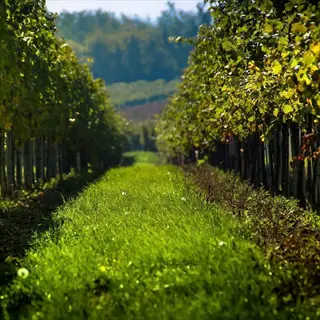
- What they are: Fast-growing plants such as annual ryegrass, daikon radish, and clover grown to feed and open the soil.
- Why they work: Deep roots punch channels through compacted clay, and turning the crop under adds fresh organic matter from the inside out.
- How to use: Sow in fall or spring, then cut and turn green manure under when it is one-third to one-half grown, per Missouri Extension.
- Best for: Larger beds and no-till gardeners who want to build structure without hauling in bags of amendment.
- Top picks: Daikon radish drills deep holes, while ryegrass and clover add dense root mass and, with clover, nitrogen.
- Watch for: Cut cover crops before they set seed so they do not become weeds in your beds.
One plain caution ties these together. Manure-based composts can run high in salts, which builds up and stresses plants over time. Balance any aged manure with leaf mold and plant-based compost, and get a soil test before you spread heavy amounts. Mix your sources and you sidestep that risk while still building the structure clay soil needs.
The Sand Mistake and What to Avoid
Adding sand to clay feels like the obvious fix. Clay is dense and sticky, sand is loose and gritty, so mixing the two should give you something in between. It does not. This is the single most common of all clay soil mistakes, and it can leave your beds worse off than the day you started.
The problem is scale. Clay particles are tiny, smaller than 0.002 mm, while sand grains are huge by comparison. When you mix them in the wrong ratio, the clay does not spread the sand apart. Instead the clay fills every gap between the sand grains, the way wet cement coats gravel.
Like diamonds, clay soils are highly structured at the atomic level. No amount of sand added to a clay soil will change its texture. The large sand particles provide a surface onto which the tiny clay particles adhere. The result can be more difficult to manage than the original clay.
Utah State University Extension puts the result in blunt terms. Get the sand and clay proportions wrong and you create a material similar to low-grade concrete. The gaps you hoped to open up close instead, so water cannot move through and roots cannot push in. Your drainage ends up worse, not better.
Think of the recipe for adobe brick or mortar. It is clay plus sand, packed tight and left to set hard. You build walls from it. Garden soil needs the opposite. Skip the organic matter and a clay and sand blend drifts toward that concrete-like soil. You lose the loose, crumbly texture plants want.
Sand is not the only trap. Working clay while it is wet smears the particles into a sealed, airless block. It bakes hard once it dries. So wait until the soil crumbles in your hand before you dig. Dumping compost into one planting hole backfires too. The loose pocket fills with water like a bucket, and the roots rot. Spread your amendments across the whole bed instead.
Gravel gets the same hopeful treatment. The results are mixed at best. A thin layer of rock under heavy clay can trap water above it, soil experts warn. It does not carry the water away. Skip these shortcuts and lean on organic matter across the full bed. You will dodge the mistakes that set most gardeners back a season.
Why Organic Matter Works
Here is why organic matter beats every other fix for clay. Add just 1% and your soil holds up to 20,000 more gallons of water per acre. That number comes from USDA NRCS data shared by UF/IFAS. Push your soil to 4% organic matter and it holds more than double the water it held at just 1%. Those are not small gains, and they explain why the same amended bed both drains faster after a storm and stays moist longer in a dry spell.
The real magic happens out of sight. Soil microbes make a sticky substance called glomalin that glues single clay particles into small crumbs. Those crumbs build the open pore spaces that let water, air, and roots move through the ground. This crumb-building process is called soil aggregation. It is the whole reason organic matter turns dense clay into soil you can work.
Think of it this way. Single clay particles act like fine flour that packs tight and leaves no room for air. Aggregates act like bread crumbs, with gaps between each piece for water and roots to slip through. That shift in soil structure is what gives you better water holding capacity and easier digging at the same time. Organic matter can hold up to 10 times its own weight in water, which is why it works both ways.
Do not chase a quick fix. Build organic matter steadily and the aggregation that opens up clay keeps improving season after season.
How to Apply Amendments
The spade had bounced off that baked back-corner clay all summer. So I grabbed a fork and started working the first few inches of compost into it. For three turns the tines just skated across the crust. Then on the fourth, the soil gave. The fork bit in and lifted a clod of clay shot through with dark crumbs. I worked another row, then another, mixing the compost down into the gray clay instead of piling it on top.
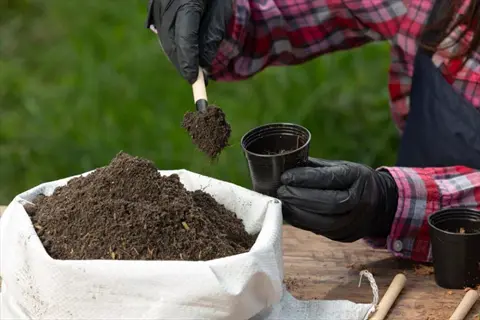
That mixing is the whole trick to how to amend clay soil. You want to work in organic matter so it blends with the clay, not bury it in one spot where it sits as a separate layer. The University of Missouri Extension method is simple and worth following to the inch. Spread a 1 to 4 inch layer of compost, leaf mold, or aged manure across the bed. Then dig it into the top 6 to 10 inches so clay and compost become one body of soil.
Spread it across the whole bed, not just the holes you plan to plant in. When you incorporate compost over the full bed, roots can spread out in every direction. For a new tree or shrub, amend the ground 2 to 5 feet out from the trunk rather than dropping rich material into the planting hole alone.
Here is the plain reason that hole matters. Rich organic stuff packed into a planting hole turns it into a soft pocket inside dense clay. Roots circle inside that pocket instead of pushing out, and water collects there with nowhere to drain. So you end up with a bathtub around your plant. Spread the amendment wide and shallow instead, and you avoid the trap.
Timing keeps amending clay soil from backfiring. Work in spring or fall during a dry spell, and never till wet clay, because wet clay smears into dense clods that set hard as you turn them. If you run a no-till bed, you do not have to dig at all. Layer compost and mulch on the surface and let worms and roots pull it down for you over the season. The steps below put the whole routine in order.
Test your soil first and pick a dry spell in spring or fall, since working wet clay smears it into dense clods that set hard.
Lay down a one to four inch layer of compost, leaf mold, or aged manure evenly across the whole bed, not just the planting spots.
Fork or dig the organic matter into the top six to ten inches so it blends with the clay instead of sitting in a separate layer.
Cover the bed with a few inches of mulch to protect the soil, feed worms, and slow the crusting that clay forms on top.
Top up with about a quarter inch of compost each spring or fall, because organic matter breaks down and the gains fade without it.
Gypsum Done Right
| Cation Exchange Capacity | Annual Gypsum Rate | Notes |
|---|---|---|
| Less than 5 | 0.25 tons per acre | Lowest rate for low-CEC soils |
| 5 to 10 | 0.5 tons per acre | Targets 70 to 80% calcium base saturation |
| 10 to 15 | 1 ton per acre | Mid-range clay and loam soils |
| Greater than 15 | 2 tons per acre | Higher-CEC clays; never exceed 5 tons per acre per year |
| Rates from USDA NRCS Conservation Practice Standard Code 333. A soil test gives your cation exchange capacity. | ||
Read a bag of Pennington or any other product and it sounds like gypsum loosens any packed clay. That claim is too broad. The USDA NRCS standard tells a narrower, more honest story about what gypsum can and cannot do for your dirt.
Gypsum is calcium sulfate, and it works as a soil flocculant. The calcium pulls scattered clay particles into clumps. Those clumps cut surface crusting and let water soak in faster. Of all the cations in your soil, calcium has the biggest effect on structure. So gypsum for clay soil does help water move, and unlike lime it stays pH-neutral. That matters if you don't want to shift your soil pH.
Here is the part the labels skip. Gypsum can help true sodic soils and let more water soak in. But it does not fix sodic soil on its own, and it will not soften plain compacted clay. Soil testing should come first. A test tells you your cation exchange capacity, which sets your rate in the table above. It also tells you whether gypsum even fits your problem.
Think of gypsum as a supporting player, not the star. It can open a door, but compost builds the house. Use the NRCS rates when a test says you need it, and keep stacking organic matter for the structure that lasts.
A Realistic Timeline
So how long to amend clay soil before you see real change? The honest answer is that some payoff shows up fast, but the deep fix takes patience. Your surface soil feels softer within the first season, yet full structure takes longer to build.
Think of improving clay soil as a building project, not a one-time dig. Organic matter breaks down each year, so you have to replace it. Each fresh layer of compost feeds the soil life that glues particles into crumbly clumps, and that slow work is what fixes drainage for good.
Water holding climbs as your organic matter rises toward the 4 to 5% target. A silt loam at 4% organic matter holds more than twice the water it held at 1%. That gain does not happen overnight. It stacks up season by season as your yearly amendment routine keeps feeding the ground.
Here is what the road looks like, so you know what to expect and don't quit too early.
First season
After the first compost layer and mulch, surface soil softens, water soaks in a little faster, and digging gets easier near the top.
Year one to two
With a second and third yearly top-up, organic matter climbs, crumbly aggregates form deeper, and drainage and root growth clearly improve.
Year two to three
Soil reaches the four to five percent organic matter range, holding more water and needing less fertilizer as structure stabilizes.
Ongoing
Keep adding about a quarter inch of compost yearly, because organic matter breaks down and the improvement fades without it.
If your clay is severe or drains badly, a raised bed is the fast lane. You get good soil in one season instead of waiting two or three years. The ground below still slowly improves as roots and worms work down into it, so you win on both fronts.
The big shift in mindset is this. Better soil structure is something you grow over time, not something you buy in a bag. Show up with compost each year, and your clay turns from a problem into the richest patch in your yard.
5 Common Myths
Adding sand to clay soil is a fast, easy way to loosen it up and improve drainage for plant roots.
Sand mixed into clay can bind into a hard, concrete-like material that is more difficult to manage than the original clay soil.
Gypsum is a magic cure that will quickly soften and loosen any kind of hard, compacted clay garden soil.
Gypsum mainly helps certain soils by improving water infiltration; it does not loosen ordinary compacted clay and does not fix sodic soil alone.
Once you amend clay soil with compost one time, the improvement is permanent and you never need to add more.
Organic matter breaks down over time, so you should reapply it every year to keep building and holding the improved soil structure.
Clay soil is simply bad soil, so nothing useful or healthy will ever grow well in a heavy clay garden.
Clay holds water and nutrients well, and many deep-rooted plants thrive in it once structure is improved with organic matter.
You should always dig organic matter deep into the planting hole when adding a new tree or shrub to clay.
Amend a wide area two to five feet out from the trunk instead, because rich material in the hole alone can trap water and stunt roots.
Conclusion
The whole plan for any good clay soil amendment comes down to one truth. Organic matter is the answer, and sand is the mistake. Compost, leaf mold, and aged manure feed the soil and build the crumbly structure your plants want. Sand does the opposite, and it can leave you with something close to concrete.
The numbers are worth keeping in your head. Every 1% rise in organic matter helps your soil hold up to 20,000 more gallons of water per acre. So aim for 4% to 5% organic matter over time. That is the level where your soil holds water and feeds plants on its own, without you reaching for fertilizer.
The method to improve clay soil stays simple year after year. Spread a 1 to 4 inch layer of organic matter and work it into the top 6 to 10 inches. Then add mulch on top to protect what you built. Organic matter breaks down, so you repeat this each year. Test your soil before you reach for gypsum, since it only helps in specific cases and will not soften plain compacted clay.
Be patient and let the work add up. I dug a spade into my own backyard clay last spring and it broke apart in dark, loose crumbs instead of the gray brick I started with 3 years ago. If your clay is too poor or too wet to fix in place, raised beds give you a clean start above it. But for most yards, steady amending builds real soil structure in a few seasons. Improved clay becomes an asset you can count on. It holds water and nutrients far better than sandy soil ever will, and that pays you back every single season.
Glossary
- Flocculating agent
- A material that causes fine soil particles to cluster together, which can improve water infiltration and structure.
- Glomalin
- A sticky substance produced by soil microbes that helps glue clay particles together into stable crumbs.
- Green manure
- A cover crop grown specifically to be cut down and worked into the soil to add organic matter.
- Gypsum
- Calcium sulfate, a soil amendment that can improve water movement in some soils by helping particles cluster together.
- Leaf mold
- A dark, crumbly soil amendment made from fallen leaves that have broken down over one to two years.
- Organic matter
- Decomposed plant and animal material, such as compost or leaf mold, that improves soil structure and fertility.
- Soil aggregation
- The process by which individual soil particles clump into crumbs, creating pore spaces for air, water, and roots.
- Water holding capacity
- The amount of water a soil can store and make available to plant roots after excess water drains away.
External Sources
Frequently Asked Questions
What is the best amendment for clay soil?
Organic matter such as compost, aged manure, and leaf mold is the best amendment for clay soil.
Should I add sand to clay soil?
No. Sand mixed into clay can set into a hard, concrete-like material that is harder to work than the original clay.
How do I turn my clay soil into good soil?
Add organic matter yearly:
- Spread one to four inches of compost
- Work it into the top six to ten inches
- Mulch the surface
- Repeat every spring or fall
How long does it take to amend clay soil?
Some benefits show in the first season, but full improvement usually takes one to three years of yearly amending.
How do you amend clay soil without tilling?
Layer compost and mulch on top:
- Sheet compost on the surface
- Mulch deeply over it
- Grow cover crops with deep roots
- Let worms and roots work it in
Do coffee grounds improve clay soil?
Coffee grounds add a little organic matter but work best composted first and mixed with other materials, not used alone.
What plants thrive in clay soil?
Many deep-rooted plants thrive in clay, including a range of perennials, shrubs, and tough vegetables.
Can you use too much soil amendment?
Yes. Too much amendment can raise salts, throw off nutrients, and create a soil that drains unevenly.
Can I put topsoil on top of clay soil?
You can, but a topsoil layer over clay often creates a perched water table, so blending and amending works better.
Can I make my own soil improver for clay?
Yes. Homemade compost from yard and kitchen waste makes an excellent, low-cost soil improver for clay.