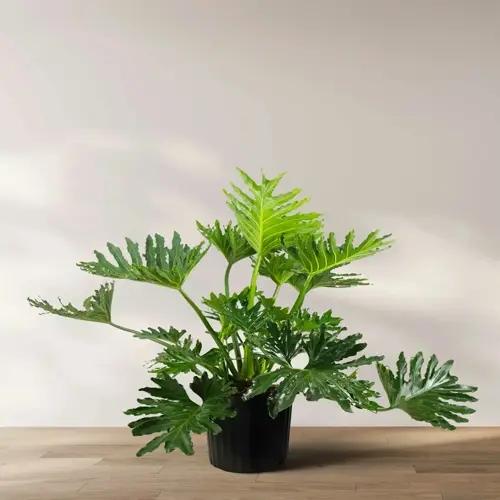

"Leave it crammed in there," my friend said over coffee, tapping my pot. "Treat it like an orchid and it'll bloom better." I looked at the plant by my east window. Roots spiraled out the drain holes and the leaves had stopped getting bigger. I sized it up one pot anyway. Within three weeks it pushed out two fresh split leaves.
Your rhaphidophora tetrasperma root bound plant does not stay happy that way for long. This plant takes a snug pot for a short while. But it will not sit tightly bound the way some orchids do. Knowing when to repot matters more here than with most houseplants on your shelf. This one just grows too fast for a tight pot.
NC State lists this plant as a rapid grower, and that speed is the whole reason it fills a pot so quickly. Roots race outward in a few months and wrap the inside of your container. They leave almost no soil behind. A slightly snug fit is fine and even helps your plant stay sturdy and upright. But once it crosses into tightly bound territory, the trouble starts and your plant slows right down.
The biggest problem you face is water. A pot packed with roots and little soil dries out within a day or two of watering, sometimes faster in summer. Your plant can't drink fast enough to keep up. So it sits thirsty between your watering days. Growth stalls, new leaves come out small, and your lower foliage may yellow even though you water on your normal schedule. You end up chasing a problem that more soil would fix.
A few clear signs tell you the pot has gotten too tight. Roots poke out the drainage holes or push up over the soil line. Water runs straight through in seconds instead of soaking in. The whole root mass slides out as one solid plug with barely any loose mix clinging to it. New leaves shrink or skip their splits. When you spot any of these, your plant is asking for more room, not less. You don't need all the signs at once to act.
The fix is simple, and I keep it short here because the main article walks through the full repotting steps. Repot in spring or summer while the plant is actively growing, since it bounces back fastest in the warm months. Trying to repot a stalled plant in the dead of winter just adds stress with no real payoff.
Get your pot size progression right and you avoid most problems down the road. Move up just one size, about 1 to 2 inches (2.5 to 5 cm) wider than the current pot. Skip the urge to jump into a giant container thinking you'll save yourself work. A huge pot holds far more soil than these roots can use, so that extra mix stays wet and invites root rot.
Use fresh chunky aroid mix when you size up, not plain potting soil straight from the bag. This plant climbs trees in the wild and its roots want air pockets around them. A blend with orchid bark, perlite, and a bit of coco coir drains fast and breathes well. Fresh mix also resets the nutrients your old depleted soil ran out of. Pack it loosely so water can move through and reach every root.
So no, your Rhaphidophora tetrasperma does not like to be root bound for long. Check the roots once a season, and when the pot fills, step up one size with fresh mix. Do that and you'll keep those big split leaves coming year after year.
Read the full article: Rhaphidophora Tetrasperma Care Guide