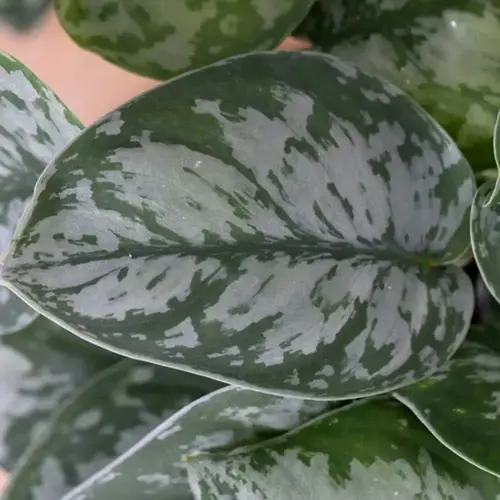

The air-purifier label is one of the most repeated houseplant claims online, and syngonium gets it a lot. So it is worth checking against the evidence before you trust it. The honest answer is that syngonium air purifying is mostly a myth. Your plant does not meaningfully clean the air in a normal room, and the research behind that popular claim does not say what most people think it says.
The claim traces back to one famous test that gets stretched far past what it showed. Below is the gap between the lab and your living room, in plain terms you can check for yourself.
The Sealed Chamber
- The setup: Researchers put plants in small sealed boxes, not real rooms, so nothing could move in or out.
- Why it matters: A box with no fresh air coming in is nothing like a room with doors, vents, and gaps around windows.
- The result: Any cleaning measured in that box does not carry over to the open space where you actually live.
The Real Room Problem
- Air exchange wins: Your room swaps out its air on its own, far faster than a few leaves can scrub it.
- The plant math: Matching that natural exchange would take roughly 10 to 1,000 plants per square meter of floor.
- The reality: That is a small jungle in every room, which no one keeps, so the effect at home stays near zero.
What You Actually Notice
- No real change: You will not measure cleaner air after you add one plant, or even five, to your space.
- The honest perk: What you do get is a green corner and leaves you enjoy looking at every day.
- Your better tools: For air you can feel, you lean on a window and a fan, not a pot of leaves.
Now for the famous study itself. The NASA clean air study ran back in 1989. It tested a handful of plants inside those sealed boxes for fumes like benzene and formaldehyde. Here is the part people skip. Syngonium was not even one of the plants in that study. So when you hear it is a NASA-approved air cleaner, that line is wrong on two counts at once. The test does not apply to your home, and the plant was never in the test.
Newer work settles it more firmly. A 2020 review by Cummings and Waring pulled together decades of plant studies. Then they ran the numbers for real indoor spaces, the kind you actually live in. They found that potted plants do not improve indoor air quality the way the headlines promise. The tiny bit a single plant removes gets swamped by the normal flow of air through your room. So the leaves do real work, just not enough to register where you breathe.
None of this is a reason for you to skip the plant. You just buy it for the right reasons. A syngonium earns its spot through easy care and colorful foliage, not through some filter effect it cannot deliver. It fills your corner fast, forgives a missed watering, and gives you arrow-shaped leaves in green, cream, and pink. Those are honest perks you can count on. The syngonium air purifying story is the one part you let go of.
If cleaner air is your real goal, put your effort where it works for you. Open a window for a few minutes a day to bring in fresh air and push your stale air out. That single move beats any number of plants. Run an exhaust fan in your kitchen and bathroom so moisture and fumes leave instead of settling in your home.
For cleaner air at home, focus on ventilation and source control. Open windows, run exhaust fans, and cut the source of bad air, such as smoke, strong cleaners, or off-gassing furniture. Keep the syngonium for how it looks, not for what it filters.
So grow the syngonium because it is a great-looking, low-fuss plant. Just keep your expectations grounded, and skip the syngonium air purifying hope. It will not scrub your air, and no houseplant on a shelf really will. Want better indoor air quality? Bring in fresh air and cut your pollution sources. A happy arrowhead vine is a nice bonus you get on top of that.
Read the full article: Syngonium Plant Care Guide for Beginners