
Introduction
Welcome to one of the friendliest plants you can bring home. The syngonium plant, known to botanists as Syngonium podophyllum, goes by a few easy names too. Most people call it the arrowhead plant or the arrowhead vine, thanks to the shape of its young leaves. It grows fast, forgives beginner mistakes, and rewards you with new foliage almost every month.
This is not some rare find that needs fussy care. In fact, Syngonium podophyllum is the most grown species in the foliage plant trade. That makes it a true beginner-proven houseplant. You see it on shop shelves for a reason. It likes the same conditions most homes already have, so basic indoor plant care is simple to get right.
Two facts deserve a clear answer up front. The first is that this plant is toxic to pets and people if chewed or eaten. The second is the popular claim that it cleans the air in your home, which turns out to be overstated. Many quick care pages gloss over both. You will get the honest version of each here, so you can keep your home and your pets safe.
Think of the rest as a friendly map you can follow at your own pace. You will learn the care basics for light, water, and soil. Then you will meet the prettiest varieties like White Butterfly and Pink Allusion. These cultivars sparked this wave of houseplant fever. After that comes propagation and straight talk on safety. Whether you are new to plants or coming back for your tenth, this guide meets you right where you are.
Why Syngonium Is a Top Plant
A bare, dim corner by my east window turned into a green column three years ago. I set a small bushy White Butterfly against a moss pole and walked away. The plant was the size of a coffee mug when it went up. Within a season it had gripped the pole and started to climb on its own.
It filled in fast. New arrow-shaped leaves pushed out every couple of weeks. The cream-and-green color got brighter as the stems reached the light. That corner went from empty to lush, and I barely lifted a finger. So now I hand a syngonium plant to friends who swear they kill everything.
The syngonium plant is a tropical aroid in the Araceae family. It grows wild from Mexico down to Ecuador. Those steamy forest roots are the reason it forgives you indoors. It wants warm, humid, dappled shade under a canopy. A normal heated room with bright indirect light feels close enough to home.
This is also the most commonly produced species in the foliage plant industry. You have likely walked past dozens of them without knowing it. Indoors it stays small. It grows 3 to 6 feet (0.9 to 1.8 m) tall and 1 to 2 feet (0.3 to 0.6 m) wide. So it earns a spot on a shelf or up a pole without taking over the room.
You grow it for the leaves, not the flowers. The arrow-shaped young leaves give the arrowhead plant its name, and they shift color as they age. Dozens of variegated types exist in pink, cream, white, and near-neon green. Pick a few and you get very different looks from one easy species.
Lab-grown tissue culture made this plant cheap and easy to find. Almost every shop stocks it for a few dollars. That low price and big supply is why it has become a default beginner houseplant. It is the starter foliage plant in shops worldwide. Here is what makes it tick at a glance.
Light, Water and Humidity
Light, water, and warmth work as one routine, not three separate chores. Get the light right and your watering gets easier, because a plant in a good spot dries out at a steady pace you can read. Your syngonium wants bright indirect light, the kind of glow where you could sit and read a book with ease but the sun never lands straight on the leaves.
Keep it near a window with plenty of light and skip the harsh midday sun. Direct rays tend to burn or bleach the foliage, so an unshaded south window often runs too hot for it. Variegated types, like the pink and white ones, need a touch more light than solid-green plants to hold their color. When the variegation fades or washes out, that is your cue to move it somewhere brighter.
How often to water syngonium comes down to a simple touch test, not a calendar. Water when the top 1 to 2 inches (2.5 to 5 cm) of soil feels dry. Through spring and summer the plant pushes new leaves fast and drinks more, so water it on a regular rhythm. From fall through late winter growth slows, the soil stays wet longer, and you ease off.
The fastest way to hurt this plant is overwatering, not forgetting it. Yellow lower leaves and soft, mushy stems mean the roots are sitting in soggy soil too long. A thirsty plant droops a little and perks back up within hours of a good drink, so lean toward letting it dry out between waterings.
Bright Indirect Light
- Best spot: Place it near a window with plenty of light but where direct sun never strikes the leaves for long.
- Avoid full sun: Direct sunlight tends to burn or bleach the foliage, so an unshaded south window is usually too harsh.
- Variegated cultivars: Pink and white variegated types need a little more light than solid-green ones to keep their color.
- Low-light note: It tolerates lower light but grows slower and leggier, with smaller and less colorful leaves.
Watering Rhythm
- Dry-down rule: Water when the top 1 to 2 inches (2.5 to 5 cm) of soil feels dry to the touch.
- Growing season: Water regularly through spring and summer when the plant is actively pushing new leaves.
- Cool months: Reduce watering from fall through late winter, when growth slows and soil stays wet longer.
- Overwatering signs: Yellowing leaves and mushy stems usually mean the roots are sitting in soggy soil too long.
Warmth And Humidity
- Warmth: It loves warm rooms and dislikes cold drafts, so keep it away from chilly windows and doorways.
- Humidity: High humidity suits it best, which you can raise with a tray of wet pebbles or by grouping plants.
- Brown tips: Dry indoor air, especially in winter, often shows up as crispy brown leaf edges and tips.
- Placement: Keep it clear of heating and cooling vents that blast dry or cold air directly onto the leaves.
Reading The Plant
- Thirsty signs: Slightly drooping, softening leaves usually perk back up within hours of a thorough watering.
- Too wet: Yellow lower leaves and a sour, soggy pot mean you should let the soil dry further before watering again.
- Color cues: Faded variegation often signals the plant wants brighter indirect light to restore its pattern.
- Seasonal shift: Growth slows in winter, so expect the soil to dry more slowly and adjust your watering down.
Humidity is the piece most people miss, and it bites hardest in winter. Heating dries out indoor air, and your syngonium answers with crispy brown leaf tips. This is a seasonal problem with an easy fix. Set the pot on a tray of wet pebbles or group it with other plants, and the air around the leaves stays damp enough to keep those edges green.
Avoid locations with full sun, as direct sunlight will tend to burn or bleach the foliage.
Soil, Feeding and Repotting
Well-draining soil is the right idea, but the phrase gives you nothing to scoop into a pot. So here is the real recipe. The best soil for syngonium is a chunky blend that holds a little water and lets the rest run straight through. That way the roots get both a drink and plenty of air.
Build an aroid potting mix from equal parts potting soil, perlite, and a chunky bit like orchid bark or coco coir. The Missouri Botanical Garden says a soil-based mix works well for this plant indoors. UF/IFAS growers keep that media slightly acidic, with a pH near 5.5 to 6.5. That is the range where your plant feeds with ease.
Here is the simple kitchen test for whether your mix is right. Squeeze a handful after watering. Good aroid mix should feel like a moist sponge that drains fast, never like wet, packed-down clay. If water pools on top or the soil stays soggy for days, add more bark and perlite until it loosens up.
Almost every syngonium sold today starts in tissue culture and ships in dense nursery media that stays wet far too long. A fresh chunky mix at the first repot gives roots room to breathe and noticeably speeds up new growth. The steps below fold the mix, feeding, and repotting into one easy run.
Combine equal parts potting soil, perlite, and orchid bark or coco coir so the mix drains fast while staying lightly moist. Aim for a slightly acidic pH around 5.5 to 6.5.
Fertilize with a balanced houseplant feed during spring and summer growth, then pause through fall and winter while the plant rests.
Pick a pot only one size larger with drainage holes. A terracotta pot helps excess moisture escape and lowers the risk of root rot.
Plan on repotting every year or two once roots fill the pot. Set the plant at the same depth it grew before, then water it in and return it to bright indirect light.
Reaching for a pot several sizes too big holds a large mass of wet soil around small roots, which is one of the fastest ways to trigger root rot. Step up gradually.
Varieties Worth Growing
Most lists of syngonium varieties dump every cultivar into one pile and leave you guessing. A smarter way to sort them is by how much light each one needs to hold its color. Green-dominant types keep their look in a dim corner. The heavily variegated and pink ones want a brighter spot, or the color drains toward plain green.
White Butterfly is the standard syngonium and the one you'll spot in almost every plant shop. From there the choices spread out fast, with more than 19 named cultivars on the market. You can find pink syngonium types like Pink Allusion and neon ones like Neon Robusta on the same shelf for a few dollars each.
I keep a Pink Allusion right next to a White Butterfly on the east window corner. The Pink Allusion sat a foot back from the glass for months and read almost green. I slid it forward to the edge of the sill, and within two weeks the new leaves came in with a deeper blush across the veins.
The rare types run far pricier and sell out fast. The albo forms are the worst for this, with prices that can sting. Everything below is cheap and easy to find. Match one to your actual window and you'll keep its color without much work.
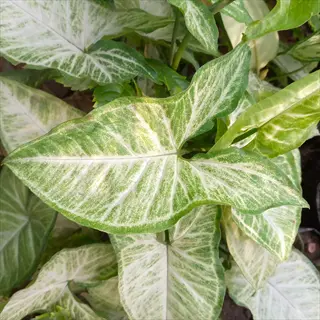
White Butterfly
- Look: Soft green leaves with creamy white centers and pale veining give it a bright, airy appearance.
- Status: It is considered the standard syngonium and the most widely sold cultivar in plant shops.
- Light: Bright indirect light keeps the pale centers clean and the overall plant full and compact.
- Growth: It grows quickly and stays bushy when young, making it forgiving for first-time growers.
- Care: Standard syngonium care applies, with regular watering and warmth producing steady new leaves.
- Best for: A reliable starter variety for anyone wanting classic arrowhead looks without fuss.
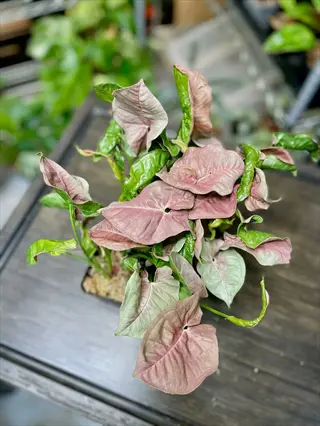
Pink Allusion
- Look: Pale green leaves carry soft pink veins and edges that give a gentle blush of color.
- Light: It needs bright indirect light to keep the pink tones from fading toward plain green.
- Color shift: Newer leaves often show the strongest pink, deepening when light levels are generous.
- Growth: It stays relatively compact and tidy, which suits shelves and tabletop displays.
- Care: Treat it like other syngonium, but lean slightly brighter to protect the variegation.
- Best for: Growers who want subtle pink color without chasing rare, pricey cultivars.
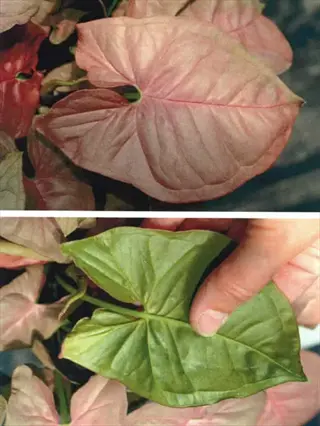
Neon Robusta
- Look: Bubblegum to dusty-pink leaves make this one of the most colorful easygoing cultivars.
- Light: Bright indirect light brings out the strongest pink, while low light pushes it greener.
- Growth: It vines readily and looks great trailing from a shelf or climbing a small support.
- Care: Keep humidity up and avoid soggy soil, as with any syngonium, to protect the colorful foliage.
- Color: Mature leaves can soften in tone, so newer growth usually carries the brightest pink.
- Best for: Anyone wanting a bold pop of pink from a tough, widely available plant.
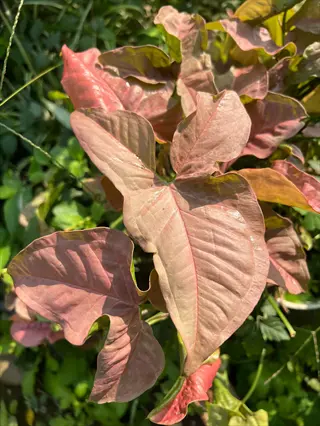
Confetti
- Look: Green leaves are flecked and splashed with pink speckles, like scattered confetti across the foliage.
- Light: Bright indirect light helps the pink speckling stay visible against the green.
- Growth: It grows in the same easy, bushy-then-vining way as other compact cultivars.
- Care: Standard watering and humidity keep the speckled leaves healthy and well colored.
- Variation: Speckle density varies leaf to leaf, which is part of its playful charm.
- Best for: Collectors who like a speckled, patterned look rather than solid variegation.
Propagation and Vining Habit
Learning how to propagate syngonium takes about five minutes and one clean cut. The plant roots so fast that one healthy stem can turn into three or four new plants in a single growing season.
The trick is to cut in the right spot. You want stem cuttings that include a node, the small bump where a leaf meets the stem and where new roots push out. Snip just below that bump, drop the cutting in water or moist soil, and roots show up in a couple of weeks.
My White Butterfly on the moss pole by the east window had gone bare and stretched, all naked stem and a sad tuft of leaves up top. I cut the leggy tips just below a node and dropped them in a jar on the sill. Roots filled the glass in about two weeks, I tucked the rooted cuttings back into the same pot, and the plant looked full again by the next month.
Snip a healthy stem just below a node, the small bump where a leaf and roots emerge, keeping one or two leaves on the cutting.
Place the node in a jar of water or push it into moist mix; roots usually appear within a couple of weeks in a warm, bright spot.
Once roots reach an inch or two (2.5 to 5 cm), move a water-rooted cutting into a chunky aroid mix and water it in gently.
Pinch growing tips to keep a bushy form, or train stems up a moss pole if you want the larger, lobed mature leaves to develop.
Here is the part most care cards skip. This plant changes its leaves as it climbs, and the juvenile vs mature leaves look like they came from two different species. Young plants grow the simple arrow shape you bought it for.
Give those stems a moss pole and the plant grows up instead of out. Climbing triggers the mature form, and the leaves split into 5 to 11 leaflets on long stalks that reach 15 to 24 inches (38 to 60 cm). The arrowhead look gives way to a big lobed leaf that surprises a lot of first-time growers.
So you get to pick the plant you want. Pinch the tips and skip the pole for a bushy mound that stays compact. Let it climb for a tall, large-leaved look that fills a corner. Just know how hard it pulls when it gets going.
Arrowhead vine is a strong climber, easily reaching the tops of our native trees. The stems by which it climbs are thick and fleshy giving them a weight much heavier than most native vines, thus potentially making trees top heavy and more susceptible to toppling in a strong wind.
Toxicity, Safety and Air Truth
Two questions follow this plant home from the store. Is syngonium toxic, and does it clean your air? The honest answers matter if you share your space with pets or kids. So let me give you the straight facts instead of the feel-good version you see everywhere.
Yes, it is toxic to cats and dogs, and to horses and people too. The trouble comes from tiny crystals called calcium oxalate that sit in the leaves, stems, and sap. Chew a leaf and those crystals jab the soft tissue of the mouth and throat right away. The sap can also trigger contact dermatitis on sensitive skin, so a stray drop on your hand may leave it red and itchy.
Now the other half of the story. You have likely seen this plant sold as a NASA-approved air purifying wonder, and that label is wrong. Syngonium was never in the 1989 NASA study, and newer research shows potted plants do almost nothing for the air in a real room. Grow it for the colorful leaves, not for cleaner air. The facts below break down both points.
Why It Is Toxic
- Toxic principle: The plant contains insoluble calcium oxalate crystals throughout its leaves, stems, roots, and sap.
- Who is affected: It is toxic to cats, dogs, and horses, and it is also poisonous to people if chewed or swallowed.
- Skin contact: The sap can cause contact dermatitis, so sensitive people may want gloves when pruning or repotting.
- Severity: Poisoning is generally rated medium, with painful but usually self-limiting mouth and throat irritation.
Symptoms To Watch For
- Mouth signs: Look for oral irritation with pain and swelling of the mouth, tongue, and lips after chewing.
- Drooling: Excessive drooling is a common early sign in pets that have bitten a leaf or stem.
- Stomach upset: Vomiting can occur in cats and dogs, though horses typically do not vomit.
- Swallowing: Difficulty swallowing may follow, so call a vet or the ASPCA hotline at 888-426-4435 if you see these signs.
The Air-Purifying Truth
- Not in the NASA study: Syngonium was not among the plants in the 1989 NASA Clean Air Study, despite common claims.
- Lab versus rooms: Chamber results do not translate to real homes, where matching outdoor air exchange would need a huge number of plants.
- Peer review: A 2020 review concluded that potted plants do not improve indoor air quality in normal rooms.
- Better reason to grow it: Enjoy syngonium for its easy care and colorful foliage rather than as an air cleaner.
Safe Handling Habits
- Out of reach: Keep the plant on a high shelf or hanging spot so cats, dogs, and small children cannot chew it.
- Gloves: Wear gloves when pruning or repotting if your skin is sensitive, since the sap can cause irritation.
- Clean up: Pick up dropped leaves and cuttings promptly so curious pets do not nibble them off the floor.
- Emergency contact: Keep the ASPCA poison control number 888-426-4435 handy in case a pet bites a leaf.
Place syngonium on a high shelf or hanging spot well out of reach of cats, dogs, and small children, and wash your hands after handling cut stems.
None of this means you should skip the plant. A high shelf or a hanging spot keeps it out of curious mouths, and a quick hand wash after pruning settles the contact dermatitis worry. Treat it with the same care you give a sharp kitchen knife. Respect it, store it smart, and you both stay happy.
5 Common Myths
Syngonium is a proven air-purifying plant that was tested and approved in the famous NASA Clean Air Study.
Syngonium was not in the 1989 NASA study, and peer-reviewed reviews show potted plants do not meaningfully clean indoor air in real rooms.
Syngonium is completely pet safe, so it is fine to let curious cats and dogs chew on the leaves.
The plant contains insoluble calcium oxalate crystals and is toxic to cats, dogs, and horses, causing mouth pain, drooling, and trouble swallowing.
A syngonium that grows big lobed leaves with several leaflets must be a different plant or has been mislabeled.
Juvenile leaves are arrow-shaped, but the same plant naturally grows larger lobed leaves with five to eleven leaflets as it climbs and matures.
Syngonium needs a warm, sunny windowsill with several hours of direct sunlight to keep its bright leaf colors.
Direct sun tends to burn or bleach the foliage; the plant prefers bright indirect light, which keeps variegation strong without scorching.
You can only grow a syngonium in potting soil, since it will quickly rot if you try to keep it in water.
Syngonium roots readily in water and can live there long term, though it usually grows larger and faster when planted in a good soil mix.
Conclusion
Good syngonium plant care comes down to a short, steady routine you can run on autopilot. Give it bright indirect light out of harsh sun, and water once the top 1 to 2 inches (2.5 to 5 cm) of soil feels dry. Keep it warm, raise the humidity when you can, and feed it only while it pushes new growth in spring and summer. That is the whole job.
Two honest notes before you bring one home. The sap holds calcium oxalate crystals, so this plant is toxic to cats, dogs, and people if chewed. Keep it out of reach of curious pets and kids. And skip the marketing line about clean air. Syngonium was never in the 1989 NASA study. A few pots will not scrub a real room. Buy it because the leaves are beautiful, not for your lungs.
None of this should scare a first-timer. Solid arrowhead plant care is forgiving, and the plant tells you what it needs through its leaves long before it gives up. Yellow means you watered too much, and droopy means it got thirsty. Read those signals and you will rarely go wrong with this easygoing indoor plant.
So pick a variety that suits your light, a green one for a dim corner or a pink or variegated type for a brighter spot. Snip a node, drop it in a glass of water, and watch roots appear in a couple of weeks. Few plants give back this much for so little, which is exactly why syngonium earns its spot as a beginner houseplant you can grow with confidence.
Glossary
- Aroid
- A plant in the Araceae family, the group that includes syngonium along with relatives like pothos and philodendron.
- Calcium oxalate crystals
- Tiny needle-like crystals in the plant's tissue that cause mouth and throat pain when chewed, which is why syngonium is toxic to pets and people.
- Contact dermatitis
- Skin irritation, such as redness or itching, that can follow contact with the plant's sap.
- Node
- The small bump on a stem where leaves and roots emerge, and the spot you cut below when taking a propagation cutting.
- Petiole
- The stalk that connects a leaf to the main stem, which becomes very long on mature climbing syngonium plants.
- Syngonium podophyllum
- The botanical name for the arrowhead plant, a fast-growing tropical vine grown as a popular houseplant.
- Tissue culture
- A lab method of growing many identical plants from tiny tissue samples, which is how most syngonium sold today is produced.
- Variegation
- Patches of white, cream, or pink on a leaf where the green is reduced, giving cultivars their patterned coloring.
External Sources
Frequently Asked Questions
Is Syngonium a good indoor plant?
Yes. Syngonium is a fast, forgiving, beginner-friendly houseplant with colorful foliage, though it is toxic to pets and people.
How do you care for a Syngonium?
Give it bright indirect light, water when the top inch or two of soil dries, keep it warm and humid, and feed during the growing season.
How often do you water a Syngonium?
Water when the top 1 to 2 inches (2.5 to 5 cm) of soil feels dry, more often in summer and much less in winter.
Is Syngonium toxic to cats and dogs?
Yes. Syngonium contains insoluble calcium oxalate crystals and is toxic to cats, dogs, and horses, causing mouth pain and drooling.
What are common Syngonium problems?
The most common issues are:
- Yellow leaves from overwatering or root rot
- Brown leaf tips from low humidity or dry soil
- Leggy, sparse growth from too little light
- Pests such as spider mites, mealybugs, and aphids
Can a Syngonium grow in just water?
Yes. A syngonium can root and live in water long term, though it usually grows larger and faster in soil.
Where should I place my Syngonium?
Place it near a bright window with indirect light, away from direct sun, cold drafts, and heat vents, and out of pets' reach.
How long does a Syngonium live?
As a perennial vine, a well-cared-for syngonium can live for many years and is easily renewed through cuttings.
Is Syngonium good for a bedroom?
It can be a good bedroom plant if the room has enough light, but keep it out of reach of pets and small children because it is toxic.
Does Syngonium really purify the air?
Not meaningfully. Syngonium was not in the 1989 NASA study, and reviews show potted plants do not clean real room air.