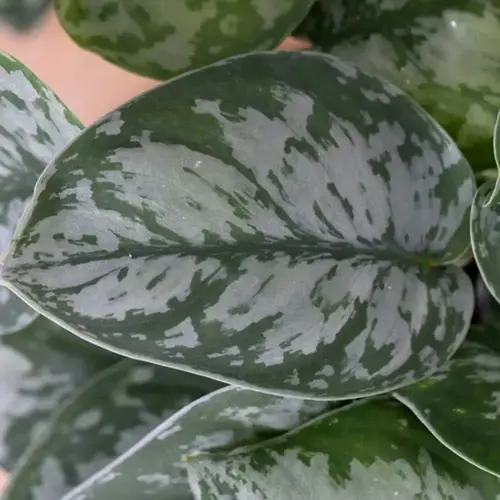

Put your syngonium a few feet back from a bright window. It needs plenty of light, but no harsh sun on the leaves. Good syngonium placement does most of the work for you. A plant in steady light and warmth shrugs off small watering slips. Put that same plant in a dark corner and those slips start to add up fast.
Light is the part people get wrong most often. Your plant wants bright indirect light all day, which means light that fills the room but never lands on the foliage as a hot beam. This kind of light keeps the variegation strong and the colors crisp. Direct sun does the opposite. It scorches the leaves with brown patches and bleaches the pink or white markings to a dull, washed-out cream within a week or two.
Warmth matters almost as much. These plants come from tropical forests, so they like the room to sit between 65°F and 80°F (18°C to 27°C) with a bit of humidity in the air. Keep yours away from cold drafts and dry heating vents. A spot next to a door that opens to winter air, or right above a blasting radiator, will brown the leaf edges fast.
Stand where the plant will go at midday. If your own shadow is soft and you can read a book without a lamp, the light is right. If the sun hits your hand directly, move back two or three feet.
A bathroom or kitchen is often a great fit because both rooms hold extra moisture from showers and cooking. That humidity keeps the leaves full and stops the crispy brown tips you see in dry air. Just make sure the room still gets real daylight. A windowless bathroom is too dark to keep the plant happy long term. If your only humid room is dark, try another fix. Group the plant with other plants, or set the pot on a tray of damp pebbles to lift the moisture around it.
It also helps to think about syngonium placement by season. The sun sits lower in winter and many windows that felt bright in summer turn dim. Watch the leaves for the signs. Pale growth and long, leggy stems mean the spot got too dark and the plant is reaching for light. Move it closer to the glass through the short, gray months, then ease it back a little once spring sun returns.
Think about how you want the plant to grow, too. A young syngonium stays bushy and compact, but it vines as it ages. Set it on a shelf or hang it and the stems will trail down in long, leafy ropes. Give it a moss pole instead and it climbs upward, growing bigger leaves as it goes. Both look great, so pick the shape that fits your space.
One safety note that drives placement. Syngonium is toxic to cats, dogs, and kids if they chew the leaves, so keep it well out of reach. A high shelf or a hanging spot solves the light problem and the pet problem at the same time.
A few habits keep it thriving once it is settled. Rotate the pot a quarter turn every week or two. This way every side gets light and the plant grows even instead of leaning. Give pink and white plants your brightest indirect spot. These leaves need more light than plain green ones. The extra light is what holds their color. And steer clear of two traps. Hot south-facing glass bakes the leaves, and chilly entryways let cold air pool around the pot.
So the best spot for syngonium is simple to picture. Pick a bright room, set the plant back from the window, keep it warm and a little humid, and lift it out of reach of curious pets. Nail that, and your plant will reward you with fast, colorful growth for years.
Read the full article: Syngonium Plant Care Guide for Beginners