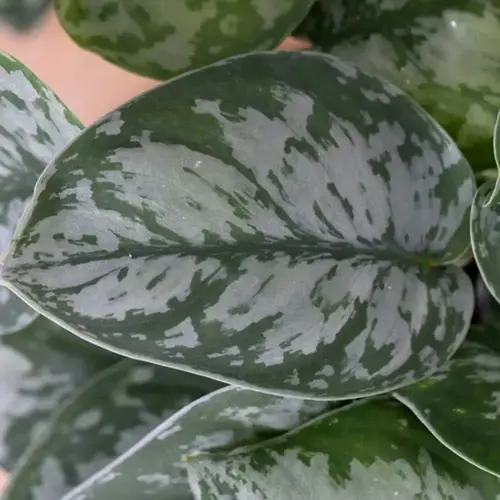

"Will that little plant on the dresser help me sleep?" a houseguest asked me, nodding at the arrowhead vine by the bed. I gave her the honest answer. The syngonium bedroom plant is lovely to look at and calming on the eyes. But it is not an air cleaner, so it will not change how you breathe at night. She still wanted one for her own room by morning, and that tells you most of what you need to know.
So yes, a syngonium works well in a bedroom, as long as the room gets some daylight. It belongs on the short list of bedroom plants that stay tidy, grow slow, and ask almost nothing of you week to week. You water it when the top inch of soil dries out, and that is about the whole job. The one real catch is light, which we will get to in a moment.
Most of the fit comes down to size and habit. A syngonium bedroom plant keeps a neat, compact shape and grows at a gentle pace, so it will not swallow your nightstand or crowd a small dresser. The arrowhead leaves stay soft and full, and you can wipe the dust off them in seconds. It does not shed a mess of dead leaves onto the floor either. That calm, tidy growth is what makes it such an easy roommate for the small space where you sleep.
Light is where you have to be honest with yourself about the room. The plant is low light tolerant, so it can sit in a dim corner for weeks without dropping leaves or sulking. But tolerating low light is not the same as thriving in it. In a dark spot the stems stretch out, grow long and bare between leaves, and the pretty color washes out. Give it a bright indirect spot near a window and it stays full, compact, and rich in color. East or north light suits it well, since harsh midday sun can scorch the thin leaves.
Here is the part most people get wrong about any bedroom plant. A single potted plant does not clean the air in a real room in any way you would ever notice. The famous 1989 NASA study ran inside sealed chambers the size of a phone booth. Those tiny boxes were nothing like an open bedroom, and syngonium was not even one of the plants they tested. Later reviews of that research found you would need hundreds of plants packed into one room to match the air swap from a single cracked window. So bring a syngonium into your bedroom for how it looks and how it makes the space feel, not for some promise of cleaner air while you sleep.
Syngonium is toxic to cats, dogs, and people. The sap holds tiny crystals that burn the mouth, so a curious pet or a toddler can get hurt chewing on a leaf.
That toxicity should shape exactly where you put the pot. I keep mine on a high shelf by the window, well out of reach of the cat. Set yours on a high shelf or dresser top too, away from any pets and small children, and choose a spot that still sits close to the glass. You get the bright light the plant wants and the safety your household needs in one simple choice. Keep the trailing stems trimmed so they do not dangle down where a curious cat can bat at them. Do that, and your syngonium gives you a calm, green, low-stress corner to wind down beside each night.
Read the full article: Syngonium Plant Care Guide for Beginners